
BuddhistCatholicContemplativeEvangelicalGeneral ChristianHinduJewishLatter-day SaintMuslimNew VisionsProgressive Christian
Beliefs
- Buddhist
- Catholic
- Contemplative
- Evangelical
- General Christian
- Hindu
- Jewish
- Latter-day Saint
- More Voices
- Muslim
- New Visions
- Pagan
- Progressive Christian
Topics
- Religion News
- Food and Religion
- Sports and Religion
- Religious Art
- Religious Music and Entertainment
- Religious Events
- History and Religion
- Style and Religion
- Politics and Religion
- Women in Religion
- Recreation Outdoors and Religion
- Business Finance and Religion
- Careers Workplace and Religion
- Education and Religion
- Family Parenting and Religion
- Health Fitness and Religion
- Home and Religion
- Relationships and Religion
- Technology and Religion
- Travel and Religion
Columnists
- Buddhist Columnists
- Business Finance and Religion Columnists
- Careers Workplace and Religion Columnists
- Catholic Columnists
- Contemplative Columnists
- Education and Religion Columnists
- Evangelists Columnists
- Family Parenting and Religion Columnists
- General Christian Columnists
- Health Fitness and Religion Columnists
- Hindu Columnists
- History and Religion Columnists
- Home and Religion Columnists
- Jewish Columnists
- More Voices Columnists
- Latter Day Columnists
- Muslim Columnists
- New Visions Columnists
- Nonreligious Columnists
- Pagan Columnists
- Politics and Religion Columnists
- Progressive Columnists
- Recreation Outdoors and Religion Columnists
- Relationships and Religion Columnists
- Religion News Columnists
- Religious Art Columnists
- Religious Events Columnists
- Religious Music and Entertainment Columnists
- Sports and Religion Columnists
- Style and Religion Columnists
- Technology and Religion Columnists
- Travel and Religion Columnists
- Women in Religion Columnists
Resource Library
- 2026 Calendar
- Library of World Religions
- The 100 Most Holy Places on Earth
- Patheos Answers
- Podcasts
- Videos
- Faith Leaders Database
- Anglican Episcopalian
- Bahai
- Baptist
- Buddhism
- Christianity
- Confucianism
- Eastern Orthodoxy
- Hinduism
- Holiness and Pentecostal
- ISKCON
- Islam
- Judaism
- Lutheran
- Methodist
- The Church of Jesus Christ of Latter-day Saints
- New Age
- Paganism
- Presbytarian and Reformed
- Protestantism
- Religion Behind the Scenes
- Roman Catholic
- Scientology
- Shia Islam
- Sikhism
- Sufism
- Sunni Islam
- Taoism
- Zen
- See all religions
Research Tools
 Ad-Free & Subscriber Log-In Subscription Support
Ad-Free & Subscriber Log-In Subscription Support
Follow Patheos 

- Trending:
- Forgiveness
- |
- Marriage
- |
- Consciousness
- |
- Death Penalty
- |
- Election
- |
- Halloween

- Home
- Catholic
- Politics and Religion
- Oh, crud. Now it’s Cupich?
Oh, crud. Now it’s Cupich?
Last updated on: February 6, 2016 at 10:45 am by Jane the Actuary
Oh, crud. Now it’s Cupich? 2016-02-06T10:45:29-06:00 Jane the Actuary
Patheos Explore the world's faith through different perspectives on religion and spirituality! Patheos has the views of the prevalent religions and spiritualities of the world.
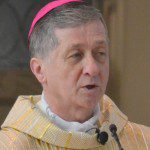
According to today’s Tribune, Chicago’s Archbishop Cupich (whom I’ve been skeptical of ever since, upon his arrival, he said that immigration, not violence in the city or declining Catholic school enrollment or church attendance, was his top priority) is all in favor of rewriting the rules so that divorced-and-remarried Catholics — as well as gay couples, cohabitating couples, etc. — can participate fully in the sacraments.
Per today’s article, “Cupich emerges as strong voice in synod,
Cupich told reporters in Rome he favors pathways to offer Holy Communion to divorced and remarried Catholics. He said the church must respect the decisions those Catholics make about their spiritual lives and he believes the same is true for gay Catholics in relationships.
With respect to gay couples in particular,
“My role as a pastor is to help them discern what the role of God is by looking at the objective moral teaching of the church and yet at the same time helping them through a period of discernment to understand what God is calling them to at that point,” he said.
And both at his prior diocese in Spokane and here in Chicago, he’s been busy even before the synod:
In both dioceses, priests discussed how to welcome the many different families they see in their parishes, including divorced couples, parents who never married and same-sex couples. As background, they were briefed on canon law and were asked to read “The Gospel of the Family,” a prominent proposal by German theologian Cardinal Walter Kasper to support and welcome back into the fold families that have failed.
The article then quotes priests who are implied to be expressing Cupich’s point of view, e.g.,:
Cupich told priests that navigating canon law is just one piece of the puzzle. He said the church must engage in a theological discussion about the definition and purpose of the sacraments.
“Are sacraments rewards for good behavior or are sacraments, as the pope would say, medicines for mercy?” said the Rev. Ken Simpson, pastor of St. Clement in the Lincoln Park neighborhood. “That’s a really important conversation. … Then you begin to answer questions about who ought to share in those.”
The National Catholic Reporter has more extended quotes from this press briefing. Of the Kasper proposal to welcome the D&Rs to communion, he says:
“I think that he has reasoned this proposal well, given the theology that he offers,” said Cupich. “I do think that we should look at a way in which people are not just accompanied but integrated and reconciled.”
“We have to believe in the mercy of God and the grace of God to trigger conversion, rather than having it the other way around as though you’re only going to get mercy if you have the conversion,” said the archbishop. “The economy of salvation doesn’t work that way. Christ receives people and it’s because of that mercy that the conversion happens.”
So: wow.
First of all, the Kasper proposal cited, as summarized here, is what I cited from Marx yesterday: that a D&R who’s sorry about having, say, left his wife, can begin receiving communion after some sort of waiting period.
Fundamentally, there are two issues here.
First, the idea of conscience is being mutated into an excuse to skitter away from the idea of any objective moral teaching at all. For Cupich to suggest that he counsels gay Catholics to believe that God may be calling them to something other than chastity, say, maybe instead diminished promiscuity, instead, is an abdication of his responsibility as a Catholic priest. To speak of conscience without simultaneously acknowledging the responsibility of those in positions of pastoral care to instruct so as to properly form the conscience, is a cop-out.
Second, the role of sacraments is being transformed. Remember the wedding feast, when the host invited the all manner of stragglers and strangers? — Yet those without a proper wedding garment were kicked out.
The sacrament of baptism, in the case of adults and children beyond the age of reason, requires a willingness to profess the faith.
The sacrament of the Eucharist requires that one have faith in the real presence of Christ, and be in a State of Grace.
The sacrament of reconciliation requires that one be penitent (which itself requires the intention to abandon the sin).
The sacrament of marriage requires the intent to be faithful, commit to each other in a lifelong way, and to welcome children to the marriage.
The sacraments are not tools to bring in nonbelievers, or to convert sinners. One might wish they worked that way, that baptism would inspire belief, that the Eucharist would produce a State of Grace, that reconciliation would bring about penitence, and that the sacrament of marriage could create the resolution to be faithful. It would certainly be nice to have these tools — to sprinkle water on unsuspecting passers-by and have them enter in on Sunday morning, or lay hands on a sinner and have them change their ways, or give a notorious womanizer a ring and have him stay faithful. And it is also true that the the sacraments should strengthen faith and help seeds grow. But to imagine that we can reinvent the sacraments into what we’d like them to be, as outreach tools, is a perversion of Christian doctrine beyond these smaller issues of divorce and remarriage.
Previous Post
October 17, 2015
Cardinal Marx on marriage: right problem, wrong solution
Next Post

October 19, 2015 Can a sinner receive communion? and a (mis?)reading of Evangelii Gaudium
Browse Our Archives
Select a Category Actuarial/Retirement Issues Politics Uncategorized
Select a Month September 2026 August 2026 July 2026 June 2026 April 2026 March 2026 February 2026 January 2026 December 2025 November 2025 October 2025 July 2025 June 2025 May 2025 April 2025 March 2025 February 2025 January 2025 December 2024 November 2024 October 2024 September 2024 August 2024 July 2024 June 2024 May 2024 April 2024 March 2024 February 2024 December 2023 November 2023 October 2023 September 2023 August 2023 July 2023 December 2022 September 2022 August 2022 July 2022 June 2022 May 2022 February 2022 January 2022 December 2021 August 2021 June 2021 April 2021 February 2021 January 2021 December 2020 November 2020 October 2020 September 2020 August 2020 July 2020 June 2020 May 2020 April 2020 March 2020 February 2020 January 2020 December 2019 November 2019 October 2019 September 2019 August 2019 July 2019 June 2019 May 2019 April 2019 March 2019 February 2019 January 2019 December 2018 November 2018 October 2018 September 2018 August 2018 July 2018 June 2018 May 2018 April 2018 March 2018 February 2018 January 2018 December 2017 November 2017 October 2017 September 2017 August 2017 July 2017 June 2017 May 2017 April 2017 March 2017 February 2017 January 2017 December 2016 November 2016 October 2016 September 2016 August 2016 July 2016 June 2016 May 2016 April 2016 March 2016 February 2016 January 2016 December 2015 November 2015 October 2015 September 2015 August 2015 July 2015 June 2015 May 2015 April 2015 March 2015 February 2015 January 2015 December 2014 November 2014 October 2014 September 2014 August 2014 July 2014 June 2014 May 2014 April 2014 March 2014 February 2014 January 2014 December 2013 November 2013 October 2013 September 2013 August 2013 July 2013
Follow Us!
TAKE THE
Religious Wisdom Quiz
What does the name "Samuel" mean?
Select your answer to see how you score.
Heard by God Gifted by God Saved by God Sent by God
Related posts from Jane the Actuary

Actually, Card. Cupich is hurting, not helping, immigrants
Is Cardinal Cupich Failing the Archdiocese of Chicago?
Dear Cardinal Cupich: enough with endless Capital Campaigns!
The good and bad about Cupich's DNC prayer
TRENDING AT PATHEOS Catholic

Methodist Central Hall and Westminster Abbey
Situated on the same square is Methodist Central Hall and Westminster Abbey. ...

57th Dove Awards Honor Dolly Parton, Crown New...
On gospel music’s biggest night, the 57th annual GMA Dove Awards honored...

The First Eucharistic Controversy: Christ’s Real Presence
For Catholics, the Eucharist is the source and summit of the Christian...

What a Stop Sign Can Teach Us About...
How to Make a Decision When You Can't Hear God Main point:...

Archdiocese Hosts Military Marriage Retreat in Germany
RASTATT, Germany — The transient military lifestyle, with its frequent deployments and...

Nearly every morning, I make the drive to Detroit with my high-school-age...
view all Catholic blogs
Ad-Free & Subscriber Log-In Subscription Support
- About Us
- 2026 Calendar
- Videos
- Podcasts
- Library of World Religions
- Faith In Media Tracker
- Advertise With Us
- Write for Us
- Privacy Policy
- Terms of Service
- Do Not Sell My Data
- Contact Us
- Radiant Digital
- Manage Newsletter Subscriptions
- Unsubscribe From Notifications
- Sitemap
Copyright 2008-2026, Patheos. All rights reserved.
Subscription Support Ad-Free & Subscriber Log-In
Follow Patheos