
BuddhistCatholicContemplativeEvangelicalGeneral ChristianHinduJewishLatter-day SaintMuslimNew VisionsProgressive Christian
Beliefs
- Buddhist
- Catholic
- Contemplative
- Evangelical
- General Christian
- Hindu
- Jewish
- Latter-day Saint
- More Voices
- Muslim
- New Visions
- Pagan
- Progressive Christian
Topics
- Religion News
- Food and Religion
- Sports and Religion
- Religious Art
- Religious Music and Entertainment
- Religious Events
- History and Religion
- Style and Religion
- Politics and Religion
- Women in Religion
- Recreation Outdoors and Religion
- Business Finance and Religion
- Careers Workplace and Religion
- Education and Religion
- Family Parenting and Religion
- Health Fitness and Religion
- Home and Religion
- Relationships and Religion
- Technology and Religion
- Travel and Religion
Columnists
- Buddhist Columnists
- Business Finance and Religion Columnists
- Careers Workplace and Religion Columnists
- Catholic Columnists
- Contemplative Columnists
- Education and Religion Columnists
- Evangelists Columnists
- Family Parenting and Religion Columnists
- General Christian Columnists
- Health Fitness and Religion Columnists
- Hindu Columnists
- History and Religion Columnists
- Home and Religion Columnists
- Jewish Columnists
- More Voices Columnists
- Latter Day Columnists
- Muslim Columnists
- New Visions Columnists
- Nonreligious Columnists
- Pagan Columnists
- Politics and Religion Columnists
- Progressive Columnists
- Recreation Outdoors and Religion Columnists
- Relationships and Religion Columnists
- Religion News Columnists
- Religious Art Columnists
- Religious Events Columnists
- Religious Music and Entertainment Columnists
- Sports and Religion Columnists
- Style and Religion Columnists
- Technology and Religion Columnists
- Travel and Religion Columnists
- Women in Religion Columnists
Resource Library
- 2026 Calendar
- Library of World Religions
- The 100 Most Holy Places on Earth
- Patheos Answers
- Podcasts
- Videos
- Faith Leaders Database
- Anglican Episcopalian
- Bahai
- Baptist
- Buddhism
- Christianity
- Confucianism
- Eastern Orthodoxy
- Hinduism
- Holiness and Pentecostal
- ISKCON
- Islam
- Judaism
- Lutheran
- Methodist
- The Church of Jesus Christ of Latter-day Saints
- New Age
- Paganism
- Presbytarian and Reformed
- Protestantism
- Religion Behind the Scenes
- Roman Catholic
- Scientology
- Shia Islam
- Sikhism
- Sufism
- Sunni Islam
- Taoism
- Zen
- See all religions
Research Tools
 Ad-Free & Subscriber Log-In Subscription Support
Ad-Free & Subscriber Log-In Subscription Support
Follow Patheos 

- Trending:
- Forgiveness
- |
- Marriage
- |
- Consciousness
- |
- Death Penalty
- |
- Election
- |
- Halloween

- Home
- Catholic
- Politics and Religion
- From the “library”: Practical Ethics, by Peter Singer
From the “library”: Practical Ethics, by Peter Singer
Last updated on: January 22, 2016 at 8:11 am by Jane the Actuary
From the “library”: Practical Ethics, by Peter Singer 2016-01-22T08:11:52-06:00 Jane the Actuary
Patheos Explore the world's faith through different perspectives on religion and spirituality! Patheos has the views of the prevalent religions and spiritualities of the world.
according to which, the words and deeds of Planned Parenthood and its defenders are rational, ethical, and entirely appropriate.
Disclaimer #1: I haven’t read the whole book, just skimmed through for the provocative pieces.
Disclaimer #2: This isn’t actually a book checked out from the library, but rather a book that was on the “items on this cart are free” cart that the library places in the parking garage entrance, comprised of books and magazines they judge to be unsellable at the quarterly used book sales. The cart typically contains old National Geographics and magazines of interest only to specialists/hobbyists; occasionally there are severely outdated guidebooks. In any event, I don’t recommend purchasing this book or taking any action which would put more royalties in the author’s pockets.
Anyway:
it occurs to me that I haven’t weighted in on the Planned Parenthood controversy, in which a PP executive spoke nonchalantly about, among other things, taking special care to preserve hearts, livers, and heads during the course of abortions, to sell (“donate with costs reimbursed”) to medical researchers and other buyers. (If you’re behind in you’re news, here are the most recent pieces written by writers/sites I follow: “The Butchers of Planned Parenthood” by Kevin D. Williamson, and “Planned Parenthood Suddenly Claims It Pays Women For Organ Harvesting” by Mollie Hemingway.)
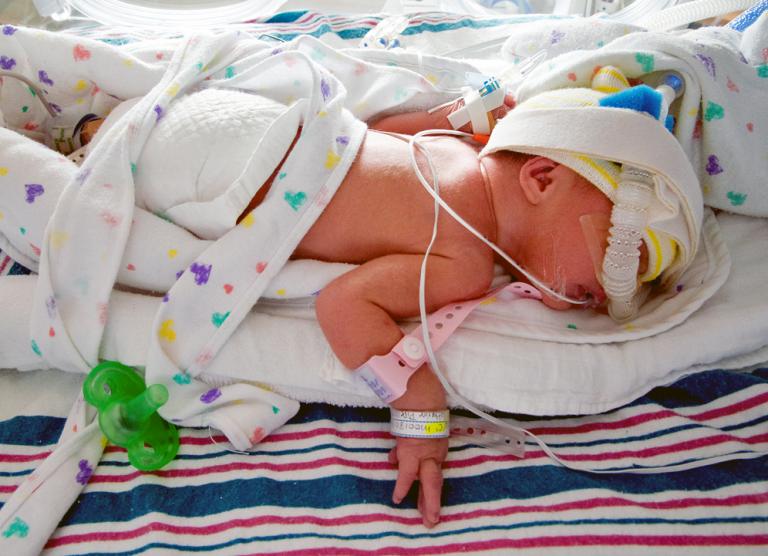
But fundamentally the mindset of these people is that unborn children — or even newborns, or the severely disabled — are not “persons” in their definition of the term. And bearing that in mind, there is nothing shocking about the fact that they’d consider the organs of these “human non-persons” fair game for any use.
Which brings us to Peter Singer, a name that Wesley J. Smith, through his writing at the National Review and elsewhere previously, has made me aware of. The book is an updated 1993 edition, 2006 printing, originally published in 1979.
His fundamental approach is this: to be a member of the species Homo sapiens is not enough to have a “right to life”; one must also be a “person.” He cites Joseph Fletcher’s list of “indicators of humanhood”:
self-awareness, self-control, a sense of the future, a sense of the past, the capacity to relate to others, concern for others, communication, and curiosity. (p. 86)
and says that any human being who is not a “person” according to this definition does not have a “right to life”, or, rather, that with respect to such beings, there’s nothing wrong with killing, and it may even be the ethically right thing to do.
(Note that it’s not as easy as you’d think to find quotes, as he tends to quote other philosophers, where it becomes clear that he agrees with them, and says things like “it could be viewed like this. . . ” rather than “I believe that. . . “)
Hence, with respect to abortion, there’s not really any question of its acceptability, except that perhaps at that point when a fetus is capable of feeling pain, this should be avoided, in the same way as you shouldn’t cause an animal pain unnecessarily. What’s more, there isn’t any cut-off prior to birth, and even at birth, Singer says:
It would, of course, be difficult to say at what age children begin to see themselves as distinct entities existing over time. Even when we talk with two and three year old children it is usually very difficult to elicit any coherent conception of death, or of the possibility that someone — let alone the child herself — might cease to exist. no doubt children vary greatly in the age at which they begin to understand these matters, as they do in most things. But a difficulty in drawing the line is not a reason for drawing it in a place that is obviously wrong. . . . [Singer then discusses the option of setting this line at birth, but then suggests that] there should be at least some circumstances in which a full legal right to life comes into force not at birth, but only a short time after birth — perhaps a month [as a ] safety margin. (p. 172)
And even here, it’s clear that his definition — “must have a sufficient understanding of the world in order for one’s killing to be unethical” — encompasses a great deal more than just newborns, but, of course, he can’t quite pursue the consequence that a two-year-old is of insufficient moral worth.
He later says this:
In Chapter 4 we saw that the fact that a being is a human being, in the sense of a member of the species Homo sapiens, is not relevant to the wrongness of killing it; it is, rather, characteristics like rationality, autonomy, and self-consciousness that make a difference. Infants lack these characteristics. Killing them, therefore, cannot be equated with killing normal human beings, or any other self-conscious beings. This conclusion is not limited to infants who, because of irreversible intellectual disabilities, will never be rational, self-conscious beings. (p. 182)
In later chapters he discusses the ethical rightness of euthanasia as it pertains to disabled infants, and, ultimately, the severely disabled due to disease or accident, in their prime or aging-related, and rejects “slippery slope” arguments, saying that the fundamental problem with Nazism was that they killed because of their pursuit of racial purity, rather than elimination of “pointless suffering,” so that as long as we’re properly motivated, all will be well. He further cites the ancient Greeks, of whom he says,
Ancient Greeks regularly killed or exposed infants, but appear to have been at least as scrupulous about taking the lives of their fellow-citizens as medieval Christians or modern Americans. . . . I mention these practices . . . to indicate that lines can be drawn at places different from where we now draw them. (p. 217).
Bottom-line: from a Singerian ethos, Planned Parenthood is doing nothing wrong.
What’s more, the difficulty is this: how does one argue with Singer? He’s not even in the same universe, when it comes to his perception of the world. And Planned Parenthood’s defenders live in his universe, or at least much closer to it, or, if they read his writings, would probably find themselves in agreement, if perhaps squeamish about saying that infanticide’s fine, so long as mom and dad agree.
Previous Post

July 18, 2015
"The sanctions wouldn't have lasted anyway"
Next Post
July 20, 2015 "The Most Beautiful [Houses of Worship] in the World
Browse Our Archives
Select a Category Actuarial/Retirement Issues Politics Uncategorized
Select a Month September 2026 August 2026 July 2026 June 2026 April 2026 March 2026 February 2026 January 2026 December 2025 November 2025 October 2025 July 2025 June 2025 May 2025 April 2025 March 2025 February 2025 January 2025 December 2024 November 2024 October 2024 September 2024 August 2024 July 2024 June 2024 May 2024 April 2024 March 2024 February 2024 December 2023 November 2023 October 2023 September 2023 August 2023 July 2023 December 2022 September 2022 August 2022 July 2022 June 2022 May 2022 February 2022 January 2022 December 2021 August 2021 June 2021 April 2021 February 2021 January 2021 December 2020 November 2020 October 2020 September 2020 August 2020 July 2020 June 2020 May 2020 April 2020 March 2020 February 2020 January 2020 December 2019 November 2019 October 2019 September 2019 August 2019 July 2019 June 2019 May 2019 April 2019 March 2019 February 2019 January 2019 December 2018 November 2018 October 2018 September 2018 August 2018 July 2018 June 2018 May 2018 April 2018 March 2018 February 2018 January 2018 December 2017 November 2017 October 2017 September 2017 August 2017 July 2017 June 2017 May 2017 April 2017 March 2017 February 2017 January 2017 December 2016 November 2016 October 2016 September 2016 August 2016 July 2016 June 2016 May 2016 April 2016 March 2016 February 2016 January 2016 December 2015 November 2015 October 2015 September 2015 August 2015 July 2015 June 2015 May 2015 April 2015 March 2015 February 2015 January 2015 December 2014 November 2014 October 2014 September 2014 August 2014 July 2014 June 2014 May 2014 April 2014 March 2014 February 2014 January 2014 December 2013 November 2013 October 2013 September 2013 August 2013 July 2013
Follow Us!
TAKE THE
Religious Wisdom Quiz
What did God tell Moses from the burning bush?
Select your answer to see how you score.
That he would become Pharaoh That he would be king of Israel That he would build the temple That he would lead Israel out of Egypt
Related posts from Jane the Actuary

The ERA of 1972 no longer exists in...

What's A Pro-Life Illinoisan To do?
The Violinist vs. the Castaway, and an attempt...
On the end of Roe, and why I'm...
TRENDING AT PATHEOS Catholic

The Dangers of Gradual Accommodation (Winking at Sin)
Recently, the “law of gradualness” resurfaced during the opening of a weeklong,...

The Iron Gates and the Lion of the...
Yesterday, I didn't finish my report about, well, yesterday. So I'll...

Dolly Parton’s Last Song Wins Dove Award with...
Bluegrass band The Grascals, speaking on the red carpet at the 57th...

The Image: On the Horror of Capitalism and...
The Image Then went the Pharisees, and took counsel how they might...

We are approaching the date of our new American national holiday: October...

Letters on Living the Faith by C.S. Lewis
Most of us met C.S. Lewis as a public intellectual. Mere Christianity....
view all Catholic blogs
Ad-Free & Subscriber Log-In Subscription Support
- About Us
- 2026 Calendar
- Videos
- Podcasts
- Library of World Religions
- Faith In Media Tracker
- Advertise With Us
- Write for Us
- Privacy Policy
- Terms of Service
- Do Not Sell My Data
- Contact Us
- Radiant Digital
- Manage Newsletter Subscriptions
- Unsubscribe From Notifications
- Sitemap
Copyright 2008-2026, Patheos. All rights reserved.
Subscription Support Ad-Free & Subscriber Log-In
Follow Patheos