
BuddhistCatholicContemplativeEvangelicalGeneral ChristianHinduJewishLatter-day SaintMuslimNew VisionsProgressive Christian
Beliefs
- Buddhist
- Catholic
- Contemplative
- Evangelical
- General Christian
- Hindu
- Jewish
- Latter-day Saint
- More Voices
- Muslim
- New Visions
- Pagan
- Progressive Christian
Topics
- Religion News
- Food and Religion
- Sports and Religion
- Religious Art
- Religious Music and Entertainment
- Religious Events
- History and Religion
- Style and Religion
- Politics and Religion
- Women in Religion
- Recreation Outdoors and Religion
- Business Finance and Religion
- Careers Workplace and Religion
- Education and Religion
- Family Parenting and Religion
- Health Fitness and Religion
- Home and Religion
- Relationships and Religion
- Technology and Religion
- Travel and Religion
Columnists
- Buddhist Columnists
- Business Finance and Religion Columnists
- Careers Workplace and Religion Columnists
- Catholic Columnists
- Contemplative Columnists
- Education and Religion Columnists
- Evangelists Columnists
- Family Parenting and Religion Columnists
- General Christian Columnists
- Health Fitness and Religion Columnists
- Hindu Columnists
- History and Religion Columnists
- Home and Religion Columnists
- Jewish Columnists
- More Voices Columnists
- Latter Day Columnists
- Muslim Columnists
- New Visions Columnists
- Nonreligious Columnists
- Pagan Columnists
- Politics and Religion Columnists
- Progressive Columnists
- Recreation Outdoors and Religion Columnists
- Relationships and Religion Columnists
- Religion News Columnists
- Religious Art Columnists
- Religious Events Columnists
- Religious Music and Entertainment Columnists
- Sports and Religion Columnists
- Style and Religion Columnists
- Technology and Religion Columnists
- Travel and Religion Columnists
- Women in Religion Columnists
Resource Library
- 2026 Calendar
- Library of World Religions
- The 100 Most Holy Places on Earth
- Patheos Answers
- Podcasts
- Videos
- Faith Leaders Database
- Anglican Episcopalian
- Bahai
- Baptist
- Buddhism
- Christianity
- Confucianism
- Eastern Orthodoxy
- Hinduism
- Holiness and Pentecostal
- ISKCON
- Islam
- Judaism
- Lutheran
- Methodist
- The Church of Jesus Christ of Latter-day Saints
- New Age
- Paganism
- Presbytarian and Reformed
- Protestantism
- Religion Behind the Scenes
- Roman Catholic
- Scientology
- Shia Islam
- Sikhism
- Sufism
- Sunni Islam
- Taoism
- Zen
- See all religions
Research Tools
 Ad-Free & Subscriber Log-In Subscription Support
Ad-Free & Subscriber Log-In Subscription Support
Follow Patheos 

- Trending:
- Forgiveness
- |
- Marriage
- |
- Consciousness
- |
- Death Penalty
- |
- Election
- |
- Halloween

- Home
- Catholic
- Politics and Religion
- Thinking about a Core Curriculum
Thinking about a Core Curriculum
Last updated on: February 26, 2015 at 11:14 pm by Jane the Actuary
Thinking about a Core Curriculum 2015-02-26T23:14:47-06:00 Jane the Actuary
Patheos Explore the world's faith through different perspectives on religion and spirituality! Patheos has the views of the prevalent religions and spiritualities of the world.
Today my son had a soccer game — just the house league, and he’s one of those players who, if the ball comes his way, he’ll kick it, but he’s not out there ahead of the others scoring goals. And the weather was unseasonably cold, though happily the rain slowed and ultimately stopped, though the field was drenched.
Which meant that, having looked at the core-curriculum study last night, I spent the game mentally thinking through the whole question of “what should the core curriculum be?”
Writing
This is the easiest piece: students should have a “college-level” writing ability regardless of whether they major in the liberal arts or the sciences, though students should be able to meet this requirement by taking “freshman comp” or maybe alternately by a combination of a placement test and some other coursework which involves significant amounts of writing.
History
Yes, not surprisingly, I think history should be a significant portion of a core curriculum. The basic requirement should be a core competence in world history, tested via a placement test. Do you know what the Cultural Revolution was? What the key dates and events were in World War II? and so on.
And here’s where I’d bring this requirement into the 21st century. The placement test would consist of sections for different time periods and regions, you’d get credit where you could, and would have to take modules for the remainder, probably with a combination of online and textbook learning rather than in the classroom, and probably at a level of rigor that’s less than what it would be if you had to take a full-year US survey and European survey and “other” survey (and with a reduced level of credit granted). But the point is, you need to understand the basic outlines, and colleges shouldn’t take it for granted that kids get this in high school, in the same way as they don’t take it for granted that kids get the writing skills in high school.
The second part of the requirement would be some kind of a “themes in history” class which would attempt to try to incorporate the two elements of “actions have consequences” and “same . . . but different” from yesterday’s blog post, with a fair amount of choice as to the time period and region selected, so long as the class adheres to certain common guidelines.
Alternatively, this could be two courses — one a traditional history course with a heavy does of Cause and Effect and the other a course about another culture, which can be chosen from history department offerings (e.g., Classical Greece) or another department, such as “Chinese Studies” or the like, with the stipulation that a foreign student, or a student with a significant background in the country can’t choose that region — or a series of two courses could be chosen which incorporate aspects of both.
Math
Placement test, again, or remedial non-credit coursework to demonstrate or attain competence in all the topics of “college-prep high school math” would be the basic prerequisite, but the general-education requirement, for anyone who’s not otherwise taking “real” math, would be a practical one: a course in basic statistics (including data interpretation and hypothesis testing), with some interest theory thrown in.
Science
Science is a bit trickier. The required “science for non-majors” course should decidedly not be a course in environmentalism and sustainability and global warming and so forth. My ideal class would be the result of actual scientists putting their heads together and figuring out what the basic concepts are that educated people need to understand, based on the articles they read, and facebook posts, and the like, that make them want to pound their heads into the wall.
Social Sciences
This is where things get trickier still — because students should understand “civics,” as traditionally understood (though, again, this should be remedial, remedying deficiencies if a student hasn’t learned the material in high school), should have a basic understanding of economics, and should be able to discuss intelligently the Key Social Issues of the Day, but it’s the nature of universities today that this last component to such a requirement would almost inevitably be taught from a politically-liberal perspective, unless the content was very tightly controlled.
Again, this would be modular, so that a student could elect a full Political Science 101 for the “civics” component or an Econ 101 (or Econ 101 & 102, Macro & Micro) instead of the Econ Lite which this would represent, for instance.
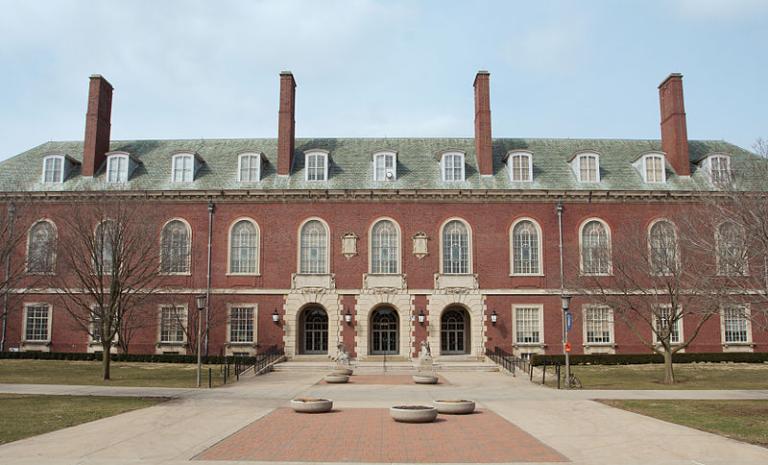
As you can see, my core curriculum is actually fairly prescriptive, especially compared with places such as the University of Illinois, where you get thousands of choices as long as you conform to general categories. It’s premised on the idea that, if a university education is more than a technical school, then that basic level of understanding the world can’t be obtained by choosing classes based on themes such as “science and society,” but that there is a real, key set of knowledge and skills.
Why am I writing about this? Because I think it’s worth thinking about, as one piece of the bigger puzzle of how to reform higher education in the 21st century. And because I had to wait for my oldest son to get back from his first high school dance. (Homecoming — but not as I remembered it, where you had to hope for an invitation from a Boy, and instead more of a “everyone who’s willing to get dress up can come.”) But he’s home now — he didn’t actually dance, but he and the kids he went with hung out in the cafeteria and talked — so it’s bedtime. Talk among yourselves. . . what, if anything, should a university require besides expertise in your major field of study?
(Alternatively, we could just add a 13th grade, and insist that college-bound students demonstrate proficiency in these fields before heading off to a shortened college program, perhaps by withholding financial aid from not-fully-qualified students and insisting that high schools provide the curriculum to prospective students of any age. But that’s another post.)
Previous Post

October 18, 2014
The Spartans and History
Next Post
October 19, 2014 What happens when marriage isn't marriage any longer?
Browse Our Archives
Select a Category Actuarial/Retirement Issues Politics Uncategorized
Select a Month September 2026 August 2026 July 2026 June 2026 April 2026 March 2026 February 2026 January 2026 December 2025 November 2025 October 2025 July 2025 June 2025 May 2025 April 2025 March 2025 February 2025 January 2025 December 2024 November 2024 October 2024 September 2024 August 2024 July 2024 June 2024 May 2024 April 2024 March 2024 February 2024 December 2023 November 2023 October 2023 September 2023 August 2023 July 2023 December 2022 September 2022 August 2022 July 2022 June 2022 May 2022 February 2022 January 2022 December 2021 August 2021 June 2021 April 2021 February 2021 January 2021 December 2020 November 2020 October 2020 September 2020 August 2020 July 2020 June 2020 May 2020 April 2020 March 2020 February 2020 January 2020 December 2019 November 2019 October 2019 September 2019 August 2019 July 2019 June 2019 May 2019 April 2019 March 2019 February 2019 January 2019 December 2018 November 2018 October 2018 September 2018 August 2018 July 2018 June 2018 May 2018 April 2018 March 2018 February 2018 January 2018 December 2017 November 2017 October 2017 September 2017 August 2017 July 2017 June 2017 May 2017 April 2017 March 2017 February 2017 January 2017 December 2016 November 2016 October 2016 September 2016 August 2016 July 2016 June 2016 May 2016 April 2016 March 2016 February 2016 January 2016 December 2015 November 2015 October 2015 September 2015 August 2015 July 2015 June 2015 May 2015 April 2015 March 2015 February 2015 January 2015 December 2014 November 2014 October 2014 September 2014 August 2014 July 2014 June 2014 May 2014 April 2014 March 2014 February 2014 January 2014 December 2013 November 2013 October 2013 September 2013 August 2013 July 2013
Follow Us!
TAKE THE
Religious Wisdom Quiz
How many daughters did Job have after his restoration?
Select your answer to see how you score.
Seven Two Five Three
Related posts from Jane the Actuary

Oh, heck, let's criticize "free college" in detail
The Great Guardianship/Financial Aid Scandal of 2019 (or...

How much is a grad student worth?
Affirmative-Action Rhodes Scholarships?
TRENDING AT PATHEOS Catholic

Emotion in Early Christianity by Andrew Crislip
Andrew Crislip’s Emotion in Early Christianity examines an often overlooked dimension of...

16 Spiritual Touchstones for a More Grounded Life
After decades of spiritual study, here are 16 principles I try...

Catholic Evangelization: Sharing Your Faith Every Day
Welcome back to the Graceful Awakening mini-series called, “From Faith to Mission.” ...

The Pillar of the Boatmen: the Ancient Monument...
The Pillar of the Boatmen is a Romano-Gaulish sculpture that dates from...

In one sense walking into Westminster Abbey is like walking down the...

'Super Scam Me' Exposes AI Jon Bon Jovi...
Leslie Pickett believed she was in a relationship with Jon Bon Jovi....
view all Catholic blogs
Ad-Free & Subscriber Log-In Subscription Support
- About Us
- 2026 Calendar
- Videos
- Podcasts
- Library of World Religions
- Faith In Media Tracker
- Advertise With Us
- Write for Us
- Privacy Policy
- Terms of Service
- Do Not Sell My Data
- Contact Us
- Radiant Digital
- Manage Newsletter Subscriptions
- Unsubscribe From Notifications
- Sitemap
Copyright 2008-2026, Patheos. All rights reserved.
Subscription Support Ad-Free & Subscriber Log-In
Follow Patheos