
BuddhistCatholicContemplativeEvangelicalGeneral ChristianHinduJewishLatter-day SaintMuslimNew VisionsProgressive Christian
Beliefs
- Buddhist
- Catholic
- Contemplative
- Evangelical
- General Christian
- Hindu
- Jewish
- Latter-day Saint
- More Voices
- Muslim
- New Visions
- Pagan
- Progressive Christian
Topics
- Religion News
- Food and Religion
- Sports and Religion
- Religious Art
- Religious Music and Entertainment
- Religious Events
- History and Religion
- Style and Religion
- Politics and Religion
- Women in Religion
- Recreation Outdoors and Religion
- Business Finance and Religion
- Careers Workplace and Religion
- Education and Religion
- Family Parenting and Religion
- Health Fitness and Religion
- Home and Religion
- Relationships and Religion
- Technology and Religion
- Travel and Religion
Columnists
- Buddhist Columnists
- Business Finance and Religion Columnists
- Careers Workplace and Religion Columnists
- Catholic Columnists
- Contemplative Columnists
- Education and Religion Columnists
- Evangelists Columnists
- Family Parenting and Religion Columnists
- General Christian Columnists
- Health Fitness and Religion Columnists
- Hindu Columnists
- History and Religion Columnists
- Home and Religion Columnists
- Jewish Columnists
- More Voices Columnists
- Latter Day Columnists
- Muslim Columnists
- New Visions Columnists
- Nonreligious Columnists
- Pagan Columnists
- Politics and Religion Columnists
- Progressive Columnists
- Recreation Outdoors and Religion Columnists
- Relationships and Religion Columnists
- Religion News Columnists
- Religious Art Columnists
- Religious Events Columnists
- Religious Music and Entertainment Columnists
- Sports and Religion Columnists
- Style and Religion Columnists
- Technology and Religion Columnists
- Travel and Religion Columnists
- Women in Religion Columnists
Resource Library
- 2026 Calendar
- Library of World Religions
- The 100 Most Holy Places on Earth
- Patheos Answers
- Podcasts
- Videos
- Faith Leaders Database
- Anglican Episcopalian
- Bahai
- Baptist
- Buddhism
- Christianity
- Confucianism
- Eastern Orthodoxy
- Hinduism
- Holiness and Pentecostal
- ISKCON
- Islam
- Judaism
- Lutheran
- Methodist
- The Church of Jesus Christ of Latter-day Saints
- New Age
- Paganism
- Presbytarian and Reformed
- Protestantism
- Religion Behind the Scenes
- Roman Catholic
- Scientology
- Shia Islam
- Sikhism
- Sufism
- Sunni Islam
- Taoism
- Zen
- See all religions
Research Tools
 Ad-Free & Subscriber Log-In Subscription Support
Ad-Free & Subscriber Log-In Subscription Support
Follow Patheos 

- Trending:
- Forgiveness
- |
- Marriage
- |
- Consciousness
- |
- Death Penalty
- |
- Election
- |
- Halloween
 James Wellman on American Religion
- Home
- Progressive Christian
- The Abundant Zone: Theologizing the Present Age
The Abundant Zone: Theologizing the Present Age
Last updated on: April 18, 2015 at 12:57 pm by Dr. James Wellman
The Abundant Zone: Theologizing the Present Age 2015-04-18T12:57:39-06:00 Dr. James Wellman
Patheos Explore the world's faith through different perspectives on religion and spirituality! Patheos has the views of the prevalent religions and spiritualities of the world.
This post was originally published in Christ and Cascadia, I am sharing it here by permission. I’ve been thinking that these ideas could be used to rethink, re-theologize our usual assumptions about the terror of “noneness,” perhaps, depending on our vision, we can see the present age as an age of abundance rather than scarcity.
Among sociologists, it has become conventional wisdom to label the Pacific Northwest – or “Cascadia” – as a “secularized” region, a religious desert – a spiritual “none zone.”
I should know. I did it myself in this book.
But, as a sociologist and a Christian, I have become increasingly convinced that these labels are, in many ways, deeply problematic
As many of you know, more than 60 percent of Cascadia (roughly Washington, Oregon, and British Columbia) are religiously unaffiliated. Another 11 percent are Catholic, and 10 percent are some form of evangelical. The rest are a conglomeration of mainliners, Mormons, Jews and Muslims. That leaves 60 percent of Cascadians who are religiously unaffiliated, 30 percent are “nones” (i.e. spiritual but not religious) while the other 30 percent attest to being Catholic or Protestant, even though no church claims them.
These statistics have led sociologists and members of the media to conclude that Cascadia is religiously empty – a divine vacuum.
Perhaps we have too narrowly limited faith to people who “believe” and “belong” in the same manner as traditional Western Protestantism.
But I wonder if our sociological lenses (and my own Protestant eyes) have missed something important about the spiritual character and potential of this region. Perhaps we have too narrowly limited faith to people who “believe” and “belong” in the same manner as traditional Western Protestantism.
So, with that in mind, here is my attempt at an alternative evaluation of Cascadia – not as a spiritual “none zone” but as a region of spiritual abundance.
Please remember: I’m a sociologist – not a theologian. (So, I’m in way over my head.)
The Abundant Zone
I would like to propose that we, as Christians, evaluate Cascadia not in terms of what it lacks but in terms of what it has.
In almost every conceivable way, Cascadia – both the land and its culture – is characterized by a cultural and biological abundance. It is abundant in natural resources, abundant in human genius, abundant in its diversity of cultures, abundant in industry and abundant in educational opportunities.
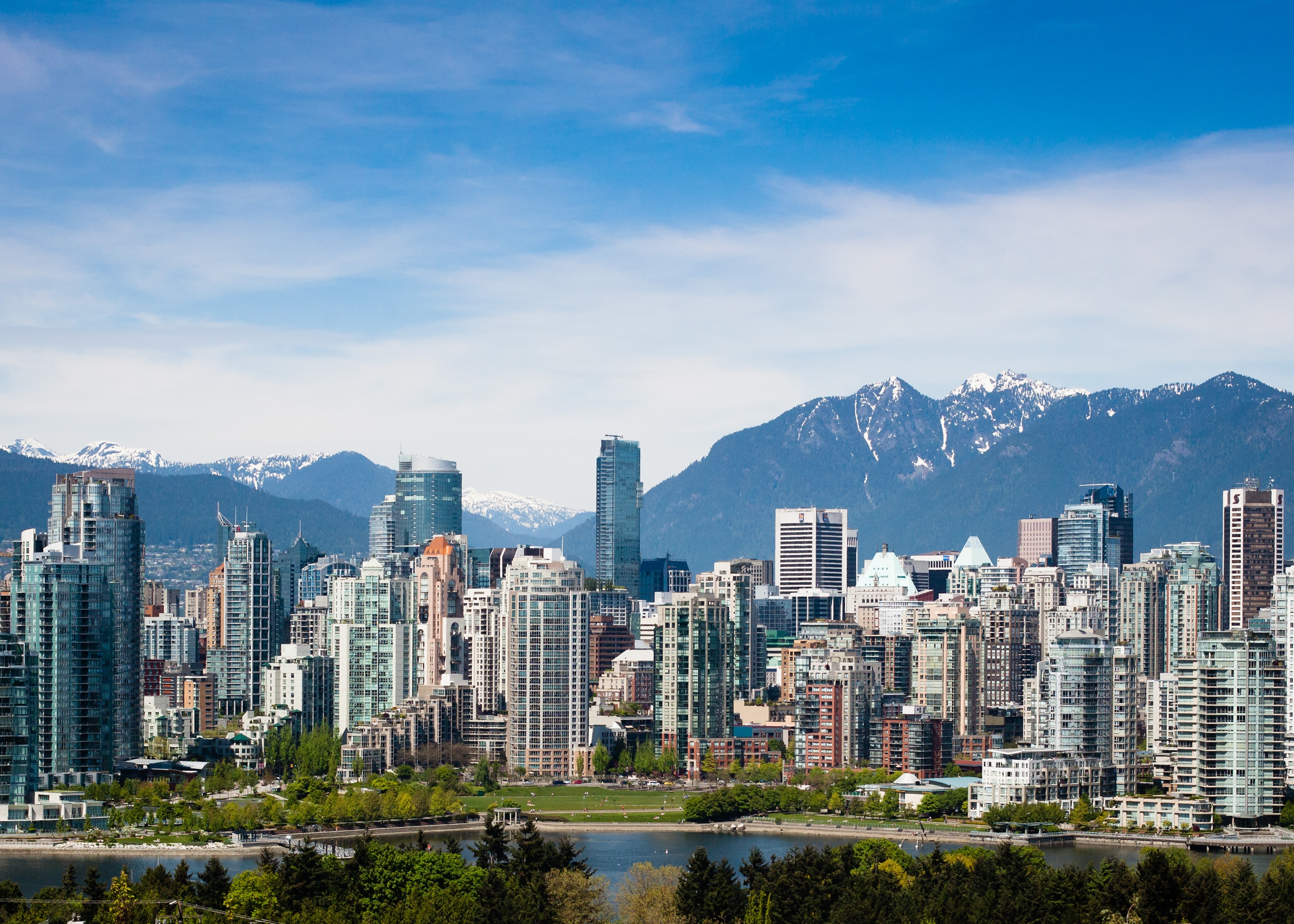
Perhaps it is time to consider whether we should evaluate this place with a theology of abundance.
From this perspective, the region is a synecdoche for the Kingdom of God – a part of a much greater whole. Indeed Cascadia is a place of such wonder and awesome possibility that it simply can take one’s breath away.
Right up the street from my home on Bainbridge Island is a road named Potlatch. For the Native peoples, the abundance of this region was so bountiful that the practice of giving away one’s possessions became a ritual of competitive extravagance. Extravagance made possible by a region that seemed to have limitless capacities to provide for its inhabitants.
In the midst of this abundance, I have argued, to my surprise, that it is the evangelicals who have most accurately understood the opportunity of Cascadia. They look at the region as a vast landscape of possibility. And in all sorts of imaginative ways, they have taken advantage of the lack of religious options. They see an open market, and so they go to work, supplying their religious goods.
Liberal Christians, on the other hand, complain and feel guilty. Is it right to convert? For many of them, the answer is no – and to their credit there is the shadow of the post-colonial critique that instructs (but also perhaps undercuts) their mission to speak the good news.
But I wonder, how are we to look upon this vast region of abundance? Is there a third way beyond these evangelical and liberal approaches?
The Pacific Northwest and the Logos
What if we applied a hybrid Johannine / Eastern Orthodox Christian lens to this region?
In this sense, none of what we see, feel, touch, hear, or taste is secular in any sense: it is penetrated by the divine, and incarnationally infused with the divine Logos – the great ordering principle of reality.
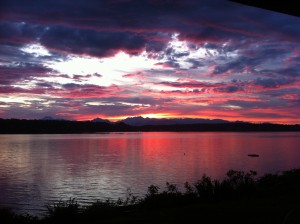
In the Orthodox Tradition, we cannot know God’s essence but we can know God’s energy and his will in the world through the work and ministry of Jesus Christ. We can know God in the beauty, goodness and truth that is abundant all around us. In this sense, none of what we see, feel, touch, hear, or taste is secular in any sense: it is penetrated by the divine, and incarnationally infused with the divine Logos – the great ordering principle of reality.
In this way, like Paul at Mars Hill, we Cascadian Christians can behold the truth, beauty and goodness of this region and declare that this abundance testifies to the ultimate truth, beauty, and goodness of our God.
Biblically speaking the seeds are falling all around us, and if we have eyes to see and ears to hear, then we might turn and begin to act as witnesses: witnesses to God’s abundance and to the genius in our midst; witnesses that by the word of God all things were created, en-fleshed and imbued with beauty, goodness and truth. We simply name the source and we make a witness, and we do it with great confidence that the abundance all around is God-given, God-infused. Isn’t this the real truth of our region? I think it is.
As some of you know I wrote a book about Rob Bell and a New American Christianity. I think Bell has become more and more incarnational in his vision of culture. And, so, in this spirit, I rewrote Paul’s famous speech in front of the Areoapagus:
Acts 17:22–31, New Revised Seattle Version:
22 Then Paul stood in front of the Amazon Complex on Lake Union and said, “O Seattlelites, I see how extremely religious you are in every way. 23 For as I went through the city and looked carefully at the objects of your worship – your technology, your businesses, your jets, your football stadiums, I found among them an altar with the inscription, ‘To the 12th man.’ What therefore you worship as unknown, this I proclaim to you. 24 The God who made the world and everything in it, he who is Lord of heaven and earth, does not live in stadiums made by human hands, 25 nor is he served by human hands, as though he needed anything, since he himself gives to all mortals life and breath and all things. 26 From one ancestor he made all nations and tribes to inhabit the whole earth, and he allotted the times of their existence and the boundaries of the places where they would live, 27 so that they would search for God and perhaps grope for him and find him – though indeed he is not far from each one of us. 28 For ‘In him we live and move and have our being.
And, of course, which one of us, looking upon the sunsets of this last summer in Seattle could not say, “Yes, this awesome beauty is God-created, God-formed; beauty as of the Son, who is Christ our friend, and his advocate the Spirit that comes alongside. And this One invites us to know the source of this beauty – to name that source, Christ in Cascadia, Christ for Cascadia, Christ through Cascadia.”
Isn’t Cascadia’s abundance a God-given abundance?
We should stop calling it the “none zone.” What a putdown!
It is the Abundant Zone, made by and given for the glory of God, that we, who are promised the abundant life, may know the source and go out and do greater things than even the Son. For the Son has gone to the Father, and the energy of God is with us and comes to us in abounding joy so that all people – and I do mean all people – may see and rejoice. Let us with eyes to see and ears to hear see and hear how we have been gifted with this glory.
Next Post

April 25, 2015 A Beautiful Legacy: My Friend Bill Harper—Pastor Extraordinaire
Browse Our Archives
Select a Category Uncategorized
Select a Month October 2017 June 2017 April 2017 March 2017 February 2017 January 2017 November 2016 October 2016 September 2016 July 2016 June 2016 April 2016 March 2016 February 2016 January 2016 December 2015 July 2015 April 2015 March 2015 June 2014 May 2014 March 2014 January 2014 November 2013 October 2013 September 2013 August 2013 July 2013 June 2013 May 2013 April 2013
Follow Us!
TAKE THE
Religious Wisdom Quiz
What does James say we should be quick to do and slow to do?
Select your answer to see how you score.
Quick to forgive, slow to judge Quick to obey, slow to question Quick to listen, slow to speak and slow to become angry Quick to pray, slow to doubt
Related posts from James Wellman on American Religion
A Lament for Liberal Protestantism
James Wellman on American Religion

Driscoll on Patheos: My Request for an Apology
James Wellman on American Religion

More Blood at the Altar of the Gun
James Wellman on American Religion

James Wellman on American Religion
TRENDING AT PATHEOS Progressive Christian

Why Christians Have a Sacred Duty to Vote:...
The Bible offers strong support for the sacred duty to vote. Here...

What Being a Modern-Day Apostle Means to Me
In my last column, I discussed the ins and outs of modern-day...

Did Ancient China Once Worship the God of...
Across human history, a common thread weaves through the origins of the...

Love Your Neighbor – Including Earth-Kin: Lev. 19,...
God’s command to love your neighbor means acting in an ethical and...

Lead a Church Study of “Jesus and Lao...
Guest writer Jack Thomas (The Irreverent Reverend) reflects on leading his church...

Principles for Understanding the Apostolic Ministry Today
Whenever people discover that my formal ministry title is "apostle," as in...
view all Progressive Christian blogs
Ad-Free & Subscriber Log-In Subscription Support
- About Us
- 2026 Calendar
- Videos
- Podcasts
- Library of World Religions
- Faith In Media Tracker
- Advertise With Us
- Write for Us
- Privacy Policy
- Terms of Service
- Do Not Sell My Data
- Contact Us
- Radiant Digital
- Manage Newsletter Subscriptions
- Unsubscribe From Notifications
- Sitemap
Copyright 2008-2026, Patheos. All rights reserved.
Subscription Support Ad-Free & Subscriber Log-In
Follow Patheos