
BuddhistCatholicContemplativeEvangelicalGeneral ChristianHinduJewishLatter-day SaintMuslimNew VisionsProgressive Christian
Beliefs
- Buddhist
- Catholic
- Contemplative
- Evangelical
- General Christian
- Hindu
- Jewish
- Latter-day Saint
- More Voices
- Muslim
- New Visions
- Pagan
- Progressive Christian
Topics
- Religion News
- Food and Religion
- Sports and Religion
- Religious Art
- Religious Music and Entertainment
- Religious Events
- History and Religion
- Style and Religion
- Politics and Religion
- Women in Religion
- Recreation Outdoors and Religion
- Business Finance and Religion
- Careers Workplace and Religion
- Education and Religion
- Family Parenting and Religion
- Health Fitness and Religion
- Home and Religion
- Relationships and Religion
- Technology and Religion
- Travel and Religion
Columnists
- Buddhist Columnists
- Business Finance and Religion Columnists
- Careers Workplace and Religion Columnists
- Catholic Columnists
- Contemplative Columnists
- Education and Religion Columnists
- Evangelists Columnists
- Family Parenting and Religion Columnists
- General Christian Columnists
- Health Fitness and Religion Columnists
- Hindu Columnists
- History and Religion Columnists
- Home and Religion Columnists
- Jewish Columnists
- More Voices Columnists
- Latter Day Columnists
- Muslim Columnists
- New Visions Columnists
- Nonreligious Columnists
- Pagan Columnists
- Politics and Religion Columnists
- Progressive Columnists
- Recreation Outdoors and Religion Columnists
- Relationships and Religion Columnists
- Religion News Columnists
- Religious Art Columnists
- Religious Events Columnists
- Religious Music and Entertainment Columnists
- Sports and Religion Columnists
- Style and Religion Columnists
- Technology and Religion Columnists
- Travel and Religion Columnists
- Women in Religion Columnists
Resource Library
- 2026 Calendar
- Library of World Religions
- The 100 Most Holy Places on Earth
- Patheos Answers
- Podcasts
- Videos
- Faith Leaders Database
- Anglican Episcopalian
- Bahai
- Baptist
- Buddhism
- Christianity
- Confucianism
- Eastern Orthodoxy
- Hinduism
- Holiness and Pentecostal
- ISKCON
- Islam
- Judaism
- Lutheran
- Methodist
- The Church of Jesus Christ of Latter-day Saints
- New Age
- Paganism
- Presbytarian and Reformed
- Protestantism
- Religion Behind the Scenes
- Roman Catholic
- Scientology
- Shia Islam
- Sikhism
- Sufism
- Sunni Islam
- Taoism
- Zen
- See all religions
Research Tools
 Ad-Free & Subscriber Log-In Subscription Support
Ad-Free & Subscriber Log-In Subscription Support
Follow Patheos 

- Trending:
- Forgiveness
- |
- Marriage
- |
- Consciousness
- |
- Death Penalty
- |
- Election
- |
- Halloween
 James Wellman on American Religion
- Home
- Progressive Christian
- Bullish Times for Religious Progressives?
Bullish Times for Religious Progressives?
Last updated on: July 31, 2013 at 1:26 pm by Dr. James Wellman
Bullish Times for Religious Progressives? 2013-07-31T13:26:58-06:00 Dr. James Wellman
Patheos Explore the world's faith through different perspectives on religion and spirituality! Patheos has the views of the prevalent religions and spiritualities of the world.
“Lies, damned lies, and statistics…” is sometimes used to dismiss statistical analysis, but in fact, when dealing with statistics that have gone through the rigor of multiple peer reviews, I would say that this really isn’t always true. Some statistical analysis is revealing because it is accurate, sophisticated and really does the job.
My colleague, Tony Jones, in his recent post hails the new Economic Values Survey (EVS) as calling for bullish times for religious progressives, and progressive Christianity in particular. Needless to say, I’m not buying it.
Going back to Roger Olson’s post on mainline Protestantism, in which he questions the continuing habit of calling liberal Protestants “mainline”—Olson instructs us that the real mainline Christians are evangelicals and Southern Baptists—a claim that I regard as true statistically and in terms of their political weight. My take is that the EVS report embodies a rather conventional liberal ideological persuasion that bends the report toward the progressive side of the spectrum, as a way of saying, “Yes, conservatives are big, but in fact, progressives, if we count correctly, are bigger.”
Now, I am a progressive but I’m not persuaded by this new study. There are a number of issues with the EVS report. First, the troubling statistical problems: they don’t report the reliability of their “religious orientation scale,” and yet they report reliability for their other scales. Second, in a footnote they admit that very few people rank high across all three scales (theological, social and economic) and very few people rank low across all three scales. This suggests that the three scales should not be combined, as they don’t form one concept. Finally, the way they create their religious orientation scale, if a respondent believes that the Bible is literally true, holds a personal view of God, believes in preserving religious tradition, is against same-sex marriage and abortion, they can still fall under “religious moderate,” if they hold a more economically liberal perspectives. In what world would a person like that be considered a ‘religious moderate’? No wonder there are so many religious moderates in their sample, it is an artifact of how they created their scale.
Furthermore, on the EVS findings: Only 1-in-10 religious progressive says that religion is the most important thing in their lives. These folks may have progressive values, which I largely share, but religion seems to have little or no relation to these values. Moreover, large percentages of progressives want their religion kept “private” and out of “public issues.” My sense is that these are precisely the kind of people that are either Protestant “mainline” types or formerly so, which previous studies have called “lay liberals.” These folks are generally only tangentially associated with religion and use Christianity as a kind of “folk” ideology: Be nice, forgive and live a good life. They fit very well into Chris Smith’s quintessential “moralistic therapeutic deists,” rather then some woolly construct called religious progressives.
Finally, the EVS reports that religious progressives see religion as doing the “right thing” rather than having a “right belief.” Jones seems to take this as indication that these folks are “incarnational Christians,” a phrase that he has chosen for his particular form of emergent Christianity.
I quite like the phrase and the notion. I’ve argued that this form of Christian faith both captures what’s “new” in American Christianity and is nicely illustrated in my recent book, Rob Bell and a New American Christianity. Nonetheless, I don’t see the EVS report as a ringing endorsement of “incarnational Christianity,” or that it indicates a rising social and religious movement. The problem with religious progressives is that they don’t want it to be a part of a social movement precisely because they are private about their faith—most don’t attend a church, and the younger generation, as the EVS rightly indicates, are deeply alienated from religious institutions of any kind.
What continues to remain vibrant in the American religious landscape is a bedrock conservative type of evangelicalism, which is institutionally strong, and, from my perspective on American religion, is the mainline Christian religion in the United States for the foreseeable future. Trust me, when I say, I’d love to be proven wrong!
Previous Post

July 26, 2013
Mainline Resurgent: Is it TRUE?
Next Post
August 6, 2013 How Hedonism Harms Us
Browse Our Archives
Select a Category Uncategorized
Select a Month October 2017 June 2017 April 2017 March 2017 February 2017 January 2017 November 2016 October 2016 September 2016 July 2016 June 2016 April 2016 March 2016 February 2016 January 2016 December 2015 July 2015 April 2015 March 2015 June 2014 May 2014 March 2014 January 2014 November 2013 October 2013 September 2013 August 2013 July 2013 June 2013 May 2013 April 2013
Follow Us!
TAKE THE
Religious Wisdom Quiz
What does "Pentateuch" mean?
Select your answer to see how you score.
Holy Writings Sacred Teachings Five Scrolls God's Law
Related posts from James Wellman on American Religion
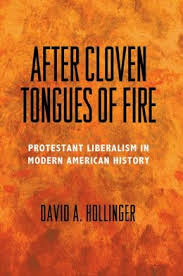
A Lament for Liberal Protestantism
James Wellman on American Religion

Driscoll on Patheos: My Request for an Apology
James Wellman on American Religion

More Blood at the Altar of the Gun
James Wellman on American Religion

James Wellman on American Religion
TRENDING AT PATHEOS Progressive Christian

Why Christians Have a Sacred Duty to Vote:...
The Bible offers strong support for the sacred duty to vote. Here...

What Being a Modern-Day Apostle Means to Me
In my last column, I discussed the ins and outs of modern-day...

Did Ancient China Once Worship the God of...
Across human history, a common thread weaves through the origins of the...

Love Your Neighbor – Including Earth-Kin: Lev. 19,...
God’s command to love your neighbor means acting in an ethical and...

Lead a Church Study of “Jesus and Lao...
Guest writer Jack Thomas (The Irreverent Reverend) reflects on leading his church...

Principles for Understanding the Apostolic Ministry Today
Whenever people discover that my formal ministry title is "apostle," as in...
view all Progressive Christian blogs
Ad-Free & Subscriber Log-In Subscription Support
- About Us
- 2026 Calendar
- Videos
- Podcasts
- Library of World Religions
- Faith In Media Tracker
- Advertise With Us
- Write for Us
- Privacy Policy
- Terms of Service
- Do Not Sell My Data
- Contact Us
- Radiant Digital
- Manage Newsletter Subscriptions
- Unsubscribe From Notifications
- Sitemap
Copyright 2008-2026, Patheos. All rights reserved.
Subscription Support Ad-Free & Subscriber Log-In
Follow Patheos