
BuddhistCatholicContemplativeEvangelicalGeneral ChristianHinduJewishLatter-day SaintMuslimNew VisionsProgressive Christian
Beliefs
- Buddhist
- Catholic
- Contemplative
- Evangelical
- General Christian
- Hindu
- Jewish
- Latter-day Saint
- More Voices
- Muslim
- New Visions
- Pagan
- Progressive Christian
Topics
- Religion News
- Food and Religion
- Sports and Religion
- Religious Art
- Religious Music and Entertainment
- Religious Events
- History and Religion
- Style and Religion
- Politics and Religion
- Women in Religion
- Recreation Outdoors and Religion
- Business Finance and Religion
- Careers Workplace and Religion
- Education and Religion
- Family Parenting and Religion
- Health Fitness and Religion
- Home and Religion
- Relationships and Religion
- Technology and Religion
- Travel and Religion
Columnists
- Buddhist Columnists
- Business Finance and Religion Columnists
- Careers Workplace and Religion Columnists
- Catholic Columnists
- Contemplative Columnists
- Education and Religion Columnists
- Evangelists Columnists
- Family Parenting and Religion Columnists
- General Christian Columnists
- Health Fitness and Religion Columnists
- Hindu Columnists
- History and Religion Columnists
- Home and Religion Columnists
- Jewish Columnists
- More Voices Columnists
- Latter Day Columnists
- Muslim Columnists
- New Visions Columnists
- Nonreligious Columnists
- Pagan Columnists
- Politics and Religion Columnists
- Progressive Columnists
- Recreation Outdoors and Religion Columnists
- Relationships and Religion Columnists
- Religion News Columnists
- Religious Art Columnists
- Religious Events Columnists
- Religious Music and Entertainment Columnists
- Sports and Religion Columnists
- Style and Religion Columnists
- Technology and Religion Columnists
- Travel and Religion Columnists
- Women in Religion Columnists
Resource Library
- 2026 Calendar
- Library of World Religions
- The 100 Most Holy Places on Earth
- Patheos Answers
- Podcasts
- Videos
- Faith Leaders Database
- Anglican Episcopalian
- Bahai
- Baptist
- Buddhism
- Christianity
- Confucianism
- Eastern Orthodoxy
- Hinduism
- Holiness and Pentecostal
- ISKCON
- Islam
- Judaism
- Lutheran
- Methodist
- The Church of Jesus Christ of Latter-day Saints
- New Age
- Paganism
- Presbytarian and Reformed
- Protestantism
- Religion Behind the Scenes
- Roman Catholic
- Scientology
- Shia Islam
- Sikhism
- Sufism
- Sunni Islam
- Taoism
- Zen
- See all religions
Research Tools
 Ad-Free & Subscriber Log-In Subscription Support
Ad-Free & Subscriber Log-In Subscription Support
Follow Patheos 

- Trending:
- Forgiveness
- |
- Marriage
- |
- Consciousness
- |
- Death Penalty
- |
- Election
- |
- Halloween
 Capitol and Cathedral
- Home
- Progressive Christian
- His business background should help Trump, but it won’t
His business background should help Trump, but it won’t
Last updated on: January 30, 2017 at 11:16 am by Jacob Lupfer
His business background should help Trump, but it won’t 2017-01-30T11:16:17-04:00 Jacob Lupfer
Patheos Explore the world's faith through different perspectives on religion and spirituality! Patheos has the views of the prevalent religions and spiritualities of the world.
Donald Trump’s offensive, unconventional campaign for the presidency was mostly about himself: his bluntness, his disregard for norms of behavior, and his masterful media manipulation. But the political novice never tired of promoting what he saw as his chief asset: He is a terrific businessman who built an amazing company by making great deals. And now, the man who wrote the book on deal-making is going to make deals on behalf of the American people.
The chief problem with his pitch, however, is that the government is not a business. While political liberals occasionally make this point to counter conservative business executives seeking high office, it more often arises in political debates about economic issues: deficit spending, privatization, and so on.
But while the federal government is very different than a corporation, it remains true that business acumen could be a helpful asset to political leaders. The president of the United States is, after all, chief executive. In our history, this is mostly an untested theory. Until now, we have never elected a president without government or military experience. However, a number of notable business executives have sought the Republican nomination in recent cycles. Plenty of leading Democratic Member of Congress have successful business backgrounds.
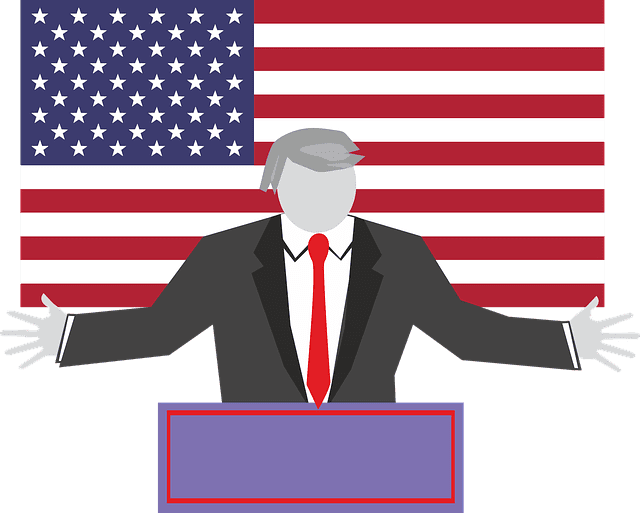
Image credit: Pixabay
Presidents get to the Oval Office through superior political skill. Once they arrive, they face tests of executive leadership that would overwhelm even the most adept senior manager. President Donald J. Trump succeeded where Mitt Romney failed: He convinced the American electorate to put a businessman in the White House.
Like Romney, President George W. Bush holds a MBA from Harvard. Bush campaigned in 2000 to be the “CEO president.” But Bush’s pedigree and successful tenure as governor of Texas, not his experience in the private sector, made his claims to executive ability believable. Considering how hard Bush leaned on his managerial skills during the campaign, it is worth noting how little he has cited his business experience as being consequential to his tenure in office, either during or after his presidency.
The remarkably close elections of Bush in 2000 and Trump in 2016 undermine any notion that Americans clamor to elect businessmen as chief executives. Both men owe their victories to the Electoral College, having lost the popular vote.
Of course, Trump’s presidential aptitude is limited by his lack of government experience, his feeble grasp of policy, and his well-known character flaws. Still, it remains true that seasoned executives may possess vital skills for presidential success that career politicians often lack. But there is a broad debate about whether and how business acumen translates to presidential effectiveness.
The modern presidency’s scope exceeds anything the framers of the Constitution could have imagined. The enumerated powers in Article II establish the president as a glorified clerk. Far from being an inherently powerful office, political scientist Richard Neusdadt argued that the presidency is an “empty vessel” that takes the shape of the person who fills it.
The framers expected Congress to be out of session and out of the capital most of the time. There were few executive offices or year-round government functionaries. Early presidents personally handled great volumes of paperwork. They paid aides out of their own salaries, and sometimes dipped into personal finances for official duties.
Eventually, Congress authorized funds for a small staff to assist presidents. But as late as Woodrow Wilson’s administration, there were so few staffers that First Lady Edith Wilson managed the last 17 months of his presidency when he fell ill. At the height of the New Deal, a special commission studied the White House’s staff needs and famously concluded, “The president needs help.” Congressional action formalized the Executive Office of the President in 1939, and our present system of White House offices, advisors, and staff began to evolve.
The modern presidency is a carefully orchestrated public relations event and an unending political campaign. But behind the scenes, presidents manage policy proposals, political challenges, consequential relationships, and a massive bureaucracy. Americans have often trusted the presidency to governors, who at least have some executive experience to accompany their political skill. Members of Congress like John F. Kennedy or President Barack Obama bring national policy knowledge and other skills to the office, but their chief concerns had been their constituents and donors. House Members and Senators do not necessarily bring strong managerial experience to the presidency.
Of course, even governors can be incompetent managers. President Jimmy Carter was an engineer by training and a notorious micromanager. The Atlantic’s James Fallows noted in 1979 that for the first months of his presidency, Carter insisted on personally reviewing requests to use the White House tennis court.
Trump campaigned on his ability to make great deals. Unfortunately for him, negotiation is not a skill set the president calls upon day-to-day. High-level appointees negotiate on the president’s behalf. Congressional leaders are more consequential deal makers than presidents.
The primary and most consequential occupation of presidents is to make decisions, not deals. For all the ups and downs of Obama’s presidency, the arc of his eight years in office can be traced from the most consequential decisions he made. President George W. Bush titled his memoir Decision Points. For all we know about Donald Trump, the truth is that we have barely witnessed his presidential decision making. So far, he is off to a terrible start. His temper, behavior, vindictiveness, or vanity will probably lead him to make bad decisions.
But it remains possible that Trump’s political instinct, media savvy, and business experience could combine to make him successful in some areas. Trump seems not to be bound by either ideology or party loyalty. This is a potential liability that may make him likelier to exhibit erratic, unpredictable, self-serving, or even self-destructive behavior. It also frees him to champion his brand of populist/nationalist politics.
In order to leverage his business success into effective presidential leadership, Trump will have to summon virtues of inquisitiveness, reflection, and self-criticism that seem to have eluded him through most of seven decades. He needs to know his weaknesses, learn from his errors, and delegate judiciously.
All presidents make mistakes. Not every decision is prudent and wise. To put it mildly, Trump has struggled to take responsibility and admit fault in the past. It is not usually in presidents’ interest to highlight their mistakes. But it is the duty of every decent, self-reflective person. Learning from mistakes is not just a good habit, it’s a feature of strong leadership.
In a news conference last Nov. 10, Obama was asked about the president-elect’s temperament. “This office has a habit of magnifying and pointing out” weaknesses and character flaws, the president observed. Obama also reflected on the presidency’s awesome information and administrative burden:
This may seem like a silly example, but I know myself well enough to know I can’t keep track of paper. I am not well-organized in that way. And so pretty quickly after I’m getting stacks of briefing books coming n every night, I say to myself, ‘I have got to figure out a system because I have bad filing, sorting, and organizing habits. And I have got to find some people who can help me keep track of this stuff.’ Now this seems trivial, but actually it ends up being a pretty big piece of business.
Trump should also consult the other four living ex-presidents. And, while he will enjoy his prerogative to put his unique stamp on his administration by making hundreds more appointments, Trump should strongly consider the advice and experience of staffers who have worked in the government before.
He may know the art of the deal, but to be an effective president, Mr. Trump will need to master the art and science of persuasion. Neustadt explained that when presidents use their formal powers, they act from a position of weakness. When they rely on their prestige and persuasion, they operate from a position of strength. This paradox may not come naturally to Trump. But presidential behavior is highly constrained by broader political and economic factors. People expect the president to do much more than their authority allows them to do. Trump will be successful only if he convince others (in Congress, the Executive Branch, the media, and elsewhere) that they act in their own best interests when they do what he wants.
The government is not a company. But a seasoned business executive’s skills could serve a president very well. I find Trump’s rhetoric and behavior appalling. His temperament and character may very well turn his presidency into a national disgrace. This would be a shame. A businessman could bring strong leadership, vision, and decision making to the presidential office.
Previous Post

January 27, 2017
Does it matter if Trump really thinks abortion is evil?
Next Post

January 31, 2017 How the ERLC became the premier evangelical public-policy organization
Browse Our Archives
Select a Category #Faith2016 Christian right Christianity Debates Democratic Convention Donald Trump GOP nominating contest Inauguration Media News roundup Personal Polls Religious freedom Republican Convention Uncategorized
Select a Month February 2018 December 2017 November 2017 October 2017 August 2017 July 2017 May 2017 April 2017 March 2017 February 2017 January 2017 December 2016 November 2016 October 2016 September 2016 August 2016 July 2016 June 2016
Follow Us!
TAKE THE
Religious Wisdom Quiz
Which parable features a man building on rock versus sand?
Select your answer to see how you score.
The Talents The Workers in the Vineyard The Sower The Wise and Foolish Builders
Related posts from Capitol and Cathedral
Sam Brownback, soon-to-be ambassador

Evangelicals and the Trump train

TRENDING AT PATHEOS Progressive Christian

Why Christians Have a Sacred Duty to Vote:...
The Bible offers strong support for the sacred duty to vote. Here...

What Being a Modern-Day Apostle Means to Me
In my last column, I discussed the ins and outs of modern-day...

Did Ancient China Once Worship the God of...
Across human history, a common thread weaves through the origins of the...

Love Your Neighbor – Including Earth-Kin: Lev. 19,...
God’s command to love your neighbor means acting in an ethical and...

Lead a Church Study of “Jesus and Lao...
Guest writer Jack Thomas (The Irreverent Reverend) reflects on leading his church...

Principles for Understanding the Apostolic Ministry Today
Whenever people discover that my formal ministry title is "apostle," as in...
view all Progressive Christian blogs
Ad-Free & Subscriber Log-In Subscription Support
- About Us
- 2026 Calendar
- Videos
- Podcasts
- Library of World Religions
- Faith In Media Tracker
- Advertise With Us
- Write for Us
- Privacy Policy
- Terms of Service
- Do Not Sell My Data
- Contact Us
- Radiant Digital
- Manage Newsletter Subscriptions
- Unsubscribe From Notifications
- Sitemap
Copyright 2008-2026, Patheos. All rights reserved.
Subscription Support Ad-Free & Subscriber Log-In
Follow Patheos