
BuddhistCatholicContemplativeEvangelicalGeneral ChristianHinduJewishLatter-day SaintMuslimNew VisionsProgressive Christian
Beliefs
- Buddhist
- Catholic
- Contemplative
- Evangelical
- General Christian
- Hindu
- Jewish
- Latter-day Saint
- More Voices
- Muslim
- New Visions
- Pagan
- Progressive Christian
Topics
- Religion News
- Food and Religion
- Sports and Religion
- Religious Art
- Religious Music and Entertainment
- Religious Events
- History and Religion
- Style and Religion
- Politics and Religion
- Women in Religion
- Recreation Outdoors and Religion
- Business Finance and Religion
- Careers Workplace and Religion
- Education and Religion
- Family Parenting and Religion
- Health Fitness and Religion
- Home and Religion
- Relationships and Religion
- Technology and Religion
- Travel and Religion
Columnists
- Buddhist Columnists
- Business Finance and Religion Columnists
- Careers Workplace and Religion Columnists
- Catholic Columnists
- Contemplative Columnists
- Education and Religion Columnists
- Evangelists Columnists
- Family Parenting and Religion Columnists
- General Christian Columnists
- Health Fitness and Religion Columnists
- Hindu Columnists
- History and Religion Columnists
- Home and Religion Columnists
- Jewish Columnists
- More Voices Columnists
- Latter Day Columnists
- Muslim Columnists
- New Visions Columnists
- Nonreligious Columnists
- Pagan Columnists
- Politics and Religion Columnists
- Progressive Columnists
- Recreation Outdoors and Religion Columnists
- Relationships and Religion Columnists
- Religion News Columnists
- Religious Art Columnists
- Religious Events Columnists
- Religious Music and Entertainment Columnists
- Sports and Religion Columnists
- Style and Religion Columnists
- Technology and Religion Columnists
- Travel and Religion Columnists
- Women in Religion Columnists
Resource Library
- 2026 Calendar
- Library of World Religions
- The 100 Most Holy Places on Earth
- Patheos Answers
- Podcasts
- Videos
- Faith Leaders Database
- Anglican Episcopalian
- Bahai
- Baptist
- Buddhism
- Christianity
- Confucianism
- Eastern Orthodoxy
- Hinduism
- Holiness and Pentecostal
- ISKCON
- Islam
- Judaism
- Lutheran
- Methodist
- The Church of Jesus Christ of Latter-day Saints
- New Age
- Paganism
- Presbytarian and Reformed
- Protestantism
- Religion Behind the Scenes
- Roman Catholic
- Scientology
- Shia Islam
- Sikhism
- Sufism
- Sunni Islam
- Taoism
- Zen
- See all religions
Research Tools
 Ad-Free & Subscriber Log-In Subscription Support
Ad-Free & Subscriber Log-In Subscription Support
Follow Patheos 

- Trending:
- Forgiveness
- |
- Marriage
- |
- Consciousness
- |
- Death Penalty
- |
- Election
- |
- Halloween

-
Tools
-
Support the Work
- Home
- Evangelical
- Recovering Moral Vision Between Shame and Shamelessness
Recovering Moral Vision Between Shame and Shamelessness
Last updated on: September 29, 2026 at 5:39 am by Brad Vaughn
Recovering Moral Vision Between Shame and Shamelessness 2026-04-14T14:52:15-07:00 Brad Vaughn
Patheos Explore the world's faith through different perspectives on religion and spirituality! Patheos has the views of the prevalent religions and spiritualities of the world.
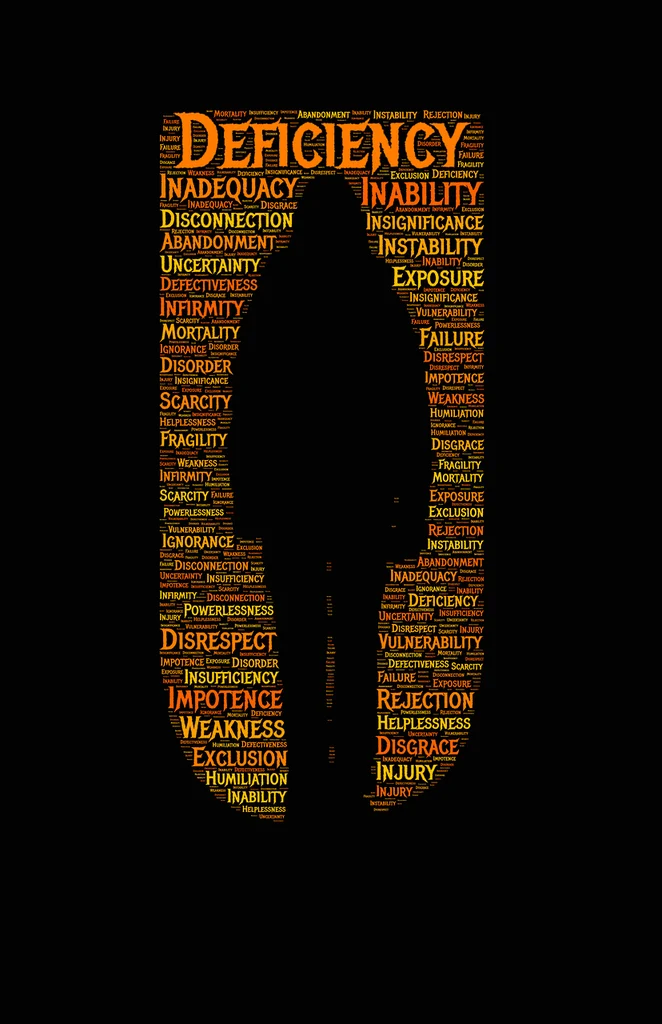
We tend to imagine moral growth as a kind of escape: getting out from under shame. This is for good reason. Many people are formed in environments where failure didn’t just mean, “you did something wrong,” but “you are something wrong.”
In those contexts, shame doesn’t function as a helpful signal; it becomes a totalizing force that shapes identity itself. So it makes sense that many instinctively move to reject shame altogether.
Credit: Public Domain
But what often happens is not a movement into health but a swing to the opposite extreme: from shame to shamelessness. That shift, while understandable, doesn’t actually resolve the problem. It simply inverts it.
When Shame Becomes a Moral System
To see why, we must understand what shame does when it becomes a governing moral system.
Shame collapses the distinction between action and identity. It fuses what you did with who you are. Once that fusion takes place, morality is no longer about pursuing the good; it becomes about avoiding exposure. You stop asking what is right and begin asking what will keep you from being seen as wrong. That shift may not always be conscious, but it quietly reshapes how you live.
This is why shame so often produces control, especially in relationships. When your sense of worth is unstable, every relational dynamic begins to carry more weight than it should.
Take something as ordinary— and as charged— as desire within marriage. Desire, in itself, is not the problem. But when desire is filtered through shame, it rarely remains simply desire. It becomes pressure. If affirmation, affection, or sex are withheld, it does not merely feel like absence; it feels like rejection. And rejection, in a shame-structured world, is not just painful; it is destabilizing. It threatens identity.
Under those conditions, desire becomes difficult to hold as a gift. It begins to function as something that must be secured. That is where control enters. It may not appear as overt domination. Often it is subtle, such as emotional pressure, strategic withdrawal, or quiet insistence. Yet, beneath it is a simple logic: “I cannot afford for this to be withheld from me.”
What might otherwise be a space of mutual love becomes an arena of scarcity. And once scarcity governs the relationship, even good things become distorted. Intimacy is no longer received; it is managed. Vulnerability is no longer an offering; it becomes a means of securing what feels necessary for survival.
The Turn to Shamelessness
Given all this, it’s not surprising that many people seek freedom by rejecting shame entirely. (To be clear, some forms of shame should be rejected.) Shame that attaches worth to performance, that is used to manipulate, or that silences rather than clarifies, is not morally healthy.
However, the cultural move often goes further than that. We do not simply reject toxic shame; we reject the category altogether. When that happens, something essential is lost.
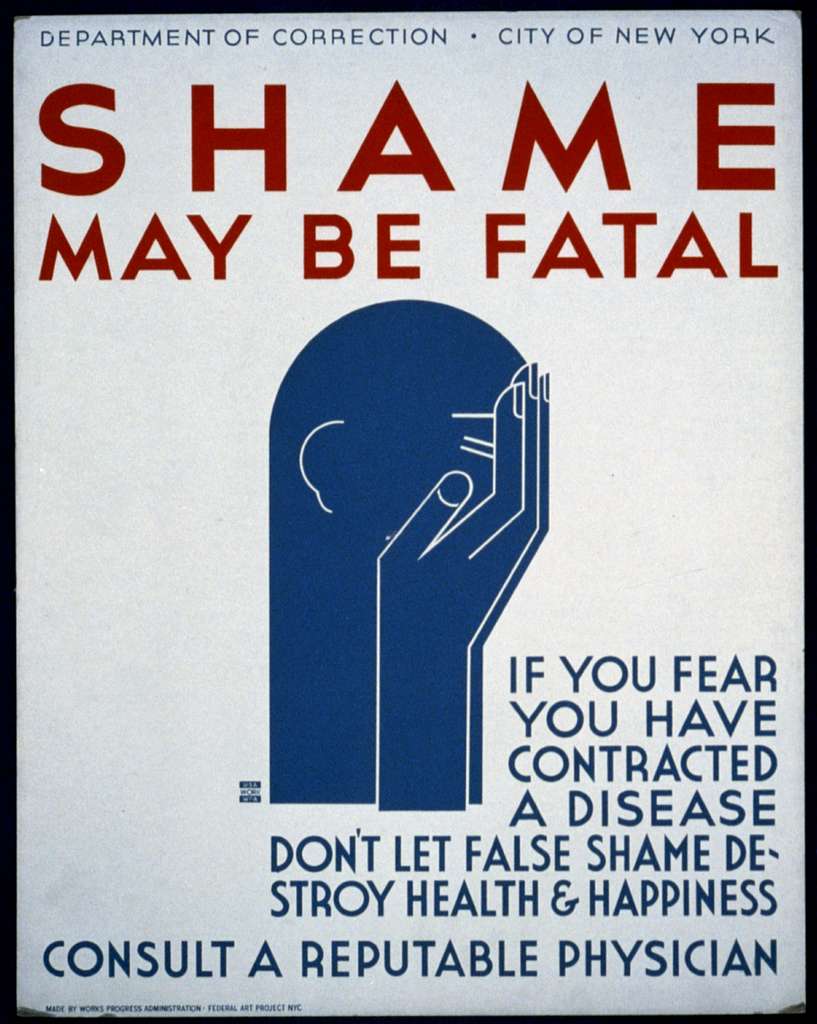
Shamelessness is often framed as liberation… the courage to live without apology, to reject imposed norms, to silence the inner critic. But when shamelessness becomes a moral posture rather than a corrective, it begins to erode our capacity for moral recognition. If nothing can meaningfully confront you, then nothing can meaningfully correct you. And if nothing can correct you, then growth becomes nearly impossible.
Credit: Public Domain
What looks like freedom can quietly become a form of insulation.
This has relational consequences as well. If shame leads to over-control, shamelessness leads to under-responsibility. You stop asking how your actions affect others in any deep or sustained way because the self has become the primary reference point. Others are no longer encountered as persons to be honored but as contexts in which you express yourself.
Why Both Extremes Fail
What is striking is that these two extremes (i.e., being governed by shame and rejecting it altogether) are not as different as they appear. Both absolutize the self. Shame says, “I am irredeemably bad,” while shamelessness says, “I am beyond judgment.”
In both cases, the self becomes the final court of appeal. One is crushed under judgment; the other is insulated from it. Still, neither is rightly ordered. Neither allows for a stable engagement with moral reality.
This is why the solution is not to choose one over the other but to recover the proper function of shame itself. Here, Aristotle’s insight is helpful, not because we need a simple compromise between two extremes but because we need to understand virtue as a matter of right ordering.
The goal is not less shame or more shame but rightly ordered shame.
What Shame Is For
At its best, shame is not an identity verdict; it is a relational signal. It does not say, “you are worthless,” but “something here is out of alignment.”
It points to a rupture, not just in abstract moral law but in the fabric of relational life. And because it is a signal rather than a sentence, it can be responded to. It creates the possibility of repentance precisely because it does not collapse the self into failure.
You can name what is wrong without concluding that you are beyond repair.
A helpful analogy here is physical pain. Pain is not something we seek, but it serves a necessary function. It alerts us when something is wrong. If pain becomes constant and overwhelming, it distorts our experience of reality. But if the capacity for pain disappears altogether, we are left exposed to damage we cannot perceive.
The problem, in both cases, is not pain itself but its miscalibration. Shame functions similarly. When it overwhelms, it becomes destructive. When it disappears, something essential is lost. The task is not elimination but recalibration.
Honor, Identity, and Stability
This is where questions of honor and identity become central. The deeper issue is not simply whether we feel shame but what our sense of worth is anchored to.
If honor is something we must secure (e.g., through performance, control, or the responses of others), shame will always either dominate us or be something we try to silence. But if honor is stable, if it is conferred rather than constantly negotiated, then shame no longer has to carry the weight of identity. It can do its proper work without becoming totalizing.
In theological terms, this is where grace becomes super significant, not merely important doctrinally. If worth is given rather than achieved, failure can be named without becoming final. One can confess without collapsing, be corrected without being annihilated, and face what is wrong without needing to defend oneself at every turn.
This changes the dynamics of relationships. When your worth is not constantly at stake, you no longer need to control others to secure it. You are freed to love rather than to manage.
Recalibrating the Moral Life
Living between shame and shamelessness, then, is not a static achievement but an ongoing process of recalibration. When shame arises, the question is not simply how to get rid of it, but what it is pointing to and whether it is telling the truth.
Sometimes it exposes something real. Sometimes it echoes something distorted. Discernment is required. And the absence of shame requires its own form of scrutiny. A lack of shame is not always a sign of health; sometimes it’s a sign that something has gone numb.
This is why character formation cannot be reduced to an individual project. We need others who can help us see what we cannot see. We need people who can name where shame is excessive and where it is absent. Left to ourselves, we tend to drift toward one extreme or the other. Yet, within a community oriented toward truth, grace, and mutual accountability, it becomes possible to learn a more stable way of being.
The Kind of Person You Become
In the end, the issue is not simply how we feel but who we become.
A person ruled by shame cannot love well because everything is too fragile. A person without shame cannot love well because nothing is taken seriously enough. To live well is to become the kind of person who can feel the weight of moral failure without being crushed by it and who can experience freedom without dissolving into indifference.
Previous Post

September 15, 2026
The Real Crisis Beneath America’s Social Crises (Part 2)
Next Post

October 13, 2026 No King forgets his crown. Why do we?
Recent Comments
"A thoughtful and thought-provoking article that raises important questions about the challenges facing the Western ..."
"to fit social or religious expectations. Especially women, who were expected to sacrifice everything to ..."
3 reasons you should not be ..."
"Powerful reminder short, sturdy truths can lose their weight if treated as slogans. The solas ..."
How Western Individualism Quietly Undermines the ..."
"If 'America’s deepest crisis is not merely political. It is moral and spiritual.' is in ..."
The Real Crisis Beneath America’s Social ..."
Browse Our Archives
Select a Category Atonement Biblical Theology Book Reviews China Chinese Church Chinese Culture Chinese Language Collectivism Contextualization Culture (General) Ecclesiology Evangelism Gospel Honor & Shame (Face) Interpretation/Exegesis Justification/Righteousness Missiology Mission Methods One Gospel for All Nations Other Practical Contextualization Reading Romans with Eastern Eyes Resources Romans Salvation (General) Saving God's Face Seeking God's Face The Cross in Context Theological Contextualization Theological Education Theology Uncategorized
Select a Month October 2026 September 2026 August 2026 July 2026 June 2026 May 2026 April 2026 March 2026 February 2026 January 2026 December 2025 November 2025 October 2025 September 2025 August 2025 July 2025 June 2025 May 2025 April 2025 March 2025 February 2025 January 2025 December 2024 November 2024 October 2024 September 2024 August 2024 July 2024 June 2024 May 2024 April 2024 March 2024 February 2024 January 2024 December 2023 November 2023 October 2023 September 2023 August 2023 July 2023 June 2023 May 2023 April 2023 March 2023 February 2023 January 2023 December 2022 November 2022 October 2022 September 2022 August 2022 July 2022 June 2022 May 2022 April 2022 March 2022 February 2022 January 2022 December 2021 November 2021 October 2021 September 2021 August 2021 July 2021 June 2021 May 2021 April 2021 March 2021 February 2021 January 2021 December 2020 November 2020 October 2020 September 2020 August 2020 July 2020 June 2020 May 2020 April 2020 March 2020 February 2020 January 2020 December 2019 November 2019 October 2019 September 2019 August 2019 July 2019 June 2019 May 2019 April 2019 March 2019 February 2019 January 2019 December 2018 November 2018 October 2018 September 2018 August 2018 July 2018 June 2018 May 2018 April 2018 March 2018 February 2018 January 2018 December 2017 November 2017 October 2017 September 2017 August 2017 July 2017 June 2017 May 2017 April 2017 March 2017 February 2017 January 2017 December 2016 November 2016 October 2016 September 2016 August 2016 July 2016 June 2016 May 2016 April 2016 March 2016 February 2016 January 2016 December 2015 November 2015 October 2015 September 2015 August 2015 July 2015 June 2015 May 2015 April 2015 March 2015 February 2015 January 2015 December 2014 November 2014 October 2014 September 2014 August 2014 July 2014 June 2014 May 2014 April 2014 March 2014 February 2014 January 2014 December 2013 November 2013 October 2013 September 2013 August 2013 July 2013 June 2013 May 2013 April 2013 March 2013 February 2013 January 2013 December 2012 November 2012
Follow Us!
TAKE THE
Religious Wisdom Quiz
What does "Pharisee" mean?
Select your answer to see how you score.
Holy one Teacher Separated one Healer
Books by This Author Books by Brad Vaughn
Related posts from Saving God's Face

No King forgets his crown. Why do we?

Refuge, Confession, and the End of Shame

Psalm 25 and the Fear of Being Put...

Glory, Violence, and the Gospel of Peace
TRENDING AT PATHEOS Evangelical

The Sermon on the Mount, Part I: Matthew...
The Sermon on the Mount, Part I (Matthew 4:12-5:12) St. Matthew moves...

What's up from Crossway: Reviewing some of their latest A few weeks...

Janie Learns the Way of the Cross: A...
Teaching children about Jesus' Passion can be challenging. Many parents and educators...

Looking For Good Catholic Writing - October 2026
He alone extends the heavens, and he walks upon the waves of...

In "Irreplaceable," our book on vocation and technology, Trevor Sutton and I...

I was strolling through the top floor of the brand new Parthenon...
view all Evangelical blogs
What Are Your Thoughts?leave a comment
Ad-Free & Subscriber Log-In Subscription Support
- About Us
- 2026 Calendar
- Videos
- Podcasts
- Library of World Religions
- Faith In Media Tracker
- Advertise With Us
- Write for Us
- Privacy Policy
- Terms of Service
- Do Not Sell My Data
- Contact Us
- Radiant Digital
- Manage Newsletter Subscriptions
- Unsubscribe From Notifications
- Sitemap
Copyright 2008-2026, Patheos. All rights reserved.
Subscription Support Ad-Free & Subscriber Log-In
Follow Patheos