
BuddhistCatholicContemplativeEvangelicalGeneral ChristianHinduJewishLatter-day SaintMuslimNew VisionsProgressive Christian
Beliefs
- Buddhist
- Catholic
- Contemplative
- Evangelical
- General Christian
- Hindu
- Jewish
- Latter-day Saint
- More Voices
- Muslim
- New Visions
- Pagan
- Progressive Christian
Topics
- Religion News
- Food and Religion
- Sports and Religion
- Religious Art
- Religious Music and Entertainment
- Religious Events
- History and Religion
- Style and Religion
- Politics and Religion
- Women in Religion
- Recreation Outdoors and Religion
- Business Finance and Religion
- Careers Workplace and Religion
- Education and Religion
- Family Parenting and Religion
- Health Fitness and Religion
- Home and Religion
- Relationships and Religion
- Technology and Religion
- Travel and Religion
Columnists
- Buddhist Columnists
- Business Finance and Religion Columnists
- Careers Workplace and Religion Columnists
- Catholic Columnists
- Contemplative Columnists
- Education and Religion Columnists
- Evangelists Columnists
- Family Parenting and Religion Columnists
- General Christian Columnists
- Health Fitness and Religion Columnists
- Hindu Columnists
- History and Religion Columnists
- Home and Religion Columnists
- Jewish Columnists
- More Voices Columnists
- Latter Day Columnists
- Muslim Columnists
- New Visions Columnists
- Nonreligious Columnists
- Pagan Columnists
- Politics and Religion Columnists
- Progressive Columnists
- Recreation Outdoors and Religion Columnists
- Relationships and Religion Columnists
- Religion News Columnists
- Religious Art Columnists
- Religious Events Columnists
- Religious Music and Entertainment Columnists
- Sports and Religion Columnists
- Style and Religion Columnists
- Technology and Religion Columnists
- Travel and Religion Columnists
- Women in Religion Columnists
Resource Library
- 2026 Calendar
- Library of World Religions
- The 100 Most Holy Places on Earth
- Patheos Answers
- Podcasts
- Videos
- Faith Leaders Database
- Anglican Episcopalian
- Bahai
- Baptist
- Buddhism
- Christianity
- Confucianism
- Eastern Orthodoxy
- Hinduism
- Holiness and Pentecostal
- ISKCON
- Islam
- Judaism
- Lutheran
- Methodist
- The Church of Jesus Christ of Latter-day Saints
- New Age
- Paganism
- Presbytarian and Reformed
- Protestantism
- Religion Behind the Scenes
- Roman Catholic
- Scientology
- Shia Islam
- Sikhism
- Sufism
- Sunni Islam
- Taoism
- Zen
- See all religions
Research Tools
 Ad-Free & Subscriber Log-In Subscription Support
Ad-Free & Subscriber Log-In Subscription Support
Follow Patheos 

- Trending:
- Forgiveness
- |
- Marriage
- |
- Consciousness
- |
- Death Penalty
- |
- Election
- |
- Halloween

-
Tools
-
Support the Work
- Home
- Evangelical
- Relationships and Religion
- Psalm 25 and the Fear of Being Put to Shame (Part 1)
Psalm 25 and the Fear of Being Put to Shame (Part 1)
Last updated on: August 4, 2026 at 3:46 am by Brad Vaughn
Psalm 25 and the Fear of Being Put to Shame (Part 1) 2026-03-19T08:04:45-07:00 Brad Vaughn
Patheos Explore the world's faith through different perspectives on religion and spirituality! Patheos has the views of the prevalent religions and spiritualities of the world.
Psalm 25 is a poignant prayer for people who live with the fear of shame. That fear takes many forms. Sometimes it stems from guilt over real sin. Sometimes it appears as imposter syndrome, social anxiety, or the lingering power of childhood wounds.
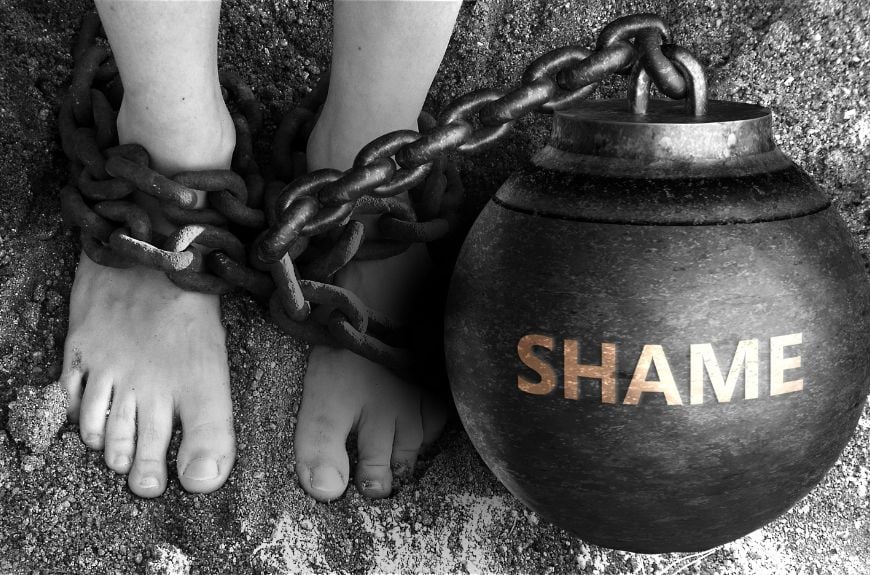
Credit: Creative Commons CC-NC 4.0
In each case, the underlying concern is similar: I will be exposed as deficient, rejected, dismissed, or unworthy.
The Problem We Don’t Name Clearly
Psalm 25 doesn’t treat that fear lightly. It gives it language. More importantly, it gives it direction.
One of the most striking features of the psalm is how often the psalmist returns to the issue of shame.
“O my God, in you I trust; let me not be put to shame” (v. 2).
“Indeed, none who wait for you shall be put to shame” (v. 3).
“Let me not be put to shame, for I take refuge in you” (v. 20).
Shame is not incidental here. It’s one of the psalm’s controlling concerns.
Yet the psalm is equally striking for what it does not do. The writer does not respond to shame by protecting his image, managing perceptions, or justifying himself. He does not hide. He does not spin. Instead, he turns toward God in dependence.
The psalm suggests that the path out of shame is not the construction of a stronger self-image but the practice of deeper trust in the Lord
The Psalm’s Moral Logic
Psalm 25 contrasts two ways of living.
On the one hand are those who wait for the Lord. On the other are those who are “wantonly treacherous” (v. 3). This is not simply a contrast between anxious people and peaceful people. It is a contrast between two moral strategies for dealing with vulnerability.
The treacherous attempt to secure themselves through manipulation, deceit, and control. They do not wait on God because waiting requires surrender. Instead, they grasp for outcomes and use others as a means of self-protection. They try to avoid shame by mastering circumstances.
Yet, the psalm insists that this strategy is self-defeating. In the end, shame belongs not to those who wait for the Lord but to those who disregard his ways.
That is why verses 4–5 follow so naturally:
Make me to know your ways, O LORD;
teach me your paths.
Lead me in your truth and teach me,
for you are the God of my salvation;
for you I wait all the day long.
If those who wait for the Lord will not be put to shame, then the central question becomes: How does one actually wait?
The answer is that we can only wait rightly if we know God’s ways.
Waiting is not passive. It is formed dependence. It requires that our instincts be reshaped so that we no longer default to self-protective treachery. To wait on God is to live according to his truth rather than according to fear.
Knowing God’s Ways vs. Treacherous Living
Psalm 25 implicitly links two ideas:
- Waiting on the Lord
- Knowing his ways
And it sets both against treachery.
This matters because fear of shame often pushes people toward shortcuts. When we feel exposed, we are tempted to:
- manage impressions
- conceal weakness
- blame others
- secure ourselves at someone else’s expense
In other words, we become subtly treacherous.
The psalm answers that temptation directly: do not become treacherous in order to escape shame. Learn God’s ways instead.
You cannot wait on God if you do not know how he works. And if you do not know his ways, you will default to your own, which, under pressure, tend toward control rather than trust.
Shame Does Not Lead the Psalmist to Hide
One of the most psychologically perceptive features of Psalm 25 is that the desire not to be ashamed does not lead David to hide his sin. It leads him to confess it.
“Remember not the sins of my youth” (v. 7).
“Pardon my guilt, for it is great” (v. 11).
“Forgive all my sins” (v. 18).
This runs against instinct. Shame usually produces concealment. When people feel exposed, they minimize, excuse, or reinterpret. But the psalmist moves in the opposite direction.
Why?
Because he knows that unresolved guilt cannot be healed by denial. If shame is ultimately answered in God’s presence, then the truth must be told there.
The desire not to be put to shame becomes a reason to confess, not a reason to hide.
A Theology of Memory
This is why remembrance becomes so central in the psalm.
The psalmist asks God to remember his mercy and steadfast love (v. 6), while asking him not to remember his sins (v. 7). He is appealing to God’s character over against his own failure.
His hope is not that his sins are small. It is that God’s mercy is greater.
This is crucial. The resolution of shame does not come from rewriting our past but from placing our past within the larger reality of God’s covenant faithfulness.
Where This Leaves Us
Psalm 25 reframes the entire problem of shame.
The issue is not merely psychological. It is theological and moral. When faced with the possibility of shame, we will either:
- grasp for control (treachery), or
- entrust ourselves to God (waiting)
That choice will shape everything else… how we think, how we act and how we deal with our own sin.
Relationships and Religion
Previous Post

July 21, 2026
Independent Thinking Isn’t What You Think
Next Post
August 18, 2026 Refuge, Confession, and the End of Shame
Recent Comments
"A thoughtful and thought-provoking article that raises important questions about the challenges facing the Western ..."
"to fit social or religious expectations. Especially women, who were expected to sacrifice everything to ..."
3 reasons you should not be ..."
"Powerful reminder short, sturdy truths can lose their weight if treated as slogans. The solas ..."
How Western Individualism Quietly Undermines the ..."
"If 'America’s deepest crisis is not merely political. It is moral and spiritual.' is in ..."
The Real Crisis Beneath America’s Social ..."
Browse Our Archives
Select a Category Atonement Biblical Theology Book Reviews China Chinese Church Chinese Culture Chinese Language Collectivism Contextualization Culture (General) Ecclesiology Evangelism Gospel Honor & Shame (Face) Interpretation/Exegesis Justification/Righteousness Missiology Mission Methods One Gospel for All Nations Other Practical Contextualization Reading Romans with Eastern Eyes Resources Romans Salvation (General) Saving God's Face Seeking God's Face The Cross in Context Theological Contextualization Theological Education Theology Uncategorized
Select a Month October 2026 September 2026 August 2026 July 2026 June 2026 May 2026 April 2026 March 2026 February 2026 January 2026 December 2025 November 2025 October 2025 September 2025 August 2025 July 2025 June 2025 May 2025 April 2025 March 2025 February 2025 January 2025 December 2024 November 2024 October 2024 September 2024 August 2024 July 2024 June 2024 May 2024 April 2024 March 2024 February 2024 January 2024 December 2023 November 2023 October 2023 September 2023 August 2023 July 2023 June 2023 May 2023 April 2023 March 2023 February 2023 January 2023 December 2022 November 2022 October 2022 September 2022 August 2022 July 2022 June 2022 May 2022 April 2022 March 2022 February 2022 January 2022 December 2021 November 2021 October 2021 September 2021 August 2021 July 2021 June 2021 May 2021 April 2021 March 2021 February 2021 January 2021 December 2020 November 2020 October 2020 September 2020 August 2020 July 2020 June 2020 May 2020 April 2020 March 2020 February 2020 January 2020 December 2019 November 2019 October 2019 September 2019 August 2019 July 2019 June 2019 May 2019 April 2019 March 2019 February 2019 January 2019 December 2018 November 2018 October 2018 September 2018 August 2018 July 2018 June 2018 May 2018 April 2018 March 2018 February 2018 January 2018 December 2017 November 2017 October 2017 September 2017 August 2017 July 2017 June 2017 May 2017 April 2017 March 2017 February 2017 January 2017 December 2016 November 2016 October 2016 September 2016 August 2016 July 2016 June 2016 May 2016 April 2016 March 2016 February 2016 January 2016 December 2015 November 2015 October 2015 September 2015 August 2015 July 2015 June 2015 May 2015 April 2015 March 2015 February 2015 January 2015 December 2014 November 2014 October 2014 September 2014 August 2014 July 2014 June 2014 May 2014 April 2014 March 2014 February 2014 January 2014 December 2013 November 2013 October 2013 September 2013 August 2013 July 2013 June 2013 May 2013 April 2013 March 2013 February 2013 January 2013 December 2012 November 2012
Follow Us!
TAKE THE
Religious Wisdom Quiz
What sign does Paul give in 2 Thessalonians as his authentic mark in every letter?
Select your answer to see how you score.
His signature His greeting in his own handwriting A special blessing His seal
Books by This Author Books by Brad Vaughn
Related posts from Saving God's Face

No King forgets his crown. Why do we?

Recovering Moral Vision Between Shame and Shamelessness

Refuge, Confession, and the End of Shame
How Biblical Sacrifices Vindicate God’s Glory
TRENDING AT PATHEOS Evangelical

The First Eucharistic Controversy: Christ’s Real Presence
For Catholics, the Eucharist is the source and summit of the Christian...

How to Make a Decision When You Can't...
Main point: It’s much more valuable to stay close to God so...

Archdiocese Hosts Military Marriage Retreat in Germany
RASTATT, Germany — The transient military lifestyle, with its frequent deployments and...

Nearly every morning, I make the drive to Detroit with my high-school-age...

The Real AI Story Is Adoption Without Trust
Artificial intelligence has crossed a political threshold. It is no longer a...

A new article, written by Jeff Lindsay and Gale L. Pooley,...
view all Evangelical blogs
What Are Your Thoughts?leave a comment
Ad-Free & Subscriber Log-In Subscription Support
- About Us
- 2026 Calendar
- Videos
- Podcasts
- Library of World Religions
- Faith In Media Tracker
- Advertise With Us
- Write for Us
- Privacy Policy
- Terms of Service
- Do Not Sell My Data
- Contact Us
- Radiant Digital
- Manage Newsletter Subscriptions
- Unsubscribe From Notifications
- Sitemap
Copyright 2008-2026, Patheos. All rights reserved.
Subscription Support Ad-Free & Subscriber Log-In
Follow Patheos