
BuddhistCatholicContemplativeEvangelicalGeneral ChristianHinduJewishLatter-day SaintMuslimNew VisionsProgressive Christian
Beliefs
- Buddhist
- Catholic
- Contemplative
- Evangelical
- General Christian
- Hindu
- Jewish
- Latter-day Saint
- More Voices
- Muslim
- New Visions
- Pagan
- Progressive Christian
Topics
- Religion News
- Food and Religion
- Sports and Religion
- Religious Art
- Religious Music and Entertainment
- Religious Events
- History and Religion
- Style and Religion
- Politics and Religion
- Women in Religion
- Recreation Outdoors and Religion
- Business Finance and Religion
- Careers Workplace and Religion
- Education and Religion
- Family Parenting and Religion
- Health Fitness and Religion
- Home and Religion
- Relationships and Religion
- Technology and Religion
- Travel and Religion
Columnists
- Buddhist Columnists
- Business Finance and Religion Columnists
- Careers Workplace and Religion Columnists
- Catholic Columnists
- Contemplative Columnists
- Education and Religion Columnists
- Evangelists Columnists
- Family Parenting and Religion Columnists
- General Christian Columnists
- Health Fitness and Religion Columnists
- Hindu Columnists
- History and Religion Columnists
- Home and Religion Columnists
- Jewish Columnists
- More Voices Columnists
- Latter Day Columnists
- Muslim Columnists
- New Visions Columnists
- Nonreligious Columnists
- Pagan Columnists
- Politics and Religion Columnists
- Progressive Columnists
- Recreation Outdoors and Religion Columnists
- Relationships and Religion Columnists
- Religion News Columnists
- Religious Art Columnists
- Religious Events Columnists
- Religious Music and Entertainment Columnists
- Sports and Religion Columnists
- Style and Religion Columnists
- Technology and Religion Columnists
- Travel and Religion Columnists
- Women in Religion Columnists
Resource Library
- 2026 Calendar
- Library of World Religions
- The 100 Most Holy Places on Earth
- Patheos Answers
- Podcasts
- Videos
- Faith Leaders Database
- Anglican Episcopalian
- Bahai
- Baptist
- Buddhism
- Christianity
- Confucianism
- Eastern Orthodoxy
- Hinduism
- Holiness and Pentecostal
- ISKCON
- Islam
- Judaism
- Lutheran
- Methodist
- The Church of Jesus Christ of Latter-day Saints
- New Age
- Paganism
- Presbytarian and Reformed
- Protestantism
- Religion Behind the Scenes
- Roman Catholic
- Scientology
- Shia Islam
- Sikhism
- Sufism
- Sunni Islam
- Taoism
- Zen
- See all religions
Research Tools
 Ad-Free & Subscriber Log-In Subscription Support
Ad-Free & Subscriber Log-In Subscription Support
Follow Patheos 

- Trending:
- Forgiveness
- |
- Marriage
- |
- Consciousness
- |
- Death Penalty
- |
- Election
- |
- Halloween

-
Tools
-
Support the Work
- Home
- Evangelical
- History and Religion
- How Biblical Sacrifices Vindicate God’s Glory
How Biblical Sacrifices Vindicate God’s Glory
Last updated on: June 23, 2026 at 5:00 am by Brad Vaughn
How Biblical Sacrifices Vindicate God’s Glory 2026-03-15T13:23:18-07:00 Brad Vaughn
Patheos Explore the world's faith through different perspectives on religion and spirituality! Patheos has the views of the prevalent religions and spiritualities of the world.
Public Domain CC 1.0
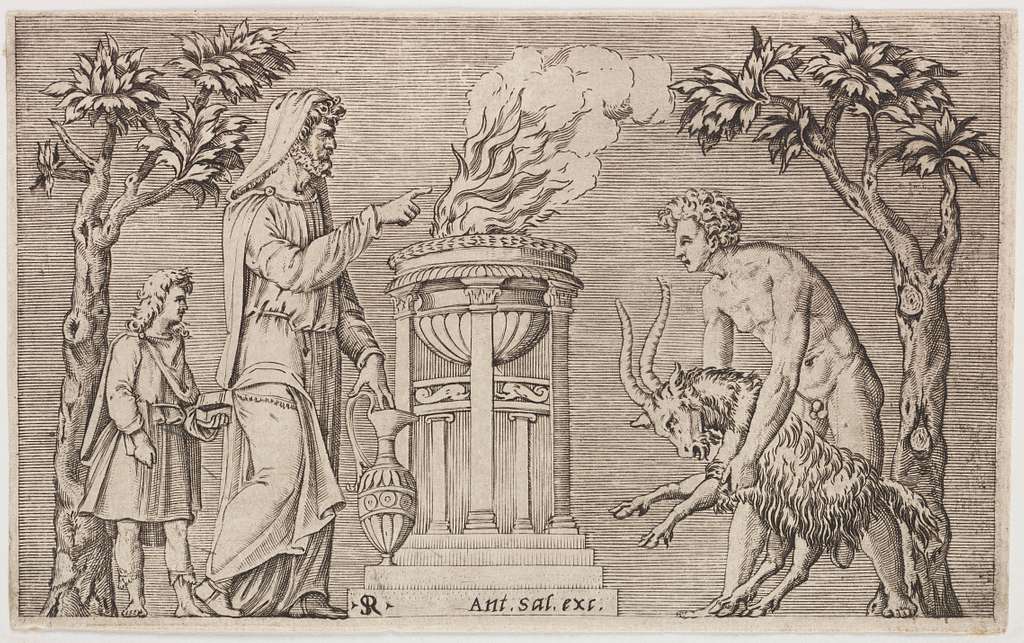
What if we’ve fundamentally misunderstood the purpose of biblical sacrifice? While popular theology focuses on appeasing divine wrath through substitutionary punishment, I argue in chapter 5 of my book The Cross in Context that sacrifices work by accomplishing something far more profound: vindicating God’s honor.
Sin doesn’t merely break divine law; it spits in God’s face, defaming his name and treating the Creator King as common. Sacrifices serve as honor-giving gifts that acknowledge God’s unique worth while also removing the sinner’s shame through divine acceptance.
Holiness as Honor Language
My argument begins with a crucial insight: holiness fundamentally expresses unique honor. When biblical writers speak of sanctifying people, places, or objects, they’re describing the bestowal of distinctive worth and recognition. We honor what we regard as holy, and we worship God precisely because we recognize his unique holiness.
This honor-dimension of holiness appears throughout Scripture. When God responds to Nadab and Abihu’s sin in Leviticus 10:3, he declares: “Among those who are near me I will be sanctified, and before all the people I will be glorified.” To be sanctified and to be glorified are parallel expressions—sanctification means giving God the unique honor he deserves.
Isaiah’s vision reinforces this connection: “Holy, holy, holy is the Lord of hosts; the whole earth is full of his glory!” (Isaiah 6:3). Holiness and glory intertwine because holiness inherently carries honor connotations. When we set something apart as holy, we acknowledge its supreme value and treat it with the respect it deserves.
The Honor-Shame Dynamic in Biblical Purity
Throughout the biblical canon, writers use honor-shame language to explain concepts like holiness, sanctification, and purity. This pattern proves especially significant in passages dealing with sacrifice and atonement.
In Ezekiel 36, God explains that Israel’s unfaithfulness has “profaned” his holy name among the nations. His solution involves sanctifying himself—not making himself objectively holier but displaying the holiness that makes him worthy of honor. He will accomplish this by cleansing his people from their uncleanness and shame, thus restoring his reputation among the nations.
Public Domain CC 1.0
The New Testament continues this pattern. Hebrews 2:10-11 describes salvation as God “bringing many children to glory,” which verse 11 interprets as sanctification. Paul uses similar language in Romans 1, where failing to honor God leads to impurity and “dishonorable passions,” while 2 Timothy 2:20-21 explicitly equates honor with holiness.
Peter extensively weaves honor-shame language throughout his discussion of holiness in 1 Peter 1:15-2:17. After quoting Leviticus 11:44 (“be holy, for I am holy”), he develops his argument using temple-sacrificial imagery while increasingly employing honor-shame terminology. Those who are holy will “not be put to shame” but will receive honor as they live honorably for God’s glory.
How Sacrifices Vindicate God’s Honor
In the Pentateuch, I demonstrate that sacrifice’s primary function is to sanctify (thus honor) God. This sanctification results in atonement being made. The sequence proves crucial: first, a sacrifice is offered in ways that honor God, then atonement follows.
Leviticus 9:6-7 illustrates this pattern. Moses commands Aaron to offer sacrifices “so that the glory of the Lord may appear to you” and to “make atonement for yourself and for the people.” The result appears in verse 23—God’s glory indeed appears after the sacrifices are properly offered.
When Aaron’s sons Nadab and Abihu fail to honor God through their inappropriate fire, God’s response clarifies sacrifice’s fundamental purpose: “I will be sanctified” (glorified) among those who draw near (Leviticus 10:3). The surrounding context immediately explains what sanctifying God requires—distinguishing “between the holy and the common, and between the unclean and the clean” (10:10).
Negative Evidence: Shameful Sacrifices
The honor-function of sacrifice becomes especially clear when we examine what happens when sacrifices fail to honor God. Malachi 1:6-8 provides vivid negative evidence:
“A son honors his father, and a servant his master. If then I am a father, where is my honor? And if I am a master, where is my fear?” says the Lord of hosts to you, O priests, who despise my name. But you say, “How have we despised your name?” By offering polluted food upon my altar… When you offer blind animals in sacrifice, is that not evil?”
The priests dishonor God by offering shameful sacrifices, which amounts to polluting God himself! How we give sacrifices represents how we regard God. Offering polluted food equals polluting the divine recipient.
First Samuel 2:29-30 confirms this interpretation. Eli honors his sons above God by allowing them to scorn the sacrifices, prompting God’s declaration: “those who honor me I will honor, and those who despise me shall be treated with contempt.” Sacrifices are meant to express the honor due to God.
Sacrifices Remove Shame and Restore Honor
Beyond vindicating God’s honor, sacrifices also address the worshipper’s shame problem. When King Uzziah inappropriately attempts to burn incense, the priests rebuke him by explaining that proper sacrificing should “bring you honor from the Lord God” (2 Chronicles 26:18).
Ezekiel 16:62-63 provides direct evidence that atoning sacrifices address objective shame: “you shall know that I am the Lord, that you may remember and be confounded and never open your mouth again because of your shame, when I atone for you for all that you have done.” God atones for their shameful actions, thus removing their legitimate reason for shame.
The logic extends to ritual impurity as well:
- Uncleanness causes shame and exclusion
- Sacrifices solve uncleanness
- Therefore, sacrifices solve shame problems
Multiple passages demonstrate that uncleanness can indeed be shameful, creating social exclusion and separation from the community. Since sacrifices address uncleanness through atonement, they simultaneously address the shame that accompanies ritual defilement.
A False Dichotomy Resolved
Some might object that we should distinguish between gifts (which glorify God) and atoning sacrifices (which serve as compensation rather than gifts). I argue this creates a false biblical dichotomy. Scripture demonstrates that sacrifices can simultaneously function as gifts and compensation.
Jesus himself calls the obligatory sacrifice for cleansing leprosy a “gift” (Matthew 8:4), even though Leviticus 14 presents it as required compensation for ritual impurity. In biblical thinking, even obligatory sacrifices can express honor to the recipient when offered with proper attitudes and motivations.
Contemporary Applications
This honor-shame understanding of sacrifice opens fresh possibilities for contextualizing the gospel in global cultures where face, reputation, and social honor remain central concerns. Rather than forcing Western legal metaphors onto biblical texts, recognizing atonement’s honor-shame dimensions enables more culturally resonant communication.
In missions contexts, I can explain that Jesus serves as the ultimate “chicken” under whose feathers we hide from shame, drawing from African proverbs that my colleague Jay Moon documents. Such analogies help people grasp how Christ’s sacrifice simultaneously honors God and removes our legitimate reasons for shame.
This perspective also transforms Christian worship and ethics. The sacrificial system overturns conventional honor expectations—through sacrificial death, God receives glory while shame is removed. This calls believers to reevaluate what we consider praiseworthy, making repentance, service, and humility means of glorifying God and receiving honor from our Creator King.
Integration with Other Atonement Theories
Rather than replacing other theories, this honor-shame framework provides common ground for various atonement perspectives. Everyone can agree that Old Testament sacrifices should glorify God, even if they disagree about the specific mechanisms involved.
Those who hold penal substitutionary views can affirm that Christ’s sacrifice upholds God’s honor, perhaps by satisfying justice in ways that demonstrate divine righteousness. Others might prefer more positive formulations— that sacrificial death straightforwardly demonstrates repentance and allegiance, or that offerings sanctify God by setting him apart as uniquely worthy of glory.
The Heart of Biblical Atonement
My analysis reveals that biblical sacrifice functions within a comprehensive honor-shame framework that spans both Testaments. Offerings work by restoring God’s defamed honor while removing human shame through divine acceptance. This view draws from the entire biblical canon and naturally integrates multiple atonement metaphors.
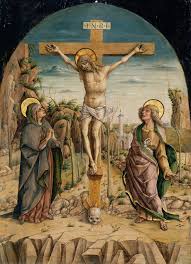
As a reconciliation offering, Christ bears our shame by giving God the glory due his name. He serves as the ultimate honor-giving gift that acknowledges the Creator’s unique worth while providing the means for shameful sinners to be accepted into the presence of the divine King.
Understanding sacrifice through honor-shame lenses doesn’t diminish the seriousness of sin or the necessity of Christ’s death. Rather, it reveals why sin matters so deeply (it dishonors God) and why atonement proves so costly (restoring divine honor requires the ultimate sacrifice). This framework prepares us to explore how biblical writers use purification, burden-bearing, and economic metaphors to explain the multifaceted richness of Christ’s atoning work.
History and Religion
Previous Post

June 9, 2026
What Exactly Does Christ Purify?
Next Post

July 7, 2026 How Technique Undermines Mission
Recent Comments
"A thoughtful and thought-provoking article that raises important questions about the challenges facing the Western ..."
"to fit social or religious expectations. Especially women, who were expected to sacrifice everything to ..."
3 reasons you should not be ..."
"Powerful reminder short, sturdy truths can lose their weight if treated as slogans. The solas ..."
How Western Individualism Quietly Undermines the ..."
"If 'America’s deepest crisis is not merely political. It is moral and spiritual.' is in ..."
The Real Crisis Beneath America’s Social ..."
Browse Our Archives
Select a Category Atonement Biblical Theology Book Reviews China Chinese Church Chinese Culture Chinese Language Collectivism Contextualization Culture (General) Ecclesiology Evangelism Gospel Honor & Shame (Face) Interpretation/Exegesis Justification/Righteousness Missiology Mission Methods One Gospel for All Nations Other Practical Contextualization Reading Romans with Eastern Eyes Resources Romans Salvation (General) Saving God's Face Seeking God's Face The Cross in Context Theological Contextualization Theological Education Theology Uncategorized
Select a Month October 2026 September 2026 August 2026 July 2026 June 2026 May 2026 April 2026 March 2026 February 2026 January 2026 December 2025 November 2025 October 2025 September 2025 August 2025 July 2025 June 2025 May 2025 April 2025 March 2025 February 2025 January 2025 December 2024 November 2024 October 2024 September 2024 August 2024 July 2024 June 2024 May 2024 April 2024 March 2024 February 2024 January 2024 December 2023 November 2023 October 2023 September 2023 August 2023 July 2023 June 2023 May 2023 April 2023 March 2023 February 2023 January 2023 December 2022 November 2022 October 2022 September 2022 August 2022 July 2022 June 2022 May 2022 April 2022 March 2022 February 2022 January 2022 December 2021 November 2021 October 2021 September 2021 August 2021 July 2021 June 2021 May 2021 April 2021 March 2021 February 2021 January 2021 December 2020 November 2020 October 2020 September 2020 August 2020 July 2020 June 2020 May 2020 April 2020 March 2020 February 2020 January 2020 December 2019 November 2019 October 2019 September 2019 August 2019 July 2019 June 2019 May 2019 April 2019 March 2019 February 2019 January 2019 December 2018 November 2018 October 2018 September 2018 August 2018 July 2018 June 2018 May 2018 April 2018 March 2018 February 2018 January 2018 December 2017 November 2017 October 2017 September 2017 August 2017 July 2017 June 2017 May 2017 April 2017 March 2017 February 2017 January 2017 December 2016 November 2016 October 2016 September 2016 August 2016 July 2016 June 2016 May 2016 April 2016 March 2016 February 2016 January 2016 December 2015 November 2015 October 2015 September 2015 August 2015 July 2015 June 2015 May 2015 April 2015 March 2015 February 2015 January 2015 December 2014 November 2014 October 2014 September 2014 August 2014 July 2014 June 2014 May 2014 April 2014 March 2014 February 2014 January 2014 December 2013 November 2013 October 2013 September 2013 August 2013 July 2013 June 2013 May 2013 April 2013 March 2013 February 2013 January 2013 December 2012 November 2012
Follow Us!
TAKE THE
Religious Wisdom Quiz
What worldwide Christian youth movement was started by Robert Baden-Powell with a focus on outdoor activities and morality?
Select your answer to see how you score.
Wesley Guild Sisters of Charity Boy Scouts Young Life
Books by This Author Books by Brad Vaughn
Related posts from Saving God's Face

No King forgets his crown. Why do we?

Refuge, Confession, and the End of Shame

Psalm 25 and the Fear of Being Put...

What Exactly Does Christ Purify?
TRENDING AT PATHEOS Evangelical

Nearly every morning, I make the drive to Detroit with my high-school-age...

The Real AI Story Is Adoption Without Trust
Artificial intelligence has crossed a political threshold. It is no longer a...

A new article, written by Jeff Lindsay and Gale L. Pooley,...

Swimfan: Forgotten Aughts Pleasures
This is a recovery effort. In 2002, My Big Fat Greek Wedding...

Top Three Anti-Catholic Lies About Catholicism
This is my initial transcript for the video, "THE 3 WORST...

Pope Leo Celebrates Mass for Nurses & Docs...
I don't have any idea how he did it, but Pope Leo...
view all Evangelical blogs
What Are Your Thoughts?leave a comment
Ad-Free & Subscriber Log-In Subscription Support
- About Us
- 2026 Calendar
- Videos
- Podcasts
- Library of World Religions
- Faith In Media Tracker
- Advertise With Us
- Write for Us
- Privacy Policy
- Terms of Service
- Do Not Sell My Data
- Contact Us
- Radiant Digital
- Manage Newsletter Subscriptions
- Unsubscribe From Notifications
- Sitemap
Copyright 2008-2026, Patheos. All rights reserved.
Subscription Support Ad-Free & Subscriber Log-In
Follow Patheos