
BuddhistCatholicContemplativeEvangelicalGeneral ChristianHinduJewishLatter-day SaintMuslimNew VisionsProgressive Christian
Beliefs
- Buddhist
- Catholic
- Contemplative
- Evangelical
- General Christian
- Hindu
- Jewish
- Latter-day Saint
- More Voices
- Muslim
- New Visions
- Pagan
- Progressive Christian
Topics
- Religion News
- Food and Religion
- Sports and Religion
- Religious Art
- Religious Music and Entertainment
- Religious Events
- History and Religion
- Style and Religion
- Politics and Religion
- Women in Religion
- Recreation Outdoors and Religion
- Business Finance and Religion
- Careers Workplace and Religion
- Education and Religion
- Family Parenting and Religion
- Health Fitness and Religion
- Home and Religion
- Relationships and Religion
- Technology and Religion
- Travel and Religion
Columnists
- Buddhist Columnists
- Business Finance and Religion Columnists
- Careers Workplace and Religion Columnists
- Catholic Columnists
- Contemplative Columnists
- Education and Religion Columnists
- Evangelists Columnists
- Family Parenting and Religion Columnists
- General Christian Columnists
- Health Fitness and Religion Columnists
- Hindu Columnists
- History and Religion Columnists
- Home and Religion Columnists
- Jewish Columnists
- More Voices Columnists
- Latter Day Columnists
- Muslim Columnists
- New Visions Columnists
- Nonreligious Columnists
- Pagan Columnists
- Politics and Religion Columnists
- Progressive Columnists
- Recreation Outdoors and Religion Columnists
- Relationships and Religion Columnists
- Religion News Columnists
- Religious Art Columnists
- Religious Events Columnists
- Religious Music and Entertainment Columnists
- Sports and Religion Columnists
- Style and Religion Columnists
- Technology and Religion Columnists
- Travel and Religion Columnists
- Women in Religion Columnists
Resource Library
- 2026 Calendar
- Library of World Religions
- The 100 Most Holy Places on Earth
- Patheos Answers
- Podcasts
- Videos
- Faith Leaders Database
- Anglican Episcopalian
- Bahai
- Baptist
- Buddhism
- Christianity
- Confucianism
- Eastern Orthodoxy
- Hinduism
- Holiness and Pentecostal
- ISKCON
- Islam
- Judaism
- Lutheran
- Methodist
- The Church of Jesus Christ of Latter-day Saints
- New Age
- Paganism
- Presbytarian and Reformed
- Protestantism
- Religion Behind the Scenes
- Roman Catholic
- Scientology
- Shia Islam
- Sikhism
- Sufism
- Sunni Islam
- Taoism
- Zen
- See all religions
Research Tools
 Ad-Free & Subscriber Log-In Subscription Support
Ad-Free & Subscriber Log-In Subscription Support
Follow Patheos 

- Trending:
- Forgiveness
- |
- Marriage
- |
- Consciousness
- |
- Death Penalty
- |
- Election
- |
- Halloween

-
Tools
-
Support the Work
- Home
- Evangelical
- What Exactly Does Christ Purify?
What Exactly Does Christ Purify?
Last updated on: June 9, 2026 at 5:06 am by Brad Vaughn
What Exactly Does Christ Purify? 2026-03-15T13:09:01-07:00 Brad Vaughn
Patheos Explore the world's faith through different perspectives on religion and spirituality! Patheos has the views of the prevalent religions and spiritualities of the world.
The connection between morality and cleanness runs deep in human psychology. We instinctively associate wrongdoing with being “dirty”— victims of assault describe feeling stained, those complicit in moral failures speak of feeling unclean. This visceral link between purity and righteousness permeates biblical thought, making purification one of the most prominent metaphors for atonement in Scripture.
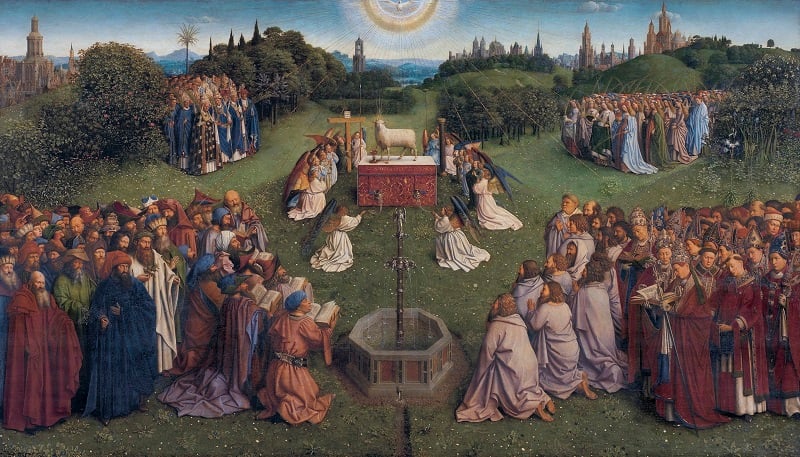
Credit: Public Domain CC 1.0
Yet I’ve discovered that our contemporary understanding of this imagery often misses crucial nuances in how biblical writers actually employed purity language. My research into Leviticus 16 and Hebrews 9-10 reveals a more sophisticated theological framework than commonly recognized.
The Day of Atonement Reconsidered
When I examine Leviticus 16 carefully, I find that the text demonstrates how atonement fundamentally changes the relationship between worshippers and the sacred space where God dwells. The ritual’s complexity initially overwhelms readers, but the underlying logic becomes clear when we focus on the key sequence: Aaron first offers reconciliation offerings for himself, then for the congregation, followed by the symbolic removal of iniquity via the live goat, and finally burnt offerings for both priest and assembly.
What emerges is a binding process. Through atonement, the priest connects himself to the Lord, and whatever encumbers a relationship with God is removed. As God’s holy representative, the priest then mediates on behalf of the congregation, allowing God to reaffirm a positive, connected relationship with his people.
The altar’s unique position in this ritual proves particularly instructive. Unlike the tent of meeting and the Holy Place, the outer altar interacts with common, non-priestly worshippers, placing it in what James Greenberg aptly calls a state of “limbo”—holy before YHWH yet disconnected due to the atmosphere of the people’s rebellious acts. Greenberg notes that
“a natural result of YHWH’s connection to the altar is that it is made holy… It is not that the altar was ever desanctified; however, the atmosphere of the people’s rebellious acts caused the altar to be in a state of limbo.”
Navigating Cross-Cultural Contexts
My investigation into how different religious traditions handle similar symbols has proven illuminating. Matthew Bennett’s work on Islamic and Christian perspectives demonstrates that “Arabic speaking Christians and Muslims use shared language to describe divergent concepts.” While Islam incorporates purification concepts, it fundamentally rejects any inherent relationship between blood, sin, and atonement—illustrating how “using shared vocabulary and history, [one can tell] a different story based upon a different worldview.”
This cross-cultural analysis reinforces my conviction that we must orient audiences to Scripture’s larger narrative framework before attempting to communicate biblical atonement theology. The danger of surface-level contextualization cannot be overstated.
Hebrews and the Transformation of Consciousness
The writer of Hebrews masterfully reappropriates Old Testament purity language rather than dismissing it. My analysis reveals how Hebrews 9-10 addresses a fundamental weakness of the old covenant: “Gifts and sacrifices are offered that cannot perfect the conscience of the worshiper.”
The Greek term syneidēsis (conscience) refers to the heart’s capacity to discern good from evil. When Christ “purifies our conscience from dead works to worship the living God” (Hebrews 9:14), he fulfills Jeremiah’s new covenant promise:
“I will put my law within them, and I will write it on their hearts.”
This transformation addresses identity at its core. Too often, purity metaphors create what Richard Beck identifies as permanent defilement categories:
“when sins are structured by purity metaphors, there is no obvious route to repentance. The metaphor only entails permanent defilement and ruin.”
Christ’s atoning work breaks this cycle, offering genuine restoration rather than perpetual shame.
The Covenant Dimension
My analysis of Hebrews 9:15-22 challenges conventional translations that unnecessarily switch between “covenant” and “will” for the same Greek term diathēkē. The passage maintains consistent covenant terminology throughout, emphasizing how Christ’s death secures redemption from transgressions under the first covenant while inaugurating the new.
The logic stems from Old Testament covenant symbolism, particularly the self-maledictory oaths of Genesis 15 and Jeremiah 34. Breaking covenant with God leads to death, and “the ritual that initiated the covenant set the conditions of that covenant. The one who breaks it must die.” Christ’s death, therefore, functions both retrospectively (dealing with the Law’s punitive sanctions) and prospectively (securing the new covenant’s promised salvation).
Implications for Contemporary Theology
These insights carry profound implications for how we articulate atonement today. The biblical metaphor of purification offers hope to those trapped in shame cycles, particularly regarding sins that carry strong social taboos. As one person reflected on purity culture’s distortions: when sexual sin becomes a permanent identity marker rather than an occasion for repentance and restoration,
“it makes the focus not so much ‘Who am I in relationship to God, who loves and relates to sinners and shows grace to sinners.’ It becomes this ‘Do I have this badge and this identity of being a virgin?’”
The richness of biblical purification imagery, properly understood, communicates that Christ’s atoning work addresses not merely guilt but the fundamental transformation of identity. This makes purity metaphors particularly valuable for contextualizing atonement across cultures where shame predominates over guilt-based approaches to morality.
In conclusion, I believe that careful attention to how Scripture actually employs purification metaphors (rather than imposing our assumptions upon them) reveals a more nuanced and ultimately more hopeful understanding of Christ’s atoning work. The biblical vision of purification points beyond mere cleansing to genuine transformation, offering renewed identity rather than perpetual shame.
Previous Post

May 26, 2026
The Sin of Most Political Debates Isn’t What You Think
Next Post
June 23, 2026 How Biblical Sacrifices Vindicate God’s Glory
Recent Comments
"A thoughtful and thought-provoking article that raises important questions about the challenges facing the Western ..."
"to fit social or religious expectations. Especially women, who were expected to sacrifice everything to ..."
3 reasons you should not be ..."
"Powerful reminder short, sturdy truths can lose their weight if treated as slogans. The solas ..."
How Western Individualism Quietly Undermines the ..."
"If 'America’s deepest crisis is not merely political. It is moral and spiritual.' is in ..."
The Real Crisis Beneath America’s Social ..."
Browse Our Archives
Select a Category Atonement Biblical Theology Book Reviews China Chinese Church Chinese Culture Chinese Language Collectivism Contextualization Culture (General) Ecclesiology Evangelism Gospel Honor & Shame (Face) Interpretation/Exegesis Justification/Righteousness Missiology Mission Methods One Gospel for All Nations Other Practical Contextualization Reading Romans with Eastern Eyes Resources Romans Salvation (General) Saving God's Face Seeking God's Face The Cross in Context Theological Contextualization Theological Education Theology Uncategorized
Select a Month October 2026 September 2026 August 2026 July 2026 June 2026 May 2026 April 2026 March 2026 February 2026 January 2026 December 2025 November 2025 October 2025 September 2025 August 2025 July 2025 June 2025 May 2025 April 2025 March 2025 February 2025 January 2025 December 2024 November 2024 October 2024 September 2024 August 2024 July 2024 June 2024 May 2024 April 2024 March 2024 February 2024 January 2024 December 2023 November 2023 October 2023 September 2023 August 2023 July 2023 June 2023 May 2023 April 2023 March 2023 February 2023 January 2023 December 2022 November 2022 October 2022 September 2022 August 2022 July 2022 June 2022 May 2022 April 2022 March 2022 February 2022 January 2022 December 2021 November 2021 October 2021 September 2021 August 2021 July 2021 June 2021 May 2021 April 2021 March 2021 February 2021 January 2021 December 2020 November 2020 October 2020 September 2020 August 2020 July 2020 June 2020 May 2020 April 2020 March 2020 February 2020 January 2020 December 2019 November 2019 October 2019 September 2019 August 2019 July 2019 June 2019 May 2019 April 2019 March 2019 February 2019 January 2019 December 2018 November 2018 October 2018 September 2018 August 2018 July 2018 June 2018 May 2018 April 2018 March 2018 February 2018 January 2018 December 2017 November 2017 October 2017 September 2017 August 2017 July 2017 June 2017 May 2017 April 2017 March 2017 February 2017 January 2017 December 2016 November 2016 October 2016 September 2016 August 2016 July 2016 June 2016 May 2016 April 2016 March 2016 February 2016 January 2016 December 2015 November 2015 October 2015 September 2015 August 2015 July 2015 June 2015 May 2015 April 2015 March 2015 February 2015 January 2015 December 2014 November 2014 October 2014 September 2014 August 2014 July 2014 June 2014 May 2014 April 2014 March 2014 February 2014 January 2014 December 2013 November 2013 October 2013 September 2013 August 2013 July 2013 June 2013 May 2013 April 2013 March 2013 February 2013 January 2013 December 2012 November 2012
Follow Us!
TAKE THE
Religious Wisdom Quiz
According to Hebrews, what two things cannot be shaken?
Select your answer to see how you score.
A kingdom that cannot be shaken Faith and love Heaven and earth The word and Spirit
Books by This Author Books by Brad Vaughn
Related posts from Saving God's Face
How Biblical Sacrifices Vindicate God’s Glory
What are Essential Elements of Atonement?

The Heart of Biblical Sacrifice Is Not Blood...

The Temple as Sacred Space for Divine Honor
TRENDING AT PATHEOS Evangelical

The First Eucharistic Controversy: Christ’s Real Presence
For Catholics, the Eucharist is the source and summit of the Christian...

How to Make a Decision When You Can't...
Main point: It’s much more valuable to stay close to God so...

Archdiocese Hosts Military Marriage Retreat in Germany
RASTATT, Germany — The transient military lifestyle, with its frequent deployments and...

Nearly every morning, I make the drive to Detroit with my high-school-age...

The Real AI Story Is Adoption Without Trust
Artificial intelligence has crossed a political threshold. It is no longer a...

A new article, written by Jeff Lindsay and Gale L. Pooley,...
view all Evangelical blogs
What Are Your Thoughts?leave a comment
Ad-Free & Subscriber Log-In Subscription Support
- About Us
- 2026 Calendar
- Videos
- Podcasts
- Library of World Religions
- Faith In Media Tracker
- Advertise With Us
- Write for Us
- Privacy Policy
- Terms of Service
- Do Not Sell My Data
- Contact Us
- Radiant Digital
- Manage Newsletter Subscriptions
- Unsubscribe From Notifications
- Sitemap
Copyright 2008-2026, Patheos. All rights reserved.
Subscription Support Ad-Free & Subscriber Log-In
Follow Patheos