
BuddhistCatholicContemplativeEvangelicalGeneral ChristianHinduJewishLatter-day SaintMuslimNew VisionsProgressive Christian
Beliefs
- Buddhist
- Catholic
- Contemplative
- Evangelical
- General Christian
- Hindu
- Jewish
- Latter-day Saint
- More Voices
- Muslim
- New Visions
- Pagan
- Progressive Christian
Topics
- Religion News
- Food and Religion
- Sports and Religion
- Religious Art
- Religious Music and Entertainment
- Religious Events
- History and Religion
- Style and Religion
- Politics and Religion
- Women in Religion
- Recreation Outdoors and Religion
- Business Finance and Religion
- Careers Workplace and Religion
- Education and Religion
- Family Parenting and Religion
- Health Fitness and Religion
- Home and Religion
- Relationships and Religion
- Technology and Religion
- Travel and Religion
Columnists
- Buddhist Columnists
- Business Finance and Religion Columnists
- Careers Workplace and Religion Columnists
- Catholic Columnists
- Contemplative Columnists
- Education and Religion Columnists
- Evangelists Columnists
- Family Parenting and Religion Columnists
- General Christian Columnists
- Health Fitness and Religion Columnists
- Hindu Columnists
- History and Religion Columnists
- Home and Religion Columnists
- Jewish Columnists
- More Voices Columnists
- Latter Day Columnists
- Muslim Columnists
- New Visions Columnists
- Nonreligious Columnists
- Pagan Columnists
- Politics and Religion Columnists
- Progressive Columnists
- Recreation Outdoors and Religion Columnists
- Relationships and Religion Columnists
- Religion News Columnists
- Religious Art Columnists
- Religious Events Columnists
- Religious Music and Entertainment Columnists
- Sports and Religion Columnists
- Style and Religion Columnists
- Technology and Religion Columnists
- Travel and Religion Columnists
- Women in Religion Columnists
Resource Library
- 2026 Calendar
- Library of World Religions
- The 100 Most Holy Places on Earth
- Patheos Answers
- Podcasts
- Videos
- Faith Leaders Database
- Anglican Episcopalian
- Bahai
- Baptist
- Buddhism
- Christianity
- Confucianism
- Eastern Orthodoxy
- Hinduism
- Holiness and Pentecostal
- ISKCON
- Islam
- Judaism
- Lutheran
- Methodist
- The Church of Jesus Christ of Latter-day Saints
- New Age
- Paganism
- Presbytarian and Reformed
- Protestantism
- Religion Behind the Scenes
- Roman Catholic
- Scientology
- Shia Islam
- Sikhism
- Sufism
- Sunni Islam
- Taoism
- Zen
- See all religions
Research Tools
 Ad-Free & Subscriber Log-In Subscription Support
Ad-Free & Subscriber Log-In Subscription Support
Follow Patheos 

- Trending:
- Forgiveness
- |
- Marriage
- |
- Consciousness
- |
- Death Penalty
- |
- Election
- |
- Halloween

-
Tools
-
Support the Work
- Home
- Evangelical
- Relationships and Religion
- Why Christianity Needs Individuals but Rejects Individualism
Why Christianity Needs Individuals but Rejects Individualism
Last updated on: April 14, 2026 at 6:50 am by Brad Vaughn
Why Christianity Needs Individuals but Rejects Individualism 2026-04-14T06:50:52-07:00 Brad Vaughn
Patheos Explore the world's faith through different perspectives on religion and spirituality! Patheos has the views of the prevalent religions and spiritualities of the world.

Credit: Wikimedia Commons
One of the great confusions of modern Western culture is that we’ve learned to use the words individual and individualism as if they were interchangeable. They are not. They name radically different visions of what a human being is.
This confusion runs so deep that many Christians feel forced into a false choice: either you resist “individualism” and risk crushing the person, or you celebrate individuality and slide into expressive autonomy. However, that is a false dilemma. The biblical vision of the person depends on individuality… and stands in judgment over individualism.
To see why, let’s slow down and make a distinction that our culture no longer knows how to make.
Individuality Is Not Individualism
An individual is a particular, irreplaceable human being. A person with a name, a history, a calling, and a story that no one else can live for them. The Bible is full of individuals. Abraham is not just a member of Israel; he is Abraham. David is not a type; he is David. Peter is not a unit in the church; he is Peter. God does not redeem abstractions. He calls people.
By contrast, individualism is something else entirely. It’s not the recognition that persons matter. It is a moral theory about what a person is for. It says that the self is sovereign and identity is self-constructed. Individualism claims that obligations are chosen rather than received. It contends that freedom means authorship over one’s own meaning.
Individuality says, “You are someone.” Individualism says, “You belong to yourself.” Those are not the same claim. In fact, they are in tension.
Western individualism did not emerge because the West suddenly discovered that people matter. It emerged because the West lost a shared moral cosmos. When there is no longer a thick story about what a human being is for (i.e., no shared vision of the good), the only place left to anchor meaning is inside the self.
Consequently, the modern person is handed a terrible burden: you must decide who you are. You must choose your values. You must define your purpose. You must make your life make sense.
That sounds empowering until you realize what it really is: existential isolation.
Individualism is Isolating
You are no longer a person who receives an identity. You are a project who must invent one.
This is why Western individualism is so anxious. It promises freedom but delivers responsibility without support. You’re free to be anything but also accountable for everything. If your life feels empty, well, that is your fault. If your identity feels unstable, that’s also your failure. If your choices do not satisfy, you picked wrong.
By contrast, the biblical vision of individuality is not self-sovereignty but giftedness.
You are created, not invented.
You are called, not constructed.
You are named, not branded.
Your life is not a blank canvas. It’s a vocation.
The Christian story begins not with autonomy but with address. God speaks: “Let us make man.” “Abraham.” “Moses.” “Samuel.” “Mary.” “Peter.” Identity arises from being called into a relationship and a mission. You do not decide who you are; you discover who you have been made to be.
This is why the Christian tradition can honor difference without turning difference into self-authorship. People are not interchangeable. We have different gifts, different callings, different weaknesses, different paths of obedience. The body has many members, Paul says, not because each member invents itself but because God gives different gifts for the good of the whole.
Individuality is real. It is sacred. It is not self-created.
Individualistic Discipleship
Western individualism, however, quietly redefines discipleship. It turns following Jesus into a kind of spiritual consumerism. You choose your beliefs. You pick your church and your moral commitments. You select which parts of the gospel feel authentic to you.
Obedience becomes optional.
Authority becomes suspicious.
Tradition becomes oppressive.
Community becomes instrumental.
The church becomes a vendor of spiritual goods rather than a people under a shared Lord.
This is why so many Christians today speak the language of “my truth” and “my journey” while still using religious vocabulary. The grammar of individualism has colonized faith. God is still there, but he has become a supporting character in the story of my self-actualization.
Biblical Discipleship
But that is not discipleship. That is therapeutic spirituality. Jesus doesn’t say, “Create yourself.” He says, “Follow me.”
Following always involves loss. Loss of imagined autonomy. Loss of self-authorship. Loss of the fantasy that you are the final judge of your own good.
In a world shaped by Western individualism, this feels like violence. In the biblical world, it is called conversion.
Here is the paradox that modern culture cannot understand: you do not become less yourself by submitting to God. You become more yourself.
Because individuality does not come from self-assertion. It comes from alignment with reality. A violin becomes most itself when it is played according to its design. A human being becomes most himself or herself when living in truth about God, neighbor, and self.
The tragedy of Western individualism is that it treats all limits as threats. But limits are not the enemy of identity. They are its condition. You are this kind of person, not that kind. You are called to these loves, not all loves. You are placed in this family, this time, this body, this story.
To reject those givens in the name of freedom is not liberation; it’s dislocation.
Faithful discipleship requires a different posture. It requires the courage to receive an identity rather than manufacture one. Faithfulness means we accepting that fact that you will be told who you are before you decide who you will be. We are formed by a story older and wiser than our own preferences.
This is why the church must resist the slide into individualism even as it fiercely protects individuality. We do not want conformity. We want faithfulness. We don’t want uniformity but unity. We do not want crushed persons. We want rightly ordered ones.
God does not save us as faceless units. He saves us as particular people into a particular people.
That difference (between being an individual and being an individualist) may be one of the most important distinctions for Christians to recover in a culture that no longer knows what a self is for.
Relationships and Religion
Politics and Religion
Previous Post

March 31, 2026
The Gulag Theology of One Day in the Life of Ivan Denisovich
Next Post
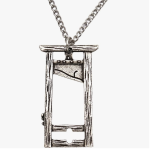
April 28, 2026 Why Do I Wear a Guillotine Around My Neck?
Recent Comments
"A thoughtful and thought-provoking article that raises important questions about the challenges facing the Western ..."
"to fit social or religious expectations. Especially women, who were expected to sacrifice everything to ..."
3 reasons you should not be ..."
"Powerful reminder short, sturdy truths can lose their weight if treated as slogans. The solas ..."
How Western Individualism Quietly Undermines the ..."
"If 'America’s deepest crisis is not merely political. It is moral and spiritual.' is in ..."
The Real Crisis Beneath America’s Social ..."
Browse Our Archives
Select a Category Atonement Biblical Theology Book Reviews China Chinese Church Chinese Culture Chinese Language Collectivism Contextualization Culture (General) Ecclesiology Evangelism Gospel Honor & Shame (Face) Interpretation/Exegesis Justification/Righteousness Missiology Mission Methods One Gospel for All Nations Other Practical Contextualization Reading Romans with Eastern Eyes Resources Romans Salvation (General) Saving God's Face Seeking God's Face The Cross in Context Theological Contextualization Theological Education Theology Uncategorized
Select a Month October 2026 September 2026 August 2026 July 2026 June 2026 May 2026 April 2026 March 2026 February 2026 January 2026 December 2025 November 2025 October 2025 September 2025 August 2025 July 2025 June 2025 May 2025 April 2025 March 2025 February 2025 January 2025 December 2024 November 2024 October 2024 September 2024 August 2024 July 2024 June 2024 May 2024 April 2024 March 2024 February 2024 January 2024 December 2023 November 2023 October 2023 September 2023 August 2023 July 2023 June 2023 May 2023 April 2023 March 2023 February 2023 January 2023 December 2022 November 2022 October 2022 September 2022 August 2022 July 2022 June 2022 May 2022 April 2022 March 2022 February 2022 January 2022 December 2021 November 2021 October 2021 September 2021 August 2021 July 2021 June 2021 May 2021 April 2021 March 2021 February 2021 January 2021 December 2020 November 2020 October 2020 September 2020 August 2020 July 2020 June 2020 May 2020 April 2020 March 2020 February 2020 January 2020 December 2019 November 2019 October 2019 September 2019 August 2019 July 2019 June 2019 May 2019 April 2019 March 2019 February 2019 January 2019 December 2018 November 2018 October 2018 September 2018 August 2018 July 2018 June 2018 May 2018 April 2018 March 2018 February 2018 January 2018 December 2017 November 2017 October 2017 September 2017 August 2017 July 2017 June 2017 May 2017 April 2017 March 2017 February 2017 January 2017 December 2016 November 2016 October 2016 September 2016 August 2016 July 2016 June 2016 May 2016 April 2016 March 2016 February 2016 January 2016 December 2015 November 2015 October 2015 September 2015 August 2015 July 2015 June 2015 May 2015 April 2015 March 2015 February 2015 January 2015 December 2014 November 2014 October 2014 September 2014 August 2014 July 2014 June 2014 May 2014 April 2014 March 2014 February 2014 January 2014 December 2013 November 2013 October 2013 September 2013 August 2013 July 2013 June 2013 May 2013 April 2013 March 2013 February 2013 January 2013 December 2012 November 2012
Follow Us!
TAKE THE
Religious Wisdom Quiz
What is the main theme of Galatians?
Select your answer to see how you score.
Church discipline Spiritual gifts Love above faith Justification by faith
Books by This Author Books by Brad Vaughn
Related posts from Saving God's Face

The Real Crisis Beneath America’s Social Crises (Part...

America’s Crisis Is Deeper Than Politics

Independent Thinking Isn’t What You Think

The Gulag Theology of One Day in the...
TRENDING AT PATHEOS Evangelical

Pope Leo Celebrates Mass for Nurses & Docs...
I don't have any idea how he did it, but Pope Leo...

The Sermon on the Mount, Part I: Matthew...
The Sermon on the Mount, Part I (Matthew 4:12-5:12) St. Matthew moves...

What's up from Crossway: Reviewing some of their latest A few weeks...

Janie Learns the Way of the Cross: A...
Teaching children about Jesus' Passion can be challenging. Many parents and educators...

Looking For Good Catholic Writing - October 2026
He alone extends the heavens, and he walks upon the waves of...

In "Irreplaceable," our book on vocation and technology, Trevor Sutton and I...
view all Evangelical blogs
What Are Your Thoughts?leave a comment
Ad-Free & Subscriber Log-In Subscription Support
- About Us
- 2026 Calendar
- Videos
- Podcasts
- Library of World Religions
- Faith In Media Tracker
- Advertise With Us
- Write for Us
- Privacy Policy
- Terms of Service
- Do Not Sell My Data
- Contact Us
- Radiant Digital
- Manage Newsletter Subscriptions
- Unsubscribe From Notifications
- Sitemap
Copyright 2008-2026, Patheos. All rights reserved.
Subscription Support Ad-Free & Subscriber Log-In
Follow Patheos