
BuddhistCatholicContemplativeEvangelicalGeneral ChristianHinduJewishLatter-day SaintMuslimNew VisionsProgressive Christian
Beliefs
- Buddhist
- Catholic
- Contemplative
- Evangelical
- General Christian
- Hindu
- Jewish
- Latter-day Saint
- More Voices
- Muslim
- New Visions
- Pagan
- Progressive Christian
Topics
- Religion News
- Food and Religion
- Sports and Religion
- Religious Art
- Religious Music and Entertainment
- Religious Events
- History and Religion
- Style and Religion
- Politics and Religion
- Women in Religion
- Recreation Outdoors and Religion
- Business Finance and Religion
- Careers Workplace and Religion
- Education and Religion
- Family Parenting and Religion
- Health Fitness and Religion
- Home and Religion
- Relationships and Religion
- Technology and Religion
- Travel and Religion
Columnists
- Buddhist Columnists
- Business Finance and Religion Columnists
- Careers Workplace and Religion Columnists
- Catholic Columnists
- Contemplative Columnists
- Education and Religion Columnists
- Evangelists Columnists
- Family Parenting and Religion Columnists
- General Christian Columnists
- Health Fitness and Religion Columnists
- Hindu Columnists
- History and Religion Columnists
- Home and Religion Columnists
- Jewish Columnists
- More Voices Columnists
- Latter Day Columnists
- Muslim Columnists
- New Visions Columnists
- Nonreligious Columnists
- Pagan Columnists
- Politics and Religion Columnists
- Progressive Columnists
- Recreation Outdoors and Religion Columnists
- Relationships and Religion Columnists
- Religion News Columnists
- Religious Art Columnists
- Religious Events Columnists
- Religious Music and Entertainment Columnists
- Sports and Religion Columnists
- Style and Religion Columnists
- Technology and Religion Columnists
- Travel and Religion Columnists
- Women in Religion Columnists
Resource Library
- 2026 Calendar
- Library of World Religions
- The 100 Most Holy Places on Earth
- Patheos Answers
- Podcasts
- Videos
- Faith Leaders Database
- Anglican Episcopalian
- Bahai
- Baptist
- Buddhism
- Christianity
- Confucianism
- Eastern Orthodoxy
- Hinduism
- Holiness and Pentecostal
- ISKCON
- Islam
- Judaism
- Lutheran
- Methodist
- The Church of Jesus Christ of Latter-day Saints
- New Age
- Paganism
- Presbytarian and Reformed
- Protestantism
- Religion Behind the Scenes
- Roman Catholic
- Scientology
- Shia Islam
- Sikhism
- Sufism
- Sunni Islam
- Taoism
- Zen
- See all religions
Research Tools
 Ad-Free & Subscriber Log-In Subscription Support
Ad-Free & Subscriber Log-In Subscription Support
Follow Patheos 

- Trending:
- Forgiveness
- |
- Marriage
- |
- Consciousness
- |
- Death Penalty
- |
- Election
- |
- Halloween

-
Tools
-
Support the Work
- Home
- Evangelical
- History and Religion
- What are Essential Elements of Atonement?
What are Essential Elements of Atonement?
Last updated on: March 3, 2026 at 3:55 am by Brad Vaughn
What are Essential Elements of Atonement? 2025-07-21T13:03:24-07:00 Brad Vaughn
Patheos Explore the world's faith through different perspectives on religion and spirituality! Patheos has the views of the prevalent religions and spiritualities of the world.

Credit: CC 4.0
What exactly is atonement? Despite its centrality to Christianity, this question often receives oversimplified answers that miss the biblical text’s own logic.
In chapter 4 of The Cross in Context, I examine the Hebrew term kipper and related concepts to discover what atonement actually accomplishes according to Scripture itself. The results challenge common assumptions while also revealing a richer, more biblically grounded understanding of how God removes barriers between himself and his people.
Atonement as Seeking Divine Favor
The Hebrew verb kpr (often translated “atone”) doesn’t primarily mean “cover,” “wipe away,” or “punish,” as commonly assumed. Following James Greenberg’s careful analysis, I argue that kpr means “to repair or create a new protective connection” between the worshipper and the Lord. It reflects God’s acceptance of the priestly offering and fundamentally involves seeking divine favor.
This becomes clear when we examine how biblical writers use kpr alongside related terms. The Septuagint consistently translates kpr with exilaskomai, which simply means “entreat” or “seek favor.” When Jacob prepares to meet Esau, he hopes to “atone his face” (kpr) through gifts, meaning he seeks Esau’s favor and acceptance. The same dynamic applies to our relationship with God.
Malachi 1:9 provides a telling example: “And now implore the favor of God, that he may be gracious to us.” The prophet uses exilaskomai—if we followed conventional translation patterns, he’d be telling people to “atone” God’s face! Rather, this passage evokes the imagery of someone bowing before an authority, hoping that authority will “lift their face” in acceptance.
Atonement, therefore, involves entreating God’s favor. While this may include appeasing wrath in some contexts, seeking favor is the broader concept that encompasses various situations where barriers to relationship exist.
The Centrality of Burning, Not Bleeding
One often missed but significant observation challenges a widespread assumption about sacrifice: forgiveness and atonement consistently follow the burning of offerings, not the shedding of blood. The pattern appears repeatedly: after fat is burned on the altar, creating “a pleasing aroma to the Lord,” the text declares, “the priest shall make atonement for them, and they shall be forgiven.”
This timing proves crucial. In Numbers 16, Aaron stops a deadly plague by burning incense— no blood involved, yet atonement is accomplished and God’s wrath appeased. The burning rite, which produces the pleasing aroma, serves as the climactic moment when God accepts the offering and grants atonement.
This doesn’t diminish blood’s importance but clarifies its role. Blood matters not primarily because of death but because of life—Leviticus 17:11 explicitly states that “the life of the flesh is in the blood.” Offering blood represents giving one’s entire life to God, which is why it must be burned to create the aroma that signals divine acceptance.
Atonement’s Transformative Power
Atonement accomplishes two types of transformation, depending on the initial state of its object: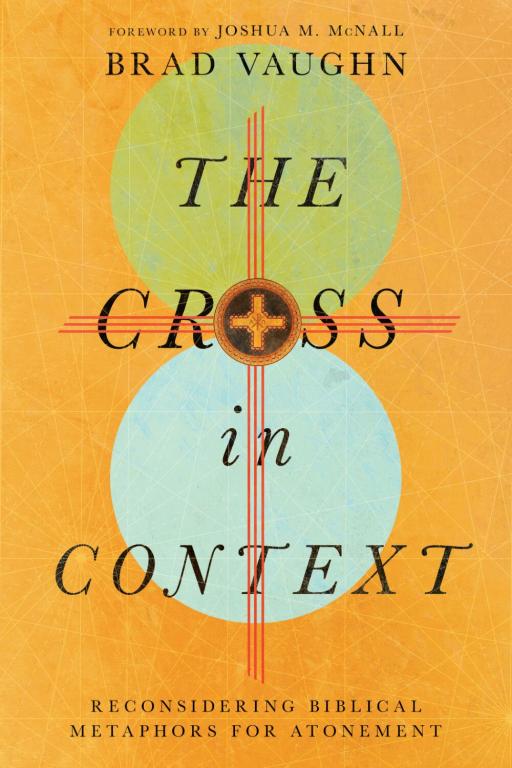
- From unclean to clean: Atonement purifies those defiled by sin or ritual impurity
- From clean to holy: Atonement consecrates or sanctifies what is already clean
This explains why atonement is necessary even for the altar and priests during consecration ceremonies. They weren’t defiled or sinful; they were simply common rather than holy. Atonement transforms their status, setting them apart for sacred service.
Numbers 8 beautifully illustrates this process with the Levites. They need atonement not because of sin but because God has chosen to consecrate them for special service. The atonement ritual transforms them from common Israelites to holy servants of the sanctuary.
The Primary Objects of Atonement
Contrary to popular belief, the primary objects receiving atonement aren’t people but sacred objects and spaces— the Holy Place, the tent of meeting, and the altar. While atonement is certainly made on behalf of people, the priests make atonement for sacred objects and space.
This reveals atonement’s fundamental purpose: removing uncleanness that threatens to defile the sanctuary where God dwells among his people.
When impurity threatens God’s dwelling place, atonement cleanses the sacred space by removing the uncleanness belonging to people. This protects unclean people from God’s anger while maintaining the purity necessary for his continued presence among them.
Atonement Without Death
Perhaps most challenging to conventional thinking, I demonstrate that atonement doesn’t inherently require death or punishment. Multiple passages prove this point:
- Priests made atonement by eating the reconciliation offering, yet they weren’t executed as substitutes
- Fine flour could serve as a reconciliation offering for the poor, providing atonement without any death
- Incense alone brought atonement during the plague in Numbers 16
- Gold jewelry brought atonement in Numbers 31
- Moses sought atonement through prayer in Exodus 32
These examples prove that while death may sometimes accompany atonement, it’s not the essential mechanism. Atonement fundamentally removes barriers to a relationship with God, whether through cleansing, consecration, or honor-giving gifts.
Life in the Blood
My analysis of Leviticus 17:11 emphasizes that blood makes atonement precisely because it contains life, not because it represents punitive death. The passage’s logic focuses on life: “For the life of the flesh is in the blood; and I have given it to you for making atonement for your lives on the altar; for, as life, it is the blood that makes atonement.”
This connects to my earlier discussion of devoted gifts. A devoted thing belongs exclusively to God and cannot be redeemed for ordinary use. If the devoted thing is alive, it must die— not as punishment but as the means of giving its entire life to God. The shedding of blood represents the complete offering of life to the divine King.
The prohibition against eating blood stems from this same logic. Blood is reserved exclusively for God because it represents life given to him. Like the fat that must be burned rather than eaten, blood belongs to God alone as part of the symbolic meal that creates fellowship between the divine King and his people.
Cleansing the Levites: A Case Study
Numbers 8 provides a comprehensive example of how these concepts work together. God consecrates Israel’s firstborn, making them his possession. The Levites serve as substitutes for the firstborn, requiring their own consecration through atonement. Reconciliation and burnt offerings bind the Levites to God, transforming them from common Israelites to holy servants.
This process protects both the firstborn (through substitution) and the community (by providing properly consecrated mediators who can approach God safely). The entire system demonstrates how atonement creates the proper connections necessary for God to dwell among his people without destroying them.
Implications for Understanding Christ
These insights prove essential for understanding Christ’s atoning work. Jesus serves as the ultimate devoted substitute— one who gives his entire life to God and therefore can redeem those who belong to God. His perfect offering creates the ultimate “pleasing aroma” that enables us to draw near to God with confidence.
Rather than focusing primarily on punishment and wrath, this framework emphasizes atonement’s positive purpose: removing every barrier that prevents intimate fellowship between God and his people. Christ doesn’t merely satisfy legal requirements but accomplishes the cosmic goal of enabling redeemed humanity to dwell with God in sacred space.
Understanding atonement as seeking divine favor through offerings that create protective connections reveals the relational heart of this doctrine. God desires fellowship with his people and has provided the means for that fellowship to be maintained despite the reality of human sin and cosmic defilement.
In Christ, we find the perfect fulfillment of every sacrificial type— the devoted offering whose life creates the ultimate bond between heaven and earth.
History and Religion
Previous Post

February 17, 2026
Seeking Pleasure and Joy Via Dopamine and Oxytocin
Next Post

March 17, 2026 We Don’t Believe What’s True. We Believe What’s Entertaining
Recent Comments
"A thoughtful and thought-provoking article that raises important questions about the challenges facing the Western ..."
"to fit social or religious expectations. Especially women, who were expected to sacrifice everything to ..."
3 reasons you should not be ..."
"Powerful reminder short, sturdy truths can lose their weight if treated as slogans. The solas ..."
How Western Individualism Quietly Undermines the ..."
"If 'America’s deepest crisis is not merely political. It is moral and spiritual.' is in ..."
The Real Crisis Beneath America’s Social ..."
Browse Our Archives
Select a Category Atonement Biblical Theology Book Reviews China Chinese Church Chinese Culture Chinese Language Collectivism Contextualization Culture (General) Ecclesiology Evangelism Gospel Honor & Shame (Face) Interpretation/Exegesis Justification/Righteousness Missiology Mission Methods One Gospel for All Nations Other Practical Contextualization Reading Romans with Eastern Eyes Resources Romans Salvation (General) Saving God's Face Seeking God's Face The Cross in Context Theological Contextualization Theological Education Theology Uncategorized
Select a Month October 2026 September 2026 August 2026 July 2026 June 2026 May 2026 April 2026 March 2026 February 2026 January 2026 December 2025 November 2025 October 2025 September 2025 August 2025 July 2025 June 2025 May 2025 April 2025 March 2025 February 2025 January 2025 December 2024 November 2024 October 2024 September 2024 August 2024 July 2024 June 2024 May 2024 April 2024 March 2024 February 2024 January 2024 December 2023 November 2023 October 2023 September 2023 August 2023 July 2023 June 2023 May 2023 April 2023 March 2023 February 2023 January 2023 December 2022 November 2022 October 2022 September 2022 August 2022 July 2022 June 2022 May 2022 April 2022 March 2022 February 2022 January 2022 December 2021 November 2021 October 2021 September 2021 August 2021 July 2021 June 2021 May 2021 April 2021 March 2021 February 2021 January 2021 December 2020 November 2020 October 2020 September 2020 August 2020 July 2020 June 2020 May 2020 April 2020 March 2020 February 2020 January 2020 December 2019 November 2019 October 2019 September 2019 August 2019 July 2019 June 2019 May 2019 April 2019 March 2019 February 2019 January 2019 December 2018 November 2018 October 2018 September 2018 August 2018 July 2018 June 2018 May 2018 April 2018 March 2018 February 2018 January 2018 December 2017 November 2017 October 2017 September 2017 August 2017 July 2017 June 2017 May 2017 April 2017 March 2017 February 2017 January 2017 December 2016 November 2016 October 2016 September 2016 August 2016 July 2016 June 2016 May 2016 April 2016 March 2016 February 2016 January 2016 December 2015 November 2015 October 2015 September 2015 August 2015 July 2015 June 2015 May 2015 April 2015 March 2015 February 2015 January 2015 December 2014 November 2014 October 2014 September 2014 August 2014 July 2014 June 2014 May 2014 April 2014 March 2014 February 2014 January 2014 December 2013 November 2013 October 2013 September 2013 August 2013 July 2013 June 2013 May 2013 April 2013 March 2013 February 2013 January 2013 December 2012 November 2012
Follow Us!
TAKE THE
Religious Wisdom Quiz
True or False: Paul wrote to the Philippians while he was imprisoned.
Select your answer to see how you score.
TRUE FALSE
Books by This Author Books by Brad Vaughn
Related posts from Saving God's Face
How Biblical Sacrifices Vindicate God’s Glory
What Exactly Does Christ Purify?

The Heart of Biblical Sacrifice Is Not Blood...

The Temple as Sacred Space for Divine Honor
TRENDING AT PATHEOS Evangelical

When Halloween Unmasks Married Hearts
Written by Dr. David K. Ewen from Eternal Truth Bible College Behind...

Aristotle. He’s been called the father of logic, the father of the...

Methodist Central Hall and Westminster Abbey
Situated on the same square is Methodist Central Hall and Westminster Abbey. ...

57th Dove Awards Honor Dolly Parton, Crown New...
On gospel music’s biggest night, the 57th annual GMA Dove Awards honored...

The First Eucharistic Controversy: Christ’s Real Presence
For Catholics, the Eucharist is the source and summit of the Christian...

What a Stop Sign Can Teach Us About...
How to Make a Decision When You Can't Hear God Main point:...
view all Evangelical blogs
What Are Your Thoughts?leave a comment
Ad-Free & Subscriber Log-In Subscription Support
- About Us
- 2026 Calendar
- Videos
- Podcasts
- Library of World Religions
- Faith In Media Tracker
- Advertise With Us
- Write for Us
- Privacy Policy
- Terms of Service
- Do Not Sell My Data
- Contact Us
- Radiant Digital
- Manage Newsletter Subscriptions
- Unsubscribe From Notifications
- Sitemap
Copyright 2008-2026, Patheos. All rights reserved.
Subscription Support Ad-Free & Subscriber Log-In
Follow Patheos