
BuddhistCatholicContemplativeEvangelicalGeneral ChristianHinduJewishLatter-day SaintMuslimNew VisionsProgressive Christian
Beliefs
- Buddhist
- Catholic
- Contemplative
- Evangelical
- General Christian
- Hindu
- Jewish
- Latter-day Saint
- More Voices
- Muslim
- New Visions
- Pagan
- Progressive Christian
Topics
- Religion News
- Food and Religion
- Sports and Religion
- Religious Art
- Religious Music and Entertainment
- Religious Events
- History and Religion
- Style and Religion
- Politics and Religion
- Women in Religion
- Recreation Outdoors and Religion
- Business Finance and Religion
- Careers Workplace and Religion
- Education and Religion
- Family Parenting and Religion
- Health Fitness and Religion
- Home and Religion
- Relationships and Religion
- Technology and Religion
- Travel and Religion
Columnists
- Buddhist Columnists
- Business Finance and Religion Columnists
- Careers Workplace and Religion Columnists
- Catholic Columnists
- Contemplative Columnists
- Education and Religion Columnists
- Evangelists Columnists
- Family Parenting and Religion Columnists
- General Christian Columnists
- Health Fitness and Religion Columnists
- Hindu Columnists
- History and Religion Columnists
- Home and Religion Columnists
- Jewish Columnists
- More Voices Columnists
- Latter Day Columnists
- Muslim Columnists
- New Visions Columnists
- Nonreligious Columnists
- Pagan Columnists
- Politics and Religion Columnists
- Progressive Columnists
- Recreation Outdoors and Religion Columnists
- Relationships and Religion Columnists
- Religion News Columnists
- Religious Art Columnists
- Religious Events Columnists
- Religious Music and Entertainment Columnists
- Sports and Religion Columnists
- Style and Religion Columnists
- Technology and Religion Columnists
- Travel and Religion Columnists
- Women in Religion Columnists
Resource Library
- 2026 Calendar
- Library of World Religions
- The 100 Most Holy Places on Earth
- Patheos Answers
- Podcasts
- Videos
- Faith Leaders Database
- Anglican Episcopalian
- Bahai
- Baptist
- Buddhism
- Christianity
- Confucianism
- Eastern Orthodoxy
- Hinduism
- Holiness and Pentecostal
- ISKCON
- Islam
- Judaism
- Lutheran
- Methodist
- The Church of Jesus Christ of Latter-day Saints
- New Age
- Paganism
- Presbytarian and Reformed
- Protestantism
- Religion Behind the Scenes
- Roman Catholic
- Scientology
- Shia Islam
- Sikhism
- Sufism
- Sunni Islam
- Taoism
- Zen
- See all religions
Research Tools
 Ad-Free & Subscriber Log-In Subscription Support
Ad-Free & Subscriber Log-In Subscription Support
Follow Patheos 

- Trending:
- Forgiveness
- |
- Marriage
- |
- Consciousness
- |
- Death Penalty
- |
- Election
- |
- Halloween

-
Tools
-
Support the Work
- Home
- Evangelical
- Women in Religion
- Honor and Shame in Mary’s Magnificat
Honor and Shame in Mary’s Magnificat
Last updated on: December 9, 2025 at 8:07 am by Brad Vaughn
Honor and Shame in Mary’s Magnificat 2025-12-09T08:07:24-07:00 Brad Vaughn
Patheos Explore the world's faith through different perspectives on religion and spirituality! Patheos has the views of the prevalent religions and spiritualities of the world.
Credit: flickr/paullew
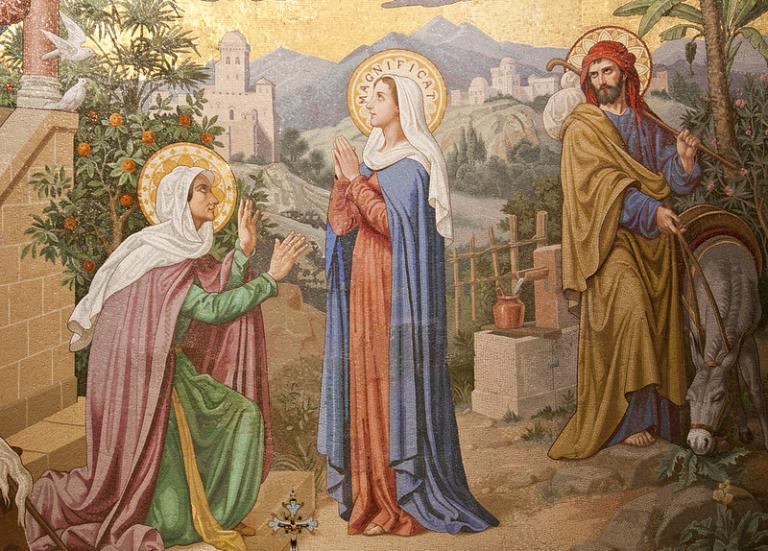
Mary’s song of praise, the Magnificat (Luke 1:46–55), bursts with themes of honor and shame that resonate deeply with the cultural world of first-century Palestine. In an honor-shame society like the one Mary inhabited, identity and relationships revolved around communal expectations and the avoidance of disgrace.
Yet in this famous hymn, Mary reveals a God who overturns human standards of honor, elevating the humble and bringing down the proud. Her words proclaim a vision of justice rooted in God’s mercy and faithfulness. This post examines how the themes of honor and shame shape the Magnificat, revealing God’s surprising and transformative work in the lives of individuals and communities.
Mary’s Honor Amid Social Shame
Mary’s situation, at first glance, carries the shadow of shame. A young, unwed woman—betrothed yet pregnant—risked severe judgment in her community. In a culture where a woman’s honor depended heavily on her chastity and conformity to social norms, Mary’s pregnancy would appear scandalous.
Yet her response is remarkable: she doesn’t dwell on the potential for disgrace. Instead, she declares, “My soul magnifies the Lord, and my spirit rejoices in God my Savior” (Luke 1:46–47). Her trust in God’s vindication transforms what the world sees as shame into a profound source of honor.
By choosing Mary, an ordinary girl from an unremarkable village, God flips social expectations on their head. The angel Gabriel calls her “highly favored” and “blessed among women” (Luke 1:28), language that confers a divine honor surpassing any human disgrace. Mary embraces this calling, proclaiming that “from now on all generations will call me blessed” (Luke 1:48).
Her honor doesn’t come from status or power but from God’s redemptive purpose. Mary’s song reminds us that God often works through those the world overlooks, granting them lasting significance in His kingdom.
Reversal of Honor and Shame
The Magnificat is a song of dramatic reversals. Mary proclaims, “He has brought down rulers from their thrones but has lifted up the humble” (Luke 1:52). This isn’t a polite reordering of priorities; it’s a radical upheaval.
In Mary’s world, honor often belonged to the wealthy and powerful, while the poor and humble bore the weight of social shame. But in God’s economy, these distinctions collapse. The proud are scattered, rulers dethroned, and the lowly exalted.
This theme runs throughout Luke’s Gospel. Jesus, like his mother, champions the marginalized: the poor, the outcast, and the sinner.
Mary’s song foreshadows his teachings, particularly the beatitudes (Luke 6:20–26), where the hungry are blessed and the rich warned of coming woes. Her words also echo the Old Testament, particularly Hannah’s song in 1 Samuel 2:1–10, which celebrates God’s justice in raising the lowly. In both cases, the message is clear: God’s honor is rooted not in human hierarchies but in His unwavering justice and mercy.
God’s Honor as the Basis for Reversal
Central to Mary’s Magnificat is her recognition of God’s character as the ultimate source of honor. She declares, “Holy is his name. His mercy extends to those who fear him, from generation to generation” (Luke 1:49–50). In these words, Mary points to a vision of honor that transcends human achievements. God’s holiness and faithfulness provide the foundation for the dramatic reversals she celebrates.
Mary concludes by situating her personal story within the larger narrative of God’s covenantal promises. “He has helped his servant Israel, remembering to be merciful to Abraham and his descendants forever” (Luke 1:54–55).
These lines root the reversals of honor and shame in God’s ongoing faithfulness to His people. The Magnificat isn’t just a personal testimony; it’s a declaration of God’s overarching plan to restore His creation and honor those who align themselves with His purposes.
Honor for the Lowly and Hungry
Mary’s song doesn’t stop at personal praise; it also reveals God’s concern for the disenfranchised. “He has filled the hungry with good things but has sent the rich away empty” (Luke 1:53). In the ancient world, hunger wasn’t just a physical condition—it was a marker of social shame. Yet Mary celebrates a God who feeds the hungry and leaves the self-satisfied without.
This theme resonates throughout Luke-Acts, where God’s grace consistently reaches the marginalized: women, Gentiles, the poor, etc. Mary’s song sets the stage for the Gospel’s emphasis on inclusion and justice. It’s a powerful reminder that in God’s kingdom, the powerless are not forgotten; they are cherished, dignified, and filled with good things.
A Theological Reflection on Honor and Shame
The Magnificat challenges us to rethink honor and shame in light of God’s kingdom. In Mary’s song, true honor isn’t earned by status or power but given by God to those who trust Him. In a world obsessed with reputation and achievement, the Magnificat invites us to embrace humility and align ourselves with God’s vision of justice and mercy.
Mary’s response to her calling also inspires. Faced with potential shame, she rejoices in God’s promises, trusting that His purposes will bring vindication. For modern believers, her example is a challenge and a comfort. Like Mary, we are called to trust God’s honor even when human eyes see only disgrace.
Conclusion
Mary’s Magnificat is far more than a personal hymn of praise; it’s a bold declaration of God’s justice and faithfulness. By elevating the humble and casting down the proud, God reveals a kingdom where honor belongs to the lowly and shame has no lasting power.
Mary’s song invites us to see the world differently, to hope in God’s promises, and to embrace the values of His kingdom. Through her voice, Luke’s Gospel proclaims the transformative power of God’s justice—a justice that lifts the shamed, humbles the mighty, and offers hope to all who trust in Him.
Women in Religion
History and Religion
Previous Post

November 25, 2025
You're Either a Louse or a Legend?
Next Post

January 6, 2026 Can Ethnic Pride Be Rational?
Recent Comments
"A thoughtful and thought-provoking article that raises important questions about the challenges facing the Western ..."
"to fit social or religious expectations. Especially women, who were expected to sacrifice everything to ..."
3 reasons you should not be ..."
"Powerful reminder short, sturdy truths can lose their weight if treated as slogans. The solas ..."
How Western Individualism Quietly Undermines the ..."
"If 'America’s deepest crisis is not merely political. It is moral and spiritual.' is in ..."
The Real Crisis Beneath America’s Social ..."
Browse Our Archives
Select a Category Atonement Biblical Theology Book Reviews China Chinese Church Chinese Culture Chinese Language Collectivism Contextualization Culture (General) Ecclesiology Evangelism Gospel Honor & Shame (Face) Interpretation/Exegesis Justification/Righteousness Missiology Mission Methods One Gospel for All Nations Other Practical Contextualization Reading Romans with Eastern Eyes Resources Romans Salvation (General) Saving God's Face Seeking God's Face The Cross in Context Theological Contextualization Theological Education Theology Uncategorized
Select a Month October 2026 September 2026 August 2026 July 2026 June 2026 May 2026 April 2026 March 2026 February 2026 January 2026 December 2025 November 2025 October 2025 September 2025 August 2025 July 2025 June 2025 May 2025 April 2025 March 2025 February 2025 January 2025 December 2024 November 2024 October 2024 September 2024 August 2024 July 2024 June 2024 May 2024 April 2024 March 2024 February 2024 January 2024 December 2023 November 2023 October 2023 September 2023 August 2023 July 2023 June 2023 May 2023 April 2023 March 2023 February 2023 January 2023 December 2022 November 2022 October 2022 September 2022 August 2022 July 2022 June 2022 May 2022 April 2022 March 2022 February 2022 January 2022 December 2021 November 2021 October 2021 September 2021 August 2021 July 2021 June 2021 May 2021 April 2021 March 2021 February 2021 January 2021 December 2020 November 2020 October 2020 September 2020 August 2020 July 2020 June 2020 May 2020 April 2020 March 2020 February 2020 January 2020 December 2019 November 2019 October 2019 September 2019 August 2019 July 2019 June 2019 May 2019 April 2019 March 2019 February 2019 January 2019 December 2018 November 2018 October 2018 September 2018 August 2018 July 2018 June 2018 May 2018 April 2018 March 2018 February 2018 January 2018 December 2017 November 2017 October 2017 September 2017 August 2017 July 2017 June 2017 May 2017 April 2017 March 2017 February 2017 January 2017 December 2016 November 2016 October 2016 September 2016 August 2016 July 2016 June 2016 May 2016 April 2016 March 2016 February 2016 January 2016 December 2015 November 2015 October 2015 September 2015 August 2015 July 2015 June 2015 May 2015 April 2015 March 2015 February 2015 January 2015 December 2014 November 2014 October 2014 September 2014 August 2014 July 2014 June 2014 May 2014 April 2014 March 2014 February 2014 January 2014 December 2013 November 2013 October 2013 September 2013 August 2013 July 2013 June 2013 May 2013 April 2013 March 2013 February 2013 January 2013 December 2012 November 2012
Follow Us!
TAKE THE
Religious Wisdom Quiz
How did Saul first offend God as king?
Select your answer to see how you score.
He took the Ark He defeated the Philistines He offered sacrifices himself He built an idol
Books by This Author Books by Brad Vaughn
Related posts from Saving God's Face

No King forgets his crown. Why do we?

Recovering Moral Vision Between Shame and Shamelessness

Refuge, Confession, and the End of Shame

Psalm 25 and the Fear of Being Put...
TRENDING AT PATHEOS Evangelical

Emotion in Early Christianity by Andrew Crislip
Andrew Crislip’s Emotion in Early Christianity examines an often overlooked dimension of...

16 Spiritual Touchstones for a More Grounded Life
After decades of spiritual study, here are 16 principles I try...

Catholic Evangelization: Sharing Your Faith Every Day
Welcome back to the Graceful Awakening mini-series called, “From Faith to Mission.” ...

The Pillar of the Boatmen: the Ancient Monument...
The Pillar of the Boatmen is a Romano-Gaulish sculpture that dates from...

In one sense walking into Westminster Abbey is like walking down the...

'Super Scam Me' Exposes AI Jon Bon Jovi...
Leslie Pickett believed she was in a relationship with Jon Bon Jovi....
view all Evangelical blogs
What Are Your Thoughts?leave a comment
Ad-Free & Subscriber Log-In Subscription Support
- About Us
- 2026 Calendar
- Videos
- Podcasts
- Library of World Religions
- Faith In Media Tracker
- Advertise With Us
- Write for Us
- Privacy Policy
- Terms of Service
- Do Not Sell My Data
- Contact Us
- Radiant Digital
- Manage Newsletter Subscriptions
- Unsubscribe From Notifications
- Sitemap
Copyright 2008-2026, Patheos. All rights reserved.
Subscription Support Ad-Free & Subscriber Log-In
Follow Patheos