
BuddhistCatholicContemplativeEvangelicalGeneral ChristianHinduJewishLatter-day SaintMuslimNew VisionsProgressive Christian
Beliefs
- Buddhist
- Catholic
- Contemplative
- Evangelical
- General Christian
- Hindu
- Jewish
- Latter-day Saint
- More Voices
- Muslim
- New Visions
- Pagan
- Progressive Christian
Topics
- Religion News
- Food and Religion
- Sports and Religion
- Religious Art
- Religious Music and Entertainment
- Religious Events
- History and Religion
- Style and Religion
- Politics and Religion
- Women in Religion
- Recreation Outdoors and Religion
- Business Finance and Religion
- Careers Workplace and Religion
- Education and Religion
- Family Parenting and Religion
- Health Fitness and Religion
- Home and Religion
- Relationships and Religion
- Technology and Religion
- Travel and Religion
Columnists
- Buddhist Columnists
- Business Finance and Religion Columnists
- Careers Workplace and Religion Columnists
- Catholic Columnists
- Contemplative Columnists
- Education and Religion Columnists
- Evangelists Columnists
- Family Parenting and Religion Columnists
- General Christian Columnists
- Health Fitness and Religion Columnists
- Hindu Columnists
- History and Religion Columnists
- Home and Religion Columnists
- Jewish Columnists
- More Voices Columnists
- Latter Day Columnists
- Muslim Columnists
- New Visions Columnists
- Nonreligious Columnists
- Pagan Columnists
- Politics and Religion Columnists
- Progressive Columnists
- Recreation Outdoors and Religion Columnists
- Relationships and Religion Columnists
- Religion News Columnists
- Religious Art Columnists
- Religious Events Columnists
- Religious Music and Entertainment Columnists
- Sports and Religion Columnists
- Style and Religion Columnists
- Technology and Religion Columnists
- Travel and Religion Columnists
- Women in Religion Columnists
Resource Library
- 2026 Calendar
- Library of World Religions
- The 100 Most Holy Places on Earth
- Patheos Answers
- Podcasts
- Videos
- Faith Leaders Database
- Anglican Episcopalian
- Bahai
- Baptist
- Buddhism
- Christianity
- Confucianism
- Eastern Orthodoxy
- Hinduism
- Holiness and Pentecostal
- ISKCON
- Islam
- Judaism
- Lutheran
- Methodist
- The Church of Jesus Christ of Latter-day Saints
- New Age
- Paganism
- Presbytarian and Reformed
- Protestantism
- Religion Behind the Scenes
- Roman Catholic
- Scientology
- Shia Islam
- Sikhism
- Sufism
- Sunni Islam
- Taoism
- Zen
- See all religions
Research Tools
 Ad-Free & Subscriber Log-In Subscription Support
Ad-Free & Subscriber Log-In Subscription Support
Follow Patheos 

- Trending:
- Forgiveness
- |
- Marriage
- |
- Consciousness
- |
- Death Penalty
- |
- Election
- |
- Halloween

-
Tools
-
Support the Work
- Home
- Evangelical
- The Heart of Biblical Sacrifice Is Not Blood and Death
The Heart of Biblical Sacrifice Is Not Blood and Death
Last updated on: November 11, 2025 at 3:43 am by Brad Vaughn
The Heart of Biblical Sacrifice Is Not Blood and Death 2025-07-21T12:43:55-07:00 Brad Vaughn
Patheos Explore the world's faith through different perspectives on religion and spirituality! Patheos has the views of the prevalent religions and spiritualities of the world.

Credit: CC 3.0
Popular evangelical theology often reduces Israel’s sacrificial system to a simple blood transaction: God punishes an animal instead of the sinner, extinguishing divine wrath through substitutionary death. While this contains elements of truth, it fundamentally misrepresents how biblical writers understood sacrifice.
In chapter 3 of The Cross in Context, I show that Israel’s offerings served a far richer purpose; they were the divinely appointed means for people to “draw near” to God, honoring him as the divine King who graciously dwells among his people.
Coming Near Through Offering
The Hebrew word for “offering” (qorban) comes from the root qrb, meaning “to come near” or “approach.” This linguistic insight proves crucial for understanding a sacrifice’s fundamental purpose. When Israelites brought offerings, they were not primarily focused on appeasing wrath or transferring guilt—they were drawing near to the holy God who had made his dwelling among them.
This “coming near” language permeates Leviticus. Whether offering burnt offerings, grain offerings, or peace offerings, worshippers were fundamentally seeking access to God’s presence. The sacrificial system provided the divinely ordained pathway for maintaining a covenant relationship with the Lord, who had chosen to dwell in their midst.
The Diverse Functions of Israel’s Offerings
I survey the five major types of offerings to reveal their varied but complementary functions:
Burnt offerings involved completely consuming an animal on the altar, creating “a pleasing aroma to the Lord.” Ancient sources like Philo recognized these as pure expressions of honor to God “for his own sake, and not for that of any other being.”
Grain offerings (minḥâ) used the same Hebrew word typically translated “gift” or “tribute” when offered to kings or authorities. These offerings explicitly functioned as expressions of respect and submission to divine authority.
Peace offerings were described as “food” (leḥem) for God, with worshippers sharing the meal alongside the divine King. This created fellowship and symbolically reinforced the covenant bond between God and his people.
The Reconciliation offering (traditionally called the “sin offering”) served to reconnect (ḥṭʾ) people to God when relationship had been disrupted. Through James Greenberg’s careful linguistic analysis, I show that the verb ḥṭʾ fundamentally means “to bind”—the offering binds worshippers back to God, repairing broken relationship.
Reparation offerings (traditionally “guilt offerings”) provided restitution for offenses against holy things or harm committed against others, ensuring that debts were properly paid.
Gifts, Tribute, and Symbolic Meals
What emerges from this survey challenges modern sensibilities but aligns perfectly with ancient Near Eastern royal protocol. Israel’s offerings functioned as tribute to their divine King, gifts that expressed honor and allegiance. They also served as symbolic meals shared between God and his people— not because God needs food, but because shared meals create and sustain relationships across cultures.
This food imagery isn’t primitive anthropomorphism but sophisticated covenant theology. Just as human relationships are forged and maintained through shared meals, so God’s people maintain their relationship with him through the symbolic act of providing food offerings that create “a pleasing aroma” when burned on the altar.
The Common Thread: Burning, Not Bleeding
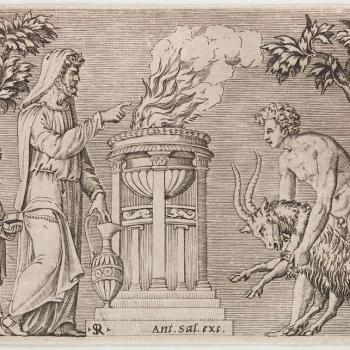
 Here I present a most important observation: the element common to every type of sacrifice isn’t the shedding of blood but the burning rite that produces “a pleasing aroma to the Lord.” Even grain offerings, which involve no animals, create this pleasing aroma when burned. The climax of sacrifice comes not with death but with the rising smoke that symbolically carries the offering to God.
This insight proves crucial for understanding passages like Numbers 16, where Aaron stops a plague by burning incense, not shedding blood. The aroma itself, not blood, accomplishes atonement and appeases God’s wrath.
Devoted Gifts and the Logic of Redemption
Here is where we need to be familiar with the concept of “devoted” gifts—offerings that become “most holy” and therefore irredeemable for ordinary use. If a devoted thing is alive, it must die, not as punishment but as the means of giving its entire life to God. This explains why blood matters in Leviticus 17:11: “the life of the flesh is in the blood,” so offering blood represents offering one’s entire life to God.
This framework sheds light on why Israel’s firstborn needed redemption. They belonged to God but weren’t devoted things because they could be redeemed through substitutes. The Levites served as living substitutes for the firstborn, while animal sacrifices served as devoted substitutes for the Levites. This creates a chain of substitution that ultimately protects human life while honoring God’s claim on his people.
Atonement Without Death
Perhaps most challenging to popular assumptions, atonement doesn’t inherently require death (as I demonstrate in the book). The priests made atonement by eating the reconciliation offering—yet they weren’t executed as substitutes. Flour could serve as a reconciliation offering for the poor, providing atonement without any death. Gold jewelry brought atonement in Numbers 31. Moses sought to make atonement through prayer alone in Exodus 32.
These passages prove that while death may sometimes be involved in atonement, it’s not the essential mechanism. Atonement fundamentally involves removing barriers to a relationship with God, whether through cleansing, binding, or honor-giving gifts.
Contemporary Applications
This understanding transforms how we contextualize the gospel. Rather than focusing primarily on divine wrath and punishment, we can emphasize atonement’s positive purpose: drawing near to God. This resonates powerfully in honor-shame cultures where gift-giving, respect for authority, and shared meals remain central to relationship-building.
I also explore how Eastern Orthodox concepts of theosis (divine participation) may bridge cultural gaps, particularly in contexts where union with the divine rather than legal justification provides more meaningful categories for understanding salvation.
Implications for Christology
These insights regarding devoted gifts, symbolic meals, and the purpose of drawing near to God prove essential for understanding Christ’s atoning work. Jesus serves as the ultimate devoted substitute, wholly given to God and therefore able to redeem those who belong to God. His sacrifice creates the ultimate “pleasing aroma” that enables us to draw near to the divine throne with confidence.
Rather than diminishing Christ’s work, this framework reveals its cosmic scope. Christ doesn’t merely satisfy legal requirements but restores the fundamental purpose of creation: intimate fellowship between God and his people in sacred space where heaven and earth intersect.
Understanding Israel’s sacrificial system in its proper context—as the means of drawing near to the divine King through honor-giving gifts that create fellowship—provides the essential foundation for grasping what Christ accomplishes through his perfect offering of himself to the Father. The goal isn’t merely forgiveness but restoration to the presence of God, where we can serve as his royal priesthood in the renewed creation.
Previous Post

October 28, 2025
Self-Ambition Is a Cancer
Next Post

November 25, 2025 You're Either a Louse or a Legend?
Recent Comments
"A thoughtful and thought-provoking article that raises important questions about the challenges facing the Western ..."
"to fit social or religious expectations. Especially women, who were expected to sacrifice everything to ..."
3 reasons you should not be ..."
"Powerful reminder short, sturdy truths can lose their weight if treated as slogans. The solas ..."
How Western Individualism Quietly Undermines the ..."
"If 'America’s deepest crisis is not merely political. It is moral and spiritual.' is in ..."
The Real Crisis Beneath America’s Social ..."
Browse Our Archives
Select a Category Atonement Biblical Theology Book Reviews China Chinese Church Chinese Culture Chinese Language Collectivism Contextualization Culture (General) Ecclesiology Evangelism Gospel Honor & Shame (Face) Interpretation/Exegesis Justification/Righteousness Missiology Mission Methods One Gospel for All Nations Other Practical Contextualization Reading Romans with Eastern Eyes Resources Romans Salvation (General) Saving God's Face Seeking God's Face The Cross in Context Theological Contextualization Theological Education Theology Uncategorized
Select a Month October 2026 September 2026 August 2026 July 2026 June 2026 May 2026 April 2026 March 2026 February 2026 January 2026 December 2025 November 2025 October 2025 September 2025 August 2025 July 2025 June 2025 May 2025 April 2025 March 2025 February 2025 January 2025 December 2024 November 2024 October 2024 September 2024 August 2024 July 2024 June 2024 May 2024 April 2024 March 2024 February 2024 January 2024 December 2023 November 2023 October 2023 September 2023 August 2023 July 2023 June 2023 May 2023 April 2023 March 2023 February 2023 January 2023 December 2022 November 2022 October 2022 September 2022 August 2022 July 2022 June 2022 May 2022 April 2022 March 2022 February 2022 January 2022 December 2021 November 2021 October 2021 September 2021 August 2021 July 2021 June 2021 May 2021 April 2021 March 2021 February 2021 January 2021 December 2020 November 2020 October 2020 September 2020 August 2020 July 2020 June 2020 May 2020 April 2020 March 2020 February 2020 January 2020 December 2019 November 2019 October 2019 September 2019 August 2019 July 2019 June 2019 May 2019 April 2019 March 2019 February 2019 January 2019 December 2018 November 2018 October 2018 September 2018 August 2018 July 2018 June 2018 May 2018 April 2018 March 2018 February 2018 January 2018 December 2017 November 2017 October 2017 September 2017 August 2017 July 2017 June 2017 May 2017 April 2017 March 2017 February 2017 January 2017 December 2016 November 2016 October 2016 September 2016 August 2016 July 2016 June 2016 May 2016 April 2016 March 2016 February 2016 January 2016 December 2015 November 2015 October 2015 September 2015 August 2015 July 2015 June 2015 May 2015 April 2015 March 2015 February 2015 January 2015 December 2014 November 2014 October 2014 September 2014 August 2014 July 2014 June 2014 May 2014 April 2014 March 2014 February 2014 January 2014 December 2013 November 2013 October 2013 September 2013 August 2013 July 2013 June 2013 May 2013 April 2013 March 2013 February 2013 January 2013 December 2012 November 2012
Follow Us!
TAKE THE
Religious Wisdom Quiz
Who was the mother of Samuel?
Select your answer to see how you score.
Mary Deborah Sarah Hannah
Books by This Author Books by Brad Vaughn
Related posts from Saving God's Face
How Biblical Sacrifices Vindicate God’s Glory
What Exactly Does Christ Purify?

Why Do I Wear a Guillotine Around My...
What are Essential Elements of Atonement?
TRENDING AT PATHEOS Evangelical

The Real AI Story Is Adoption Without Trust
Artificial intelligence has crossed a political threshold. It is no longer a...

A new article, written by Jeff Lindsay and Gale L. Pooley,...

Swimfan: Forgotten Aughts Pleasures
This is a recovery effort. In 2002, My Big Fat Greek Wedding...

Top Three Anti-Catholic Lies About Catholicism
This is my initial transcript for the video, "THE 3 WORST...

Pope Leo Celebrates Mass for Nurses & Docs...
I don't have any idea how he did it, but Pope Leo...

The Sermon on the Mount, Part I: Matthew...
The Sermon on the Mount, Part I (Matthew 4:12-5:12) St. Matthew moves...
view all Evangelical blogs
What Are Your Thoughts?leave a comment
Ad-Free & Subscriber Log-In Subscription Support
- About Us
- 2026 Calendar
- Videos
- Podcasts
- Library of World Religions
- Faith In Media Tracker
- Advertise With Us
- Write for Us
- Privacy Policy
- Terms of Service
- Do Not Sell My Data
- Contact Us
- Radiant Digital
- Manage Newsletter Subscriptions
- Unsubscribe From Notifications
- Sitemap
Copyright 2008-2026, Patheos. All rights reserved.
Subscription Support Ad-Free & Subscriber Log-In
Follow Patheos