
BuddhistCatholicContemplativeEvangelicalGeneral ChristianHinduJewishLatter-day SaintMuslimNew VisionsProgressive Christian
Beliefs
- Buddhist
- Catholic
- Contemplative
- Evangelical
- General Christian
- Hindu
- Jewish
- Latter-day Saint
- More Voices
- Muslim
- New Visions
- Pagan
- Progressive Christian
Topics
- Religion News
- Food and Religion
- Sports and Religion
- Religious Art
- Religious Music and Entertainment
- Religious Events
- History and Religion
- Style and Religion
- Politics and Religion
- Women in Religion
- Recreation Outdoors and Religion
- Business Finance and Religion
- Careers Workplace and Religion
- Education and Religion
- Family Parenting and Religion
- Health Fitness and Religion
- Home and Religion
- Relationships and Religion
- Technology and Religion
- Travel and Religion
Columnists
- Buddhist Columnists
- Business Finance and Religion Columnists
- Careers Workplace and Religion Columnists
- Catholic Columnists
- Contemplative Columnists
- Education and Religion Columnists
- Evangelists Columnists
- Family Parenting and Religion Columnists
- General Christian Columnists
- Health Fitness and Religion Columnists
- Hindu Columnists
- History and Religion Columnists
- Home and Religion Columnists
- Jewish Columnists
- More Voices Columnists
- Latter Day Columnists
- Muslim Columnists
- New Visions Columnists
- Nonreligious Columnists
- Pagan Columnists
- Politics and Religion Columnists
- Progressive Columnists
- Recreation Outdoors and Religion Columnists
- Relationships and Religion Columnists
- Religion News Columnists
- Religious Art Columnists
- Religious Events Columnists
- Religious Music and Entertainment Columnists
- Sports and Religion Columnists
- Style and Religion Columnists
- Technology and Religion Columnists
- Travel and Religion Columnists
- Women in Religion Columnists
Resource Library
- 2026 Calendar
- Library of World Religions
- The 100 Most Holy Places on Earth
- Patheos Answers
- Podcasts
- Videos
- Faith Leaders Database
- Anglican Episcopalian
- Bahai
- Baptist
- Buddhism
- Christianity
- Confucianism
- Eastern Orthodoxy
- Hinduism
- Holiness and Pentecostal
- ISKCON
- Islam
- Judaism
- Lutheran
- Methodist
- The Church of Jesus Christ of Latter-day Saints
- New Age
- Paganism
- Presbytarian and Reformed
- Protestantism
- Religion Behind the Scenes
- Roman Catholic
- Scientology
- Shia Islam
- Sikhism
- Sufism
- Sunni Islam
- Taoism
- Zen
- See all religions
Research Tools
 Ad-Free & Subscriber Log-In Subscription Support
Follow Patheos 

- Trending:
- Advent
- |
- Forgiveness
- |
- Thanksgiving
- |
- Election
- |
- Seasonal Holidays
- |
- Marriage

-
Tools
-
Support the Work
- Home
- Evangelical
- “Why Have You Forsaken Me?” and the Problem of Evil
“Why Have You Forsaken Me?” and the Problem of Evil
Last updated on: September 16, 2025 at 4:34 am by Brad Vaughn
“Why Have You Forsaken Me?” and the Problem of Evil 2025-04-20T14:46:04-07:00 Brad Vaughn
Patheos Explore the world's faith through different perspectives on religion and spirituality! Patheos has the views of the prevalent religions and spiritualities of the world.

Public Domain
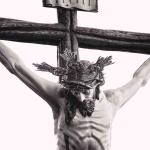
Matthew 27:46 is one of the most unsettling verses in all of Scripture. As Jesus hangs on the cross, he cries out, “My God, my God, why have you forsaken me?” It’s not a rhetorical question. And it’s not just a quote from Psalm 22—it’s a raw, personal expression of abandonment. In that one cry, we see the deep mystery of suffering laid bare.
Many Christians read this moment through the lens of penal substitution: Jesus is being punished in our place, bearing the wrath of God so we don’t have to. But let’s set that framework aside for a moment—not to reject it but to listen afresh.
If we take the words at face value, without importing that interpretive grid, something else comes into focus. This cry of dereliction becomes a small but powerful lens through which we see the core question behind every theodicy: How can God be good and yet allow this?
Not a Philosophical Problem to Solve
Theodicy typically asks: “How can a good and powerful God allow suffering and evil in the world?” That’s a question we ask from the outside, as thinkers, theologians, and at times, sufferers.
Yet, what happens when the question isn’t asked about God but to God? That’s what happens on the cross.
Jesus doesn’t offer an explanation for evil. He doesn’t give a logical defense of God’s justice. Instead, he voices the very question that makes theodicy necessary in the first place. And here’s the surprising thing: the Gospels don’t rush in to resolve it. Matthew just leaves it there.
Still, that doesn’t mean his cry is meaningless or merely expressive. In fact, the very fact that Jesus utters it, that this question comes from the mouth of the Son of God, gives it theological weight. It dignifies the cry of every sufferer who has asked the same thing. And it reframes the conversation about evil and suffering—not by solving it, but by relocating it.
(For a fuller exegetical study on this text, see my comments in The Cross in Context.)
Jesus Bears the Full Weight of Suffering
Jesus doesn’t just witness evil—he bears it. He doesn’t just affirm our pain—he inhabits it. In that moment, he doesn’t speak as one offering theological commentary. He speaks as one who has been crushed under the weight of injustice, abandonment, and death.
That’s important. Because it means that at the heart of Christianity, we don’t have a theodicy that explains suffering from a distance. We have a God who joins us in it. Jesus’ cry isn’t a theological footnote—it’s a declaration that divine love refuses to exempt itself from the worst of what we endure.
This is the scandal: God doesn’t “fix” evil in the abstract. He faces it. He enters into it. He’s not absent from the cross—he’s hidden in the cry of the forsaken.
Still Praying, Even While Protesting
It’s worth noting that Jesus doesn’t simply say, “God has forsaken me.” He says, “My God, my God…” Even in his sense of abandonment, the relationship remains intact. The protest is lodged within faith. There is still prayer, still trust. That paradox— forsakenness without rejection— is the mystery at the center of this cry.
And here’s something else: by quoting Psalm 22, Jesus invites us to recall the whole psalm, not just the first line. It begins in agony, yes, but it ends in hope. The sufferer is vindicated. Ultimately, he is not forsaken.
The God who seemed absent turns out not to have abandoned his own after all. So the cry from the cross is not just lament; it carries with it the shape of resurrection. Not triumphalism but hope after despair.
Implications for How We Talk About God and Evil
If we read Jesus’ cry on its own terms, apart from a penal substitutionary lens, we’re still left with a profound theology of suffering. But the emphasis shifts:
- First, God does not stand outside human pain—he steps into it. That changes how we talk to people in suffering. It also changes how we imagine God’s presence in our own pain.
- Second, lament becomes a legitimate and even faithful response to God. There is no rebuke from the Father here. No correction. The Father receives the cry in silence—and, in time, responds not with words but with resurrection.
- Third, evil is not rationalized or explained away. It is absorbed, taken up, and yet not given the final word.
The Cross Reframes the Theodicy Question
Jesus’ cry doesn’t remove the tension between divine goodness and human suffering—it intensifies it. But it also transforms it. It means that the question “Where is God in suffering?” can never again be answered with “Nowhere.” The Christian answer, in its simplest form, is: Right there.
Not explaining it. Not preventing it. Rather, bearing it.
That may not satisfy every philosophical curiosity. But it is the kind of answer that can sustain faith. Because it means our pain is not meaningless. It has been entered. And if entered, then redeemed.
A God Who Doesn’t Let Go
“My God, my God, why have you forsaken me?” That is not just Jesus’ question. It’s ours. And what we discover in the Gospel is that God does not answer with an argument. He answers by showing up.
That’s the center of the Christian story. Not that we are spared from suffering, but that God is found in it. Not that we are given explanations, but that we are given Christ.
That, maybe more than any theory of theodicy, is what we need when we suffer. A God who cries with us, and for us. A God who doesn’t let go.
Previous Post
September 2, 2025
Why "Jesus Died the Death I Deserve" Misses the Point
Next Post

September 30, 2025 The Temple as Sacred Space for Divine Honor
Recent Comments
"Excellent axiology."
Recovering Moral Vision Between Shame and ..."
"A thoughtful and thought-provoking article that raises important questions about the challenges facing the Western ..."
"to fit social or religious expectations. Especially women, who were expected to sacrifice everything to ..."
3 reasons you should not be ..."
"Powerful reminder short, sturdy truths can lose their weight if treated as slogans. The solas ..."
How Western Individualism Quietly Undermines the ..."
Browse Our Archives
Select a Category Atonement Biblical Theology Book Reviews China Chinese Church Chinese Culture Chinese Language Collectivism Contextualization Culture (General) Ecclesiology Evangelism Gospel Honor & Shame (Face) Interpretation/Exegesis Justification/Righteousness Missiology Mission Methods One Gospel for All Nations Other Practical Contextualization Reading Romans with Eastern Eyes Resources Romans Salvation (General) Saving God's Face Seeking God's Face The Cross in Context Theological Contextualization Theological Education Theology Uncategorized
Select a Month November 2026 October 2026 September 2026 August 2026 July 2026 June 2026 May 2026 April 2026 March 2026 February 2026 January 2026 December 2025 November 2025 October 2025 September 2025 August 2025 July 2025 June 2025 May 2025 April 2025 March 2025 February 2025 January 2025 December 2024 November 2024 October 2024 September 2024 August 2024 July 2024 June 2024 May 2024 April 2024 March 2024 February 2024 January 2024 December 2023 November 2023 October 2023 September 2023 August 2023 July 2023 June 2023 May 2023 April 2023 March 2023 February 2023 January 2023 December 2022 November 2022 October 2022 September 2022 August 2022 July 2022 June 2022 May 2022 April 2022 March 2022 February 2022 January 2022 December 2021 November 2021 October 2021 September 2021 August 2021 July 2021 June 2021 May 2021 April 2021 March 2021 February 2021 January 2021 December 2020 November 2020 October 2020 September 2020 August 2020 July 2020 June 2020 May 2020 April 2020 March 2020 February 2020 January 2020 December 2019 November 2019 October 2019 September 2019 August 2019 July 2019 June 2019 May 2019 April 2019 March 2019 February 2019 January 2019 December 2018 November 2018 October 2018 September 2018 August 2018 July 2018 June 2018 May 2018 April 2018 March 2018 February 2018 January 2018 December 2017 November 2017 October 2017 September 2017 August 2017 July 2017 June 2017 May 2017 April 2017 March 2017 February 2017 January 2017 December 2016 November 2016 October 2016 September 2016 August 2016 July 2016 June 2016 May 2016 April 2016 March 2016 February 2016 January 2016 December 2015 November 2015 October 2015 September 2015 August 2015 July 2015 June 2015 May 2015 April 2015 March 2015 February 2015 January 2015 December 2014 November 2014 October 2014 September 2014 August 2014 July 2014 June 2014 May 2014 April 2014 March 2014 February 2014 January 2014 December 2013 November 2013 October 2013 September 2013 August 2013 July 2013 June 2013 May 2013 April 2013 March 2013 February 2013 January 2013 December 2012 November 2012
Follow Us!
TAKE THE
Religious Wisdom Quiz
In the Parable of the Sower, what does the seed represent?
Select your answer to see how you score.
The Law Money The Word of God Judgment
Books by This Author Books by Brad Vaughn
Related posts from Saving God's Face
Coming to ETS? Don't Miss This Session

No King forgets his crown. Why do we?
Recovering Moral Vision Between Shame and Shamelessness
TRENDING AT PATHEOS Evangelical

Rock N' Roll-- Morphing into/for a New Generation...
Well, should we be grateful, or is rock n' roll just dead? ...

Ansley Gordon Brings Faith and Fresh Stories to...
For screenwriter and actress Ansley Gordon, Christmas has always been about more...

Chris Pratt on Veterans, Faith, “The Way of...
For Chris Pratt, service is not something that ends when a person...

Chapter 5, Sarah: The Quest for Safety in...
Open and Relational Theology & Social Psychology About this series: This series...

When Worry Gets You Nowhere, How Can Faith...
Sometimes, we think that by worrying, we can somehow predict the future....

The Wasp And I: Meditations on Repentance
How can we enter the power and joy of the repentant self...
view all Evangelical blogs
What Are Your Thoughts?leave a comment
Ad-Free & Subscriber Log-In Subscription Support
- About Us
- 2026 Calendar
- Videos
- Podcasts
- Library of World Religions
- Faith In Media Tracker
- Advertise With Us
- Write for Us
- Privacy Policy
- Terms of Service
- Do Not Sell My Data
- Contact Us
- Radiant Digital
- Manage Newsletter Subscriptions
- Unsubscribe From Notifications
- Sitemap
Copyright 2008-2026, Patheos, part of the Radiant Digital network of media brands. All rights reserved.
Subscription Support Ad-Free & Subscriber Log-In
Follow Patheos