
BuddhistCatholicContemplativeEvangelicalGeneral ChristianHinduJewishLatter-day SaintMuslimNew VisionsProgressive Christian
Beliefs
- Buddhist
- Catholic
- Contemplative
- Evangelical
- General Christian
- Hindu
- Jewish
- Latter-day Saint
- More Voices
- Muslim
- New Visions
- Pagan
- Progressive Christian
Topics
- Religion News
- Food and Religion
- Sports and Religion
- Religious Art
- Religious Music and Entertainment
- Religious Events
- History and Religion
- Style and Religion
- Politics and Religion
- Women in Religion
- Recreation Outdoors and Religion
- Business Finance and Religion
- Careers Workplace and Religion
- Education and Religion
- Family Parenting and Religion
- Health Fitness and Religion
- Home and Religion
- Relationships and Religion
- Technology and Religion
- Travel and Religion
Columnists
- Buddhist Columnists
- Business Finance and Religion Columnists
- Careers Workplace and Religion Columnists
- Catholic Columnists
- Contemplative Columnists
- Education and Religion Columnists
- Evangelists Columnists
- Family Parenting and Religion Columnists
- General Christian Columnists
- Health Fitness and Religion Columnists
- Hindu Columnists
- History and Religion Columnists
- Home and Religion Columnists
- Jewish Columnists
- More Voices Columnists
- Latter Day Columnists
- Muslim Columnists
- New Visions Columnists
- Nonreligious Columnists
- Pagan Columnists
- Politics and Religion Columnists
- Progressive Columnists
- Recreation Outdoors and Religion Columnists
- Relationships and Religion Columnists
- Religion News Columnists
- Religious Art Columnists
- Religious Events Columnists
- Religious Music and Entertainment Columnists
- Sports and Religion Columnists
- Style and Religion Columnists
- Technology and Religion Columnists
- Travel and Religion Columnists
- Women in Religion Columnists
Resource Library
- 2026 Calendar
- Library of World Religions
- The 100 Most Holy Places on Earth
- Patheos Answers
- Podcasts
- Videos
- Faith Leaders Database
- Anglican Episcopalian
- Bahai
- Baptist
- Buddhism
- Christianity
- Confucianism
- Eastern Orthodoxy
- Hinduism
- Holiness and Pentecostal
- ISKCON
- Islam
- Judaism
- Lutheran
- Methodist
- The Church of Jesus Christ of Latter-day Saints
- New Age
- Paganism
- Presbytarian and Reformed
- Protestantism
- Religion Behind the Scenes
- Roman Catholic
- Scientology
- Shia Islam
- Sikhism
- Sufism
- Sunni Islam
- Taoism
- Zen
- See all religions
Research Tools
 Ad-Free & Subscriber Log-In Subscription Support
Ad-Free & Subscriber Log-In Subscription Support
Follow Patheos 

- Trending:
- Forgiveness
- |
- Marriage
- |
- Consciousness
- |
- Death Penalty
- |
- Election
- |
- Halloween

-
Tools
-
Support the Work
- Home
- Evangelical
- History and Religion
- Hypocrisy in the Bible. Doing Right Things for Wrong Reasons
Hypocrisy in the Bible. Doing Right Things for Wrong Reasons
Last updated on: June 24, 2025 at 3:21 am by Brad Vaughn
Hypocrisy in the Bible. Doing Right Things for Wrong Reasons 2025-03-13T11:41:33-07:00 Brad Vaughn
Patheos Explore the world's faith through different perspectives on religion and spirituality! Patheos has the views of the prevalent religions and spiritualities of the world.
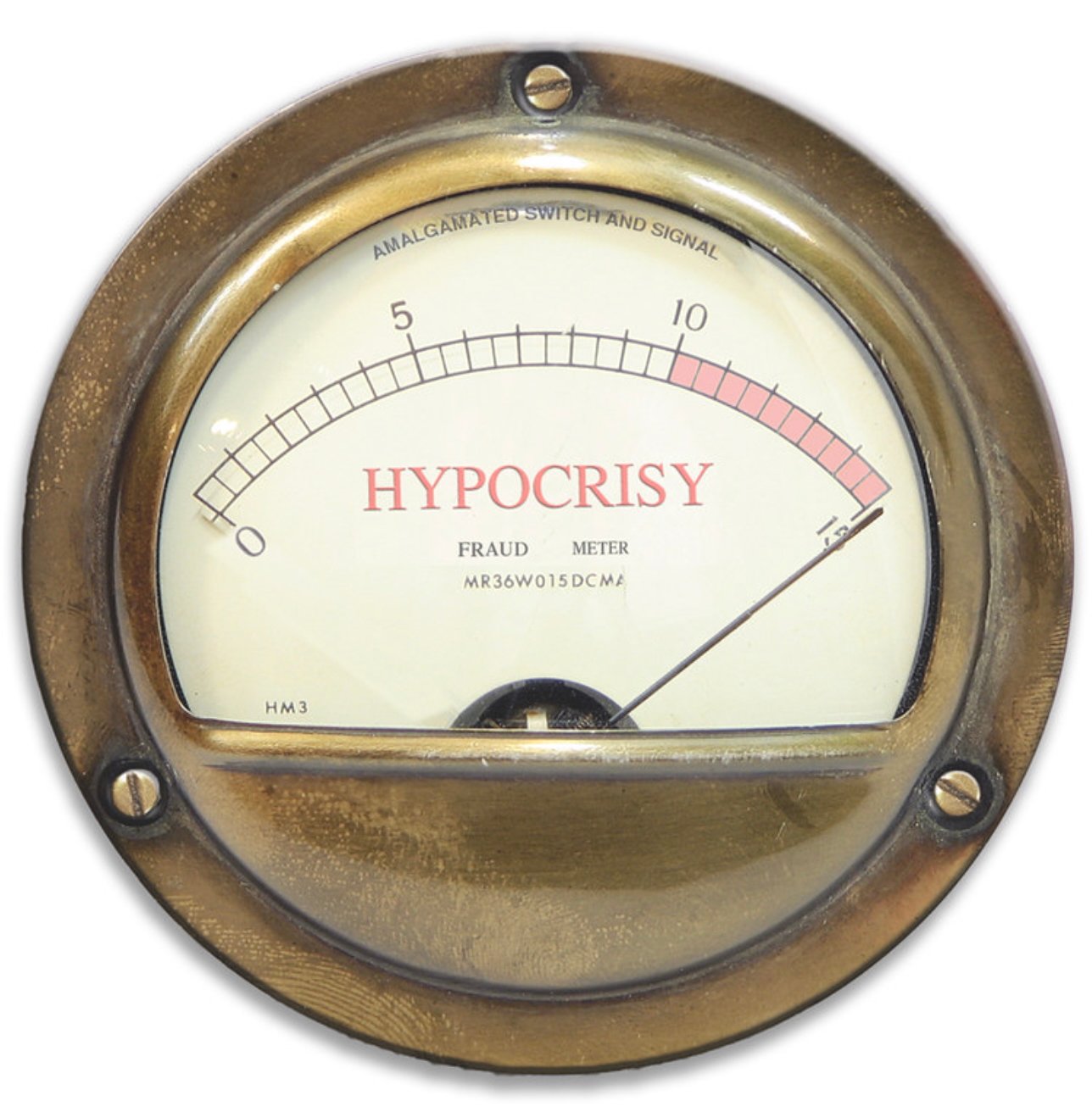
Credit: CC 2.0
When we think of hypocrisy, we usually imagine people who say one thing but do another: those who “talk the talk” but don’t “walk the walk.” And yes, that’s part of it. But the Bible takes us deeper.
According to Scripture, hypocrisy isn’t just about inconsistency or moral failure; it’s about doing the right things for the wrong reasons. It’s about using religious practices to mask self-centeredness— seeking human approval rather than God’s.
What Does the Bible Say About Hypocrisy?
Jesus reserved some of His harshest words for hypocrites. In Matthew 6, He describes people who give, pray, and fast — not out of love for God, but to be seen and praised by others. He warns:
“Beware of practicing your righteousness before other people in order to be seen by them, for then you will have no reward from your Father who is in heaven.” (Matthew 6:1, ESV)
Notice what’s striking here: Jesus doesn’t criticize what they are doing (e.g., giving to the poor, praying, fasting) these are good, even commanded, behaviors. But He rebukes why they are doing them. Their goal is to impress people, not to honor God. This tells us something essential: In God’s eyes, motives matter as much as actions.
Performance Without Relationship
Biblically, hypocrisy is not just a moral issue; it’s a relational failure. It’s living for an audience of many, rather than an audience of One. The Greek word hypokrites referred to actors in ancient theater–– people who wore masks to play a role. That’s the image Jesus uses. A hypocrite performs for the crowd but hides their true heart.
In Matthew 23, Jesus says to the Pharisees:
“For you are like whitewashed tombs, which outwardly appear beautiful, but within are full of dead people’s bones and all uncleanness.” (Matthew 23:27, ESV)
Think about that. These were the religious elites, people known for strict obedience to the law. Outwardly, they looked holy. But Jesus says their hearts were empty, even dead. Why? Because they used religion as a tool for self-promotion, not as a way to seek God. They were more concerned with managing appearances than cultivating a real relationship with the Lord.
Hypocrisy, Honor, and Shame
If we read these passages through the lens of honor and shame, the picture sharpens. In the biblical world, honor (e.g., social standing and public reputation) shaped everything. Many hypocrites in Jesus’ day weren’t simply insecure; they were chasing honor from people. Their religious behavior was a way of “saving face,” not seeking God’s glory.
But God’s view of honor is radically different. As I’ve pointed out in various places, true honor comes from God alone — from being rightly related to Him — not from public performance or social recognition. Hypocrisy, then, is not just a private failure; it’s a refusal to honor God as God. It’s a counterfeit righteousness aimed at securing human praise, not divine approval.
Hypocrisy is false honor: trying to “look good” before others while standing empty-handed before God.
Biblical Examples of Hypocrisy
The Bible gives us vivid stories that expose hypocrisy. For example,…
- Ananias and Sapphira (Acts 5:1–11): They sold land and publicly pretended to give all the money to the church but secretly kept some for themselves. Their sin wasn’t just greed — it was lying to God to appear generous and righteous.
- Simon the Sorcerer (Acts 8:9–24): He wanted to buy the power of the Holy Spirit, not to serve God, but to elevate his own status. Peter rebukes him sharply, showing that seeking God’s gifts for selfish gain is hypocrisy.
- Peter’s Hypocrisy (Galatians 2:11–14): Paul confronts Peter for acting one way with Gentiles and another way with Jews — all because Peter feared human disapproval. Even apostles can fall into hypocrisy when they let fear of others override faithfulness to God.
Hypocrisy in Our Lives Today
Modern Christians face the same dangers. Hypocrisy isn’t limited to obvious moral failures. It shows up whenever we do the right things for the wrong reasons:
- Worship to impress others, not to honor God.
- Serving to be recognized, not to love others.
- Giving to gain influence, not to glorify God.
- Preaching truth without love.
It’s easy to slip into performance mode — whether on social media, in church leadership, or everyday life. But Jesus warns us that if we seek human applause, that’s all we’ll get (Matthew 6:2). The applause of heaven is reserved for those who live for God’s eyes alone.
What’s the Cure for Hypocrisy?
So how do we fight hypocrisy — in ourselves and in our churches?
- Seek God’s approval above all. “For am I now seeking the approval of man, or of God? … If I were still trying to please man, I would not be a servant of Christ” (Galatians 1:10). Ask yourself regularly: Whose approval am I after?
- Be honest about your motives.
Pray as the psalmist did: “Search me, O God, and know my heart! Try me and know my thoughts!” (Psalm 139:23) Keep asking: Why am I doing this? Who am I trying to impress — God or others?
- Confess and repent.
The solution is not to stop doing good things but to repent of doing them for the wrong reasons. God wants honest hearts, not perfect performances.
- Pursue love and relationship with God.
As our love for God grows, our need to impress others shrinks. Jesus said the greatest commandment is: “Love the Lord your God with all your heart and with all your soul and with all your mind” (Matthew 22:37). The deeper our relationship with God, the less room hypocrisy has to live.
From Hypocrisy to Holiness
In the end, hypocrisy is about misplaced worship — it’s worshiping our self-image over God. But here’s the hope of the gospel: Jesus offers grace even to hypocrites like us. He doesn’t just command us to stop pretending — He invites us to be transformed, from the inside out.
As we grow in grace, may we become people who do the right things for the right reasons — not to build our own name, but to honor the God who “sees in secret” and “rewards openly” (Matthew 6:4).
Let’s seek the applause of heaven, not the applause of men.
History and Religion
Relationships and Religion
Previous Post

June 10, 2025
Glory, Violence, and the Gospel of Peace
Next Post

July 8, 2025 What if we cared about God’s reputation more than our own?
Recent Comments
"A thoughtful and thought-provoking article that raises important questions about the challenges facing the Western ..."
"to fit social or religious expectations. Especially women, who were expected to sacrifice everything to ..."
3 reasons you should not be ..."
"Powerful reminder short, sturdy truths can lose their weight if treated as slogans. The solas ..."
How Western Individualism Quietly Undermines the ..."
"If 'America’s deepest crisis is not merely political. It is moral and spiritual.' is in ..."
The Real Crisis Beneath America’s Social ..."
Browse Our Archives
Select a Category Atonement Biblical Theology Book Reviews China Chinese Church Chinese Culture Chinese Language Collectivism Contextualization Culture (General) Ecclesiology Evangelism Gospel Honor & Shame (Face) Interpretation/Exegesis Justification/Righteousness Missiology Mission Methods One Gospel for All Nations Other Practical Contextualization Reading Romans with Eastern Eyes Resources Romans Salvation (General) Saving God's Face Seeking God's Face The Cross in Context Theological Contextualization Theological Education Theology Uncategorized
Select a Month October 2026 September 2026 August 2026 July 2026 June 2026 May 2026 April 2026 March 2026 February 2026 January 2026 December 2025 November 2025 October 2025 September 2025 August 2025 July 2025 June 2025 May 2025 April 2025 March 2025 February 2025 January 2025 December 2024 November 2024 October 2024 September 2024 August 2024 July 2024 June 2024 May 2024 April 2024 March 2024 February 2024 January 2024 December 2023 November 2023 October 2023 September 2023 August 2023 July 2023 June 2023 May 2023 April 2023 March 2023 February 2023 January 2023 December 2022 November 2022 October 2022 September 2022 August 2022 July 2022 June 2022 May 2022 April 2022 March 2022 February 2022 January 2022 December 2021 November 2021 October 2021 September 2021 August 2021 July 2021 June 2021 May 2021 April 2021 March 2021 February 2021 January 2021 December 2020 November 2020 October 2020 September 2020 August 2020 July 2020 June 2020 May 2020 April 2020 March 2020 February 2020 January 2020 December 2019 November 2019 October 2019 September 2019 August 2019 July 2019 June 2019 May 2019 April 2019 March 2019 February 2019 January 2019 December 2018 November 2018 October 2018 September 2018 August 2018 July 2018 June 2018 May 2018 April 2018 March 2018 February 2018 January 2018 December 2017 November 2017 October 2017 September 2017 August 2017 July 2017 June 2017 May 2017 April 2017 March 2017 February 2017 January 2017 December 2016 November 2016 October 2016 September 2016 August 2016 July 2016 June 2016 May 2016 April 2016 March 2016 February 2016 January 2016 December 2015 November 2015 October 2015 September 2015 August 2015 July 2015 June 2015 May 2015 April 2015 March 2015 February 2015 January 2015 December 2014 November 2014 October 2014 September 2014 August 2014 July 2014 June 2014 May 2014 April 2014 March 2014 February 2014 January 2014 December 2013 November 2013 October 2013 September 2013 August 2013 July 2013 June 2013 May 2013 April 2013 March 2013 February 2013 January 2013 December 2012 November 2012
Follow Us!
TAKE THE
Religious Wisdom Quiz
In Jude, what did the Lord do to the people he saved from Egypt who did not believe?
Select your answer to see how you score.
Destroyed them Let them wander forty years Punished them Cast them into the wilderness
Books by This Author Books by Brad Vaughn
Related posts from Saving God's Face

No King forgets his crown. Why do we?

Recovering Moral Vision Between Shame and Shamelessness

Refuge, Confession, and the End of Shame

Psalm 25 and the Fear of Being Put...
TRENDING AT PATHEOS Evangelical

The First Eucharistic Controversy: Christ’s Real Presence
For Catholics, the Eucharist is the source and summit of the Christian...

What a Stop Sign Can Teach Us About...
How to Make a Decision When You Can't Hear God Main point:...

Archdiocese Hosts Military Marriage Retreat in Germany
RASTATT, Germany — The transient military lifestyle, with its frequent deployments and...

Nearly every morning, I make the drive to Detroit with my high-school-age...

The Real AI Story Is Adoption Without Trust
Artificial intelligence has crossed a political threshold. It is no longer a...

A new article, written by Jeff Lindsay and Gale L. Pooley,...
view all Evangelical blogs
What Are Your Thoughts?leave a comment
Ad-Free & Subscriber Log-In Subscription Support
- About Us
- 2026 Calendar
- Videos
- Podcasts
- Library of World Religions
- Faith In Media Tracker
- Advertise With Us
- Write for Us
- Privacy Policy
- Terms of Service
- Do Not Sell My Data
- Contact Us
- Radiant Digital
- Manage Newsletter Subscriptions
- Unsubscribe From Notifications
- Sitemap
Copyright 2008-2026, Patheos. All rights reserved.
Subscription Support Ad-Free & Subscriber Log-In
Follow Patheos