
BuddhistCatholicContemplativeEvangelicalGeneral ChristianHinduJewishLatter-day SaintMuslimNew VisionsProgressive Christian
Beliefs
- Buddhist
- Catholic
- Contemplative
- Evangelical
- General Christian
- Hindu
- Jewish
- Latter-day Saint
- More Voices
- Muslim
- New Visions
- Pagan
- Progressive Christian
Topics
- Religion News
- Food and Religion
- Sports and Religion
- Religious Art
- Religious Music and Entertainment
- Religious Events
- History and Religion
- Style and Religion
- Politics and Religion
- Women in Religion
- Recreation Outdoors and Religion
- Business Finance and Religion
- Careers Workplace and Religion
- Education and Religion
- Family Parenting and Religion
- Health Fitness and Religion
- Home and Religion
- Relationships and Religion
- Technology and Religion
- Travel and Religion
Columnists
- Buddhist Columnists
- Business Finance and Religion Columnists
- Careers Workplace and Religion Columnists
- Catholic Columnists
- Contemplative Columnists
- Education and Religion Columnists
- Evangelists Columnists
- Family Parenting and Religion Columnists
- General Christian Columnists
- Health Fitness and Religion Columnists
- Hindu Columnists
- History and Religion Columnists
- Home and Religion Columnists
- Jewish Columnists
- More Voices Columnists
- Latter Day Columnists
- Muslim Columnists
- New Visions Columnists
- Nonreligious Columnists
- Pagan Columnists
- Politics and Religion Columnists
- Progressive Columnists
- Recreation Outdoors and Religion Columnists
- Relationships and Religion Columnists
- Religion News Columnists
- Religious Art Columnists
- Religious Events Columnists
- Religious Music and Entertainment Columnists
- Sports and Religion Columnists
- Style and Religion Columnists
- Technology and Religion Columnists
- Travel and Religion Columnists
- Women in Religion Columnists
Resource Library
- 2026 Calendar
- Library of World Religions
- The 100 Most Holy Places on Earth
- Patheos Answers
- Podcasts
- Videos
- Faith Leaders Database
- Anglican Episcopalian
- Bahai
- Baptist
- Buddhism
- Christianity
- Confucianism
- Eastern Orthodoxy
- Hinduism
- Holiness and Pentecostal
- ISKCON
- Islam
- Judaism
- Lutheran
- Methodist
- The Church of Jesus Christ of Latter-day Saints
- New Age
- Paganism
- Presbytarian and Reformed
- Protestantism
- Religion Behind the Scenes
- Roman Catholic
- Scientology
- Shia Islam
- Sikhism
- Sufism
- Sunni Islam
- Taoism
- Zen
- See all religions
Research Tools
 Ad-Free & Subscriber Log-In Subscription Support
Ad-Free & Subscriber Log-In Subscription Support
Follow Patheos 

- Trending:
- Forgiveness
- |
- Marriage
- |
- Consciousness
- |
- Death Penalty
- |
- Election
- |
- Halloween

-
Tools
-
Support the Work
- Home
- Evangelical
- History and Religion
- How Rousseau Steers the West Wrongly to Individualism
How Rousseau Steers the West Wrongly to Individualism
Last updated on: January 7, 2025 at 4:06 am by Brad Vaughn
How Rousseau Steers the West Wrongly to Individualism 2024-10-10T16:32:36-07:00 Brad Vaughn
Patheos Explore the world's faith through different perspectives on religion and spirituality! Patheos has the views of the prevalent religions and spiritualities of the world.
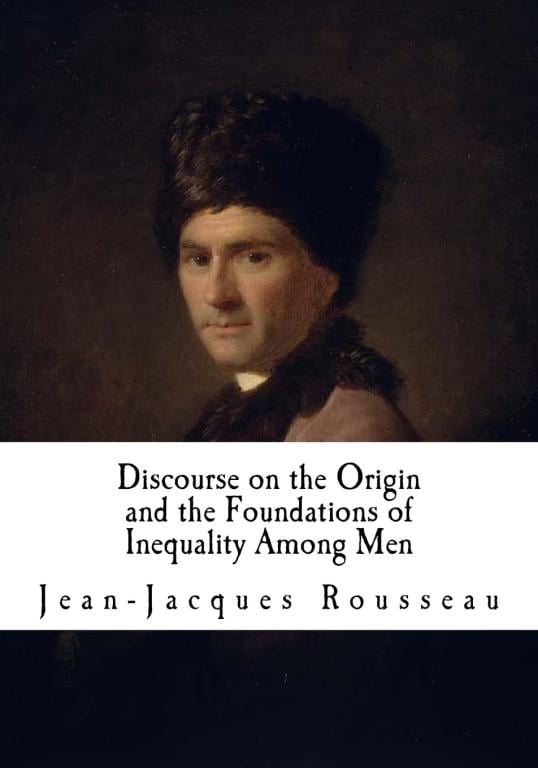
Jean-Jacques Rousseau is often celebrated as a champion of liberty, individualism, and natural human goodness. In his Second Discourse on the Origins of Human Inequality, Rousseau tries to expose the dangers of social inequality by tracing the root of human misery to the onset of civilization.
While I find his writing abysmally naive and self-contradictory, he does give voice to some of the worst inclinations in the modern West. His famous claim, “Man is weak when he is dependent and he is emancipated before he is robust,” epitomizes a particular strain of Enlightenment thinking that is deeply problematic.
This post critiques Rousseau’s perspective, emphasizing just one way that his vision of human freedom is flawed and highlighting its unintended consequences for society.
Rousseau and Enlightenment Thought
Rousseau’s Second Discourse is fundamentally a critique of civilization and an idealization of a pre-social “state of nature.” He posits that human beings, in their natural state, were solitary and free, unencumbered by the artificial dependencies that characterize contemporary society. Civilization, he argues, led to corruption by creating artificial needs and dependencies on others, as symbolized by property, social norms, and institutions.
Rousseau’s philosophy is representative of Enlightenment thinking, which often portrayed human beings as inherently rational and society as the corrupting force that prevents people from realizing their full potential. (Again, I find his argument embarrassingly illogical, yet many others drool over his conclusions.)
Rousseau’s sentiment that “Man is weak when he is dependent” reflects a problematic understanding of what it means to be human. Dependency is not only an essential characteristic of human life; it is also the foundation of social bonds and moral obligations. To Rousseau, dependency equals weakness, which implies that true freedom must be grounded in uncompromising independence.
Such a worldview glorifies an ideal of absolute self-sufficiency that overlooks the importance of interdependence—a critical flaw that carries over into how we think about social and political issues today.
The Emancipation Paradox
Rousseau’s claim that “man is emancipated before he is robust” suggests a paradox inherent in his thinking. He imagines an idealized emancipation, where individuals break free from all forms of external control before they can engage in a mature, self-directed life. In reality, human beings become capable through the experience of relational interdependence.
As infants, we are utterly dependent on caregivers; it is this dependency that allows us to become robust, capable adults. Rousseau’s vision assumes a linear progression— as though emancipation somehow occurs without the prior nurturing that creates robustness in the first place.
This logic, when taken to its extreme, has troubling implications for how we perceive freedom. The idea that true freedom requires shedding all forms of dependency disregards the deeply relational nature of human existence. Rather than being a sign of human frailty, dependency fosters empathy, mutual support, and the capacity for growth.
Rousseau’s emphasis on emancipation encourages a false ideal— one that values atomistic individualism over collective well-being.
A Critique of Enlightenment Individualism
Rousseau’s troublesome legacy can be traced to his foundational assumptions about human nature, which carry over into modern notions of individualism. By emphasizing the state of nature as a pure and inherently free state, Rousseau reinforces the idea that human beings are only truly human when they stand alone. Such a notion is a baseless figment of his imagination.
He envisions utopian freedom as a return to a supposed original autonomy—free from the entanglements of society and culture. While this conceptualization of freedom appears liberating, it invariably turns into a form of hyper-individualism that undermines the social contract that binds communities together.
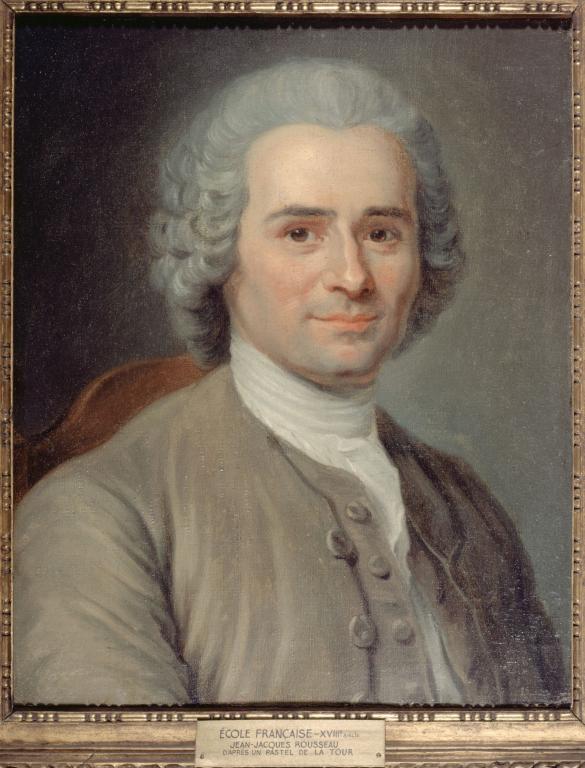
Public Domain
Here’s a little more background to contextualize Rousseau.
He writes, “The first man who, having enclosed a piece of land, thought of saying, ‘This is mine,’ and found people simple enough to believe him, was the real founder of civil society” (Second Discourse). Here, Rousseau explicitly ties the origins of inequality to the birth of private property and the establishment of rules governing ownership and power.
This critique remains powerful in revealing how material inequalities perpetuate social stratification, yet his solution—a return to a purer, more autonomous human existence—is unhelpful in addressing the intricacies of our society. It suggests that the ideal state for humanity is one free from relational ties, where any dependence represents a loss of freedom.
This perspective has contributed to contemporary issues such as the valorization of self-made success and the stigmatization of those who require help, whether due to economic hardship, disability, or age. If we accept Rousseau’s vision, individuals are deemed worthy only when they can act without aid from others, a perspective that leads to social alienation and a lack of collective responsibility.
The claim that dependency equals weakness is reflected today in the way societies treat vulnerable populations, often prioritizing individual autonomy over social welfare. In this sense, Rousseau’s thought is the seed of a Western ideology that problematically celebrates radical independence at the expense of compassion and mutual aid.
Human Flourishing Requires Dependency
Rousseau’s critique of dependency also lacks an appreciation for the positive dimensions of social ties. Human flourishing, as the Bible, Aristotle, and countless others argue, occurs within a community where individuals engage with others in meaningful ways.
His denouncement of dependency obscures the reality that relationships are essential for well-being.
Individuals cannot develop virtues, moral understanding, or even basic human capacities in isolation. Rousseau’s idealized human—emancipated, free from dependence—becomes a ghost of sorts, unable to fully engage in the richness of human experience.
Take, for instance, Rousseau’s romanticization of the “noble savage”—a figure who lives free from the burdens of social institutions. While this image resonates with many as a critique of the corrupting influence of modernity, it ultimately paints a one-dimensional portrait of human nature that undervalues community, cooperation, and shared responsibility.
The vision is one of freedom without commitments, a simplistic reduction of what human life truly entails. It’s a sad one at that.
In dismissing the role of relational ties, Rousseau’s Second Discourse ends up undermining the very conditions that make authentic freedom possible; namely, the nurturing social structures that allow individuals to thrive.
The Contemporary Relevance of Rousseau’s Ideas
The impact of Rousseau’s individualism is still seen in contemporary debates over individual rights versus social obligations. In modern Western societies, the rhetoric of self-reliance and independence often takes precedence over communal considerations. This is evident in discussions about social welfare, healthcare, and economic policy, where dependency is frequently portrayed as a moral failing.
Rousseau’s vision of freedom— one that prioritizes emancipation from all forms of external influence— contributes to this misguided valorization of autonomy.
In contrast, a more balanced perspective would recognize that dependency is not inherently antithetical to freedom. In fact, meaningful freedom emerges from interdependence and a recognition of mutual vulnerability. Social systems that emphasize collective welfare, such as universal healthcare or public education, reflect the understanding that human beings are inherently interconnected. The Enlightenment’s focus on individual autonomy, says Rousseau, fails to appreciate this fundamental truth.
Ultimately, Rousseau’s perspective on dependency and emancipation reflects the limitations of Enlightenment rationalism when taken to its extreme. By imagining a world in which people must shed all dependency to become truly free, Rousseau unwittingly sets up an impossible ideal. His critique of inequality, while valuable in exposing the corrupting influence of societal hierarchies, misses the mark when it comes to understanding how humans thrive together.
Freedom is paradoxically often found not in isolation but in community—in relationships where mutual dependency fosters resilience, empathy, and true human flourishing.
Conclusion
Rousseau’s Second Discourse offers a powerful critique of civilization and inequality, yet his understanding of freedom as emancipation from dependency is fundamentally flawed. It reflects an unfortunate strand of Enlightenment thinking that idolizes self-sufficiency at the expense of interdependence.
This worldview, which confuses individuality and individualism, contributes to a modern society that values autonomy over care, individual rights over social responsibilities, and independence over empathy. As we consider Rousseau’s legacy today, we must challenge this notion that dependency equates to weakness and recognize that true human flourishing comes from embracing, rather than rejecting, our connections to one another.
History and Religion
Relationships and Religion
Previous Post

December 10, 2024
The Inherent Contradiction of Wokeness
Next Post
January 21, 2025 Is the Drive for Recognition the Root of Inequality?
Recent Comments
"A thoughtful and thought-provoking article that raises important questions about the challenges facing the Western ..."
"to fit social or religious expectations. Especially women, who were expected to sacrifice everything to ..."
3 reasons you should not be ..."
"Powerful reminder short, sturdy truths can lose their weight if treated as slogans. The solas ..."
How Western Individualism Quietly Undermines the ..."
"If 'America’s deepest crisis is not merely political. It is moral and spiritual.' is in ..."
The Real Crisis Beneath America’s Social ..."
Browse Our Archives
Select a Category Atonement Biblical Theology Book Reviews China Chinese Church Chinese Culture Chinese Language Collectivism Contextualization Culture (General) Ecclesiology Evangelism Gospel Honor & Shame (Face) Interpretation/Exegesis Justification/Righteousness Missiology Mission Methods One Gospel for All Nations Other Practical Contextualization Reading Romans with Eastern Eyes Resources Romans Salvation (General) Saving God's Face Seeking God's Face The Cross in Context Theological Contextualization Theological Education Theology Uncategorized
Select a Month October 2026 September 2026 August 2026 July 2026 June 2026 May 2026 April 2026 March 2026 February 2026 January 2026 December 2025 November 2025 October 2025 September 2025 August 2025 July 2025 June 2025 May 2025 April 2025 March 2025 February 2025 January 2025 December 2024 November 2024 October 2024 September 2024 August 2024 July 2024 June 2024 May 2024 April 2024 March 2024 February 2024 January 2024 December 2023 November 2023 October 2023 September 2023 August 2023 July 2023 June 2023 May 2023 April 2023 March 2023 February 2023 January 2023 December 2022 November 2022 October 2022 September 2022 August 2022 July 2022 June 2022 May 2022 April 2022 March 2022 February 2022 January 2022 December 2021 November 2021 October 2021 September 2021 August 2021 July 2021 June 2021 May 2021 April 2021 March 2021 February 2021 January 2021 December 2020 November 2020 October 2020 September 2020 August 2020 July 2020 June 2020 May 2020 April 2020 March 2020 February 2020 January 2020 December 2019 November 2019 October 2019 September 2019 August 2019 July 2019 June 2019 May 2019 April 2019 March 2019 February 2019 January 2019 December 2018 November 2018 October 2018 September 2018 August 2018 July 2018 June 2018 May 2018 April 2018 March 2018 February 2018 January 2018 December 2017 November 2017 October 2017 September 2017 August 2017 July 2017 June 2017 May 2017 April 2017 March 2017 February 2017 January 2017 December 2016 November 2016 October 2016 September 2016 August 2016 July 2016 June 2016 May 2016 April 2016 March 2016 February 2016 January 2016 December 2015 November 2015 October 2015 September 2015 August 2015 July 2015 June 2015 May 2015 April 2015 March 2015 February 2015 January 2015 December 2014 November 2014 October 2014 September 2014 August 2014 July 2014 June 2014 May 2014 April 2014 March 2014 February 2014 January 2014 December 2013 November 2013 October 2013 September 2013 August 2013 July 2013 June 2013 May 2013 April 2013 March 2013 February 2013 January 2013 December 2012 November 2012
Follow Us!
TAKE THE
Religious Wisdom Quiz
Who was Moses' brother?
Select your answer to see how you score.
Eleazar Joshua Aaron Caleb
Books by This Author Books by Brad Vaughn
Related posts from Saving God's Face

Independent Thinking Isn’t What You Think

The Gulag Theology of One Day in the...
The Sin of Most Political Debates Isn’t What...

How Western Individualism Quietly Undermines the Solas
TRENDING AT PATHEOS Evangelical

'Super Scam Me' Exposes AI Jon Bon Jovi...
Leslie Pickett believed she was in a relationship with Jon Bon Jovi....

The Brazilian Remake of Kendricks' 'Flywheel' Opens in...
“Flywheel,” the story that launched the Kendrick Brothers’ filmmaking career is getting...

The Dangers of Gradual Accommodation (Winking at Sin)
Recently, the “law of gradualness” resurfaced during the opening of a weeklong,...

The Iron Gates and the Lion of the...
Yesterday, I didn't finish my report about, well, yesterday. So I'll...

The Image: On the Horror of Capitalism and...
The Image Then went the Pharisees, and took counsel how they might...

We are approaching the date of our new American national holiday: October...
view all Evangelical blogs
What Are Your Thoughts?leave a comment
Ad-Free & Subscriber Log-In Subscription Support
- About Us
- 2026 Calendar
- Videos
- Podcasts
- Library of World Religions
- Faith In Media Tracker
- Advertise With Us
- Write for Us
- Privacy Policy
- Terms of Service
- Do Not Sell My Data
- Contact Us
- Radiant Digital
- Manage Newsletter Subscriptions
- Unsubscribe From Notifications
- Sitemap
Copyright 2008-2026, Patheos. All rights reserved.
Subscription Support Ad-Free & Subscriber Log-In
Follow Patheos