
BuddhistCatholicContemplativeEvangelicalGeneral ChristianHinduJewishLatter-day SaintMuslimNew VisionsProgressive Christian
Beliefs
- Buddhist
- Catholic
- Contemplative
- Evangelical
- General Christian
- Hindu
- Jewish
- Latter-day Saint
- More Voices
- Muslim
- New Visions
- Pagan
- Progressive Christian
Topics
- Religion News
- Food and Religion
- Sports and Religion
- Religious Art
- Religious Music and Entertainment
- Religious Events
- History and Religion
- Style and Religion
- Politics and Religion
- Women in Religion
- Recreation Outdoors and Religion
- Business Finance and Religion
- Careers Workplace and Religion
- Education and Religion
- Family Parenting and Religion
- Health Fitness and Religion
- Home and Religion
- Relationships and Religion
- Technology and Religion
- Travel and Religion
Columnists
- Buddhist Columnists
- Business Finance and Religion Columnists
- Careers Workplace and Religion Columnists
- Catholic Columnists
- Contemplative Columnists
- Education and Religion Columnists
- Evangelists Columnists
- Family Parenting and Religion Columnists
- General Christian Columnists
- Health Fitness and Religion Columnists
- Hindu Columnists
- History and Religion Columnists
- Home and Religion Columnists
- Jewish Columnists
- More Voices Columnists
- Latter Day Columnists
- Muslim Columnists
- New Visions Columnists
- Nonreligious Columnists
- Pagan Columnists
- Politics and Religion Columnists
- Progressive Columnists
- Recreation Outdoors and Religion Columnists
- Relationships and Religion Columnists
- Religion News Columnists
- Religious Art Columnists
- Religious Events Columnists
- Religious Music and Entertainment Columnists
- Sports and Religion Columnists
- Style and Religion Columnists
- Technology and Religion Columnists
- Travel and Religion Columnists
- Women in Religion Columnists
Resource Library
- 2026 Calendar
- Library of World Religions
- The 100 Most Holy Places on Earth
- Patheos Answers
- Podcasts
- Videos
- Faith Leaders Database
- Anglican Episcopalian
- Bahai
- Baptist
- Buddhism
- Christianity
- Confucianism
- Eastern Orthodoxy
- Hinduism
- Holiness and Pentecostal
- ISKCON
- Islam
- Judaism
- Lutheran
- Methodist
- The Church of Jesus Christ of Latter-day Saints
- New Age
- Paganism
- Presbytarian and Reformed
- Protestantism
- Religion Behind the Scenes
- Roman Catholic
- Scientology
- Shia Islam
- Sikhism
- Sufism
- Sunni Islam
- Taoism
- Zen
- See all religions
Research Tools
 Ad-Free & Subscriber Log-In Subscription Support
Ad-Free & Subscriber Log-In Subscription Support
Follow Patheos 

- Trending:
- Forgiveness
- |
- Marriage
- |
- Consciousness
- |
- Death Penalty
- |
- Election
- |
- Halloween

-
Tools
-
Support the Work
- Home
- Evangelical
- History and Religion
- The Inherent Contradiction of Wokeness
The Inherent Contradiction of Wokeness
Last updated on: December 10, 2024 at 5:19 am by Brad Vaughn
The Inherent Contradiction of Wokeness 2024-11-27T08:42:24-07:00 Brad Vaughn
Patheos Explore the world's faith through different perspectives on religion and spirituality! Patheos has the views of the prevalent religions and spiritualities of the world.
flickr/EpicTop10
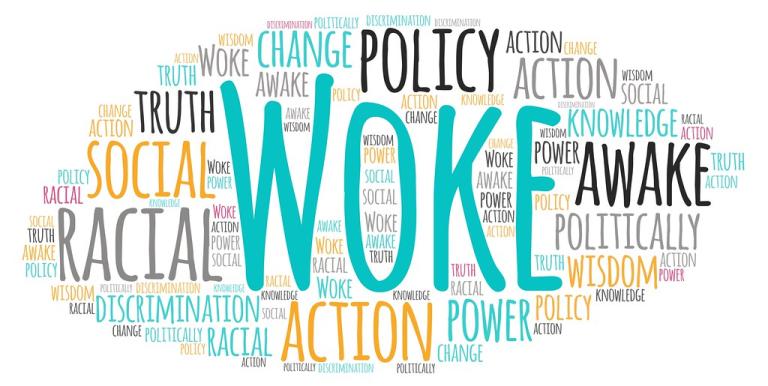
In recent years, “wokeness” has become a cultural phenomenon that is difficult to define precisely, yet its influence is pervasive. It’s often associated with social justice movements. At its core, however, wokeness is a worldview shaped by profound skepticism toward grand narratives— those overarching stories that give meaning and coherence to history, culture, and identity.
Ironically, even as wokeness rejects grand narratives, it simultaneously creates its own framework based on identity and tribal membership, essentializing people according to their marginalized or privileged status. This tension reveals both the strength and the fundamental flaw of wokeness as a worldview.
1. The Rejection of Grand Narratives
One hallmark of wokeness is its deep suspicion of grand narratives. In postmodern thought, which heavily influences woke ideology, grand narratives—like the idea of progress, the American dream, or religious metanarratives—are seen as tools of oppression. They are viewed as sweeping generalizations that mask the experiences of marginalized groups, imposing a “universal” story that really only serves the interests of those in power.
Jean-François Lyotard, one of the key figures in postmodernism, famously defined postmodernity as “incredulity toward metanarratives.” In this view, grand narratives are seen as manipulative stories constructed by those in power to maintain control.
For instance, the narrative of meritocracy, which suggests that anyone can succeed through hard work, is dismissed within woke circles as a myth that perpetuates inequality by ignoring systemic barriers. The woke worldview resists any story that claims universal truth, favoring instead a plurality of perspectives, especially those from the margins.
2. Identity and Tribal Membership as the New Grand Narrative
However, even as wokeness critiques grand narratives, it constructs a new one centered on identity and tribal membership.
In the woke framework, history and society are primarily understood through the lens of power dynamics between oppressor and oppressed groups. Identity categories—race, gender, sexuality, and more—become the primary lenses through which people’s experiences and perspectives are evaluated. The story of history, according to wokeness, is one of systemic oppression and marginalization, where the central concern is the struggle between these groups.
This creates an essentialist view of people, where individuals are primarily defined by their group identity. For example, being Black, female, or LGBTQ+ is seen as determinative of one’s experience, perspective, and even moral authority. Conversely, being white, male, or heterosexual is often associated with inherent privilege and complicity in systems of oppression. The complexity of human experience is reduced to whether one is marginalized or privileged, oppressor or oppressed.
This approach can be seen as a new kind of grand narrative, one that defines the world strictly in terms of identity politics. It’s a framework that not only explains history but also dictates morality, social priorities, and even epistemology. In other words, who you are determines what you know and how much your voice should be valued.
3. The Irony and Consequences of Essentialism
The irony is striking: while wokeness rejects grand narratives for being too simplistic and oppressive, it ends up creating its own rigid narrative that essentializes people based on their identity. The result is a worldview that often overlooks individual differences and personal agency in favor of fixed categories that define people as either victims or oppressors.
flickr/walterrrrr
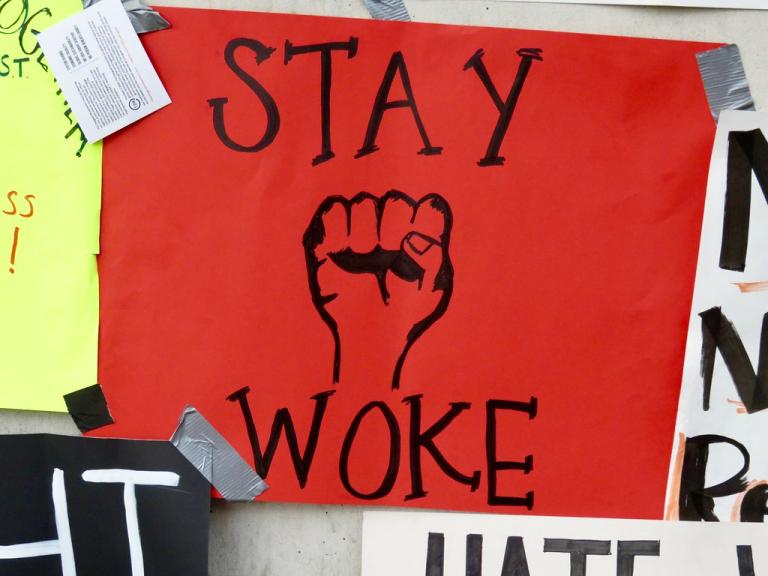
This essentialism has significant consequences. It encourages a form of tribalism where dialogue across differences becomes nearly impossible. Since identity categories determine one’s standpoint, those who are seen as privileged are often dismissed as lacking the moral authority to speak on certain issues.
Conversely, those from marginalized groups are given a kind of epistemic privilege—what some call “standpoint epistemology”—where their experiences are considered more authoritative simply because of their identity. While it’s true that marginalized voices need to be heard, wokeness can lead to a situation where the content of what is said matters less than the identity of the speaker.
Moreover, this approach risks perpetuating the very divisions it claims to resist. By focusing so heavily on identity categories, wokeness can re-inscribe the boundaries between groups, making reconciliation and mutual understanding more difficult. Rather than fostering a shared vision for justice that transcends identity, it deepens the divides, leading to more fragmentation.
4. A More Nuanced Approach
There is a better way to address the issues that wokeness seeks to highlight—one that acknowledges the reality of systemic injustices while avoiding the pitfalls of essentialism and tribalism. From a Christian perspective, the biblical narrative provides a grand story that transcends identity politics while still taking seriously the experiences of those who have been marginalized.
The gospel offers a different kind of identity, one that is rooted not in our tribal affiliations but in our union with Christ. Galatians 3:28 reminds us that in Christ, “there is neither Jew nor Greek, slave nor free, male nor female, for you are all one in Christ Jesus.” This doesn’t erase our differences or ignore the realities of injustice, but it places them within a larger story where reconciliation, justice, and love are possible.
The Christian narrative doesn’t flatten identity but reorders it under the lordship of Christ. It allows us to acknowledge systemic issues without reducing people to mere representatives of their group identity. It calls us to see each person as made in the image of God, with unique dignity, worth, and potential, while also recognizing the social dynamics that can distort those relationships.
Conclusion
Wokeness highlights real problems in our society, such as systemic injustice and the importance of hearing marginalized voices. However, its simultaneous rejection of grand narratives and its creation of an identity-based narrative reveals a deep inconsistency.
The challenge for Christians is to engage these issues with both compassion and discernment, offering a narrative that is broad enough to include everyone while deep enough to address the complexities of identity, power, and justice.
In Christ, we find a grand narrative that doesn’t oppress but liberates, not by essentializing people but by calling them into a new, redeemed identity that transcends tribalism and points toward genuine reconciliation.
History and Religion
Politics and Religion
Previous Post
November 26, 2024
Honor and Shame in Shakespeare’s Othello
Next Post
January 7, 2025 How Rousseau Steers the West Wrongly to Individualism
Recent Comments
"A thoughtful and thought-provoking article that raises important questions about the challenges facing the Western ..."
"to fit social or religious expectations. Especially women, who were expected to sacrifice everything to ..."
3 reasons you should not be ..."
"Powerful reminder short, sturdy truths can lose their weight if treated as slogans. The solas ..."
How Western Individualism Quietly Undermines the ..."
"If 'America’s deepest crisis is not merely political. It is moral and spiritual.' is in ..."
The Real Crisis Beneath America’s Social ..."
Browse Our Archives
Select a Category Atonement Biblical Theology Book Reviews China Chinese Church Chinese Culture Chinese Language Collectivism Contextualization Culture (General) Ecclesiology Evangelism Gospel Honor & Shame (Face) Interpretation/Exegesis Justification/Righteousness Missiology Mission Methods One Gospel for All Nations Other Practical Contextualization Reading Romans with Eastern Eyes Resources Romans Salvation (General) Saving God's Face Seeking God's Face The Cross in Context Theological Contextualization Theological Education Theology Uncategorized
Select a Month October 2026 September 2026 August 2026 July 2026 June 2026 May 2026 April 2026 March 2026 February 2026 January 2026 December 2025 November 2025 October 2025 September 2025 August 2025 July 2025 June 2025 May 2025 April 2025 March 2025 February 2025 January 2025 December 2024 November 2024 October 2024 September 2024 August 2024 July 2024 June 2024 May 2024 April 2024 March 2024 February 2024 January 2024 December 2023 November 2023 October 2023 September 2023 August 2023 July 2023 June 2023 May 2023 April 2023 March 2023 February 2023 January 2023 December 2022 November 2022 October 2022 September 2022 August 2022 July 2022 June 2022 May 2022 April 2022 March 2022 February 2022 January 2022 December 2021 November 2021 October 2021 September 2021 August 2021 July 2021 June 2021 May 2021 April 2021 March 2021 February 2021 January 2021 December 2020 November 2020 October 2020 September 2020 August 2020 July 2020 June 2020 May 2020 April 2020 March 2020 February 2020 January 2020 December 2019 November 2019 October 2019 September 2019 August 2019 July 2019 June 2019 May 2019 April 2019 March 2019 February 2019 January 2019 December 2018 November 2018 October 2018 September 2018 August 2018 July 2018 June 2018 May 2018 April 2018 March 2018 February 2018 January 2018 December 2017 November 2017 October 2017 September 2017 August 2017 July 2017 June 2017 May 2017 April 2017 March 2017 February 2017 January 2017 December 2016 November 2016 October 2016 September 2016 August 2016 July 2016 June 2016 May 2016 April 2016 March 2016 February 2016 January 2016 December 2015 November 2015 October 2015 September 2015 August 2015 July 2015 June 2015 May 2015 April 2015 March 2015 February 2015 January 2015 December 2014 November 2014 October 2014 September 2014 August 2014 July 2014 June 2014 May 2014 April 2014 March 2014 February 2014 January 2014 December 2013 November 2013 October 2013 September 2013 August 2013 July 2013 June 2013 May 2013 April 2013 March 2013 February 2013 January 2013 December 2012 November 2012
Follow Us!
TAKE THE
Religious Wisdom Quiz
Who said, "Lord, to whom shall we go? You have the words of eternal life"?
Select your answer to see how you score.
James Judas John Peter
Books by This Author Books by Brad Vaughn
Related posts from Saving God's Face

The Real Crisis Beneath America’s Social Crises (Part...

America’s Crisis Is Deeper Than Politics

Independent Thinking Isn’t What You Think

The Gulag Theology of One Day in the...
TRENDING AT PATHEOS Evangelical

Emotion in Early Christianity by Andrew Crislip
Andrew Crislip’s Emotion in Early Christianity examines an often overlooked dimension of...

16 Spiritual Touchstones for a More Grounded Life
After decades of spiritual study, here are 16 principles I try...

Catholic Evangelization: Sharing Your Faith Every Day
Welcome back to the Graceful Awakening mini-series called, “From Faith to Mission.” ...

The Pillar of the Boatmen: the Ancient Monument...
The Pillar of the Boatmen is a Romano-Gaulish sculpture that dates from...

In one sense walking into Westminster Abbey is like walking down the...

'Super Scam Me' Exposes AI Jon Bon Jovi...
Leslie Pickett believed she was in a relationship with Jon Bon Jovi....
view all Evangelical blogs
What Are Your Thoughts?leave a comment
Ad-Free & Subscriber Log-In Subscription Support
- About Us
- 2026 Calendar
- Videos
- Podcasts
- Library of World Religions
- Faith In Media Tracker
- Advertise With Us
- Write for Us
- Privacy Policy
- Terms of Service
- Do Not Sell My Data
- Contact Us
- Radiant Digital
- Manage Newsletter Subscriptions
- Unsubscribe From Notifications
- Sitemap
Copyright 2008-2026, Patheos. All rights reserved.
Subscription Support Ad-Free & Subscriber Log-In
Follow Patheos