
BuddhistCatholicContemplativeEvangelicalGeneral ChristianHinduJewishLatter-day SaintMuslimNew VisionsProgressive Christian
Beliefs
- Buddhist
- Catholic
- Contemplative
- Evangelical
- General Christian
- Hindu
- Jewish
- Latter-day Saint
- More Voices
- Muslim
- New Visions
- Pagan
- Progressive Christian
Topics
- Religion News
- Food and Religion
- Sports and Religion
- Religious Art
- Religious Music and Entertainment
- Religious Events
- History and Religion
- Style and Religion
- Politics and Religion
- Women in Religion
- Recreation Outdoors and Religion
- Business Finance and Religion
- Careers Workplace and Religion
- Education and Religion
- Family Parenting and Religion
- Health Fitness and Religion
- Home and Religion
- Relationships and Religion
- Technology and Religion
- Travel and Religion
Columnists
- Buddhist Columnists
- Business Finance and Religion Columnists
- Careers Workplace and Religion Columnists
- Catholic Columnists
- Contemplative Columnists
- Education and Religion Columnists
- Evangelists Columnists
- Family Parenting and Religion Columnists
- General Christian Columnists
- Health Fitness and Religion Columnists
- Hindu Columnists
- History and Religion Columnists
- Home and Religion Columnists
- Jewish Columnists
- More Voices Columnists
- Latter Day Columnists
- Muslim Columnists
- New Visions Columnists
- Nonreligious Columnists
- Pagan Columnists
- Politics and Religion Columnists
- Progressive Columnists
- Recreation Outdoors and Religion Columnists
- Relationships and Religion Columnists
- Religion News Columnists
- Religious Art Columnists
- Religious Events Columnists
- Religious Music and Entertainment Columnists
- Sports and Religion Columnists
- Style and Religion Columnists
- Technology and Religion Columnists
- Travel and Religion Columnists
- Women in Religion Columnists
Resource Library
- 2026 Calendar
- Library of World Religions
- The 100 Most Holy Places on Earth
- Patheos Answers
- Podcasts
- Videos
- Faith Leaders Database
- Anglican Episcopalian
- Bahai
- Baptist
- Buddhism
- Christianity
- Confucianism
- Eastern Orthodoxy
- Hinduism
- Holiness and Pentecostal
- ISKCON
- Islam
- Judaism
- Lutheran
- Methodist
- The Church of Jesus Christ of Latter-day Saints
- New Age
- Paganism
- Presbytarian and Reformed
- Protestantism
- Religion Behind the Scenes
- Roman Catholic
- Scientology
- Shia Islam
- Sikhism
- Sufism
- Sunni Islam
- Taoism
- Zen
- See all religions
Research Tools
 Ad-Free & Subscriber Log-In Subscription Support
Follow Patheos 

- Trending:
- Advent
- |
- Forgiveness
- |
- Thanksgiving
- |
- Election
- |
- Seasonal Holidays
- |
- Marriage

-
Tools
-
Support the Work
- Home
- Evangelical
- History and Religion
- Honor and Shame in Shakespeare’s Othello
Honor and Shame in Shakespeare’s Othello
Last updated on: November 26, 2024 at 4:57 am by Brad Vaughn
Honor and Shame in Shakespeare’s Othello 2024-08-25T16:03:37-07:00 Brad Vaughn
Patheos Explore the world's faith through different perspectives on religion and spirituality! Patheos has the views of the prevalent religions and spiritualities of the world.
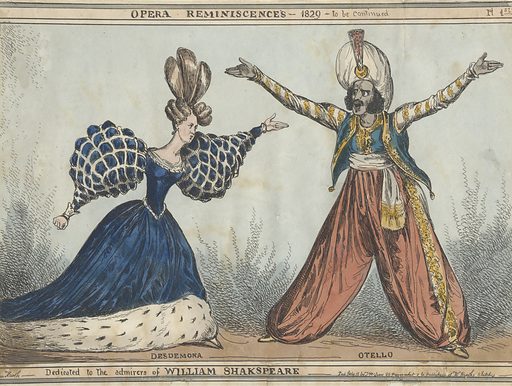
Credit: Public Domain
In this second post in the series, we look at ways that honor and shame shape major works in Western literature. Today, we examine Shakespeare’s Othello.
Othello is a masterful exploration of how honor, shame, and reputation shape human behavior and relationships. In the play, these themes are not mere background elements; they are the very forces driving the tragedy forward. As characters wrestle with their identities and public perceptions, Othello reveals the destructive power of honor and shame when they become entangled with deception, jealousy, and social expectations.
Analyzing Othello through the lens of honor-shame dynamics provides insight into how easily one’s sense of self-worth can be manipulated and how fragile the concept of honor can be when it is tethered solely to reputation.
1. Othello’s Fragile Honor and Internalized Shame
Othello is introduced as a man of considerable honor— an accomplished general who has earned the respect of Venice. His reputation is his most valuable asset, a hard-won treasure that elevates him as a Moor in a predominantly white society. However, this honor is precarious, resting not only on his military achievements but also on his social acceptance. For Othello, honor is something he constantly feels the need to protect, and this anxiety makes him vulnerable to manipulation.
What makes Othello’s situation particularly tragic is how his honor is intertwined with internalized shame. Despite his status, Othello remains conscious of his outsider identity. His race and foreign background are frequently weaponized against him, most notably by Iago and Brabantio, Desdemona’s father. Brabantio’s accusation that Othello used “witchcraft” to win Desdemona’s love underscores the underlying shame Othello carries regarding how he is perceived by Venetian society.
Even though he outwardly projects confidence, Othello’s sense of honor is always shadowed by the fear that he does not truly belong. This latent shame makes him susceptible to Iago’s schemes, as it feeds into his insecurity about whether Desdemona’s love is genuine or simply a result of his reputation.
2. Iago’s Manipulation of Reputation and Honor
Iago, the play’s chief antagonist, masterfully exploits the honor-shame framework to orchestrate Othello’s downfall. Iago understands that for Othello, and indeed for most of the characters in the play, reputation is everything. By planting the seed of doubt regarding Desdemona’s fidelity, Iago corrupts Othello’s perception of his own honor, making him believe that his wife’s supposed infidelity is a stain that must be eradicated.
In a culture where honor is tied to public perception, a wife’s unfaithfulness is seen not just as a personal betrayal but as a public humiliation. Othello becomes consumed with the idea that his reputation is being tarnished, and this fear drives him to irrational jealousy.
Iago’s skill lies in his ability to manipulate not just Othello’s view of himself but also how others view each other. He understands that reputation is the currency by which honor is measured in Venetian society, and he uses this knowledge to engineer conflict.
For instance, Iago destroys Cassio’s reputation by getting him drunk and causing a brawl, which results in Cassio’s dismissal. Cassio’s lament that he has lost his “reputation, reputation, reputation!” captures how central public honor is to the characters’ sense of self-worth. In Iago’s hands, reputation becomes both a weapon and a means of control.
3. Desdemona and the Tragic Cost of False Honor
Desdemona represents a different kind of honor—one rooted not in public reputation but in personal integrity and loyalty. Her love for Othello is genuine, and she remains faithful even when her husband doubts her.
However, in the world of Othello, personal integrity is not enough to protect one from the destructive consequences of a reputation in shambles. Desdemona’s honor is besmirched not by her actions but by the lies and suspicions spread by Iago. Her death is tragic not only because it is unjust but because it demonstrates how fragile honor can be when it is determined solely by others’ perceptions.
Desdemona’s fate highlights a key aspect of the honor-shame dynamic: in a society where reputation is paramount, truth and integrity can be easily overridden by rumor and falsehood. The shame imposed on her by Othello’s misguided belief in her infidelity is a product of the broader societal expectation that a woman’s honor is bound to her chastity and her loyalty to her husband. The tragedy is deepened by the fact that Desdemona’s public shame is completely undeserved, yet it is powerful enough to lead to her demise.
4. The Collapse of Honor and the Triumph of Shame
As Othello progresses, the distinction between honor and shame blurs. Othello’s obsession with maintaining his honor ultimately leads him to commit the most dishonorable act—murdering the innocent Desdemona. His once noble reputation is destroyed by the very thing he sought to protect.
This inversion illustrates the play’s central irony: in a world where honor is defined externally, the more one strives to preserve it, the more vulnerable one becomes to shame and disgrace.
Othello’s final act of taking his own life is framed as an attempt to reclaim some semblance of lost honor. His last words express a desire to be remembered as one who “loved not wisely but too well” and who was “perplexed in the extreme.” Even in death, he clings to the idea of preserving his reputation, hoping that by narrating his own end, he can control how he is remembered.
But this final grasp at honor is futile. Othello’s tragedy lies in the realization that his identity has been hollowed out by his dependence on external validation. In the end, the honor he seeks cannot be restored because it was never fully under his control—it was always at the mercy of societal perceptions and the manipulations of those around him.
The Fragility of Honor and the Power of Shame
Othello serves as a cautionary tale about the dangers of basing one’s identity on honor as defined by reputation. The play shows how easily honor can be weaponized, distorted, and ultimately destroyed when it is tethered solely to public perception. In a world where shame is always lurking just beneath the surface, even the most honorable intentions can lead to catastrophic outcomes.
For Othello, Desdemona, and Cassio, reputation becomes a double-edged sword—necessary for their social standing but fragile and easily shattered.
Shakespeare’s tragedy reveals the destructive power of honor when it becomes disconnected from truth and internal integrity. It warns us that when honor and shame are externalized and governed by societal standards rather than moral virtue, they become tools for manipulation and destruction.
In Othello, the pursuit of honor is ultimately a descent into shame, demonstrating the inherent instability of a life built on the fragile foundation of reputation alone.
History and Religion
Religious Art
Previous Post

November 12, 2024
Honor and Shame in Mary Shelley’s Frankenstein
Next Post

December 10, 2024 The Inherent Contradiction of Wokeness
Recent Comments
"Excellent axiology."
Recovering Moral Vision Between Shame and ..."
"A thoughtful and thought-provoking article that raises important questions about the challenges facing the Western ..."
"to fit social or religious expectations. Especially women, who were expected to sacrifice everything to ..."
3 reasons you should not be ..."
"Powerful reminder short, sturdy truths can lose their weight if treated as slogans. The solas ..."
How Western Individualism Quietly Undermines the ..."
Browse Our Archives
Select a Category Atonement Biblical Theology Book Reviews China Chinese Church Chinese Culture Chinese Language Collectivism Contextualization Culture (General) Ecclesiology Evangelism Gospel Honor & Shame (Face) Interpretation/Exegesis Justification/Righteousness Missiology Mission Methods One Gospel for All Nations Other Practical Contextualization Reading Romans with Eastern Eyes Resources Romans Salvation (General) Saving God's Face Seeking God's Face The Cross in Context Theological Contextualization Theological Education Theology Uncategorized
Select a Month November 2026 October 2026 September 2026 August 2026 July 2026 June 2026 May 2026 April 2026 March 2026 February 2026 January 2026 December 2025 November 2025 October 2025 September 2025 August 2025 July 2025 June 2025 May 2025 April 2025 March 2025 February 2025 January 2025 December 2024 November 2024 October 2024 September 2024 August 2024 July 2024 June 2024 May 2024 April 2024 March 2024 February 2024 January 2024 December 2023 November 2023 October 2023 September 2023 August 2023 July 2023 June 2023 May 2023 April 2023 March 2023 February 2023 January 2023 December 2022 November 2022 October 2022 September 2022 August 2022 July 2022 June 2022 May 2022 April 2022 March 2022 February 2022 January 2022 December 2021 November 2021 October 2021 September 2021 August 2021 July 2021 June 2021 May 2021 April 2021 March 2021 February 2021 January 2021 December 2020 November 2020 October 2020 September 2020 August 2020 July 2020 June 2020 May 2020 April 2020 March 2020 February 2020 January 2020 December 2019 November 2019 October 2019 September 2019 August 2019 July 2019 June 2019 May 2019 April 2019 March 2019 February 2019 January 2019 December 2018 November 2018 October 2018 September 2018 August 2018 July 2018 June 2018 May 2018 April 2018 March 2018 February 2018 January 2018 December 2017 November 2017 October 2017 September 2017 August 2017 July 2017 June 2017 May 2017 April 2017 March 2017 February 2017 January 2017 December 2016 November 2016 October 2016 September 2016 August 2016 July 2016 June 2016 May 2016 April 2016 March 2016 February 2016 January 2016 December 2015 November 2015 October 2015 September 2015 August 2015 July 2015 June 2015 May 2015 April 2015 March 2015 February 2015 January 2015 December 2014 November 2014 October 2014 September 2014 August 2014 July 2014 June 2014 May 2014 April 2014 March 2014 February 2014 January 2014 December 2013 November 2013 October 2013 September 2013 August 2013 July 2013 June 2013 May 2013 April 2013 March 2013 February 2013 January 2013 December 2012 November 2012
Follow Us!
TAKE THE
Religious Wisdom Quiz
Who was the oldest man recorded in the Bible?
Select your answer to see how you score.
Adam Methuselah Noah Jared
Books by This Author Books by Brad Vaughn
Related posts from Saving God's Face

Coming to ETS? Don't Miss This Session
No King forgets his crown. Why do we?

Recovering Moral Vision Between Shame and Shamelessness
Refuge, Confession, and the End of Shame
TRENDING AT PATHEOS Evangelical

Rock N' Roll-- Morphing into/for a New Generation...
Well, should we be grateful, or is rock n' roll just dead? ...

Ansley Gordon Brings Faith and Fresh Stories to...
For screenwriter and actress Ansley Gordon, Christmas has always been about more...

Chris Pratt on Veterans, Faith, “The Way of...
For Chris Pratt, service is not something that ends when a person...

Chapter 5, Sarah: The Quest for Safety in...
Open and Relational Theology & Social Psychology About this series: This series...

When Worry Gets You Nowhere, How Can Faith...
Sometimes, we think that by worrying, we can somehow predict the future....

The Wasp And I: Meditations on Repentance
How can we enter the power and joy of the repentant self...
view all Evangelical blogs
What Are Your Thoughts?leave a comment
Ad-Free & Subscriber Log-In Subscription Support
- About Us
- 2026 Calendar
- Videos
- Podcasts
- Library of World Religions
- Faith In Media Tracker
- Advertise With Us
- Write for Us
- Privacy Policy
- Terms of Service
- Do Not Sell My Data
- Contact Us
- Radiant Digital
- Manage Newsletter Subscriptions
- Unsubscribe From Notifications
- Sitemap
Copyright 2008-2026, Patheos, part of the Radiant Digital network of media brands. All rights reserved.
Subscription Support Ad-Free & Subscriber Log-In
Follow Patheos