
BuddhistCatholicContemplativeEvangelicalGeneral ChristianHinduJewishLatter-day SaintMuslimNew VisionsProgressive Christian
Beliefs
- Buddhist
- Catholic
- Contemplative
- Evangelical
- General Christian
- Hindu
- Jewish
- Latter-day Saint
- More Voices
- Muslim
- New Visions
- Pagan
- Progressive Christian
Topics
- Religion News
- Food and Religion
- Sports and Religion
- Religious Art
- Religious Music and Entertainment
- Religious Events
- History and Religion
- Style and Religion
- Politics and Religion
- Women in Religion
- Recreation Outdoors and Religion
- Business Finance and Religion
- Careers Workplace and Religion
- Education and Religion
- Family Parenting and Religion
- Health Fitness and Religion
- Home and Religion
- Relationships and Religion
- Technology and Religion
- Travel and Religion
Columnists
- Buddhist Columnists
- Business Finance and Religion Columnists
- Careers Workplace and Religion Columnists
- Catholic Columnists
- Contemplative Columnists
- Education and Religion Columnists
- Evangelists Columnists
- Family Parenting and Religion Columnists
- General Christian Columnists
- Health Fitness and Religion Columnists
- Hindu Columnists
- History and Religion Columnists
- Home and Religion Columnists
- Jewish Columnists
- More Voices Columnists
- Latter Day Columnists
- Muslim Columnists
- New Visions Columnists
- Nonreligious Columnists
- Pagan Columnists
- Politics and Religion Columnists
- Progressive Columnists
- Recreation Outdoors and Religion Columnists
- Relationships and Religion Columnists
- Religion News Columnists
- Religious Art Columnists
- Religious Events Columnists
- Religious Music and Entertainment Columnists
- Sports and Religion Columnists
- Style and Religion Columnists
- Technology and Religion Columnists
- Travel and Religion Columnists
- Women in Religion Columnists
Resource Library
- 2026 Calendar
- Library of World Religions
- The 100 Most Holy Places on Earth
- Patheos Answers
- Podcasts
- Videos
- Faith Leaders Database
- Anglican Episcopalian
- Bahai
- Baptist
- Buddhism
- Christianity
- Confucianism
- Eastern Orthodoxy
- Hinduism
- Holiness and Pentecostal
- ISKCON
- Islam
- Judaism
- Lutheran
- Methodist
- The Church of Jesus Christ of Latter-day Saints
- New Age
- Paganism
- Presbytarian and Reformed
- Protestantism
- Religion Behind the Scenes
- Roman Catholic
- Scientology
- Shia Islam
- Sikhism
- Sufism
- Sunni Islam
- Taoism
- Zen
- See all religions
Research Tools
 Ad-Free & Subscriber Log-In Subscription Support
Ad-Free & Subscriber Log-In Subscription Support
Follow Patheos 

- Trending:
- Forgiveness
- |
- Marriage
- |
- Consciousness
- |
- Death Penalty
- |
- Election
- |
- Halloween

-
Tools
-
Support the Work
- Home
- Evangelical
- Relationships and Religion
- What about Status in the Church?
What about Status in the Church?
Last updated on: November 28, 2023 at 8:39 am by Brad Vaughn
What about Status in the Church? 2023-11-28T08:39:31-07:00 Brad Vaughn
Patheos Explore the world's faith through different perspectives on religion and spirituality! Patheos has the views of the prevalent religions and spiritualities of the world.

Credit: Flickr/Fady Habib
Complex status dynamics are woven into the fabric of human society. These dynamics, deeply rooted in sociology and social psychology, influence not just secular social structures, but also religious bodies, including the church. As individuals with varying levels of social, economic, and cultural capital interact, an intricate web of relationships is formed, leading to the emergence of implicit hierarchies.
For those engaged in the life of the church, understanding these dynamics is vital. Building on the previous comments (here and here), this post explores how status affects the church and why discerning these dynamics has profound theological and practical implications.
The Church is a Social Entity
Many Christians assume that we should not be concerned about status since all believers are theoretically considered the same in Christ. This is a noble ideal, reflecting the New Testament’s teaching that all believers are equal in God’s eyes (e.g., Galatians 3:28). However, the reality is far more complex, as we’ve seen in the previous posts (part one, part two)
Sociological and social psychological research demonstrates that status dynamics are an inherent part of human social interaction. People naturally categorize others based on assorted values and attributes like wealth, occupation, education, and even religious commitment. These categorizations affect interpersonal interactions, group cohesion, and organizational structure.
The church is not isolated from societal influences.
Status dynamics invariably play a role within Christian communities. A congregation consists of individuals from diverse backgrounds, carrying with them the social norms and values that shape their behavior. This landscape leads to unintentional biases and hierarchies within the church.
The theological ideal of equality in Christ is central to biblical teaching. However, it’s far more difficult to translate this aspiration into practical reality since church members are still influenced by ingrained societal norms. Research on implicit bias shows that individuals often act on subconscious prejudices, even when consciously committed to equality.
The Theological Glimpse at Status
An entire book could be written unpacking a theology of status. For now, I’ll highlight a few ideas that trace the contours of such a work.
-
Equality in Christ
The Bible emphasizes that all are equal in the eyes of God (Galatians 3:28). Yet, status dynamics can create a chasm between members, leading to divisions that are contrary to the unity Christ seeks to foster. By examining and challenging these dynamics, the church can work towards a genuine reflection of the kingdom of God, where honor and shame are viewed through a biblical lens.
-
Love and Humility
Jesus exemplified love and humility, washing the feet of his disciples and embracing those marginalized in society. Understanding status dynamics enables the church to identify and break down barriers, fostering a community where love, service, and humility are prioritized over social standing.
-
Missions and Evangelism
In the field of missions, being aware of status dynamics helps missionaries and ministry leaders to engage appropriately with different cultures. This nuanced approach can facilitate more effective communication of the gospel.
As we’ve discussed, the desire for status (e.g., approval, acceptance, recognition, etc.) is fundamentally human. Status serves a social function. But Ridgeway adds,
“But the desire for status is never really satiated because it can never really be possessed by the individual once and for all. Since it is esteem given by others, it can always, at least theoretically, be taken away.” (Ridgeway, 60)
This profound statement is an ever-present warning as we theologize and pursue Christ.
Ignore or Engage Status?
Ignoring status dynamics or pretending they don’t exist in the church inevitably leads to a failure to address underlying tensions and inequalities. Marginalized voices get overlooked. Cliques and divisions develop, which runs contrary to the biblical vision of unity and love.

Furthermore, a lack of awareness of how status works can hinder effective outreach and evangelism, as missionaries and church leaders can fail to connect with diverse social groups in their surrounding community.
Rather than ignoring status dynamics, the church should actively engage with them.
Recognizing this social reality allows for a more nuanced understanding of how people interact within local churches. Also, a more robust understanding of status can guide intentional efforts to build a community that reflects Christ’s teachings, emphasizing love, humility, and service over social status.
Practical Implications
It’s worth commenting on a few practical implications that deserve far more reflection than I’ll offer here.
-
Church Leadership and Decision Making
Church leaders must be aware of how status dynamics can affect decision-making processes. Ensuring that decisions are not unduly influenced by social or economic status promotes transparency, inclusiveness, and a sense of shared ownership within the congregation.
-
Community and Fellowship
Recognizing status dynamics allows for the intentional fostering of a community where all members feel valued and included. This can be accomplished by implementing measures that minimize disparities, such as diverse representation in leadership and intentional outreach to marginalized groups.
-
Social Justice and Advocacy
The church is called to be a voice for the voiceless and a defender of justice. Understanding how societal structures contribute to inequality enables the body of Christ to engage in advocacy and outreach that reflect Christ’s compassion and commitment to justice.
Conclusion
The belief that Christians should not think about status because we’re all the same in Christ is well-intentioned but overlooks the complex interplay of social forces that shape human interaction.
Acknowledging and understanding status dynamics, guided by sound sociological and psychological research, enables the church to work toward a community that lives out the biblical principles of equality and unity. Rather than a stumbling block, this awareness can be a tool to help the church reflect the kingdom of God more fully in a world marked by divisions and disparities.
Status dynamics, though subtle and often overlooked, play a significant role in shaping the life of the church. By understanding these dynamics, believers can strive toward a more authentic expression of Christ’s love and humility. The theological grounding in love, equality, and mission offers a foundation from which to approach these complex issues. Practically, this awareness can influence leadership, community building, and social justice efforts.
Christ’s followers must continue to engage with this topic, holding fast to the biblical principles of honor and shame, and seeking wisdom in how to navigate a world marked by disparities. In doing so, the Church can be a beacon of hope, embodying the very essence of the gospel in a world in need of redemption and reconciliation.
Relationships and Religion
History and Religion
Previous Post

November 20, 2023
Americans, not Asians, have Positive Illusions
Next Post
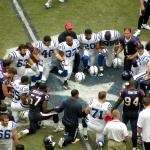
December 4, 2023 The History of NFL After-Game Prayer Circles
Recent Comments
"A thoughtful and thought-provoking article that raises important questions about the challenges facing the Western ..."
"to fit social or religious expectations. Especially women, who were expected to sacrifice everything to ..."
3 reasons you should not be ..."
"Powerful reminder short, sturdy truths can lose their weight if treated as slogans. The solas ..."
How Western Individualism Quietly Undermines the ..."
"If 'America’s deepest crisis is not merely political. It is moral and spiritual.' is in ..."
The Real Crisis Beneath America’s Social ..."
Browse Our Archives
Select a Category Atonement Biblical Theology Book Reviews China Chinese Church Chinese Culture Chinese Language Collectivism Contextualization Culture (General) Ecclesiology Evangelism Gospel Honor & Shame (Face) Interpretation/Exegesis Justification/Righteousness Missiology Mission Methods One Gospel for All Nations Other Practical Contextualization Reading Romans with Eastern Eyes Resources Romans Salvation (General) Saving God's Face Seeking God's Face The Cross in Context Theological Contextualization Theological Education Theology Uncategorized
Select a Month October 2026 September 2026 August 2026 July 2026 June 2026 May 2026 April 2026 March 2026 February 2026 January 2026 December 2025 November 2025 October 2025 September 2025 August 2025 July 2025 June 2025 May 2025 April 2025 March 2025 February 2025 January 2025 December 2024 November 2024 October 2024 September 2024 August 2024 July 2024 June 2024 May 2024 April 2024 March 2024 February 2024 January 2024 December 2023 November 2023 October 2023 September 2023 August 2023 July 2023 June 2023 May 2023 April 2023 March 2023 February 2023 January 2023 December 2022 November 2022 October 2022 September 2022 August 2022 July 2022 June 2022 May 2022 April 2022 March 2022 February 2022 January 2022 December 2021 November 2021 October 2021 September 2021 August 2021 July 2021 June 2021 May 2021 April 2021 March 2021 February 2021 January 2021 December 2020 November 2020 October 2020 September 2020 August 2020 July 2020 June 2020 May 2020 April 2020 March 2020 February 2020 January 2020 December 2019 November 2019 October 2019 September 2019 August 2019 July 2019 June 2019 May 2019 April 2019 March 2019 February 2019 January 2019 December 2018 November 2018 October 2018 September 2018 August 2018 July 2018 June 2018 May 2018 April 2018 March 2018 February 2018 January 2018 December 2017 November 2017 October 2017 September 2017 August 2017 July 2017 June 2017 May 2017 April 2017 March 2017 February 2017 January 2017 December 2016 November 2016 October 2016 September 2016 August 2016 July 2016 June 2016 May 2016 April 2016 March 2016 February 2016 January 2016 December 2015 November 2015 October 2015 September 2015 August 2015 July 2015 June 2015 May 2015 April 2015 March 2015 February 2015 January 2015 December 2014 November 2014 October 2014 September 2014 August 2014 July 2014 June 2014 May 2014 April 2014 March 2014 February 2014 January 2014 December 2013 November 2013 October 2013 September 2013 August 2013 July 2013 June 2013 May 2013 April 2013 March 2013 February 2013 January 2013 December 2012 November 2012
Follow Us!
TAKE THE
Religious Wisdom Quiz
I prayed while serving wine to the king, and my sad face led to permission for my mission. Who am I?
Select your answer to see how you score.
Nehemiah Mordecai Daniel Ezra
Books by This Author Books by Brad Vaughn
Related posts from Saving God's Face

No King forgets his crown. Why do we?

Recovering Moral Vision Between Shame and Shamelessness

Refuge, Confession, and the End of Shame

Psalm 25 and the Fear of Being Put...
TRENDING AT PATHEOS Evangelical

The Iron Gates and the Lion of the...
Yesterday, I didn't finish my report about, well, yesterday. So I'll...

Dolly Parton’s Last Song Wins Dove Award with...
Bluegrass band The Grascals, speaking on the red carpet at the 57th...

The Image: On the Horror of Capitalism and...
The Image Then went the Pharisees, and took counsel how they might...

We are approaching the date of our new American national holiday: October...

Letters on Living the Faith by C.S. Lewis
Most of us met C.S. Lewis as a public intellectual. Mere Christianity....

When Halloween Unmasks Married Hearts
Written by Dr. David K. Ewen from Eternal Truth Bible College Behind...
view all Evangelical blogs
What Are Your Thoughts?leave a comment
Ad-Free & Subscriber Log-In Subscription Support
- About Us
- 2026 Calendar
- Videos
- Podcasts
- Library of World Religions
- Faith In Media Tracker
- Advertise With Us
- Write for Us
- Privacy Policy
- Terms of Service
- Do Not Sell My Data
- Contact Us
- Radiant Digital
- Manage Newsletter Subscriptions
- Unsubscribe From Notifications
- Sitemap
Copyright 2008-2026, Patheos. All rights reserved.
Subscription Support Ad-Free & Subscriber Log-In
Follow Patheos