
BuddhistCatholicContemplativeEvangelicalGeneral ChristianHinduJewishLatter-day SaintMuslimNew VisionsProgressive Christian
Beliefs
- Buddhist
- Catholic
- Contemplative
- Evangelical
- General Christian
- Hindu
- Jewish
- Latter-day Saint
- More Voices
- Muslim
- New Visions
- Pagan
- Progressive Christian
Topics
- Religion News
- Food and Religion
- Sports and Religion
- Religious Art
- Religious Music and Entertainment
- Religious Events
- History and Religion
- Style and Religion
- Politics and Religion
- Women in Religion
- Recreation Outdoors and Religion
- Business Finance and Religion
- Careers Workplace and Religion
- Education and Religion
- Family Parenting and Religion
- Health Fitness and Religion
- Home and Religion
- Relationships and Religion
- Technology and Religion
- Travel and Religion
Columnists
- Buddhist Columnists
- Business Finance and Religion Columnists
- Careers Workplace and Religion Columnists
- Catholic Columnists
- Contemplative Columnists
- Education and Religion Columnists
- Evangelists Columnists
- Family Parenting and Religion Columnists
- General Christian Columnists
- Health Fitness and Religion Columnists
- Hindu Columnists
- History and Religion Columnists
- Home and Religion Columnists
- Jewish Columnists
- More Voices Columnists
- Latter Day Columnists
- Muslim Columnists
- New Visions Columnists
- Nonreligious Columnists
- Pagan Columnists
- Politics and Religion Columnists
- Progressive Columnists
- Recreation Outdoors and Religion Columnists
- Relationships and Religion Columnists
- Religion News Columnists
- Religious Art Columnists
- Religious Events Columnists
- Religious Music and Entertainment Columnists
- Sports and Religion Columnists
- Style and Religion Columnists
- Technology and Religion Columnists
- Travel and Religion Columnists
- Women in Religion Columnists
Resource Library
- 2026 Calendar
- Library of World Religions
- The 100 Most Holy Places on Earth
- Patheos Answers
- Podcasts
- Videos
- Faith Leaders Database
- Anglican Episcopalian
- Bahai
- Baptist
- Buddhism
- Christianity
- Confucianism
- Eastern Orthodoxy
- Hinduism
- Holiness and Pentecostal
- ISKCON
- Islam
- Judaism
- Lutheran
- Methodist
- The Church of Jesus Christ of Latter-day Saints
- New Age
- Paganism
- Presbytarian and Reformed
- Protestantism
- Religion Behind the Scenes
- Roman Catholic
- Scientology
- Shia Islam
- Sikhism
- Sufism
- Sunni Islam
- Taoism
- Zen
- See all religions
Research Tools
 Ad-Free & Subscriber Log-In Subscription Support
Ad-Free & Subscriber Log-In Subscription Support
Follow Patheos 

- Trending:
- Forgiveness
- |
- Marriage
- |
- Consciousness
- |
- Death Penalty
- |
- Election
- |
- Halloween

-
Tools
-
Support the Work
- Home
- Evangelical
- Paul’s Contextualization of Artemis for the Ephesians
Paul’s Contextualization of Artemis for the Ephesians
Last updated on: October 17, 2023 at 3:13 am by Brad Vaughn
Paul’s Contextualization of Artemis for the Ephesians 2023-09-29T13:19:40-07:00 Brad Vaughn
Patheos Explore the world's faith through different perspectives on religion and spirituality! Patheos has the views of the prevalent religions and spiritualities of the world.

While bantering about Paul’s comments about women in 1 Timothy 2, we easily miss how he uses Artemis to contextualize his message for the Ephesian church. After 2,000 years, it’s no wonder that we would miss the subtle ways that he addresses the issues facing Timothy. I should say “subtle” to us, but his original audience would not have missed his points.
How then can we today expect to pick up what Paul throws down? Insert Sandra Glahn’s Nobody’s Mother: Artemis of the Ephesians in Antiquity and the New Testament.
As I explained before, Glahn makes a remarkable contribution to the church. Her study is unique because it is comprehensive yet accessible when explaining Artemis in her Ephesian context. Based on ancient evidence, no other god or goddess, aside from Zeus, enjoyed the renown that Artemis did. Naturally, we’d expect such background to influence the church in Ephesus (where Timothy lived) and to shape Paul’s letter to them.
Why Paul Says What He Does
Contextualization has multiple parts. We want to look at why or what Paul says as well as how he says it. Frankly, the line separating what is how is blurring. We all know that how you say something is communicating the “what” of your message.
Observant readers might notice a peculiar detail in 1 Timothy that makes sense in light of Artemis’ influence on Ephesus. In 1 Tim 5:14, Paul advises young widows to marry, bear children, and manage their households. This is precisely the opposite counsel given in 1 Corinthians 7:8. Does Paul want the women to marry or not?
We previously saw that Artemis famously prized chastity and virginity; many of her followers thus spurned marriage in their worship of her. These details lead Glahn to ask,
Might a strong virginity, mindset explain why the church in Ephesus, influenced by Gentle converts, was so full of single females that Paul needed to divide widows into three groups—younger women and two groups of older women, divided according to financial need (1 Timothy 5:3-16)? (p 44).
Given these historical details, it makes sense why Paul chastises certain opponents,
“They forbid marriage and demand abstinence from foods, which God created to be received with thanksgiving by those who believe and know the truth.” (1 Tim 4:3)
Furthermore, Glahn sheds light on why Paul stresses the issue of modesty. Historical accounts describe Artemis “as a modest virgin and beautifully adorned” (p. 50). Also, “Since one of the offices associated with Artemis’s cult worship was for adorning the goddess, perhaps gold, pearls, and rich apparel were part of that emphasis [found in 1 Timothy]” (p 127).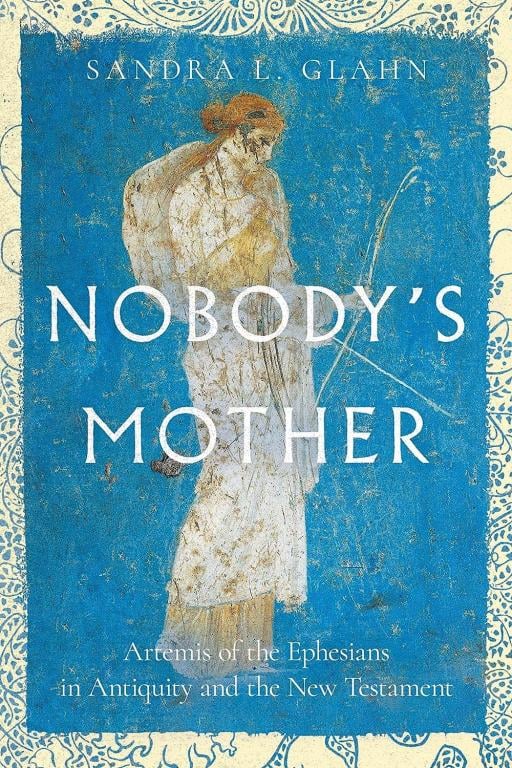
For example, Paul says, “the women should adorn themselves modestly and decently in suitable clothing, not with their hair braided, or with gold, pearls, or expensive clothes” (1 Tim 2:9). Likewise, he states that church leaders should be free from greed and the love of money (3:3, 8). Paul also commends godliness with contentment (6:6), calling the love of money “evil” (6:10), and warning that “those who want to be rich fall into temptation and are trapped by many senseless and harmful desires that plunge people into ruin and destruction” (6:9).
How Paul Says It
Paul’s theological artistry is evident in the (not so) subtle way of making a point. Some examples of contextualized writing only become evident after reading several ancient descriptions of Artemis and her cult.
You can delve into details by checking out Glahn’s Nobody’s Mother and other scholarly works. Below, I’ll simply summarize a few noteworthy items.
Many ancient sources depict Artemis as a skilled archer and hunter. Glahn explains,
“Not only arrows, but darts proceed from [Artemis’s] bow. One wonders if the apostle Paul’s reference to the enemies “flaming arrows” in Ephesians 6:16, mentioned in a context of spiritual warfare (Eph 6:10–18), might carry a veiled reference to a specific enemy he has in view.” (p. 55)
The Iliad calls her “queen of the wild beasts.” Glahn reminds us of 1 Corinthians 15:32, where Paul says, “If with merely human hopes I fought with wild animals at Ephesus, what would I have gained by it?” (p 47). In light of Paul’s troubles in Ephesus (Acts 19:23-41), such similar imagery about Ephesus increases the possibility that “wild beasts” is code for Artemis’s followers.
In addition, one of Artemis’s most common titles is “Savior.” Interestingly, this is not a term Paul frequently uses (compared to other titles); yet, this language is most dense in Paul’s letters to Timothy in Ephesus and Titus in Crete, which had strong connections to Artemis of the Ephesians (pp 118-22).
Glahn suggests several other instances of Paul’s intentional contextualization. These include Paul’s talk of “mystery” and “inheritance” as well as his opposition to magic in Ephesus.
No doubt, Nobody’s Mother is an excellent resource for biblical scholars; I also suggest that the book reinforces several points I make in One Gospel for All Nations, particularly that the Bible demonstrates the sort of contextualization the church today should be engaged in.
Previous Post

October 10, 2023
Why Artemis is Nobody’s Mother (a book review)
Next Post
October 24, 2023 Must God punish every sin … including forgiven sins?
Recent Comments
Browse Our Archives
Select a Category Atonement Biblical Theology Book Reviews China Chinese Church Chinese Culture Chinese Language Collectivism Contextualization Culture (General) Ecclesiology Evangelism Gospel Honor & Shame (Face) Interpretation/Exegesis Justification/Righteousness Missiology Mission Methods One Gospel for All Nations Other Practical Contextualization Reading Romans with Eastern Eyes Resources Romans Salvation (General) Saving God's Face Seeking God's Face The Cross in Context Theological Contextualization Theological Education Theology Uncategorized
Select a Month October 2026 September 2026 August 2026 July 2026 June 2026 May 2026 April 2026 March 2026 February 2026 January 2026 December 2025 November 2025 October 2025 September 2025 August 2025 July 2025 June 2025 May 2025 April 2025 March 2025 February 2025 January 2025 December 2024 November 2024 October 2024 September 2024 August 2024 July 2024 June 2024 May 2024 April 2024 March 2024 February 2024 January 2024 December 2023 November 2023 October 2023 September 2023 August 2023 July 2023 June 2023 May 2023 April 2023 March 2023 February 2023 January 2023 December 2022 November 2022 October 2022 September 2022 August 2022 July 2022 June 2022 May 2022 April 2022 March 2022 February 2022 January 2022 December 2021 November 2021 October 2021 September 2021 August 2021 July 2021 June 2021 May 2021 April 2021 March 2021 February 2021 January 2021 December 2020 November 2020 October 2020 September 2020 August 2020 July 2020 June 2020 May 2020 April 2020 March 2020 February 2020 January 2020 December 2019 November 2019 October 2019 September 2019 August 2019 July 2019 June 2019 May 2019 April 2019 March 2019 February 2019 January 2019 December 2018 November 2018 October 2018 September 2018 August 2018 July 2018 June 2018 May 2018 April 2018 March 2018 February 2018 January 2018 December 2017 November 2017 October 2017 September 2017 August 2017 July 2017 June 2017 May 2017 April 2017 March 2017 February 2017 January 2017 December 2016 November 2016 October 2016 September 2016 August 2016 July 2016 June 2016 May 2016 April 2016 March 2016 February 2016 January 2016 December 2015 November 2015 October 2015 September 2015 August 2015 July 2015 June 2015 May 2015 April 2015 March 2015 February 2015 January 2015 December 2014 November 2014 October 2014 September 2014 August 2014 July 2014 June 2014 May 2014 April 2014 March 2014 February 2014 January 2014 December 2013 November 2013 October 2013 September 2013 August 2013 July 2013 June 2013 May 2013 April 2013 March 2013 February 2013 January 2013 December 2012 November 2012
Follow Us!
TAKE THE
Religious Wisdom Quiz
What does "Zion" mean in Hebrew?
Select your answer to see how you score.
Fortress Holy Place City of God Promised Land
Books by This Author Books by Brad Vaughn
Related posts from Saving God's Face

Why Artemis is Nobody’s Mother (a book review)

I'm launching 3 online courses!

Think Broadly on Contextualization and Biblical Theology

Presenting the gospel like remade movie trailers
TRENDING AT PATHEOS Evangelical

Pope Leo Celebrates Mass for Nurses & Docs...
I don't have any idea how he did it, but Pope Leo...

The Sermon on the Mount, Part I: Matthew...
The Sermon on the Mount, Part I (Matthew 4:12-5:12) St. Matthew moves...

What's up from Crossway: Reviewing some of their latest A few weeks...

Janie Learns the Way of the Cross: A...
Teaching children about Jesus' Passion can be challenging. Many parents and educators...

Looking For Good Catholic Writing - October 2026
He alone extends the heavens, and he walks upon the waves of...

In "Irreplaceable," our book on vocation and technology, Trevor Sutton and I...
view all Evangelical blogs
What Are Your Thoughts?leave a comment
Ad-Free & Subscriber Log-In Subscription Support
- About Us
- 2026 Calendar
- Videos
- Podcasts
- Library of World Religions
- Faith In Media Tracker
- Advertise With Us
- Write for Us
- Privacy Policy
- Terms of Service
- Do Not Sell My Data
- Contact Us
- Radiant Digital
- Manage Newsletter Subscriptions
- Unsubscribe From Notifications
- Sitemap
Copyright 2008-2026, Patheos. All rights reserved.
Subscription Support Ad-Free & Subscriber Log-In
Follow Patheos