
BuddhistCatholicContemplativeEvangelicalGeneral ChristianHinduJewishLatter-day SaintMuslimNew VisionsProgressive Christian
Beliefs
- Buddhist
- Catholic
- Contemplative
- Evangelical
- General Christian
- Hindu
- Jewish
- Latter-day Saint
- More Voices
- Muslim
- New Visions
- Pagan
- Progressive Christian
Topics
- Religion News
- Food and Religion
- Sports and Religion
- Religious Art
- Religious Music and Entertainment
- Religious Events
- History and Religion
- Style and Religion
- Politics and Religion
- Women in Religion
- Recreation Outdoors and Religion
- Business Finance and Religion
- Careers Workplace and Religion
- Education and Religion
- Family Parenting and Religion
- Health Fitness and Religion
- Home and Religion
- Relationships and Religion
- Technology and Religion
- Travel and Religion
Columnists
- Buddhist Columnists
- Business Finance and Religion Columnists
- Careers Workplace and Religion Columnists
- Catholic Columnists
- Contemplative Columnists
- Education and Religion Columnists
- Evangelists Columnists
- Family Parenting and Religion Columnists
- General Christian Columnists
- Health Fitness and Religion Columnists
- Hindu Columnists
- History and Religion Columnists
- Home and Religion Columnists
- Jewish Columnists
- More Voices Columnists
- Latter Day Columnists
- Muslim Columnists
- New Visions Columnists
- Nonreligious Columnists
- Pagan Columnists
- Politics and Religion Columnists
- Progressive Columnists
- Recreation Outdoors and Religion Columnists
- Relationships and Religion Columnists
- Religion News Columnists
- Religious Art Columnists
- Religious Events Columnists
- Religious Music and Entertainment Columnists
- Sports and Religion Columnists
- Style and Religion Columnists
- Technology and Religion Columnists
- Travel and Religion Columnists
- Women in Religion Columnists
Resource Library
- 2026 Calendar
- Library of World Religions
- The 100 Most Holy Places on Earth
- Patheos Answers
- Podcasts
- Videos
- Faith Leaders Database
- Anglican Episcopalian
- Bahai
- Baptist
- Buddhism
- Christianity
- Confucianism
- Eastern Orthodoxy
- Hinduism
- Holiness and Pentecostal
- ISKCON
- Islam
- Judaism
- Lutheran
- Methodist
- The Church of Jesus Christ of Latter-day Saints
- New Age
- Paganism
- Presbytarian and Reformed
- Protestantism
- Religion Behind the Scenes
- Roman Catholic
- Scientology
- Shia Islam
- Sikhism
- Sufism
- Sunni Islam
- Taoism
- Zen
- See all religions
Research Tools
 Ad-Free & Subscriber Log-In Subscription Support
Ad-Free & Subscriber Log-In Subscription Support
Follow Patheos 

- Trending:
- Forgiveness
- |
- Marriage
- |
- Consciousness
- |
- Death Penalty
- |
- Election
- |
- Halloween

-
Tools
-
Support the Work
- Home
- Evangelical
- History and Religion
- The Divine Banquet: Biblical Sacrifices as Symbolic Meals
The Divine Banquet: Biblical Sacrifices as Symbolic Meals
Last updated on: October 3, 2023 at 3:21 am by Brad Vaughn
The Divine Banquet: Biblical Sacrifices as Symbolic Meals 2023-07-28T16:36:08-07:00 Brad Vaughn
Patheos Explore the world's faith through different perspectives on religion and spirituality! Patheos has the views of the prevalent religions and spiritualities of the world.
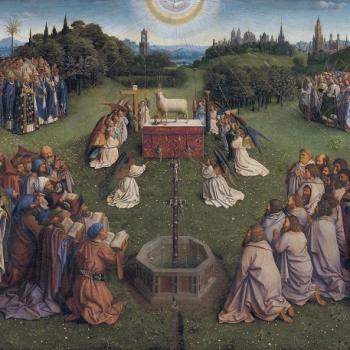
Credit: Public Domain
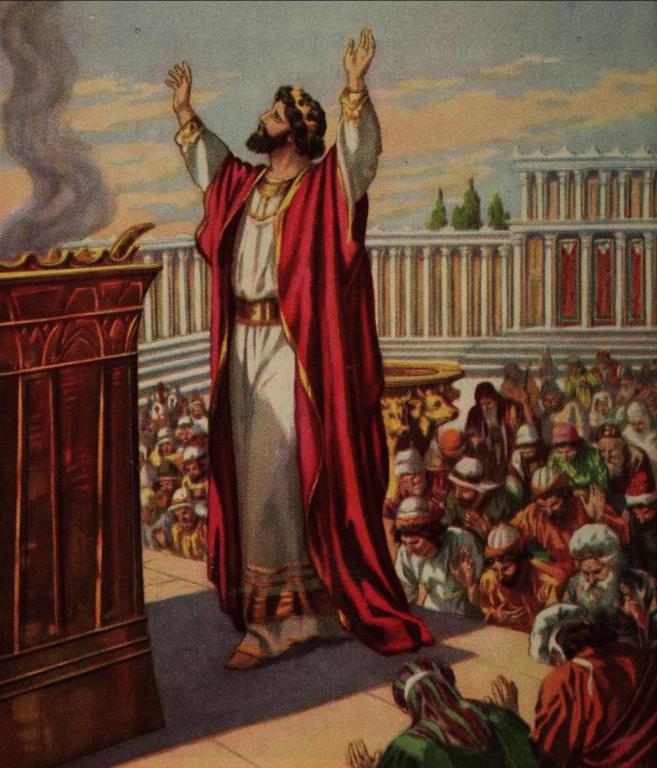
The Old Testament presents numerous examples of sacrifices, many of which can be understood as symbolic meals offered to God by His worshipers. From the solemnity of the Passover Lamb to the simple grain offerings, these sacrifices were not only acts of atonement but also deeply communal and spiritual experiences.
(Unfortunately, too few evangelicals talk about this OT background. For an exegetical deep dive into this topic, see The Cross in Context.)
Eating a Meal with God
Various scholars have observed how many biblical sacrifices are imbued with the symbolism of a meal. This imagery speaks to the intrinsic relationship between the divine and human, and more significantly, it underscores the reverence and adoration shown to God by His followers through this shared “meal.”
The term “meal” itself might evoke casual associations with our daily routines; however, in the biblical context, this connotation is significantly elevated. A meal shared with the divine is a profound expression of communal intimacy and a display of honor and reverence. Moreover, these “divine meals” are made possible by the worshipers who present their offerings as food to God.
Examples in Scripture
To unpack this idea, let’s consider some examples. In Leviticus 7:14-17, the bread is regarded as a “gift to the Lord.” The priest first eats the offering. Then, God seems to consume the meal in 7:17.
From this you shall offer one cake from each offering, as a gift to the Lord; it shall belong to the priest who dashes the blood of the offering of well-being. And the flesh of your thanksgiving sacrifice of well-being shall be eaten on the day it is offered; you shall not leave any of it until morning. But if the sacrifice you offer is a votive offering or a freewill offering, it shall be eaten on the day that you offer your sacrifice, and what is left of it shall be eaten the next day; but what is left of the flesh of the sacrifice shall be burned up on the third day.
Leviticus 21:6 says of the priests, “They shall be holy to their God, and not profane the name of their God; for they offer the Lord’s offerings by fire, the food of their God; therefore they shall be holy.” The Lord’s “food” in 21:6 is equated to the Lord’s “fire” (ʾišše). In Leviticus, the term describes each of the five main offerings and is equated with the bread elsewhere (cf. Lev 24:7; Num 28:2, 24).
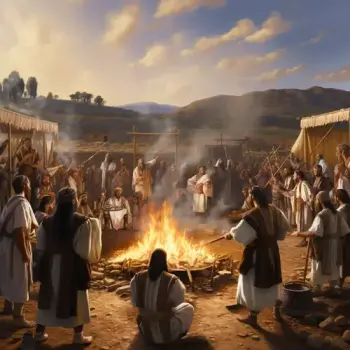
Credit: Public Domain
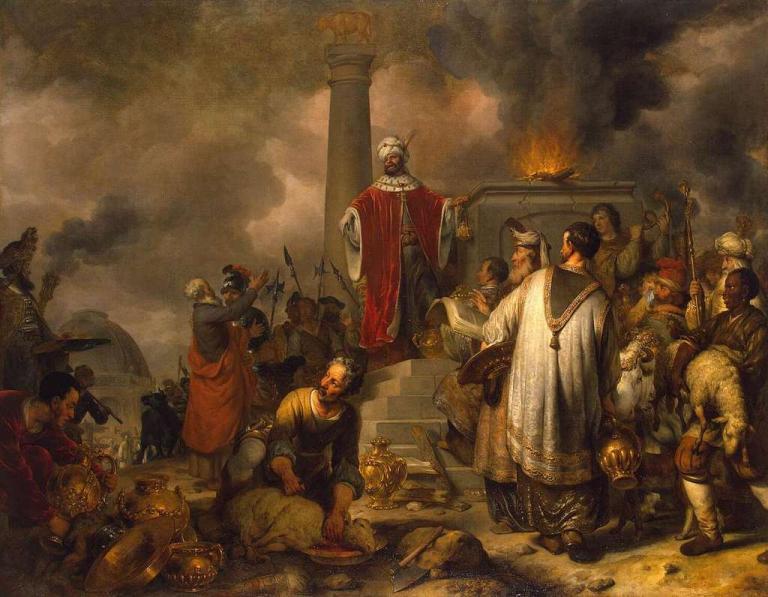
Why use fire imagery? In effect, the burning fire transforms the sacrifice, lifting it to God. Therefore, God and people could have fellowship. Where did they eat this meal? In God’s dwelling place, his temple, or simply God’s “house.”
These observations run contrary to modern sensibilities. Still, God explicitly commands Israel to give him food. The Lord tells Moses,
“Command the Israelites, and say to them: My offering, the food for my offerings by fire [ʾišše], my pleasing odor, you shall take care to offer to me at its appointed time” (Numbers 28:2).
Ezekiel even appears to represent blood as a kind of drink given to God. Ezekiel 44:7 rebukes Israel’s leaders for
“admitting foreigners, uncircumcised in heart and flesh, to be in my sanctuary, profaning my temple when you offer to me my food, the fat and the blood. You have broken my covenant with all your abominations.”
To be clear, these offerings are symbolic gifts. Scripture does not claim that God needs food. In fact, Psalm 50:7-15 rejects the suggestion. The psalmist says,
Hear, O my people, and I will speak, O Israel, I will testify against you. I am God, your God. Not for your sacrifices do I rebuke you; your burnt offerings are continually before me. I will not accept a bull from your house, or goats from your folds. For every wild animal of the forest is mine, the cattle on a thousand hills. I know all the birds of the air, and all that moves in the field is mine. If I were hungry, I would not tell you, for the world and all that is in it is mine. Do I eat the flesh of bulls, or drink the blood of goats? Offer to God a sacrifice of thanksgiving, and pay your vows to the Most High. Call on me in the day of trouble; I will deliver you, and you shall glorify me.
The fact that Israel could misunderstand the sacrifices like this further confirms the above interpretation, that is, sacrifices served as symbolic food. Hendel says, “These meals dramatize the bonds of intimacy and distance that relate Israel to God. Table and altar are analogous in various ways, implicitly foregrounding the Israelites’ closeness to God.”[1]
Sharing Communal Meals
These examples highlight that the symbolic meals are an integral part of worship, an offering to God that simultaneously provides sustenance to the worshipers. Through this process, the bond between the divine and the faithful is reaffirmed, creating a mutually enriching experience.
But what happens when the offerings are of a non-animal nature, such as grain offerings? Here, too, we see the meal symbolism emerge. Leviticus 2 introduces the grain offering, a sacrifice made with fine flour, oil, and frankincense. This grain offering, much like the animal sacrifices, was ‘consumed’ partially by God through the act of burning on the altar, while the remainder served as food for the priests.
The burning of offerings on the altar and the rising smoke symbolize God’s receiving or, perhaps, consumption of the meal. Just as the family head in ancient cultures would partake of the best portions of a meal, so too the finest parts of the offering are given to God, acknowledging Him as the supreme head of the universal family.
Importantly, the communal aspect of these “meals” reinforces the communal nature of worship. The remaining portions of the grain offering were consumed by the priests, who represented the people before God. Hence, this offering both demonstrated the worshiper’s devotion and also played a vital role in maintaining the community’s spiritual leaders.
Conclusion
Ultimately, the concept of biblical sacrifices as symbolic meals encapsulates the profound relationship between God and His people. The shared “meal” signifies mutual sustenance, honor, and community—the worshiper offers a gift of sustenance to God, while also sustaining themselves and their community. It’s a tangible expression of devotion, showing that worship is not a mere act of ritual compliance but a deeply relational act of love and respect.
To conclude, biblical sacrifices’ portrayal as symbolic meals offers a rich, multi-dimensional understanding of the nature of worship. These sacrifices are not just transactions or obligations; they are shared meals—acts of communion that echo the deep, relational character of God, who desires more than our offerings: He desires our hearts.
This enduring lesson from Old Testament serves as a reminder for us today. As we come to God with our offerings, may we do so not out of duty but out of love, honoring Him as we would honor a cherished guest at our table, acknowledging Him as the provider of all good things, and expressing our deep gratitude and reverence for His abundant grace.
[1] Ronald Hendel, “Table and Altar: The Anthropology of Food in the Priestly Torah,” in To Break Every Yoke: Essays in Honor of Marvin L. Chaney, ed. R. B. Coote and N. K. Gottwald (Sheffield: Sheffield Phoenix Press, 2007), 145.
History and Religion
Previous Post

September 26, 2023
Social Status is a Scarce Resource
Next Post
October 10, 2023 Why Artemis is Nobody’s Mother (a book review)
Recent Comments
Browse Our Archives
Select a Category Atonement Biblical Theology Book Reviews China Chinese Church Chinese Culture Chinese Language Collectivism Contextualization Culture (General) Ecclesiology Evangelism Gospel Honor & Shame (Face) Interpretation/Exegesis Justification/Righteousness Missiology Mission Methods One Gospel for All Nations Other Practical Contextualization Reading Romans with Eastern Eyes Resources Romans Salvation (General) Saving God's Face Seeking God's Face The Cross in Context Theological Contextualization Theological Education Theology Uncategorized
Select a Month October 2026 September 2026 August 2026 July 2026 June 2026 May 2026 April 2026 March 2026 February 2026 January 2026 December 2025 November 2025 October 2025 September 2025 August 2025 July 2025 June 2025 May 2025 April 2025 March 2025 February 2025 January 2025 December 2024 November 2024 October 2024 September 2024 August 2024 July 2024 June 2024 May 2024 April 2024 March 2024 February 2024 January 2024 December 2023 November 2023 October 2023 September 2023 August 2023 July 2023 June 2023 May 2023 April 2023 March 2023 February 2023 January 2023 December 2022 November 2022 October 2022 September 2022 August 2022 July 2022 June 2022 May 2022 April 2022 March 2022 February 2022 January 2022 December 2021 November 2021 October 2021 September 2021 August 2021 July 2021 June 2021 May 2021 April 2021 March 2021 February 2021 January 2021 December 2020 November 2020 October 2020 September 2020 August 2020 July 2020 June 2020 May 2020 April 2020 March 2020 February 2020 January 2020 December 2019 November 2019 October 2019 September 2019 August 2019 July 2019 June 2019 May 2019 April 2019 March 2019 February 2019 January 2019 December 2018 November 2018 October 2018 September 2018 August 2018 July 2018 June 2018 May 2018 April 2018 March 2018 February 2018 January 2018 December 2017 November 2017 October 2017 September 2017 August 2017 July 2017 June 2017 May 2017 April 2017 March 2017 February 2017 January 2017 December 2016 November 2016 October 2016 September 2016 August 2016 July 2016 June 2016 May 2016 April 2016 March 2016 February 2016 January 2016 December 2015 November 2015 October 2015 September 2015 August 2015 July 2015 June 2015 May 2015 April 2015 March 2015 February 2015 January 2015 December 2014 November 2014 October 2014 September 2014 August 2014 July 2014 June 2014 May 2014 April 2014 March 2014 February 2014 January 2014 December 2013 November 2013 October 2013 September 2013 August 2013 July 2013 June 2013 May 2013 April 2013 March 2013 February 2013 January 2013 December 2012 November 2012
Follow Us!
TAKE THE
Religious Wisdom Quiz
How many seals, trumpets, and bowls of judgment are there in Revelation?
Select your answer to see how you score.
Seven each Five each Ten each Twelve each
Books by This Author Books by Brad Vaughn
Related posts from Saving God's Face
How Biblical Sacrifices Vindicate God’s Glory
What Exactly Does Christ Purify?

Why Do I Wear a Guillotine Around My...
What are Essential Elements of Atonement?
TRENDING AT PATHEOS Evangelical

Looking at the Largest Orthodox Cathedral on Earth
There is often a considerable amount of anger and, shall we...

The Problem with False Prophets
Miller’s Station UMC| 10/18/26| Anchor Verse: Jeremiah 23: 1, 9-23 I...

Emotion in Early Christianity by Andrew Crislip
Andrew Crislip’s Emotion in Early Christianity examines an often overlooked dimension of...

16 Spiritual Touchstones for a More Grounded Life
After decades of spiritual study, here are 16 principles I try...

Catholic Evangelization: Sharing Your Faith Every Day
Welcome back to the Graceful Awakening mini-series called, “From Faith to Mission.” ...

The Pillar of the Boatmen: the Ancient Monument...
The Pillar of the Boatmen is a Romano-Gaulish sculpture that dates from...
view all Evangelical blogs
What Are Your Thoughts?leave a comment
Ad-Free & Subscriber Log-In Subscription Support
- About Us
- 2026 Calendar
- Videos
- Podcasts
- Library of World Religions
- Faith In Media Tracker
- Advertise With Us
- Write for Us
- Privacy Policy
- Terms of Service
- Do Not Sell My Data
- Contact Us
- Radiant Digital
- Manage Newsletter Subscriptions
- Unsubscribe From Notifications
- Sitemap
Copyright 2008-2026, Patheos. All rights reserved.
Subscription Support Ad-Free & Subscriber Log-In
Follow Patheos