
BuddhistCatholicContemplativeEvangelicalGeneral ChristianHinduJewishLatter-day SaintMuslimNew VisionsProgressive Christian
Beliefs
- Buddhist
- Catholic
- Contemplative
- Evangelical
- General Christian
- Hindu
- Jewish
- Latter-day Saint
- More Voices
- Muslim
- New Visions
- Pagan
- Progressive Christian
Topics
- Religion News
- Food and Religion
- Sports and Religion
- Religious Art
- Religious Music and Entertainment
- Religious Events
- History and Religion
- Style and Religion
- Politics and Religion
- Women in Religion
- Recreation Outdoors and Religion
- Business Finance and Religion
- Careers Workplace and Religion
- Education and Religion
- Family Parenting and Religion
- Health Fitness and Religion
- Home and Religion
- Relationships and Religion
- Technology and Religion
- Travel and Religion
Columnists
- Buddhist Columnists
- Business Finance and Religion Columnists
- Careers Workplace and Religion Columnists
- Catholic Columnists
- Contemplative Columnists
- Education and Religion Columnists
- Evangelists Columnists
- Family Parenting and Religion Columnists
- General Christian Columnists
- Health Fitness and Religion Columnists
- Hindu Columnists
- History and Religion Columnists
- Home and Religion Columnists
- Jewish Columnists
- More Voices Columnists
- Latter Day Columnists
- Muslim Columnists
- New Visions Columnists
- Nonreligious Columnists
- Pagan Columnists
- Politics and Religion Columnists
- Progressive Columnists
- Recreation Outdoors and Religion Columnists
- Relationships and Religion Columnists
- Religion News Columnists
- Religious Art Columnists
- Religious Events Columnists
- Religious Music and Entertainment Columnists
- Sports and Religion Columnists
- Style and Religion Columnists
- Technology and Religion Columnists
- Travel and Religion Columnists
- Women in Religion Columnists
Resource Library
- 2026 Calendar
- Library of World Religions
- The 100 Most Holy Places on Earth
- Patheos Answers
- Podcasts
- Videos
- Faith Leaders Database
- Anglican Episcopalian
- Bahai
- Baptist
- Buddhism
- Christianity
- Confucianism
- Eastern Orthodoxy
- Hinduism
- Holiness and Pentecostal
- ISKCON
- Islam
- Judaism
- Lutheran
- Methodist
- The Church of Jesus Christ of Latter-day Saints
- New Age
- Paganism
- Presbytarian and Reformed
- Protestantism
- Religion Behind the Scenes
- Roman Catholic
- Scientology
- Shia Islam
- Sikhism
- Sufism
- Sunni Islam
- Taoism
- Zen
- See all religions
Research Tools
 Ad-Free & Subscriber Log-In Subscription Support
Ad-Free & Subscriber Log-In Subscription Support
Follow Patheos 

- Trending:
- Forgiveness
- |
- Marriage
- |
- Consciousness
- |
- Death Penalty
- |
- Election
- |
- Halloween

-
Tools
-
Support the Work
- Home
- Evangelical
- Relationships and Religion
- The Untruth About “My Truth”
The Untruth About “My Truth”
Last updated on: July 25, 2023 at 12:38 pm by Brad Vaughn
The Untruth About “My Truth” 2023-07-25T12:38:24-07:00 Brad Vaughn
Patheos Explore the world's faith through different perspectives on religion and spirituality! Patheos has the views of the prevalent religions and spiritualities of the world.

Credit: Pixabay
In recent years, the phrase “my truth” has become a prominent part of social discourse, especially in discussions surrounding identity, personal experience, and subjective perspectives. What is the meaning of “my truth”? And what are its implications in shaping individual perspectives and communicating the biblical message?
What is “My Truth”?
I’ll attempt first to explain what people mean with they say, “my truth.”
“My truth” refers to a person’s subjective understanding of their experience and emotions. Those who use this phrase know that all perspectives are shaped by our unique backgrounds, values, and experiences. Its increased usage is due to a collective effort to acknowledge and respect the diversity of personal experiences and interpretations.
At the same time, “my truth” is a postmodern challenge to the claim that absolute or universal truth exists. Truth is multidimensional. Our perception of truth is contextual, often biased, and influenced by individual perceptions. The phrase “my truth” accentuates the importance of embracing diverse perspectives and questioning traditional or “authoritative” accounts of the world.
As a result, asserting “my truth” is a way that individuals affirm their autonomy and take ownership of their experiences. It encourages self-expression without the fear that others will judge or reject the speaker.
One hears claims of “my truth” quite frequently in conversations that concern marginalized communities. After all, individuals from different social and cultural backgrounds have unique perspectives that shape their identities. “My truth” buttresses against attempts by the majority culture to stifle or silence marginalized voices. Those who use the phrase hope to cultivate a sense of empathy and open-mindedness towards diverse people within their community.
What is the Problem?
The underlying goals that motivate people to speak of “my truth” are praiseworthy. However, ends don’t justify means, especially when it comes to truth. Here are a few problems that Christ’s followers should keep in mind before adopting vernacular ways of talking about truth.
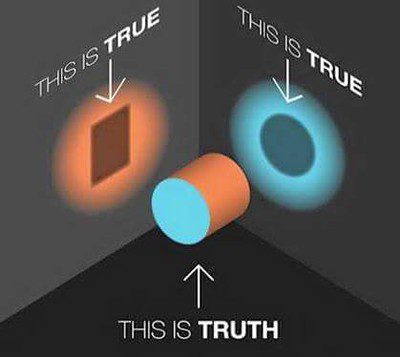
First, the phrase “my truth” implies that truth is subjective, differing from person to person. By definition, however, truth refers to something that corresponds to reality or facts, regardless of personal opinion or belief. Subjective experiences differ from interpretations of truth, which often disagree with objective truth (i.e., verifiable truth that can be supported with evidence).
What people actually mean by “my truth” is simply their understanding of truth.
Using phrases like “my truth” either reflects or reinforces the idea that truth is relative. Relativism, in the sense I’m using it, asserts that what is true depends on personal perspective or cultural context. Such thinking allows for direct contradictions. Naturally, relativism is an assault on objective truth and undermines both critical thinking and evidence-based reasoning.
Without objective truth, we have little hope that people of varied backgrounds can have profitable dialogue. After all, if everyone’s “truth” is equally valid, how do we evaluate conflicting truth claims and solve serious disagreements? A “my truth” mentality ignores scientific research, expert opinions, and reliable sources of information.
We certainly see the negative fruit of “my truth” thinking in our divisive age of social media and “fake news.” We slowly begin to disregard information based solely on its source. We arrogantly assume that our tribe alone possesses the truth.
Credit: Flickr/Leigh Blackall
Being Humble About Truth
We need a lot of humility when talking about truth. Sadly, fear undercuts humility.
Some Christians often are so scared of anything that resembles relativism that they refuse to see legitimate concerns of others who discern at least some sort of relative aspect of truth. Consequently, conservative-to-fundamentalist thinkers wind up espousing the absolute infallibility of their own interpretations.
I propose we internalize the following:
We all have a relative perspective on absolute truth.
Why do I like this formulation? First, it helps us not to confuse epistemology (study of knowledge) with metaphysics (study of reality). In other words, simply because we don’t know what is real or true does not mean that truth or reality doesn’t exist.
What else does this statement imply? It recognizes that no one has a complete grasp of the truth. At the same, it affirms that we can discern what is real. It takes experience, humility, community, and (often) training to grow in our capacity to have a greater perspective (though still relative) on absolute truth.
Emphasizing “my truth” rather than “the truth” invariably breeds tribalism. Increased polarization splinters society. We are left with a “us vs. them” mentality. As that grows, empathy vanishes. Love dies. Injustice takes root.
Phrases like “my truth” are far from harmless. Followers of Christ need to remain mindful that our words have the power to shape both our own thinking and that of others.
Relationships and Religion
History and Religion
Previous Post

July 18, 2023
No One Can “Validate” Emotions, Not Even You.
Next Post

August 1, 2023 My Response to Aubrey Sequeira’s Interview and Critique
Recent Comments
"A thoughtful and thought-provoking article that raises important questions about the challenges facing the Western ..."
"to fit social or religious expectations. Especially women, who were expected to sacrifice everything to ..."
3 reasons you should not be ..."
"Powerful reminder short, sturdy truths can lose their weight if treated as slogans. The solas ..."
How Western Individualism Quietly Undermines the ..."
"If 'America’s deepest crisis is not merely political. It is moral and spiritual.' is in ..."
The Real Crisis Beneath America’s Social ..."
Browse Our Archives
Select a Category Atonement Biblical Theology Book Reviews China Chinese Church Chinese Culture Chinese Language Collectivism Contextualization Culture (General) Ecclesiology Evangelism Gospel Honor & Shame (Face) Interpretation/Exegesis Justification/Righteousness Missiology Mission Methods One Gospel for All Nations Other Practical Contextualization Reading Romans with Eastern Eyes Resources Romans Salvation (General) Saving God's Face Seeking God's Face The Cross in Context Theological Contextualization Theological Education Theology Uncategorized
Select a Month October 2026 September 2026 August 2026 July 2026 June 2026 May 2026 April 2026 March 2026 February 2026 January 2026 December 2025 November 2025 October 2025 September 2025 August 2025 July 2025 June 2025 May 2025 April 2025 March 2025 February 2025 January 2025 December 2024 November 2024 October 2024 September 2024 August 2024 July 2024 June 2024 May 2024 April 2024 March 2024 February 2024 January 2024 December 2023 November 2023 October 2023 September 2023 August 2023 July 2023 June 2023 May 2023 April 2023 March 2023 February 2023 January 2023 December 2022 November 2022 October 2022 September 2022 August 2022 July 2022 June 2022 May 2022 April 2022 March 2022 February 2022 January 2022 December 2021 November 2021 October 2021 September 2021 August 2021 July 2021 June 2021 May 2021 April 2021 March 2021 February 2021 January 2021 December 2020 November 2020 October 2020 September 2020 August 2020 July 2020 June 2020 May 2020 April 2020 March 2020 February 2020 January 2020 December 2019 November 2019 October 2019 September 2019 August 2019 July 2019 June 2019 May 2019 April 2019 March 2019 February 2019 January 2019 December 2018 November 2018 October 2018 September 2018 August 2018 July 2018 June 2018 May 2018 April 2018 March 2018 February 2018 January 2018 December 2017 November 2017 October 2017 September 2017 August 2017 July 2017 June 2017 May 2017 April 2017 March 2017 February 2017 January 2017 December 2016 November 2016 October 2016 September 2016 August 2016 July 2016 June 2016 May 2016 April 2016 March 2016 February 2016 January 2016 December 2015 November 2015 October 2015 September 2015 August 2015 July 2015 June 2015 May 2015 April 2015 March 2015 February 2015 January 2015 December 2014 November 2014 October 2014 September 2014 August 2014 July 2014 June 2014 May 2014 April 2014 March 2014 February 2014 January 2014 December 2013 November 2013 October 2013 September 2013 August 2013 July 2013 June 2013 May 2013 April 2013 March 2013 February 2013 January 2013 December 2012 November 2012
Follow Us!
TAKE THE
Religious Wisdom Quiz
Who was healed by touching the hem of Jesus’ garment?
Select your answer to see how you score.
A centurion A leper A blind man A woman with an issue of blood
Books by This Author Books by Brad Vaughn
Related posts from Saving God's Face

The Real Crisis Beneath America’s Social Crises (Part...

America’s Crisis Is Deeper Than Politics

Independent Thinking Isn’t What You Think

The Gulag Theology of One Day in the...
TRENDING AT PATHEOS Evangelical

The Problem with False Prophets
Miller’s Station UMC| 10/18/26| Anchor Verse: Jeremiah 23: 1, 9-23 I...

Emotion in Early Christianity by Andrew Crislip
Andrew Crislip’s Emotion in Early Christianity examines an often overlooked dimension of...

16 Spiritual Touchstones for a More Grounded Life
After decades of spiritual study, here are 16 principles I try...

Catholic Evangelization: Sharing Your Faith Every Day
Welcome back to the Graceful Awakening mini-series called, “From Faith to Mission.” ...

The Pillar of the Boatmen: the Ancient Monument...
The Pillar of the Boatmen is a Romano-Gaulish sculpture that dates from...

In one sense walking into Westminster Abbey is like walking down the...
view all Evangelical blogs
What Are Your Thoughts?leave a comment
Ad-Free & Subscriber Log-In Subscription Support
- About Us
- 2026 Calendar
- Videos
- Podcasts
- Library of World Religions
- Faith In Media Tracker
- Advertise With Us
- Write for Us
- Privacy Policy
- Terms of Service
- Do Not Sell My Data
- Contact Us
- Radiant Digital
- Manage Newsletter Subscriptions
- Unsubscribe From Notifications
- Sitemap
Copyright 2008-2026, Patheos. All rights reserved.
Subscription Support Ad-Free & Subscriber Log-In
Follow Patheos