
BuddhistCatholicContemplativeEvangelicalGeneral ChristianHinduJewishLatter-day SaintMuslimNew VisionsProgressive Christian
Beliefs
- Buddhist
- Catholic
- Contemplative
- Evangelical
- General Christian
- Hindu
- Jewish
- Latter-day Saint
- More Voices
- Muslim
- New Visions
- Pagan
- Progressive Christian
Topics
- Religion News
- Food and Religion
- Sports and Religion
- Religious Art
- Religious Music and Entertainment
- Religious Events
- History and Religion
- Style and Religion
- Politics and Religion
- Women in Religion
- Recreation Outdoors and Religion
- Business Finance and Religion
- Careers Workplace and Religion
- Education and Religion
- Family Parenting and Religion
- Health Fitness and Religion
- Home and Religion
- Relationships and Religion
- Technology and Religion
- Travel and Religion
Columnists
- Buddhist Columnists
- Business Finance and Religion Columnists
- Careers Workplace and Religion Columnists
- Catholic Columnists
- Contemplative Columnists
- Education and Religion Columnists
- Evangelists Columnists
- Family Parenting and Religion Columnists
- General Christian Columnists
- Health Fitness and Religion Columnists
- Hindu Columnists
- History and Religion Columnists
- Home and Religion Columnists
- Jewish Columnists
- More Voices Columnists
- Latter Day Columnists
- Muslim Columnists
- New Visions Columnists
- Nonreligious Columnists
- Pagan Columnists
- Politics and Religion Columnists
- Progressive Columnists
- Recreation Outdoors and Religion Columnists
- Relationships and Religion Columnists
- Religion News Columnists
- Religious Art Columnists
- Religious Events Columnists
- Religious Music and Entertainment Columnists
- Sports and Religion Columnists
- Style and Religion Columnists
- Technology and Religion Columnists
- Travel and Religion Columnists
- Women in Religion Columnists
Resource Library
- 2026 Calendar
- Library of World Religions
- The 100 Most Holy Places on Earth
- Patheos Answers
- Podcasts
- Videos
- Faith Leaders Database
- Anglican Episcopalian
- Bahai
- Baptist
- Buddhism
- Christianity
- Confucianism
- Eastern Orthodoxy
- Hinduism
- Holiness and Pentecostal
- ISKCON
- Islam
- Judaism
- Lutheran
- Methodist
- The Church of Jesus Christ of Latter-day Saints
- New Age
- Paganism
- Presbytarian and Reformed
- Protestantism
- Religion Behind the Scenes
- Roman Catholic
- Scientology
- Shia Islam
- Sikhism
- Sufism
- Sunni Islam
- Taoism
- Zen
- See all religions
Research Tools
 Ad-Free & Subscriber Log-In Subscription Support
Ad-Free & Subscriber Log-In Subscription Support
Follow Patheos 

- Trending:
- Forgiveness
- |
- Marriage
- |
- Consciousness
- |
- Death Penalty
- |
- Election
- |
- Halloween

-
Tools
-
Support the Work
- Home
- Evangelical
- Religious Events
- Does Burning or Blood Effect Atonement? You Sure?
Does Burning or Blood Effect Atonement? You Sure?
Last updated on: March 14, 2023 at 4:08 pm by Brad Vaughn
Does Burning or Blood Effect Atonement? You Sure? 2023-03-03T06:18:46-07:00 Brad Vaughn
Patheos Explore the world's faith through different perspectives on religion and spirituality! Patheos has the views of the prevalent religions and spiritualities of the world.

When speaking of Christ and the OT sacrifices, we typically focus on blood. This is not without good reason. However, this laser focus ironically might blind us to broader dynamics that underscore the significance of blood and the meaning of atonement (the subject of my first post)
The Relationship Between Burning and Atonement
OT scholar Christian Eberhart makes a crucial but neglected observation about sacrifices and atonement.[1] He first poses a question, “What is common to every type of sacrifice?”
Hint: It’s not blood. Eberhard says,
“Rather than the slaughter of animals, the burning rite on the altar is the element common to all types of sacrifice, as well as the feature that distinguishes the sacrifice as an ‘offering for YHWH. . . .’ Indeed, it is the burning rite that accomplishes the goal of biblical sacrifice—namely, communication with God.”[2]
Second, he explains why so many atonement passages emphasize burning. The Pentateuch routinely mentions a sacrifice and then says, “the priest shall make atonement for them, and they shall be forgiven” (Lev 4:20, 26, 31, 35).
A consistent pattern is evident: atonement follows closely after burning.
Did you catch that? This atonement declaration is not made after the shedding of blood; rather, forgiveness and atonement come after the offering is burned on the altar. Leviticus 4:19-21, 25-26 are typical examples. Leviticus 26:31-32 reinforces the point with an implicit contrast, such that God’s not smelling pleasing aromas correlates with his condemnation of Israel.
In Numbers 16:44-48, Aaron burns incense rather than use blood. In so doing, he makes atonement for the people. The writer twice connects lighting incense and atonement. What’s the effect of incense? Atonement. The passage never mentions blood; the act of burning is repeated. As a result, the burning of incense appeases God’s wrath.
(My point is not to deny the importance of blood but to highlight where the text lays explicit emphasis. The shedding of blood is often implicit, left unstated; however, writers repeatedly underscore the link between atonement and burning.)
Does God Want Food?
James Greenberg adds a suggestion. He says,
The burning of flesh on the altars appears to convey two possible results. If sin or bodily impurity are in view, then flesh burning seems to reflect Yhwh’s removal of the effects of sin or bodily impurity that have separated the offerer from Yhwh. . . . If there is no sin or bodily impurity, then burning flesh seems to reflect a dedication, or relationship confirmation, between the offerer and Yhwh, for example, the burnt offering.[3]
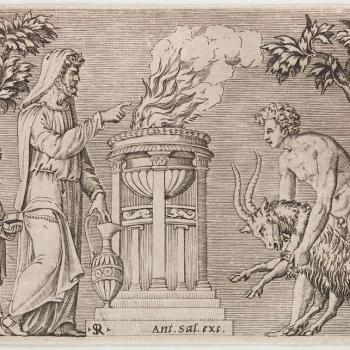
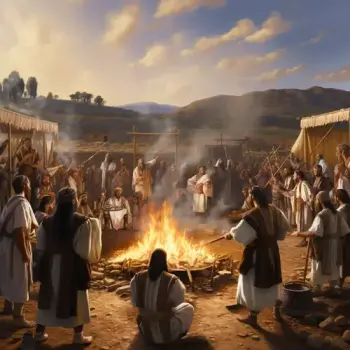
How does burning flesh “reflect a dedication, or relationship confirmation, between the offerer and Yhwh.” In part, burning appears to be a mechanism for presenting gifts to God. Fire creates smoke, which visually lifts the meal or incense upward to God.
Today, people don’t feel comfortable using food imagery when teaching the sacrifices. They fear it’ll lead to confusion and perhaps encourages idolatrous notions of God. The problem with this thinking is apparent. Biblical writers use these metaphors even though they could and did confuse people. If so, shouldn’t we be willing to follow the Bible’s example?
Culture is another reason some readers are less likely to accept or even notice this imagery. In traditional, non-Western cultures, meals are often regarded as near-sacred events. They establish binding connections. Eating with another person is an implicit approval of them. In other cultures, eating with another person redefines a relationship and even resets certain moral expectations. For example, among the Moose of Burkina Faso, West Africa,
“eating is an intimate act that helps to define familial and sexual relations. Moose culture accepts extramarital sex unless it involves sex between a man and the wife of someone with whom the man eats.”[4]
What happens when meals become little more than tolerated interruptions or biological necessities? When interpreters live in cultures where people routinely eat alone, on-the-go, and in quick fashion, they can hardly grasp the significance of this biblical imagery.
–––––––––––––––––––––––––
This post adapts select paragraphs from The Cross in Context, especially pp. 75-77.
[1] Christian Eberhart, “A Neglected Feature of Sacrifice in the Hebrew Bible,” HTR 97, no. 4 (2004): 491.
[2] Eberhart, “Neglected Feature,” 485-93.
[3] Greenberg, New Look at Leviticus, 74.
[4] Lisa Miller, Paul Rozin, and Allan Page Fiske, “Food Sharing and Feeding Another Person Suggest Intimacy,” 425.
Religious Events
Food and Religion
Previous Post

March 7, 2023
Atonement – Defining a Misunderstood Term
Next Post

March 15, 2023 It’s Time to Change My Pseudonym
Recent Comments
"A thoughtful and thought-provoking article that raises important questions about the challenges facing the Western ..."
"to fit social or religious expectations. Especially women, who were expected to sacrifice everything to ..."
3 reasons you should not be ..."
"Powerful reminder short, sturdy truths can lose their weight if treated as slogans. The solas ..."
How Western Individualism Quietly Undermines the ..."
"If 'America’s deepest crisis is not merely political. It is moral and spiritual.' is in ..."
The Real Crisis Beneath America’s Social ..."
Browse Our Archives
Select a Category Atonement Biblical Theology Book Reviews China Chinese Church Chinese Culture Chinese Language Collectivism Contextualization Culture (General) Ecclesiology Evangelism Gospel Honor & Shame (Face) Interpretation/Exegesis Justification/Righteousness Missiology Mission Methods One Gospel for All Nations Other Practical Contextualization Reading Romans with Eastern Eyes Resources Romans Salvation (General) Saving God's Face Seeking God's Face The Cross in Context Theological Contextualization Theological Education Theology Uncategorized
Select a Month October 2026 September 2026 August 2026 July 2026 June 2026 May 2026 April 2026 March 2026 February 2026 January 2026 December 2025 November 2025 October 2025 September 2025 August 2025 July 2025 June 2025 May 2025 April 2025 March 2025 February 2025 January 2025 December 2024 November 2024 October 2024 September 2024 August 2024 July 2024 June 2024 May 2024 April 2024 March 2024 February 2024 January 2024 December 2023 November 2023 October 2023 September 2023 August 2023 July 2023 June 2023 May 2023 April 2023 March 2023 February 2023 January 2023 December 2022 November 2022 October 2022 September 2022 August 2022 July 2022 June 2022 May 2022 April 2022 March 2022 February 2022 January 2022 December 2021 November 2021 October 2021 September 2021 August 2021 July 2021 June 2021 May 2021 April 2021 March 2021 February 2021 January 2021 December 2020 November 2020 October 2020 September 2020 August 2020 July 2020 June 2020 May 2020 April 2020 March 2020 February 2020 January 2020 December 2019 November 2019 October 2019 September 2019 August 2019 July 2019 June 2019 May 2019 April 2019 March 2019 February 2019 January 2019 December 2018 November 2018 October 2018 September 2018 August 2018 July 2018 June 2018 May 2018 April 2018 March 2018 February 2018 January 2018 December 2017 November 2017 October 2017 September 2017 August 2017 July 2017 June 2017 May 2017 April 2017 March 2017 February 2017 January 2017 December 2016 November 2016 October 2016 September 2016 August 2016 July 2016 June 2016 May 2016 April 2016 March 2016 February 2016 January 2016 December 2015 November 2015 October 2015 September 2015 August 2015 July 2015 June 2015 May 2015 April 2015 March 2015 February 2015 January 2015 December 2014 November 2014 October 2014 September 2014 August 2014 July 2014 June 2014 May 2014 April 2014 March 2014 February 2014 January 2014 December 2013 November 2013 October 2013 September 2013 August 2013 July 2013 June 2013 May 2013 April 2013 March 2013 February 2013 January 2013 December 2012 November 2012
Follow Us!
TAKE THE
Religious Wisdom Quiz
How many years between David's reign and the Babylonian exile?
Select your answer to see how you score.
500 years 450 years 400 years 300 years
Books by This Author Books by Brad Vaughn
Related posts from Saving God's Face
How Biblical Sacrifices Vindicate God’s Glory

What Exactly Does Christ Purify?
What are Essential Elements of Atonement?

The Heart of Biblical Sacrifice Is Not Blood...
TRENDING AT PATHEOS Evangelical

The Iron Gates and the Lion of the...
Yesterday, I didn't finish my report about, well, yesterday. So I'll...

Dolly Parton’s Last Song Wins Dove Award with...
Bluegrass band The Grascals, speaking on the red carpet at the 57th...

The Image: On the Horror of Capitalism and...
The Image Then went the Pharisees, and took counsel how they might...

We are approaching the date of our new American national holiday: October...

Letters on Living the Faith by C.S. Lewis
Most of us met C.S. Lewis as a public intellectual. Mere Christianity....

When Halloween Unmasks Married Hearts
Written by Dr. David K. Ewen from Eternal Truth Bible College Behind...
view all Evangelical blogs
What Are Your Thoughts?leave a comment
Ad-Free & Subscriber Log-In Subscription Support
- About Us
- 2026 Calendar
- Videos
- Podcasts
- Library of World Religions
- Faith In Media Tracker
- Advertise With Us
- Write for Us
- Privacy Policy
- Terms of Service
- Do Not Sell My Data
- Contact Us
- Radiant Digital
- Manage Newsletter Subscriptions
- Unsubscribe From Notifications
- Sitemap
Copyright 2008-2026, Patheos. All rights reserved.
Subscription Support Ad-Free & Subscriber Log-In
Follow Patheos