
BuddhistCatholicContemplativeEvangelicalGeneral ChristianHinduJewishLatter-day SaintMuslimNew VisionsProgressive Christian
Beliefs
- Buddhist
- Catholic
- Contemplative
- Evangelical
- General Christian
- Hindu
- Jewish
- Latter-day Saint
- More Voices
- Muslim
- New Visions
- Pagan
- Progressive Christian
Topics
- Religion News
- Food and Religion
- Sports and Religion
- Religious Art
- Religious Music and Entertainment
- Religious Events
- History and Religion
- Style and Religion
- Politics and Religion
- Women in Religion
- Recreation Outdoors and Religion
- Business Finance and Religion
- Careers Workplace and Religion
- Education and Religion
- Family Parenting and Religion
- Health Fitness and Religion
- Home and Religion
- Relationships and Religion
- Technology and Religion
- Travel and Religion
Columnists
- Buddhist Columnists
- Business Finance and Religion Columnists
- Careers Workplace and Religion Columnists
- Catholic Columnists
- Contemplative Columnists
- Education and Religion Columnists
- Evangelists Columnists
- Family Parenting and Religion Columnists
- General Christian Columnists
- Health Fitness and Religion Columnists
- Hindu Columnists
- History and Religion Columnists
- Home and Religion Columnists
- Jewish Columnists
- More Voices Columnists
- Latter Day Columnists
- Muslim Columnists
- New Visions Columnists
- Nonreligious Columnists
- Pagan Columnists
- Politics and Religion Columnists
- Progressive Columnists
- Recreation Outdoors and Religion Columnists
- Relationships and Religion Columnists
- Religion News Columnists
- Religious Art Columnists
- Religious Events Columnists
- Religious Music and Entertainment Columnists
- Sports and Religion Columnists
- Style and Religion Columnists
- Technology and Religion Columnists
- Travel and Religion Columnists
- Women in Religion Columnists
Resource Library
- 2026 Calendar
- Library of World Religions
- The 100 Most Holy Places on Earth
- Patheos Answers
- Podcasts
- Videos
- Faith Leaders Database
- Anglican Episcopalian
- Bahai
- Baptist
- Buddhism
- Christianity
- Confucianism
- Eastern Orthodoxy
- Hinduism
- Holiness and Pentecostal
- ISKCON
- Islam
- Judaism
- Lutheran
- Methodist
- The Church of Jesus Christ of Latter-day Saints
- New Age
- Paganism
- Presbytarian and Reformed
- Protestantism
- Religion Behind the Scenes
- Roman Catholic
- Scientology
- Shia Islam
- Sikhism
- Sufism
- Sunni Islam
- Taoism
- Zen
- See all religions
Research Tools
 Ad-Free & Subscriber Log-In Subscription Support
Ad-Free & Subscriber Log-In Subscription Support
Follow Patheos 

- Trending:
- Forgiveness
- |
- Marriage
- |
- Consciousness
- |
- Death Penalty
- |
- Election
- |
- Halloween

-
Tools
-
Support the Work
- Home
- Evangelical
- Re-kin-ciliation Does Not Begin with Brokenness
Re-kin-ciliation Does Not Begin with Brokenness
Last updated on: September 13, 2022 at 4:26 pm by Brad Vaughn
Re-kin-ciliation Does Not Begin with Brokenness 2022-08-16T02:46:23-07:00 Brad Vaughn
Patheos Explore the world's faith through different perspectives on religion and spirituality! Patheos has the views of the prevalent religions and spiritualities of the world.
Today’s guest post comes from Kristin Caynor, Ph.D. student at Trinity College Bristol/University of Aberdeen, TCK from Thailand, and a global theological educator. For her full bio, see below.
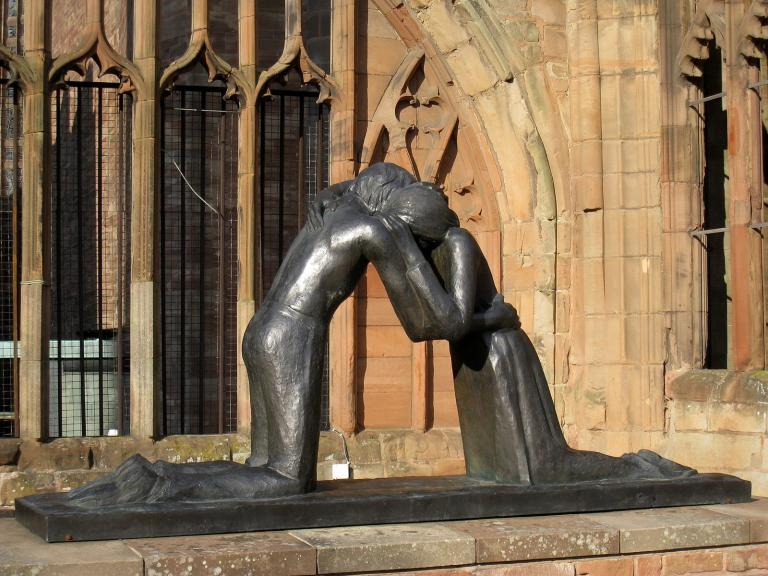
In the previous post, I offered re-kin-ciliation as an alternative to the discourse around “reconciliation” more broadly. I explained that in re-kin-ciling thought, the original goodness and harmony of human relations are affirmed, but re-kin-ciliation looks back much further than colonialism, imperialism, or any form of oppression.
It does not imply that relations between groups like Native people and the U.S. government were at one point healthy. What it says is that relationships between human beings are fundamental and that the violence and oppression we perpetrate represent a profound loss and degradation of human glory.
So how does re-kin-ciliation deal with the realities of evil?
We Never Start with the Fall
What taking re-kin-ciliation seriously causes us to do is not to dismiss evil, but rather to mourn it more deeply because of how far we have fallen. And while conversations about justice are so often dominated by shame and guilt, re-kin-ciliation affirms that no matter what we have suffered or what we have done, our story does not begin with brokenness, and it doesn’t need to end there either.
In my church community, our pastor always reminds us that we should never start the story of the world, ourselves, or others with the Fall. Rather, we need to start every story where it actually started: the created goodness spoken into being from a perfectly good God.
We constantly remind ourselves of this as we reach out to those experiencing homelessness and addiction in our streets, and we constantly remind them of it too. It isn’t only that you have the potential to be more than what you are now, but that your true self is actually more defined by the goodness God created than by the sin which has so harmed you and others through you.
The Western church tends to harp on Original Sin. But the biblical story starts with a creation that was good, and very good (Gen. 1:31). It is the perfection of God himself that is the very foundation of this world (John 1:3–5) and the very life force that continues to hold every atom together (Col. 1:15–18).
Listen to how John begins the story of the world:
“All things were made through him, and without him was not any thing made that was made. In him was life, and the life was the light of men. The light shines in the darkness, and the darkness has not overcome it” (John 1:3–5).
You see, if we begin the story of the world, ourselves, or our community with the Fall, we will be prone to preoccupy ourselves with the darkness. We may even be prone to see darkness as stronger than light, and sin as more significant and powerful over us than the power of God.
This is exactly how nearly every other creation myth begins, with chaos, oppression, and death, and that is just as true of our modern creation stories (“survival of the fittest”) as of our ancient ones.
The Story Begins with Joyful Response
But not the creation story of the LORD. His Story begins in a markedly different way: with speech, and with the joyous response of the cosmos in letting there be light. Elsewhere the Bible describes the delight that God took in his creative wisdom, and the joy with which wisdom herself responded over the inhabited world (Prov. 8:25–31).
As the story goes on, we see that the adam, the primordial human being, is also given the power of speech—not to create, but to co-create with God in the acts of naming, stewarding, and cultivating (Gen. 2:19).
Tragically, the first human pair departs from the unbroken litany of creation’s joyful responses to God’s speech. And every day since then has been marred by that tragedy, as history itself has twisted and contorted, and creation has groaned under the weight of corruption (Rom. 8:20–22). The fundamental kinship began to unravel as brother lifted hand against brother (Gen. 4:8), and rather than the multiplying kinship originally given to us (1:28), violence was multiplied (6:5, which uses the same word as 1:28).
But God the Word still holds all things together. He still lives, and he is still creating. He continued his creative acts by descending from heaven and joining his broken and beautiful creation here in the dust, in flesh and blood.
He came to show us that the story did not begin in brokenness, and it will not end there either. He came to restore and re-kin-cile us to his original goodness. The Alpha and the Omega came so that God would have the first word of creation, and so that he would also get the last.
Re-created by God’s Word
Every day we have opportunities to respond to God’s speech, to be re-created and re-kin-ciled with him and with each other, and to let there be Light in our lives that the darkness has not overcome. We can experience the power that raised Jesus from the dead living in us, and let God speak over us once again. And we can be healed.
But it doesn’t come from hearing the Word only.
In the next post, I will look at the “epistemology of re-kin-ciliation,” and explore how we can interpret scripture faithfully by living into re-kin-ciliation.
Kristin Caynor’s Bio
Kristin is a Ph.D. student at Trinity College Bristol/University of Aberdeen, and a global theological educator working with national and indigenous organizations and seminaries around the world through Live Global. She is an American with Hispanic background who grew up in both the U.S. and Thailand.
Her dissertation explores how hermeneutical practices themselves can foster relationships with others of difference, awareness of cultural diversity, reconciliation, and the inclusion of diverse cultural resources which may not yet have been considered in mainstream discourse. She is also a researcher for The Ephesians 2 Gospel Project, a global conversation around Eph. 2:11–22 exploring issues of collective identity conflict and shame-fueled violence from social scientific, theological, historical, cultural, and biblical perspectives.
Previous Post

September 7, 2022
3 Upcoming Webinars on Honor and Shame
Next Post
September 20, 2022 Is re-kin-ciliation a Prerequisite for Biblical Interpretation?
Browse Our Archives
Select a Category Atonement Biblical Theology Book Reviews China Chinese Church Chinese Culture Chinese Language Collectivism Contextualization Culture (General) Ecclesiology Evangelism Gospel Honor & Shame (Face) Interpretation/Exegesis Justification/Righteousness Missiology Mission Methods One Gospel for All Nations Other Practical Contextualization Reading Romans with Eastern Eyes Resources Romans Salvation (General) Saving God's Face Seeking God's Face The Cross in Context Theological Contextualization Theological Education Theology Uncategorized
Select a Month October 2026 September 2026 August 2026 July 2026 June 2026 May 2026 April 2026 March 2026 February 2026 January 2026 December 2025 November 2025 October 2025 September 2025 August 2025 July 2025 June 2025 May 2025 April 2025 March 2025 February 2025 January 2025 December 2024 November 2024 October 2024 September 2024 August 2024 July 2024 June 2024 May 2024 April 2024 March 2024 February 2024 January 2024 December 2023 November 2023 October 2023 September 2023 August 2023 July 2023 June 2023 May 2023 April 2023 March 2023 February 2023 January 2023 December 2022 November 2022 October 2022 September 2022 August 2022 July 2022 June 2022 May 2022 April 2022 March 2022 February 2022 January 2022 December 2021 November 2021 October 2021 September 2021 August 2021 July 2021 June 2021 May 2021 April 2021 March 2021 February 2021 January 2021 December 2020 November 2020 October 2020 September 2020 August 2020 July 2020 June 2020 May 2020 April 2020 March 2020 February 2020 January 2020 December 2019 November 2019 October 2019 September 2019 August 2019 July 2019 June 2019 May 2019 April 2019 March 2019 February 2019 January 2019 December 2018 November 2018 October 2018 September 2018 August 2018 July 2018 June 2018 May 2018 April 2018 March 2018 February 2018 January 2018 December 2017 November 2017 October 2017 September 2017 August 2017 July 2017 June 2017 May 2017 April 2017 March 2017 February 2017 January 2017 December 2016 November 2016 October 2016 September 2016 August 2016 July 2016 June 2016 May 2016 April 2016 March 2016 February 2016 January 2016 December 2015 November 2015 October 2015 September 2015 August 2015 July 2015 June 2015 May 2015 April 2015 March 2015 February 2015 January 2015 December 2014 November 2014 October 2014 September 2014 August 2014 July 2014 June 2014 May 2014 April 2014 March 2014 February 2014 January 2014 December 2013 November 2013 October 2013 September 2013 August 2013 July 2013 June 2013 May 2013 April 2013 March 2013 February 2013 January 2013 December 2012 November 2012
Follow Us!
TAKE THE
Religious Wisdom Quiz
What natural disaster did God use to destroy the earth in Noah’s time?
Select your answer to see how you score.
Fire Famine Flood Earthquake
Books by This Author Books by Brad Vaughn
Related posts from Saving God's Face

Why Christianity Needs Individuals but Rejects Individualism

Glory, Violence, and the Gospel of Peace
“I’ll be wherever you call me.”

Biblical Foundations for Local Embodiment
TRENDING AT PATHEOS Evangelical

A new article, written by Jeff Lindsay and Gale L. Pooley,...

Swimfan: Forgotten Aughts Pleasures
This is a recovery effort. In 2002, My Big Fat Greek Wedding...

Top Three Anti-Catholic Lies About Catholicism
This is my initial transcript for the video, "THE 3 WORST...

Pope Leo Celebrates Mass for Nurses & Docs...
I don't have any idea how he did it, but Pope Leo...

The Sermon on the Mount, Part I: Matthew...
The Sermon on the Mount, Part I (Matthew 4:12-5:12) St. Matthew moves...

What's up from Crossway: Reviewing some of their latest A few weeks...
view all Evangelical blogs
Ad-Free & Subscriber Log-In Subscription Support
- About Us
- 2026 Calendar
- Videos
- Podcasts
- Library of World Religions
- Faith In Media Tracker
- Advertise With Us
- Write for Us
- Privacy Policy
- Terms of Service
- Do Not Sell My Data
- Contact Us
- Radiant Digital
- Manage Newsletter Subscriptions
- Unsubscribe From Notifications
- Sitemap
Copyright 2008-2026, Patheos. All rights reserved.
Subscription Support Ad-Free & Subscriber Log-In
Follow Patheos