
BuddhistCatholicContemplativeEvangelicalGeneral ChristianHinduJewishLatter-day SaintMuslimNew VisionsProgressive Christian
Beliefs
- Buddhist
- Catholic
- Contemplative
- Evangelical
- General Christian
- Hindu
- Jewish
- Latter-day Saint
- More Voices
- Muslim
- New Visions
- Pagan
- Progressive Christian
Topics
- Religion News
- Food and Religion
- Sports and Religion
- Religious Art
- Religious Music and Entertainment
- Religious Events
- History and Religion
- Style and Religion
- Politics and Religion
- Women in Religion
- Recreation Outdoors and Religion
- Business Finance and Religion
- Careers Workplace and Religion
- Education and Religion
- Family Parenting and Religion
- Health Fitness and Religion
- Home and Religion
- Relationships and Religion
- Technology and Religion
- Travel and Religion
Columnists
- Buddhist Columnists
- Business Finance and Religion Columnists
- Careers Workplace and Religion Columnists
- Catholic Columnists
- Contemplative Columnists
- Education and Religion Columnists
- Evangelists Columnists
- Family Parenting and Religion Columnists
- General Christian Columnists
- Health Fitness and Religion Columnists
- Hindu Columnists
- History and Religion Columnists
- Home and Religion Columnists
- Jewish Columnists
- More Voices Columnists
- Latter Day Columnists
- Muslim Columnists
- New Visions Columnists
- Nonreligious Columnists
- Pagan Columnists
- Politics and Religion Columnists
- Progressive Columnists
- Recreation Outdoors and Religion Columnists
- Relationships and Religion Columnists
- Religion News Columnists
- Religious Art Columnists
- Religious Events Columnists
- Religious Music and Entertainment Columnists
- Sports and Religion Columnists
- Style and Religion Columnists
- Technology and Religion Columnists
- Travel and Religion Columnists
- Women in Religion Columnists
Resource Library
- 2026 Calendar
- Library of World Religions
- The 100 Most Holy Places on Earth
- Patheos Answers
- Podcasts
- Videos
- Faith Leaders Database
- Anglican Episcopalian
- Bahai
- Baptist
- Buddhism
- Christianity
- Confucianism
- Eastern Orthodoxy
- Hinduism
- Holiness and Pentecostal
- ISKCON
- Islam
- Judaism
- Lutheran
- Methodist
- The Church of Jesus Christ of Latter-day Saints
- New Age
- Paganism
- Presbytarian and Reformed
- Protestantism
- Religion Behind the Scenes
- Roman Catholic
- Scientology
- Shia Islam
- Sikhism
- Sufism
- Sunni Islam
- Taoism
- Zen
- See all religions
Research Tools
 Ad-Free & Subscriber Log-In Subscription Support
Ad-Free & Subscriber Log-In Subscription Support
Follow Patheos 

- Trending:
- Forgiveness
- |
- Marriage
- |
- Consciousness
- |
- Death Penalty
- |
- Election
- |
- Halloween

-
Tools
-
Support the Work
- Home
- Evangelical
- We all play the status game. How do you play?
We all play the status game. How do you play?
Last updated on: January 11, 2022 at 4:00 pm by Brad Vaughn
We all play the status game. How do you play? 2022-01-07T01:53:05-07:00 Brad Vaughn
Patheos Explore the world's faith through different perspectives on religion and spirituality! Patheos has the views of the prevalent religions and spiritualities of the world.
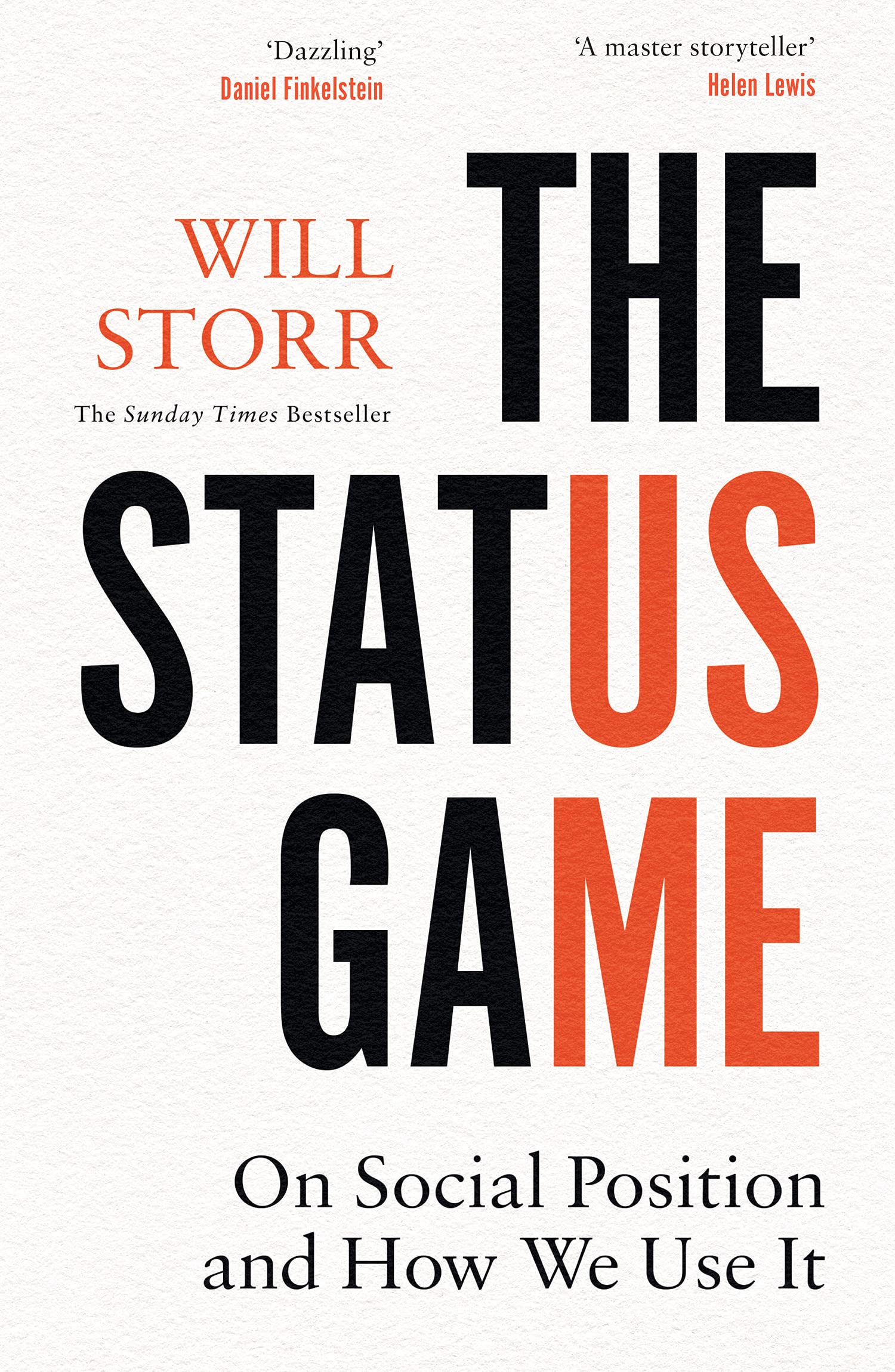
A new book just became my favorite book on the topic of honor and shame: The Status Game: On Social Position and How to Use It (by Will Storr). It’s from a mainstream publisher and presents the topic from the perspective of social science, not theology. I finished it quickly, then immediately began rereading it.
Today, I’ll introduce some of the book’s basic concepts and contours of thought. I’ll highlight a few vital insights and their significance in upcoming posts.
What are status games?
Let’s first define terms. What is “status”? Storr explains,
Status isn’t about being liked or accepted: these are separate needs, associated with connection. When people defer to us, offer respect, admiration or praise, or allow us to influence them in some way, that’s status. (11)
Of course, status is relative to circumstances, people, sphere, activities, and time. A person’s status is fluid, not fixed. One could have high status in your jiu-jitsu gym because you have a brown belt but a low status in her new job.
What then are status games? We play “status games” when we live according to practices and symbols that dictate one’s status within social groups. People engage in such play consciously and unconsciously.
Status games vary with the community. Members of different groups share “an imagined world” and live in the same “neural territory.” That is, they implicitly agree on the significance of countless symbolic actions and relate to one another accordingly.
Status games depend on the use of innumerable symbols, such as clothing, body language, manner of speech, preference in entertainment, political beliefs, music, favorite brands, and any other arbitrary symbol that people might choose.
Furthermore, these games help make sense of reality. Our status games are imbued with morality. They provide a perspective to negotiate social relationships and judge both our and others’ progress.
Three ways to play
Storr notes three types of status games, i.e., three ways to gain prestige within groups. One can use
dominance, virtue, and success. In dominance games, status is coerced by force or fear. In virtue games, status is awarded to players who are conspicuously dutiful, obedient and moralistic. In success games, status is awarded for achievement in closely specified outcomes, beyond simply winning, that require skill, talent or knowledge. (39)
To some degree, these three kinds of play are self-explanatory. Yet, Storr unpacks each and its implications with both clarity and story.
He adds,
Prestige games are symbolic. Unlike physical dominance contests, they’re not played with our actual selves, but with our reputation. We can think of our reputation as a symbolic version of us that exists in the minds of others. (43)
The various status symbols, like those mentioned above, are the means (tools, weapons, instruments, pick your metaphor) by which we navigate these social contests.
We don’t periodically choose merely to play one of these games; we play all of them repeatedly throughout our lives. If you don’t, you’re not in relationship with other people. Period.
Who are the key players?
Since status games are played in community, we must learn the rules and identify the influential players around us. Storr mentions four primary cues we use to assist us (p. 49).
-
Self-similarity
Who are the people like us? Similarities might include gender, race, employment, nationality, religion, among other options.
-
Skill
We imitate people who demonstrate skill in our desired areas of competence. Having such skills give us the ability to affect our environment, achieve goals, and protect ourselves from threat.
-
Success
We use any number of things to signal success. Titles, income, degrees, and material possessions are just a few examples. We are constantly on the lookout to identify who has what and how much of it.
-
Prestige
Our brains are wired to observe subtle markers of social status, including “the body language, eye movements and voice patterns of our co-players to see who they’re deferring to” (49).
All the above merely summarizes a few foundational aspects of status games. I’ve yet to mention many other features and implications. Status games are so ubiquitous, so ordinary, so routine that we don’t even know we’re playing them. We might easily think they are played by other people, especially those on social media. That’s wrong.
All day, every day, you engage in status games. And you will tomorrow and for the rest of your life. To do so is not a sin; it’s merely to be a social being.
In the coming posts, I’ll share other insights from Storr’s book and unpack some of their implications.
Previous Post

January 4, 2022
Is John’s Gospel a Defense of Jesus’ Honor?
Next Post
January 18, 2022 Status Games are Inherently Groupish
Browse Our Archives
Select a Category Atonement Biblical Theology Book Reviews China Chinese Church Chinese Culture Chinese Language Collectivism Contextualization Culture (General) Ecclesiology Evangelism Gospel Honor & Shame (Face) Interpretation/Exegesis Justification/Righteousness Missiology Mission Methods One Gospel for All Nations Other Practical Contextualization Reading Romans with Eastern Eyes Resources Romans Salvation (General) Saving God's Face Seeking God's Face The Cross in Context Theological Contextualization Theological Education Theology Uncategorized
Select a Month October 2026 September 2026 August 2026 July 2026 June 2026 May 2026 April 2026 March 2026 February 2026 January 2026 December 2025 November 2025 October 2025 September 2025 August 2025 July 2025 June 2025 May 2025 April 2025 March 2025 February 2025 January 2025 December 2024 November 2024 October 2024 September 2024 August 2024 July 2024 June 2024 May 2024 April 2024 March 2024 February 2024 January 2024 December 2023 November 2023 October 2023 September 2023 August 2023 July 2023 June 2023 May 2023 April 2023 March 2023 February 2023 January 2023 December 2022 November 2022 October 2022 September 2022 August 2022 July 2022 June 2022 May 2022 April 2022 March 2022 February 2022 January 2022 December 2021 November 2021 October 2021 September 2021 August 2021 July 2021 June 2021 May 2021 April 2021 March 2021 February 2021 January 2021 December 2020 November 2020 October 2020 September 2020 August 2020 July 2020 June 2020 May 2020 April 2020 March 2020 February 2020 January 2020 December 2019 November 2019 October 2019 September 2019 August 2019 July 2019 June 2019 May 2019 April 2019 March 2019 February 2019 January 2019 December 2018 November 2018 October 2018 September 2018 August 2018 July 2018 June 2018 May 2018 April 2018 March 2018 February 2018 January 2018 December 2017 November 2017 October 2017 September 2017 August 2017 July 2017 June 2017 May 2017 April 2017 March 2017 February 2017 January 2017 December 2016 November 2016 October 2016 September 2016 August 2016 July 2016 June 2016 May 2016 April 2016 March 2016 February 2016 January 2016 December 2015 November 2015 October 2015 September 2015 August 2015 July 2015 June 2015 May 2015 April 2015 March 2015 February 2015 January 2015 December 2014 November 2014 October 2014 September 2014 August 2014 July 2014 June 2014 May 2014 April 2014 March 2014 February 2014 January 2014 December 2013 November 2013 October 2013 September 2013 August 2013 July 2013 June 2013 May 2013 April 2013 March 2013 February 2013 January 2013 December 2012 November 2012
Follow Us!
TAKE THE
Religious Wisdom Quiz
How old was David when he became king over Israel?
Select your answer to see how you score.
20 years old 40 years old 30 years old 25 years old
Books by This Author Books by Brad Vaughn
Related posts from Saving God's Face

No King forgets his crown. Why do we?

Recovering Moral Vision Between Shame and Shamelessness

Refuge, Confession, and the End of Shame

Psalm 25 and the Fear of Being Put...
TRENDING AT PATHEOS Evangelical

The Iron Gates and the Lion of the...
Yesterday, I didn't finish my report about, well, yesterday. So I'll...

Dolly Parton’s Last Song Wins Dove Award with...
Bluegrass band The Grascals, speaking on the red carpet at the 57th...

The Image: On the Horror of Capitalism and...
The Image Then went the Pharisees, and took counsel how they might...

We are approaching the date of our new American national holiday: October...

Letters on Living the Faith by C.S. Lewis
Most of us met C.S. Lewis as a public intellectual. Mere Christianity....

When Halloween Unmasks Married Hearts
Written by Dr. David K. Ewen from Eternal Truth Bible College Behind...
view all Evangelical blogs
Ad-Free & Subscriber Log-In Subscription Support
- About Us
- 2026 Calendar
- Videos
- Podcasts
- Library of World Religions
- Faith In Media Tracker
- Advertise With Us
- Write for Us
- Privacy Policy
- Terms of Service
- Do Not Sell My Data
- Contact Us
- Radiant Digital
- Manage Newsletter Subscriptions
- Unsubscribe From Notifications
- Sitemap
Copyright 2008-2026, Patheos. All rights reserved.
Subscription Support Ad-Free & Subscriber Log-In
Follow Patheos