
BuddhistCatholicContemplativeEvangelicalGeneral ChristianHinduJewishLatter-day SaintMuslimNew VisionsProgressive Christian
Beliefs
- Buddhist
- Catholic
- Contemplative
- Evangelical
- General Christian
- Hindu
- Jewish
- Latter-day Saint
- More Voices
- Muslim
- New Visions
- Pagan
- Progressive Christian
Topics
- Religion News
- Food and Religion
- Sports and Religion
- Religious Art
- Religious Music and Entertainment
- Religious Events
- History and Religion
- Style and Religion
- Politics and Religion
- Women in Religion
- Recreation Outdoors and Religion
- Business Finance and Religion
- Careers Workplace and Religion
- Education and Religion
- Family Parenting and Religion
- Health Fitness and Religion
- Home and Religion
- Relationships and Religion
- Technology and Religion
- Travel and Religion
Columnists
- Buddhist Columnists
- Business Finance and Religion Columnists
- Careers Workplace and Religion Columnists
- Catholic Columnists
- Contemplative Columnists
- Education and Religion Columnists
- Evangelists Columnists
- Family Parenting and Religion Columnists
- General Christian Columnists
- Health Fitness and Religion Columnists
- Hindu Columnists
- History and Religion Columnists
- Home and Religion Columnists
- Jewish Columnists
- More Voices Columnists
- Latter Day Columnists
- Muslim Columnists
- New Visions Columnists
- Nonreligious Columnists
- Pagan Columnists
- Politics and Religion Columnists
- Progressive Columnists
- Recreation Outdoors and Religion Columnists
- Relationships and Religion Columnists
- Religion News Columnists
- Religious Art Columnists
- Religious Events Columnists
- Religious Music and Entertainment Columnists
- Sports and Religion Columnists
- Style and Religion Columnists
- Technology and Religion Columnists
- Travel and Religion Columnists
- Women in Religion Columnists
Resource Library
- 2026 Calendar
- Library of World Religions
- The 100 Most Holy Places on Earth
- Patheos Answers
- Podcasts
- Videos
- Faith Leaders Database
- Anglican Episcopalian
- Bahai
- Baptist
- Buddhism
- Christianity
- Confucianism
- Eastern Orthodoxy
- Hinduism
- Holiness and Pentecostal
- ISKCON
- Islam
- Judaism
- Lutheran
- Methodist
- The Church of Jesus Christ of Latter-day Saints
- New Age
- Paganism
- Presbytarian and Reformed
- Protestantism
- Religion Behind the Scenes
- Roman Catholic
- Scientology
- Shia Islam
- Sikhism
- Sufism
- Sunni Islam
- Taoism
- Zen
- See all religions
Research Tools
 Ad-Free & Subscriber Log-In Subscription Support
Ad-Free & Subscriber Log-In Subscription Support
Follow Patheos 

- Trending:
- Forgiveness
- |
- Marriage
- |
- Consciousness
- |
- Death Penalty
- |
- Election
- |
- Halloween

-
Tools
-
Support the Work
- Home
- Evangelical
- How do Jesus and Paul talk about “outsiders”?
How do Jesus and Paul talk about “outsiders”?
Last updated on: November 30, 2021 at 4:42 am by Brad Vaughn
How do Jesus and Paul talk about “outsiders”? 2021-10-16T02:02:52-07:00 Brad Vaughn
Patheos Explore the world's faith through different perspectives on religion and spirituality! Patheos has the views of the prevalent religions and spiritualities of the world.
Some of the richest insights when interpreting the Bible come when readers attend to its subtle details. In Outsider Designations and Boundary Construction in the New Testament, Paul Trebilco demonstrates the fruit of such labor. In this book, he turns his attention to how outsider designations assist one’s interpretation of Scripture and shed light on the early Christian movement.
Who are “sinners”?
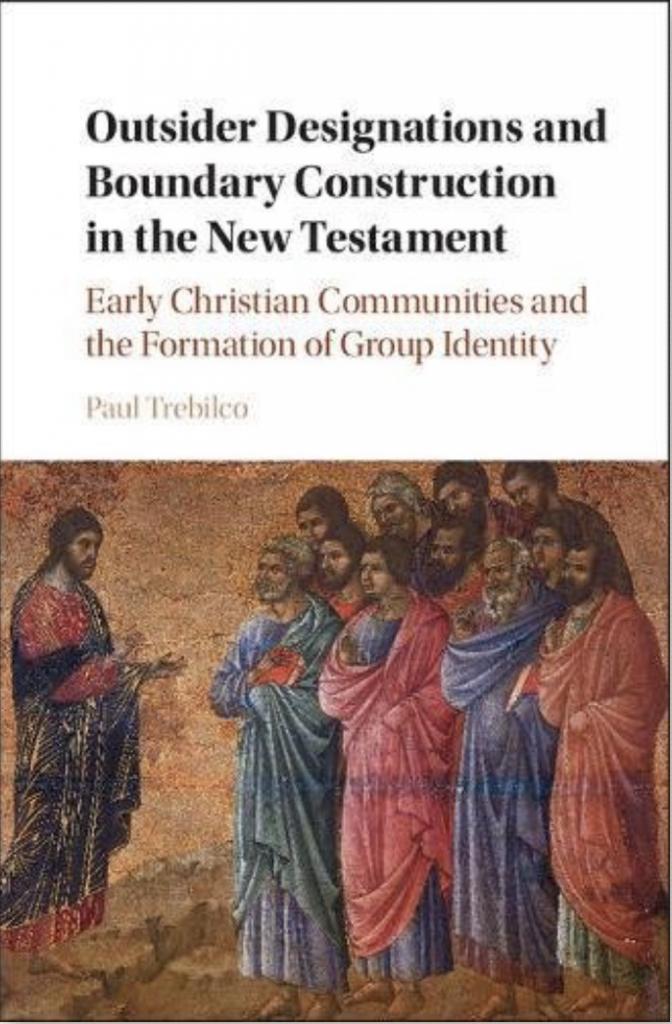 The discussion of οἱ ἁμαρτωλοί (“the sinners”) in chapter 6 typifies the insights offered in the book. It shows how Jesus and Paul altered conventional ways of using “sinners.” In the Gospels, Jesus undermined this well-known outsider label in two ways.
First, he applies the term “sinners” to those whom he accepts as followers. Second, one sees in other passages, “Jesus is redefining ‘sinners’: they are no longer blatant lawbreakers, but rather those who reject him” (p. 129). As Trebilco summarizes, Jesus “un-othered the other.”
Despite appearances, Paul, like Jesus, also subverts the term by contending that “‘sinners’ need be outsiders no longer” (p. 140). Paul’s entire way of talking about sin obliterates typical outsider designations (p. 133‐36, 219‐25). Whereas “sinner” previously referred to a select group of social undesirables, Paul applies the term to everyone. By designating all humanity as “sinners,” he magnifies the extensive reach and power of sin.
His manner of speaking has two consequences.
1. Paul effectively levels the social pecking order. The scorned and esteemed alike are equal before God. He reorients readers’ perspectives of honor and shame.
2. Reckoning all people “sinners” magnifies the glory of Christ’s victory over sin and death. Everyone should honor the king who saves humanity.
In summary, Paul here defends God’s honor, casting his opponents into the role of “outsiders.” Their own Scriptures nullify their claim to have status (or “face”) before God. Ironically, the law exposes the futility of human boasting. The law dishonors those who boast in the law.
“Outsider” Language
Biblical writers also demonstrate flexibility and creativity when using outsider designations. For instance, Treblico highlights the uncommon (if not unprecedented) use of ἄπιστος to identify outsiders as “unbelievers.” He adds,
“‘Unbelievers’ as a designation is a strongly negative term that creates a much higher boundary than ‘low boundary terms’ like ‘neighbours,’ or ‘all people.’ Those designated by this term do not have the key insider-feature of πίστις [faith]” (p. 51).
Even more generic terms for “outsider” (e.g., οἱ ἔξω, οἱ ἔξωθεν, ἰδιώτης) draw a clear distinction between insiders and outsiders. Trebilco sharpens the point by noting how ancient writers made a “strong contrast between ἀδελφοί [brothers/siblings] and all other non-family members who are ‘outwards’ – ἔξω” (p. 100).
Still, he warns against the impression that outsider designations were intended to “vilify or demean outsiders.” In 1 Corinthians, for example,
“[Paul] encourages social differentiation from these clearly labeled ‘outsiders’ but without a corresponding social distance” (p. 58).
It’s noteworthy that Paul also changes how he refers to “outsiders.” He has no desire to provoke tension or raise the suspicions of the governing authorities. Trebilco notes a tone shift in Romans 13, which speaking of governing authorities.
The lack of any “high boundary” terminology in 13:1–7 (such as “outsiders,” “unbelievers,” “the unrighteous”) means that the emphasis is on the ways the Christ-believing community can be part of and belong to the wider society. . . . Not only will being “good citizens” mean the Christ-believing group will not attract adverse attention from the authorities, or from any casual visitor to the group, but also the way in which Paul makes this call, with its general terminology (“good and bad” [v 3], “respect and honour” [v. 7]) recognisable to all and its lack of high boundary outsider designations, emphasises harmony and good relations in society. (p. 229)
In Romans, Paul’s critique of outsiders is indirect. Paul uses low boundary terms in Romans 13 to carefully avoid language that breeds unnecessary division or disrespect.
The function of such outsider terms is to highlight the significant change brought about by Christ. However, in some passages, “the actual language he uses to refer to outsiders encourages harmonious relations” (p. 225). Thus, in Rom 12:14–13:10, Paul
“avoids (whether consciously or unconsciously) terms that create a strong social and theological dualism” (p. 231).
The Strategic Use of Outsider Language
According to Trebilco, NT writers strategically blend high boundary terms as “a clear demarcation of group identity” and low boundary terms to “encourage interaction and mission” among outsiders (p. 279). Strong boundary lines serve different purposes. In 1 Corinthians, Paul’s outsider language seeks to
“reinforce the distinctiveness and ‘set-apartness’ of the Christian community,” whose identity was threatened by their conformity to the surrounding culture.” (p. 215)
The early church did not eradicate all social distinctions; in a sense, they reinforced the lines that distinguished insiders from outsiders. Trebilco concludes,
“to undermine all outsider labels would be to destroy group boundaries and hence group identity.” (p. 286)
Accordingly, this book will benefit anyone who wants to consider how biblical writers understood and shaped the church’s sense of identity amid diverse social groups.
This post adapts what I have written elsewhere in Reading Romans with Eastern Eyes (p. 72, 168-69) and my review of Trebilco’s book initially published in Themelios.
Previous Post

November 22, 2021
9Marks is Right, but Its Arguments are Wrong
Next Post
December 7, 2021 Four Ways to Interpret the Bible Missionally
Browse Our Archives
Select a Category Atonement Biblical Theology Book Reviews China Chinese Church Chinese Culture Chinese Language Collectivism Contextualization Culture (General) Ecclesiology Evangelism Gospel Honor & Shame (Face) Interpretation/Exegesis Justification/Righteousness Missiology Mission Methods One Gospel for All Nations Other Practical Contextualization Reading Romans with Eastern Eyes Resources Romans Salvation (General) Saving God's Face Seeking God's Face The Cross in Context Theological Contextualization Theological Education Theology Uncategorized
Select a Month October 2026 September 2026 August 2026 July 2026 June 2026 May 2026 April 2026 March 2026 February 2026 January 2026 December 2025 November 2025 October 2025 September 2025 August 2025 July 2025 June 2025 May 2025 April 2025 March 2025 February 2025 January 2025 December 2024 November 2024 October 2024 September 2024 August 2024 July 2024 June 2024 May 2024 April 2024 March 2024 February 2024 January 2024 December 2023 November 2023 October 2023 September 2023 August 2023 July 2023 June 2023 May 2023 April 2023 March 2023 February 2023 January 2023 December 2022 November 2022 October 2022 September 2022 August 2022 July 2022 June 2022 May 2022 April 2022 March 2022 February 2022 January 2022 December 2021 November 2021 October 2021 September 2021 August 2021 July 2021 June 2021 May 2021 April 2021 March 2021 February 2021 January 2021 December 2020 November 2020 October 2020 September 2020 August 2020 July 2020 June 2020 May 2020 April 2020 March 2020 February 2020 January 2020 December 2019 November 2019 October 2019 September 2019 August 2019 July 2019 June 2019 May 2019 April 2019 March 2019 February 2019 January 2019 December 2018 November 2018 October 2018 September 2018 August 2018 July 2018 June 2018 May 2018 April 2018 March 2018 February 2018 January 2018 December 2017 November 2017 October 2017 September 2017 August 2017 July 2017 June 2017 May 2017 April 2017 March 2017 February 2017 January 2017 December 2016 November 2016 October 2016 September 2016 August 2016 July 2016 June 2016 May 2016 April 2016 March 2016 February 2016 January 2016 December 2015 November 2015 October 2015 September 2015 August 2015 July 2015 June 2015 May 2015 April 2015 March 2015 February 2015 January 2015 December 2014 November 2014 October 2014 September 2014 August 2014 July 2014 June 2014 May 2014 April 2014 March 2014 February 2014 January 2014 December 2013 November 2013 October 2013 September 2013 August 2013 July 2013 June 2013 May 2013 April 2013 March 2013 February 2013 January 2013 December 2012 November 2012
Follow Us!
TAKE THE
Religious Wisdom Quiz
What animals did Jesus ride into Jerusalem?
Select your answer to see how you score.
An ox A camel A horse A donkey
Books by This Author Books by Brad Vaughn
Related posts from Saving God's Face

No King forgets his crown. Why do we?

Recovering Moral Vision Between Shame and Shamelessness

Refuge, Confession, and the End of Shame

Psalm 25 and the Fear of Being Put...
TRENDING AT PATHEOS Evangelical

57th Dove Awards Honor Dolly Parton, Crown New...
On gospel music’s biggest night, the 57th annual GMA Dove Awards honored...

The First Eucharistic Controversy: Christ’s Real Presence
For Catholics, the Eucharist is the source and summit of the Christian...

What a Stop Sign Can Teach Us About...
How to Make a Decision When You Can't Hear God Main point:...

Archdiocese Hosts Military Marriage Retreat in Germany
RASTATT, Germany — The transient military lifestyle, with its frequent deployments and...

Nearly every morning, I make the drive to Detroit with my high-school-age...

The Real AI Story Is Adoption Without Trust
Artificial intelligence has crossed a political threshold. It is no longer a...
view all Evangelical blogs
Ad-Free & Subscriber Log-In Subscription Support
- About Us
- 2026 Calendar
- Videos
- Podcasts
- Library of World Religions
- Faith In Media Tracker
- Advertise With Us
- Write for Us
- Privacy Policy
- Terms of Service
- Do Not Sell My Data
- Contact Us
- Radiant Digital
- Manage Newsletter Subscriptions
- Unsubscribe From Notifications
- Sitemap
Copyright 2008-2026, Patheos. All rights reserved.
Subscription Support Ad-Free & Subscriber Log-In
Follow Patheos