
BuddhistCatholicContemplativeEvangelicalGeneral ChristianHinduJewishLatter-day SaintMuslimNew VisionsProgressive Christian
Beliefs
- Buddhist
- Catholic
- Contemplative
- Evangelical
- General Christian
- Hindu
- Jewish
- Latter-day Saint
- More Voices
- Muslim
- New Visions
- Pagan
- Progressive Christian
Topics
- Religion News
- Food and Religion
- Sports and Religion
- Religious Art
- Religious Music and Entertainment
- Religious Events
- History and Religion
- Style and Religion
- Politics and Religion
- Women in Religion
- Recreation Outdoors and Religion
- Business Finance and Religion
- Careers Workplace and Religion
- Education and Religion
- Family Parenting and Religion
- Health Fitness and Religion
- Home and Religion
- Relationships and Religion
- Technology and Religion
- Travel and Religion
Columnists
- Buddhist Columnists
- Business Finance and Religion Columnists
- Careers Workplace and Religion Columnists
- Catholic Columnists
- Contemplative Columnists
- Education and Religion Columnists
- Evangelists Columnists
- Family Parenting and Religion Columnists
- General Christian Columnists
- Health Fitness and Religion Columnists
- Hindu Columnists
- History and Religion Columnists
- Home and Religion Columnists
- Jewish Columnists
- More Voices Columnists
- Latter Day Columnists
- Muslim Columnists
- New Visions Columnists
- Nonreligious Columnists
- Pagan Columnists
- Politics and Religion Columnists
- Progressive Columnists
- Recreation Outdoors and Religion Columnists
- Relationships and Religion Columnists
- Religion News Columnists
- Religious Art Columnists
- Religious Events Columnists
- Religious Music and Entertainment Columnists
- Sports and Religion Columnists
- Style and Religion Columnists
- Technology and Religion Columnists
- Travel and Religion Columnists
- Women in Religion Columnists
Resource Library
- 2026 Calendar
- Library of World Religions
- The 100 Most Holy Places on Earth
- Patheos Answers
- Podcasts
- Videos
- Faith Leaders Database
- Anglican Episcopalian
- Bahai
- Baptist
- Buddhism
- Christianity
- Confucianism
- Eastern Orthodoxy
- Hinduism
- Holiness and Pentecostal
- ISKCON
- Islam
- Judaism
- Lutheran
- Methodist
- The Church of Jesus Christ of Latter-day Saints
- New Age
- Paganism
- Presbytarian and Reformed
- Protestantism
- Religion Behind the Scenes
- Roman Catholic
- Scientology
- Shia Islam
- Sikhism
- Sufism
- Sunni Islam
- Taoism
- Zen
- See all religions
Research Tools
 Ad-Free & Subscriber Log-In Subscription Support
Ad-Free & Subscriber Log-In Subscription Support
Follow Patheos 

- Trending:
- Forgiveness
- |
- Marriage
- |
- Consciousness
- |
- Death Penalty
- |
- Election
- |
- Halloween

-
Tools
-
Support the Work
- Home
- Evangelical
- Why are Americans obsessed with avoiding stereotypes?
Why are Americans obsessed with avoiding stereotypes?
Last updated on: November 9, 2021 at 4:00 pm by Brad Vaughn
Why are Americans obsessed with avoiding stereotypes? 2021-10-20T04:47:08-07:00 Brad Vaughn
Patheos Explore the world's faith through different perspectives on religion and spirituality! Patheos has the views of the prevalent religions and spiritualities of the world.
Credit: Public Domain
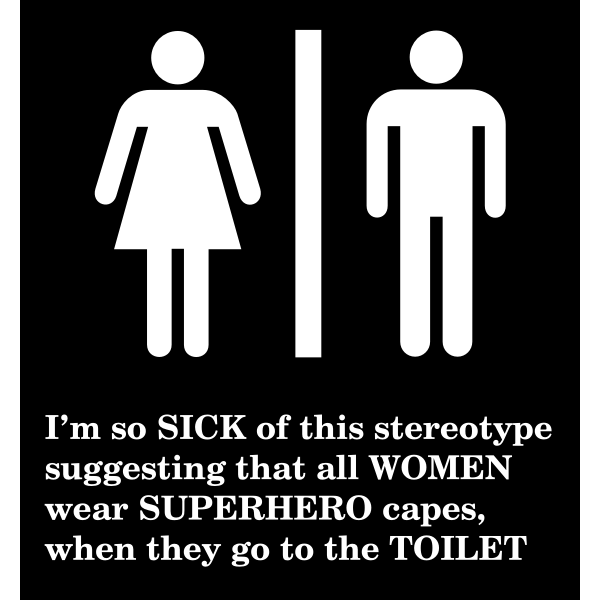
We are all stereotypical in some way. Not only do we all fit into a box, but we also fit into several of them. And guess what–– that’s ok!
Yet, after two years in the States, I’m still stunned and grieved by Americans’ insistence that no one “label” them. North Americans (and some Europeans?) have an utter obsession with avoiding putting people in categories (though many are mere descriptors of identity).
The frantic fear that one might appeal to a stereotype seems rooted in some idolatry that I haven’t quite named.
Why all the hubbub over stereotypes?
I’ve heard the reasons.
- “Not everyone fits the stereotype.”
- “I’m more than a label.”
- “Putting people in a box is disrespectful.”
- “Stereotypes can be abused.”
The tension over stereotypes is closely tied to questions of identity. The problem almost seems a bit schizophrenic. Americans are polarized about how they identify themselves. They are unsure about which way to go… whether expressive individualism or full-on group identification. For some people, being like others makes them feel dirty or tainted. It’s as if they’re degraded as individuals. Stereotypes expose their mirage of uniqueness.
Another crowd fully embraces group labels: “Black,” “gay,” “female,” “Republican,” etc. This group’s objections to stereotypes often are intellectually inconsistent. Negative characterizations are “obvious” insults to the group and thus each member’s worth. However, positive stereotypes are embraced and celebrated. While people are quick to remind us of exceptions (when it comes to negative stereotypes), few point out the exceptions to the positive comments.
Why the heightened offense of stereotypes? Francis Fukuyama’s observation provides a key clue. He writes,
“But with the rise of these social movements, many people naturally came to think of their own aims and objectives in terms of the dignity of the groups of which they were members” (Identity, 123).
In other words, it’s increasingly true that individual honor is embedded in group honor. (Of course, this has always been true, but Americans are more sensitive to this dynamic.)
Another puzzling observation is noteworthy. How we talk about identity (and thus stereotyping) depends in part on the disciplines we draw from. For instance, my friend Brandon raised a good point in a recent tweet:
“I find it very interesting that contemporary philosophy and theology tends to emphasize the profoundly atomized and individual nature of human identity while contemporary sociology and psychology appear to emphasize the deeply embedded and relational nature of identity.”
How often does our philosophizing and theologizing practically contradict our understanding of ourselves as social and psychological beings? How might we need to rethink that relationship?
Stereotypes are natural and necessary.
Let’s first acknowledge an obvious point: anything can be misused or abused, whether stereotypes or even the teaching that God loves us. Granting that, we can move on to an oft-neglected fact–– stereotypes are natural and necessary.
Our brains need to make quick predictions about the world to help us survive. Stereotypes then are a function of the “predictive brain.” (For a much deeper dive, check out David Amodio’s research on the neuroscience of stereotyping.) In a word, such generalizations free the mind up to process the vast amount of information we take in daily. Stereotypes are comparable to a “representativeness heuristic.”
Real Clear Science helpful summarizes an argument from Daniel Kahneman’s book Thinking Fast and Slow.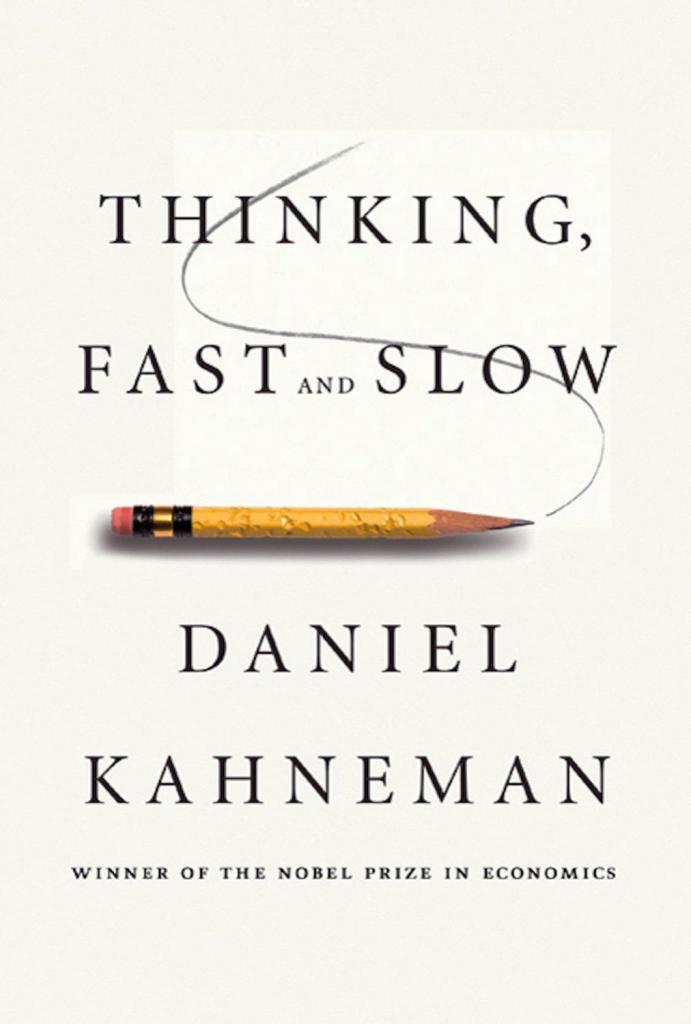
“If there were two cab companies in a city — Green and Blue, both with an equal number of cabs — and you were told that Green cabs are involved in 85% of cab accidents, which company would you choose to ride with? You’d obviously choose Blue, and, additionally, you’d almost certainly reach a conclusion that Green drivers must be a ‘collection of reckless madmen.'”
“You have now formed a stereotype of Green recklessness, which you apply to unknown individual drivers in the company,” Kahneman writes.
There’s something else that people don’t want to admit. Not only are stereotypes not going anywhere, but even Psychology Today also admits, “stereotypes are usually accurate.” I know… not always… but most stereotypes exist for a reason. That is, general patterns of group behavior exist. That’s part of what makes one group distinct from another.
When it comes to speaking about cultures, people sometimes speak of “generalizations” rather than stereotypes. Again, without the ability to speak in broad terms, we are hindered from discussing patterns found within a culture, including our own culture.
Stereotypes themselves are not bad; discrimination based on stereotypes is.
We are selective about stereotype outrage.
A story ties together much of what I’ve described. I recently worked with a friend creating a video. The professional videographer used cartoon characters representing people from around the world. I commented that the characters on one screen looked Anglo, not Asian. My friend then asked, “How do we make them more Asian without falling into stereotypes?”
My response was two-fold. First, “If they don’t look a certain way, they are hardly likely to be East Asian.” That’s just a simple fact of the genetics of people from certain regions of the world. Second, I said to her, “Notice how you did not complain about the stereotypical depictions of white people in the video.” She hadn’t thought about that.
We all have stereotypes; we are selective about what we get mad about.
It’s primarily Westerners who obsess about the slippery slope of stereotypes. In my years in East Asia, I found that Chinese routinely assumed stereotypes about them and others to be givens. Numerous times, I heard comments like, “We are yellow. Africans are black. Westerners are white,” “Americans have big eyes,” “Westerners are too independent,” and “Americans smell like sour milk.”
My point is not to approve or criticize such remarks. I note them to remind people both of the ubiquity of stereotypes and that they emerge from social experiences. We know that “American” does not imply any skin color. America is a cultural jigsaw puzzle.
Yet, such diversity is not the experience of countless people. In non-Western contexts, where conformity is a value, few think it “wrong” to make generalities. They are more comfortable with stereotypes; after all, they might say, how we’re the same is more important than how we’re different.
This post is a follow-up to my previous comments in “Yes, we stereotype. So now what?”
Previous Post

November 2, 2021
Why punish parents for kids’ bad behavior?
Next Post
November 16, 2021 Winner of the Middle Eastern Women's Video Contest
Browse Our Archives
Select a Category Atonement Biblical Theology Book Reviews China Chinese Church Chinese Culture Chinese Language Collectivism Contextualization Culture (General) Ecclesiology Evangelism Gospel Honor & Shame (Face) Interpretation/Exegesis Justification/Righteousness Missiology Mission Methods One Gospel for All Nations Other Practical Contextualization Reading Romans with Eastern Eyes Resources Romans Salvation (General) Saving God's Face Seeking God's Face The Cross in Context Theological Contextualization Theological Education Theology Uncategorized
Select a Month October 2026 September 2026 August 2026 July 2026 June 2026 May 2026 April 2026 March 2026 February 2026 January 2026 December 2025 November 2025 October 2025 September 2025 August 2025 July 2025 June 2025 May 2025 April 2025 March 2025 February 2025 January 2025 December 2024 November 2024 October 2024 September 2024 August 2024 July 2024 June 2024 May 2024 April 2024 March 2024 February 2024 January 2024 December 2023 November 2023 October 2023 September 2023 August 2023 July 2023 June 2023 May 2023 April 2023 March 2023 February 2023 January 2023 December 2022 November 2022 October 2022 September 2022 August 2022 July 2022 June 2022 May 2022 April 2022 March 2022 February 2022 January 2022 December 2021 November 2021 October 2021 September 2021 August 2021 July 2021 June 2021 May 2021 April 2021 March 2021 February 2021 January 2021 December 2020 November 2020 October 2020 September 2020 August 2020 July 2020 June 2020 May 2020 April 2020 March 2020 February 2020 January 2020 December 2019 November 2019 October 2019 September 2019 August 2019 July 2019 June 2019 May 2019 April 2019 March 2019 February 2019 January 2019 December 2018 November 2018 October 2018 September 2018 August 2018 July 2018 June 2018 May 2018 April 2018 March 2018 February 2018 January 2018 December 2017 November 2017 October 2017 September 2017 August 2017 July 2017 June 2017 May 2017 April 2017 March 2017 February 2017 January 2017 December 2016 November 2016 October 2016 September 2016 August 2016 July 2016 June 2016 May 2016 April 2016 March 2016 February 2016 January 2016 December 2015 November 2015 October 2015 September 2015 August 2015 July 2015 June 2015 May 2015 April 2015 March 2015 February 2015 January 2015 December 2014 November 2014 October 2014 September 2014 August 2014 July 2014 June 2014 May 2014 April 2014 March 2014 February 2014 January 2014 December 2013 November 2013 October 2013 September 2013 August 2013 July 2013 June 2013 May 2013 April 2013 March 2013 February 2013 January 2013 December 2012 November 2012
Follow Us!
TAKE THE
Religious Wisdom Quiz
What does James say we should be quick to do and slow to do?
Select your answer to see how you score.
Quick to listen, slow to speak and slow to become angry Quick to forgive, slow to judge Quick to pray, slow to doubt Quick to obey, slow to question
Books by This Author Books by Brad Vaughn
Related posts from Saving God's Face

No King forgets his crown. Why do we?

Recovering Moral Vision Between Shame and Shamelessness

The Real Crisis Beneath America’s Social Crises (Part...

America’s Crisis Is Deeper Than Politics
TRENDING AT PATHEOS Evangelical

When Halloween Unmasks Married Hearts
Written by Dr. David K. Ewen from Eternal Truth Bible College Behind...

Aristotle. He’s been called the father of logic, the father of the...

Methodist Central Hall and Westminster Abbey
Situated on the same square is Methodist Central Hall and Westminster Abbey. ...

57th Dove Awards Honor Dolly Parton, Crown New...
On gospel music’s biggest night, the 57th annual GMA Dove Awards honored...

The First Eucharistic Controversy: Christ’s Real Presence
For Catholics, the Eucharist is the source and summit of the Christian...

What a Stop Sign Can Teach Us About...
How to Make a Decision When You Can't Hear God Main point:...
view all Evangelical blogs
Ad-Free & Subscriber Log-In Subscription Support
- About Us
- 2026 Calendar
- Videos
- Podcasts
- Library of World Religions
- Faith In Media Tracker
- Advertise With Us
- Write for Us
- Privacy Policy
- Terms of Service
- Do Not Sell My Data
- Contact Us
- Radiant Digital
- Manage Newsletter Subscriptions
- Unsubscribe From Notifications
- Sitemap
Copyright 2008-2026, Patheos. All rights reserved.
Subscription Support Ad-Free & Subscriber Log-In
Follow Patheos