
BuddhistCatholicContemplativeEvangelicalGeneral ChristianHinduJewishLatter-day SaintMuslimNew VisionsProgressive Christian
Beliefs
- Buddhist
- Catholic
- Contemplative
- Evangelical
- General Christian
- Hindu
- Jewish
- Latter-day Saint
- More Voices
- Muslim
- New Visions
- Pagan
- Progressive Christian
Topics
- Religion News
- Food and Religion
- Sports and Religion
- Religious Art
- Religious Music and Entertainment
- Religious Events
- History and Religion
- Style and Religion
- Politics and Religion
- Women in Religion
- Recreation Outdoors and Religion
- Business Finance and Religion
- Careers Workplace and Religion
- Education and Religion
- Family Parenting and Religion
- Health Fitness and Religion
- Home and Religion
- Relationships and Religion
- Technology and Religion
- Travel and Religion
Columnists
- Buddhist Columnists
- Business Finance and Religion Columnists
- Careers Workplace and Religion Columnists
- Catholic Columnists
- Contemplative Columnists
- Education and Religion Columnists
- Evangelists Columnists
- Family Parenting and Religion Columnists
- General Christian Columnists
- Health Fitness and Religion Columnists
- Hindu Columnists
- History and Religion Columnists
- Home and Religion Columnists
- Jewish Columnists
- More Voices Columnists
- Latter Day Columnists
- Muslim Columnists
- New Visions Columnists
- Nonreligious Columnists
- Pagan Columnists
- Politics and Religion Columnists
- Progressive Columnists
- Recreation Outdoors and Religion Columnists
- Relationships and Religion Columnists
- Religion News Columnists
- Religious Art Columnists
- Religious Events Columnists
- Religious Music and Entertainment Columnists
- Sports and Religion Columnists
- Style and Religion Columnists
- Technology and Religion Columnists
- Travel and Religion Columnists
- Women in Religion Columnists
Resource Library
- 2026 Calendar
- Library of World Religions
- The 100 Most Holy Places on Earth
- Patheos Answers
- Podcasts
- Videos
- Faith Leaders Database
- Anglican Episcopalian
- Bahai
- Baptist
- Buddhism
- Christianity
- Confucianism
- Eastern Orthodoxy
- Hinduism
- Holiness and Pentecostal
- ISKCON
- Islam
- Judaism
- Lutheran
- Methodist
- The Church of Jesus Christ of Latter-day Saints
- New Age
- Paganism
- Presbytarian and Reformed
- Protestantism
- Religion Behind the Scenes
- Roman Catholic
- Scientology
- Shia Islam
- Sikhism
- Sufism
- Sunni Islam
- Taoism
- Zen
- See all religions
Research Tools
 Ad-Free & Subscriber Log-In Subscription Support
Ad-Free & Subscriber Log-In Subscription Support
Follow Patheos 

- Trending:
- Forgiveness
- |
- Marriage
- |
- Consciousness
- |
- Death Penalty
- |
- Election
- |
- Halloween

-
Tools
-
Support the Work
- Home
- Evangelical
- Why punish parents for kids’ bad behavior?
Why punish parents for kids’ bad behavior?
Last updated on: November 2, 2021 at 4:47 pm by Brad Vaughn
Why punish parents for kids’ bad behavior? 2021-10-20T05:00:58-07:00 Brad Vaughn
Patheos Explore the world's faith through different perspectives on religion and spirituality! Patheos has the views of the prevalent religions and spiritualities of the world.
If ever there were an article that illustrated honor-shame, collectivist thinking, I think this is it.
According to several outlets (CNN, Reuters, NY Post, etc.), China is now considering a new law where parents could be punished for their children’s bad behavior. No, this is not a joke or parody.

Credit: Public Domain
This is a law that only kids (and the Chinese Communist Party) could have dreamt up. Recently, for example, Reuters says the Chinese Ministry of Education
“cut back on homework and banned after-school tutoring for major subjects during the weekend and holidays, concerned about the heavy academic burden on overwhelmed children.”
The bad news, from the kids’ perspective, is that the Chinese government also limited the number of hours that children can play online video games, calling it “spiritual opium.”
This is not the first law of this sort that China has enacted. In 2013, Chinese officials passed the “Elderly Rights Law,” which mandates that older children visit their elderly parents. The law even adds, “Those who live far away from parents should go home often.”
[And before you’re too quick to criticize the law, just remember the Bible lists somewhat similar regulations and punishments for the ancient people of Israel (e.g., Exodus 21:12-17; Deuteronomy 21:18-21; 27:16; among others)].
The Collective Logic of Chinese Law
My goal in this post is not to critique the proposed legislation. Instead, I want to shine a light on its underlying logic. Most Western individualists don’t have mental categories to make sense of the government’s rationale. From a (hierarchical) collectivist perspective, the move has a certain logic to it.
First, like many other traditional cultures, “family” is the fundamental metaphor or paradigm through which Chinese see everything. In fact, the word for “country” (guojia, 国家), essentially translates “kingdom family.” Government leaders see themselves as parents to the nation. Such thinking goes back at least to Confucius. The home is paradigmatic for social life. One even calls older strangers “Auntie” and “Uncle.”
Furthermore, social collectivists understand well that “there is no me without we.” A person’s identity not only consists in their uniqueness; it also stems from the various ways they are like other people. These similarities could include gender, ethnicity, hometown, etc. People are unique only inasmuch as they have different degrees and combinations of sameness.
While Americans might see the truth in this point, many will nearly want to vomit at its implications. In part, what this means is that our ways of thinking, habits of behavior, interests, values, and moral decision-making are all products (to some degree) of our social environment. Culture and community do not alleviate a person from responsibility for their actions; however, they have a significant impact on an individual’s life.[1]
China is One Big Family
National and social health are linked to the well-being of families. (In essence, the nation is perceived as “extended family.”) Therefore, what goes on in the home is no private matter. Negligent mothers and fathers bring harm to the larger, national family when they fail to train their children properly.
What then should the nation’s parents (i.e., government officials) do when their children (adult citizens) misbehave (i.e., by their poor parenting)?
Make laws and punish offenders. From the perspective of civic leaders, they have a responsibility to protect their younger children from neglectful adult guardians. The legislation is an act of caring on the government’s part.
(Children are normally taught to love their parents, right? So, it’s also not surprising that “The bill would require parents or guardians to teach their children to “love the party, nation, people and socialism,” writes The Independent.)
This is the internal rationale that makes such laws possible. “I am you. You are me. We is me.” As noted above, this idea is both true and false. Whereas individualists debunk anything that contradicts the doctrine that “I am me,” collectivists disregard the uniqueness of individuals.
Both extremes are problematic.
[1] To give context, in America, those who lean left emphasize the effect of social/structural factors on a person’s behavior. So-called “conservatives” on the right lay heavy stress on individual responsibility to the point that the reality of systemic evil is sometimes minimized.
Previous Post

October 26, 2021
Honor and Shame in Vertical-Horizontal Individualism and Collectivism
Next Post
November 9, 2021 Why are Americans obsessed with avoiding stereotypes?
Browse Our Archives
Select a Category Atonement Biblical Theology Book Reviews China Chinese Church Chinese Culture Chinese Language Collectivism Contextualization Culture (General) Ecclesiology Evangelism Gospel Honor & Shame (Face) Interpretation/Exegesis Justification/Righteousness Missiology Mission Methods One Gospel for All Nations Other Practical Contextualization Reading Romans with Eastern Eyes Resources Romans Salvation (General) Saving God's Face Seeking God's Face The Cross in Context Theological Contextualization Theological Education Theology Uncategorized
Select a Month October 2026 September 2026 August 2026 July 2026 June 2026 May 2026 April 2026 March 2026 February 2026 January 2026 December 2025 November 2025 October 2025 September 2025 August 2025 July 2025 June 2025 May 2025 April 2025 March 2025 February 2025 January 2025 December 2024 November 2024 October 2024 September 2024 August 2024 July 2024 June 2024 May 2024 April 2024 March 2024 February 2024 January 2024 December 2023 November 2023 October 2023 September 2023 August 2023 July 2023 June 2023 May 2023 April 2023 March 2023 February 2023 January 2023 December 2022 November 2022 October 2022 September 2022 August 2022 July 2022 June 2022 May 2022 April 2022 March 2022 February 2022 January 2022 December 2021 November 2021 October 2021 September 2021 August 2021 July 2021 June 2021 May 2021 April 2021 March 2021 February 2021 January 2021 December 2020 November 2020 October 2020 September 2020 August 2020 July 2020 June 2020 May 2020 April 2020 March 2020 February 2020 January 2020 December 2019 November 2019 October 2019 September 2019 August 2019 July 2019 June 2019 May 2019 April 2019 March 2019 February 2019 January 2019 December 2018 November 2018 October 2018 September 2018 August 2018 July 2018 June 2018 May 2018 April 2018 March 2018 February 2018 January 2018 December 2017 November 2017 October 2017 September 2017 August 2017 July 2017 June 2017 May 2017 April 2017 March 2017 February 2017 January 2017 December 2016 November 2016 October 2016 September 2016 August 2016 July 2016 June 2016 May 2016 April 2016 March 2016 February 2016 January 2016 December 2015 November 2015 October 2015 September 2015 August 2015 July 2015 June 2015 May 2015 April 2015 March 2015 February 2015 January 2015 December 2014 November 2014 October 2014 September 2014 August 2014 July 2014 June 2014 May 2014 April 2014 March 2014 February 2014 January 2014 December 2013 November 2013 October 2013 September 2013 August 2013 July 2013 June 2013 May 2013 April 2013 March 2013 February 2013 January 2013 December 2012 November 2012
Follow Us!
TAKE THE
Religious Wisdom Quiz
Why was Daniel thrown into the lion’s den?
Select your answer to see how you score.
He spoke against the king He prayed to God He stole from the treasury He refused to bow to the king
Books by This Author Books by Brad Vaughn
Related posts from Saving God's Face

11 Contrasts Between Western and Eastern Cultures

Americans, not Asians, have Positive Illusions
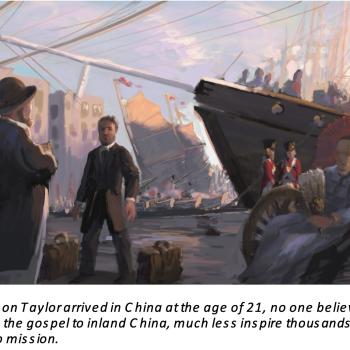
A Hudson Taylor movie is in the works!

Missionary Perspectives on Language Learning
TRENDING AT PATHEOS Evangelical

57th Dove Awards Honor Dolly Parton, Crown New...
On gospel music’s biggest night, the 57th annual GMA Dove Awards honored...

The First Eucharistic Controversy: Christ’s Real Presence
For Catholics, the Eucharist is the source and summit of the Christian...

What a Stop Sign Can Teach Us About...
How to Make a Decision When You Can't Hear God Main point:...

Archdiocese Hosts Military Marriage Retreat in Germany
RASTATT, Germany — The transient military lifestyle, with its frequent deployments and...

Nearly every morning, I make the drive to Detroit with my high-school-age...

The Real AI Story Is Adoption Without Trust
Artificial intelligence has crossed a political threshold. It is no longer a...
view all Evangelical blogs
Ad-Free & Subscriber Log-In Subscription Support
- About Us
- 2026 Calendar
- Videos
- Podcasts
- Library of World Religions
- Faith In Media Tracker
- Advertise With Us
- Write for Us
- Privacy Policy
- Terms of Service
- Do Not Sell My Data
- Contact Us
- Radiant Digital
- Manage Newsletter Subscriptions
- Unsubscribe From Notifications
- Sitemap
Copyright 2008-2026, Patheos. All rights reserved.
Subscription Support Ad-Free & Subscriber Log-In
Follow Patheos