
BuddhistCatholicContemplativeEvangelicalGeneral ChristianHinduJewishLatter-day SaintMuslimNew VisionsProgressive Christian
Beliefs
- Buddhist
- Catholic
- Contemplative
- Evangelical
- General Christian
- Hindu
- Jewish
- Latter-day Saint
- More Voices
- Muslim
- New Visions
- Pagan
- Progressive Christian
Topics
- Religion News
- Food and Religion
- Sports and Religion
- Religious Art
- Religious Music and Entertainment
- Religious Events
- History and Religion
- Style and Religion
- Politics and Religion
- Women in Religion
- Recreation Outdoors and Religion
- Business Finance and Religion
- Careers Workplace and Religion
- Education and Religion
- Family Parenting and Religion
- Health Fitness and Religion
- Home and Religion
- Relationships and Religion
- Technology and Religion
- Travel and Religion
Columnists
- Buddhist Columnists
- Business Finance and Religion Columnists
- Careers Workplace and Religion Columnists
- Catholic Columnists
- Contemplative Columnists
- Education and Religion Columnists
- Evangelists Columnists
- Family Parenting and Religion Columnists
- General Christian Columnists
- Health Fitness and Religion Columnists
- Hindu Columnists
- History and Religion Columnists
- Home and Religion Columnists
- Jewish Columnists
- More Voices Columnists
- Latter Day Columnists
- Muslim Columnists
- New Visions Columnists
- Nonreligious Columnists
- Pagan Columnists
- Politics and Religion Columnists
- Progressive Columnists
- Recreation Outdoors and Religion Columnists
- Relationships and Religion Columnists
- Religion News Columnists
- Religious Art Columnists
- Religious Events Columnists
- Religious Music and Entertainment Columnists
- Sports and Religion Columnists
- Style and Religion Columnists
- Technology and Religion Columnists
- Travel and Religion Columnists
- Women in Religion Columnists
Resource Library
- 2026 Calendar
- Library of World Religions
- The 100 Most Holy Places on Earth
- Patheos Answers
- Podcasts
- Videos
- Faith Leaders Database
- Anglican Episcopalian
- Bahai
- Baptist
- Buddhism
- Christianity
- Confucianism
- Eastern Orthodoxy
- Hinduism
- Holiness and Pentecostal
- ISKCON
- Islam
- Judaism
- Lutheran
- Methodist
- The Church of Jesus Christ of Latter-day Saints
- New Age
- Paganism
- Presbytarian and Reformed
- Protestantism
- Religion Behind the Scenes
- Roman Catholic
- Scientology
- Shia Islam
- Sikhism
- Sufism
- Sunni Islam
- Taoism
- Zen
- See all religions
Research Tools
 Ad-Free & Subscriber Log-In Subscription Support
Ad-Free & Subscriber Log-In Subscription Support
Follow Patheos 

- Trending:
- Forgiveness
- |
- Marriage
- |
- Consciousness
- |
- Death Penalty
- |
- Election
- |
- Halloween

-
Tools
-
Support the Work
- Home
- Evangelical
- Jesus experienced shame, not low self-esteem
Jesus experienced shame, not low self-esteem
Last updated on: September 7, 2021 at 4:15 pm by Brad Vaughn
Jesus experienced shame, not low self-esteem 2021-08-03T00:55:01-07:00 Brad Vaughn
Patheos Explore the world's faith through different perspectives on religion and spirituality! Patheos has the views of the prevalent religions and spiritualities of the world.
Writing the Foreword for Gregg Ten Elshof’s For Shame was a challenge. Why? Because forewords have to be short, and I could hardly contain my enthusiasm after reading his book. For Shame is a genuine contribution to recent discussions about shame. Although a short read, it will doubtless stir serious debate.
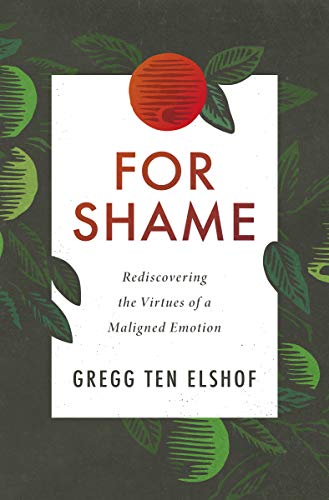 Ten Elshof doesn’t shy away from controversy, but not for the sake of provocation itself. Rather, he presses readers to expand their understanding of shame while considering its theological and practical ramifications.
In my opinion, people will have a hard time accepting one idea in particular—the claim that Jesus could feel shame. Even as I write that sentence, I know some readers will immediately tune out anything else he says. Yet, I’m just as certain that no one who just read that sentence will actually grasp what Ten Elshof means.
The difficulty is not that Ten Elshof uses the word “shame” in an odd, unprecedented way. Rather, he reminds us of a basic idea underlying all definitions of shame.
This post explains what Ten Elshof means by “shame.” In the next post, I will clarify how it relates to various types of shame.
Jesus Experienced Shame
When people define shame, they usually link it to a loss of self-esteem. This popular understanding refers to psychological shame, the kind Brene Brown speaks about. But Ten Elshof says this:
“It is possible, after all, to experience shame (even quite intense shame) without any corresponding loss of self-esteem.
Recall, for example, the shame Jesus Christ suffered on our behalf. Jesus was publicly and falsely accused of something shameful and criminal—claiming to be divine while not divine. As a consequence, he suffered public ridicule and was widely shunned. He was publicly and disgracefully stripped of his clothing, tortured, and killed.
To put it mildly, he suffered a precipitous loss of social capital and connection. He was shamed. And according to Christian teaching, if it did not pain him to experience this loss of social capital and connection in company that mattered to him—if he did not undergo felt shame—he was not in all manner of things like us. Presumably, then, Jesus experienced felt shame—intense shame.
But just as clearly, he did not suffer a lowering of self-esteem. He did not judge himself to be a person of less worth, dignity, or ability as a result of his experience, and he did not experience any loathing affect directed at himself. His shame was great, but his sense of his own dignity and self-worth were unassailed.” (p. 62)
One could easily misread this statement. A reader could miss the nuance in his argument. We must be conscious of the fact that shame is multifaceted.

Credit: Creative Commons
As I’ve said several times, people tend to talk past one another because they are generally familiar with certain aspects of shame. Writers from disparate fields use the same word but seem to talk about different subjects entirely. Consequently, we end up talking past one another.
(This is precisely why I wrote “Have Theologians No Sense of Shame? How the Bible Reconciles Objective and Subjective Shame.” In that article, I distinguish psychological, social, and sacred shame and note their presence in the Bible.)
But How Did He Experience Shame?
At first, Ten Elshof seems merely to highlight the social shame Jesus experienced, i.e., the community around him treated and regarded him as worthy of shame. But Ten Elshof implies more than that. He suggests that something is actually going on inside of Jesus.
He explains,
“Can shame be experienced apart from lowered self-esteem for us who are mere mortals?” It certainly can.
Imagine being publicly (though mistakenly) accused of an extremely shameful and criminal act. Imagine that the evidence publicly presented, though misleading, is compelling and damning indeed. And imagine that, as a consequence, you are widely shunned and poorly regarded.
You would lose social capital and connection and would suffer shame in the communities that matter to you. And if your emotions were tracking the situation in a healthy way, you would feel the pain of lost social capital and connection. But your opinion of yourself would not be affected.
Knowing you are innocent, you’d not think yourself less worthy, dignified, or able than prior to the accusation. You would suffer intense shame and have the painful emotional experience of yourself as an object of diminished social consequence in company that mattered to you. You would experience yourself as a source of discomfort and pain in the world. But you’d not necessarily sink into self-loathing or experience diminished self-esteem—at least not if shame is functioning as it should in your psychology.” (p. 63)
In focusing on the experience of Jesus, Ten Elshof underlines an aspect of shame that is implicit in other forms of shame. In short, shame entails a person’s sensitivity to the opinion of others.
Sensitivity to Opinion?
“Sensitivity” does not require agreement nor unhealthy neediness. Instead, it concerns both awareness and the displeasure that comes along with lost social connection. If a person does not have such sensitivity, they are called “shameless.” And, ironically, a shameless person is shameful.
As I and others have explained (like here, here, and here), shame is a moral emotion. A sensitivity for the opinion of another foundational for character development. Concern for other people’s opinions is inherent and thus necessary for cultivating humility.[1] Mencius says,
“Whoever has no sense of shame is not human.”[2]
Accordingly, the one who is not sensitive to shame is a threat to others.
While For Shame touches on several features of shame, this particular one often goes unnoticed or perhaps assumed.
In the next post, I’ll illustrate how shame-as-sensitivity-to-social-opinion relates to the other types of shame.
[1] Van Norden, “The Emotion of Shame,” 62.
[2] B. J. Yang, Mengzi yizhu [Translated notes on Mencius] (Beijing: Zhonghua Book Company, 1960), 80.
Previous Post

August 31, 2021
Flipping the Script on Shame and Shaming
Next Post

September 14, 2021 What’s the relationship between 4 types of shame?
Browse Our Archives
Select a Category Atonement Biblical Theology Book Reviews China Chinese Church Chinese Culture Chinese Language Collectivism Contextualization Culture (General) Ecclesiology Evangelism Gospel Honor & Shame (Face) Interpretation/Exegesis Justification/Righteousness Missiology Mission Methods One Gospel for All Nations Other Practical Contextualization Reading Romans with Eastern Eyes Resources Romans Salvation (General) Saving God's Face Seeking God's Face The Cross in Context Theological Contextualization Theological Education Theology Uncategorized
Select a Month October 2026 September 2026 August 2026 July 2026 June 2026 May 2026 April 2026 March 2026 February 2026 January 2026 December 2025 November 2025 October 2025 September 2025 August 2025 July 2025 June 2025 May 2025 April 2025 March 2025 February 2025 January 2025 December 2024 November 2024 October 2024 September 2024 August 2024 July 2024 June 2024 May 2024 April 2024 March 2024 February 2024 January 2024 December 2023 November 2023 October 2023 September 2023 August 2023 July 2023 June 2023 May 2023 April 2023 March 2023 February 2023 January 2023 December 2022 November 2022 October 2022 September 2022 August 2022 July 2022 June 2022 May 2022 April 2022 March 2022 February 2022 January 2022 December 2021 November 2021 October 2021 September 2021 August 2021 July 2021 June 2021 May 2021 April 2021 March 2021 February 2021 January 2021 December 2020 November 2020 October 2020 September 2020 August 2020 July 2020 June 2020 May 2020 April 2020 March 2020 February 2020 January 2020 December 2019 November 2019 October 2019 September 2019 August 2019 July 2019 June 2019 May 2019 April 2019 March 2019 February 2019 January 2019 December 2018 November 2018 October 2018 September 2018 August 2018 July 2018 June 2018 May 2018 April 2018 March 2018 February 2018 January 2018 December 2017 November 2017 October 2017 September 2017 August 2017 July 2017 June 2017 May 2017 April 2017 March 2017 February 2017 January 2017 December 2016 November 2016 October 2016 September 2016 August 2016 July 2016 June 2016 May 2016 April 2016 March 2016 February 2016 January 2016 December 2015 November 2015 October 2015 September 2015 August 2015 July 2015 June 2015 May 2015 April 2015 March 2015 February 2015 January 2015 December 2014 November 2014 October 2014 September 2014 August 2014 July 2014 June 2014 May 2014 April 2014 March 2014 February 2014 January 2014 December 2013 November 2013 October 2013 September 2013 August 2013 July 2013 June 2013 May 2013 April 2013 March 2013 February 2013 January 2013 December 2012 November 2012
Follow Us!
TAKE THE
Religious Wisdom Quiz
I am a day when tongues of fire appeared and people spoke in languages they had never learned. Three thousand believed that day. What am I?
Select your answer to see how you score.
Passover Easter Pentecost The Day of Atonement
Books by This Author Books by Brad Vaughn
Related posts from Saving God's Face

No King forgets his crown. Why do we?

Recovering Moral Vision Between Shame and Shamelessness

Refuge, Confession, and the End of Shame

Psalm 25 and the Fear of Being Put...
TRENDING AT PATHEOS Evangelical

The Sermon on the Mount, Part I: Matthew...
The Sermon on the Mount, Part I (Matthew 4:12-5:12) St. Matthew moves...

What's up from Crossway: Reviewing some of their latest A few weeks...

Janie Learns the Way of the Cross: A...
Teaching children about Jesus' Passion can be challenging. Many parents and educators...

Looking For Good Catholic Writing - October 2026
He alone extends the heavens, and he walks upon the waves of...

In "Irreplaceable," our book on vocation and technology, Trevor Sutton and I...

I was strolling through the top floor of the brand new Parthenon...
view all Evangelical blogs
Ad-Free & Subscriber Log-In Subscription Support
- About Us
- 2026 Calendar
- Videos
- Podcasts
- Library of World Religions
- Faith In Media Tracker
- Advertise With Us
- Write for Us
- Privacy Policy
- Terms of Service
- Do Not Sell My Data
- Contact Us
- Radiant Digital
- Manage Newsletter Subscriptions
- Unsubscribe From Notifications
- Sitemap
Copyright 2008-2026, Patheos. All rights reserved.
Subscription Support Ad-Free & Subscriber Log-In
Follow Patheos