
BuddhistCatholicContemplativeEvangelicalGeneral ChristianHinduJewishLatter-day SaintMuslimNew VisionsProgressive Christian
Beliefs
- Buddhist
- Catholic
- Contemplative
- Evangelical
- General Christian
- Hindu
- Jewish
- Latter-day Saint
- More Voices
- Muslim
- New Visions
- Pagan
- Progressive Christian
Topics
- Religion News
- Food and Religion
- Sports and Religion
- Religious Art
- Religious Music and Entertainment
- Religious Events
- History and Religion
- Style and Religion
- Politics and Religion
- Women in Religion
- Recreation Outdoors and Religion
- Business Finance and Religion
- Careers Workplace and Religion
- Education and Religion
- Family Parenting and Religion
- Health Fitness and Religion
- Home and Religion
- Relationships and Religion
- Technology and Religion
- Travel and Religion
Columnists
- Buddhist Columnists
- Business Finance and Religion Columnists
- Careers Workplace and Religion Columnists
- Catholic Columnists
- Contemplative Columnists
- Education and Religion Columnists
- Evangelists Columnists
- Family Parenting and Religion Columnists
- General Christian Columnists
- Health Fitness and Religion Columnists
- Hindu Columnists
- History and Religion Columnists
- Home and Religion Columnists
- Jewish Columnists
- More Voices Columnists
- Latter Day Columnists
- Muslim Columnists
- New Visions Columnists
- Nonreligious Columnists
- Pagan Columnists
- Politics and Religion Columnists
- Progressive Columnists
- Recreation Outdoors and Religion Columnists
- Relationships and Religion Columnists
- Religion News Columnists
- Religious Art Columnists
- Religious Events Columnists
- Religious Music and Entertainment Columnists
- Sports and Religion Columnists
- Style and Religion Columnists
- Technology and Religion Columnists
- Travel and Religion Columnists
- Women in Religion Columnists
Resource Library
- 2026 Calendar
- Library of World Religions
- The 100 Most Holy Places on Earth
- Patheos Answers
- Podcasts
- Videos
- Faith Leaders Database
- Anglican Episcopalian
- Bahai
- Baptist
- Buddhism
- Christianity
- Confucianism
- Eastern Orthodoxy
- Hinduism
- Holiness and Pentecostal
- ISKCON
- Islam
- Judaism
- Lutheran
- Methodist
- The Church of Jesus Christ of Latter-day Saints
- New Age
- Paganism
- Presbytarian and Reformed
- Protestantism
- Religion Behind the Scenes
- Roman Catholic
- Scientology
- Shia Islam
- Sikhism
- Sufism
- Sunni Islam
- Taoism
- Zen
- See all religions
Research Tools
 Ad-Free & Subscriber Log-In Subscription Support
Ad-Free & Subscriber Log-In Subscription Support
Follow Patheos 

- Trending:
- Forgiveness
- |
- Marriage
- |
- Consciousness
- |
- Death Penalty
- |
- Election
- |
- Halloween

-
Tools
-
Support the Work
- Home
- Evangelical
- Does Critical Race Theory (CRT) Stigmatize Blacks?
Does Critical Race Theory (CRT) Stigmatize Blacks?
Last updated on: July 23, 2021 at 2:08 am by Brad Vaughn
Does Critical Race Theory (CRT) Stigmatize Blacks? 2021-07-23T02:08:55-07:00 Brad Vaughn
Patheos Explore the world's faith through different perspectives on religion and spirituality! Patheos has the views of the prevalent religions and spiritualities of the world.
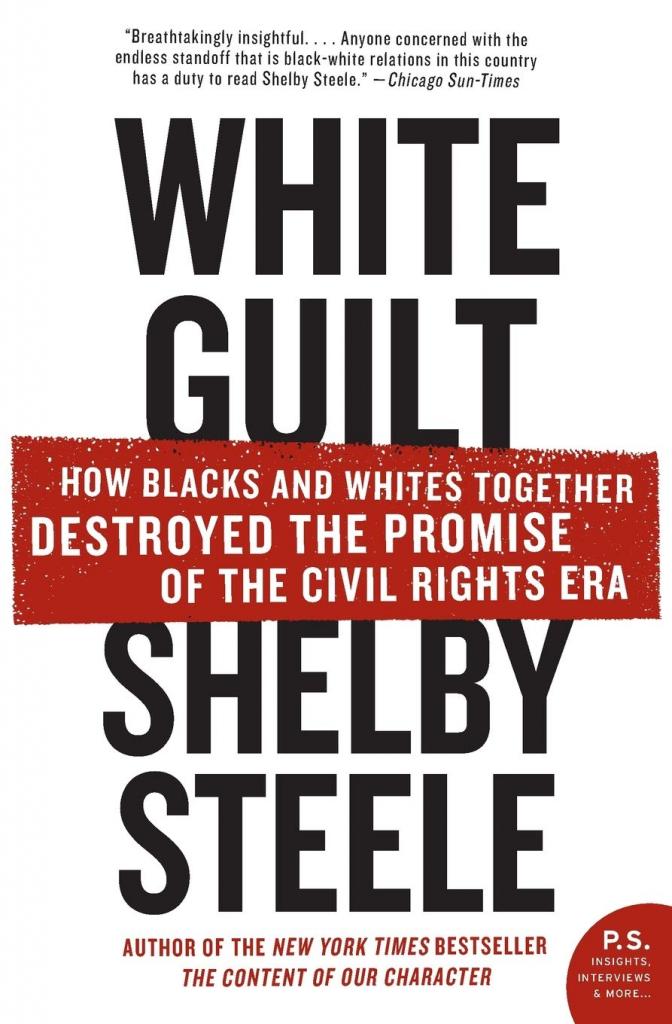 This post considers the link between shame and popular applications of Critical Race Theory (CRT) and shame. These ideas stem from my reading Shelby Steele’s Shame: How America’s Past Sins Have Polarized Our Country and White Guilt: How Blacks and Whites Together Destroyed the Promise of the Civil Rights Era.
He suggests that advocates of “applied CRT” actually stigmatize blacks. After defining a few terms, we’ll explore why CRT virtually enslaves minorities, especially blacks, in the shackles of stigma.
BEFORE YOU READ:
CRT has become a buzzword of controversy that seems to mean whatever people want it to mean. For some, it represents an endless effort to rid America of racism; for others, it signals a Marxist agenda to divide the country. Consequently, a person immediately garners enemies when one speaks either well or ill of CRT. Whatever your position, intellectual integrity requires that we consider the potential benefit or harm introduced by such theories.
Defining CRT and “Applied CRT”
Let’s define terms. No single “critical race theory” exists, though all versions share common features. Before we define CRT, we need to understand what is a “critical theory” (of which “CRT” is but on type). Political and legal philosopher Daniel Koltonski, for a class on critical theory, writes:
A “critical theory” has a distinctive aim: to unmask the ideology falsely justifying some form of social or economic oppression—to reveal it as ideology—and, in so doing, to contribute to the task of ending that oppression. And so, a critical theory aims to provide a kind of enlightenment about social and economic life that is itself emancipatory: persons come to recognize the oppression they are suffering as oppression and are thereby partly freed from it.
Another scholar explains that critical theories entail “an exploration of embedded ideology, dominant cultural norms, and oppressive stereotypes.”[1] To reinforce the point, another group of researchers explains,
“Liberation is a theme that runs through critical theory; liberation from objective oppressors such as colonizers and exploitive employers, and liberation from subjective forces such as mass culture and ideology.”[2]
CRT is one application of this approach (focusing on power and oppression) to race.
I belabor the point because some people argue that genuine CRT advocates do not frame their discussion in terms of oppression. This is a half-truth. While the words “oppressed” and “oppressor” are not on every page, they routinely speak of those with power and the injustices inflicted on those without power. What we have here is a distinction without a difference.
To be clear, many people don’t realize that CRT is
“a legal movement aimed at understanding, resisting, and remediating how U.S. law and legal institutions such as law schools have fostered and perpetuated racism and white supremacy” (as defined by CRT scholar and Wheaton assistant professor Nathan Cartagena).
Formally, advocates of CRT are concerned with the ways in which laws and systems are used to perpetuate racism. In the effort, CRT can provide helpful insights for analyzing laws and social institutions.
However, something different emerges when CRT hits popular culture (no longer the property of legal scholars). When people begin applying critical theory to assess broader social dynamics, we come upon (what I’ll call) “applied CRT,” which is laced with Marxist antagonism. The following typifies “applied CRT.”
The worldview of [applied] CRT derives from Critical Theory, which frames human life through the Marxist lens of oppressed v. oppressor, placing all members of society in one of these two groups based on identity factors such as race, religion, gender, and socioeconomic status rather than individual responsibility in actual acts of oppression.
Formal academic CRT does well notes the systemic influence of racism on our laws and institutions; from it, applied CRT can tend to label nearly everything as fatally racist.
* I explicitly state this definition so that readers do not confuse my meaning with popular (mis)understandings of CRT as synonymous merely with wanting to oppose racism. Lest we succumb to false impressions, Bruce Ashford makes an important observation:
Although CRT finds many supporters in the black intellectual community, many prominent black thinkers reject CRT as a flawed theory. In their view, this way of thinking actually perpetuates racism and harms society. Such critics of CRT include economists (Thomas Sowell, Walter Williams, and Glenn Loury), political scientists (Carol M. Swain, Wilfred Reilly), political commentators and activists (Derryck Green, Alveda King), professors of linguistics (John McWhorter), professors of divinity (Robert Smith, Jr.), public intellectuals (Coleman Hughes), and elected officials (Tim Scott), among others.
So, how does applied CRT harm minorities, especially blacks? We first need to understand racial stigma.
The Problems of Racial Stigma
The Oxford dictionary defines “stigma” as “a mark of disgrace associated with a particular circumstance, quality, or person.” When a particular social group suffers from stigma, the public begins to have negative expectations about members of that group. As Glenn Loury summarizes:
An important consequence of racial stigma is “vicious circles” of cumulative causation: self-sustaining processes in which the failure of blacks to make progress justifies for whites the very prejudicial attitudes that, when reflected in social and political action, ensure that blacks will not advance.
Stigma deepens prejudice and furthers discrimination, regardless of what policies and laws are enacted.
Responses to stigma vary, but few are healthy. Personal shame and anger are common. These can lead to anything from violence and blame-shifting to anxiety and despair. Stigma perpetuates misunderstanding between social groups. Those who are stigmatized can feel a sense of futility as though nothing they do can overcome public perceptions.
How CRT Stigmatizes Minorities
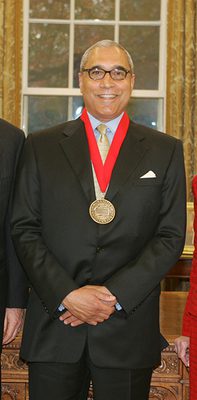
Credit: Public Domain
Ostensibly, applied CRT seeks to help liberate racial minorities from centuries of cultural subordination. However, some argue that CRT produces the opposite effect. As an African American Senior Fellow at the Hoover Institution, Shelby Steele explains how applied CRT effectively re-enslaves blacks in the shackles of stigma.
We must first consider the link between slavery, freedom, and being human. Steele says,
In slavery blacks were not free, but they were also not entirely responsible for their lives. Slavery was a form of incarceration that dehumanized its victims as much as denying them responsibility for their lives––by providing them with a subsistence existence––as by denying them freedom. Freedom is crucial for a decent life, but only in being responsible for one’s life can one take agency over it. And agency––sovereignty and will that we have over our individual lives––is what makes us fully human. (White Guilt, 47).
In his books, Steele returns to this theme again and again. Inasmuch as applied CRT perpetuates an enduring narrative whereby blacks are inescapably trapped in “systemic,” “structural,” or “institutional” racism, blacks are robbed of their agency and depend entirely on whites for their freedom.
In a word, Steele says,
No worse fate could befall a group emerging from oppression than to find itself gripped by a militancy that sees justice in making others responsible for its advancement. (62)
He underscores this humiliation when tracing the history of black militancy movements. He writes,
But the black militancy that actually emerged in the sixties— what might be called “white-guilt” militancy—was the opposite of this. Because it was really a strategy to redistribute responsibility to American institutions, it literally argued that blacks could not be fully responsible for their own advancement—this simply to make the point that whites had to be more responsible for it….
Black leader after black leader argued that we could not pick ourselves up by our own bootstraps, because we “don’t have any bootstraps.” But this humiliating plea for white intervention only projected whites as powerful and blacks as helpless. So, finally, we embraced a black militancy that argued nothing more strongly than our own perpetual weakness—or, put another way, our inferiority. (60)
According to Steele’s reasoning, such thinking means that one day, whenever blacks achieve equality (using whatever measure we’re using), then it will be whites who get the credit, not blacks since the latter were “helpless.”
(For a related post on how some missionaries patronize Chinese Christians, click here.)
Do Policies Affirm Black Inferiority?
Steele poignantly underscores the point when speaking to affirmative action programs. After describing how the US military sought to lower standards to get more minority officers, Steele says,
Double standards always stigmatize precisely those they claim to help, so it will be minority officers––not white officers––who will be seen as second-rate under such a system. (116)
In fact, he argues that such programs and policies imply “an inherent and irremediable black inferiority.”
When you give a racial preference to a child of two black professionals with advanced degrees and six-figure incomes—as entrée to a university that has not discriminated against blacks in more than sixty years—then you are clearly implying an inherent and irremediable black inferiority. You are saying that even the absence of racism and the fruits of a privileged life do not make it possible for blacks to compete with whites and Asians who may come from fractured homes and underprivileged backgrounds. (134)
In part 2 of this series, I’ll expand the conversation to explore white guilt, black identity, and what Steele regards as “black privilege.”
[1] Shirley Steinberg and Joe Kincheloe. “Power, Emancipation, and Complexity: employing critical theory.” Power and Education Vol. 2, no. 2 (2010): 141 [140-151].
[2] Heather Davidson, Scot Evans, Cynthia Ganote, Jorie Henrickson, Lynette Jacobs-Priebe, Diana L. Jones, Isaac Prilleltensky, Manuel Riemer. “Power and Action in Critical Theory Across Disciplines: Implications for Critical Community Psychology.” Am J Community Psychol 38 (2006): 36 [35–49].
Previous Post

July 6, 2021
How failure distinguishes “good” and “bad” shame
Next Post

July 20, 2021 Black Privilege and Weaponizing White Guilt
Browse Our Archives
Select a Category Atonement Biblical Theology Book Reviews China Chinese Church Chinese Culture Chinese Language Collectivism Contextualization Culture (General) Ecclesiology Evangelism Gospel Honor & Shame (Face) Interpretation/Exegesis Justification/Righteousness Missiology Mission Methods One Gospel for All Nations Other Practical Contextualization Reading Romans with Eastern Eyes Resources Romans Salvation (General) Saving God's Face Seeking God's Face The Cross in Context Theological Contextualization Theological Education Theology Uncategorized
Select a Month October 2026 September 2026 August 2026 July 2026 June 2026 May 2026 April 2026 March 2026 February 2026 January 2026 December 2025 November 2025 October 2025 September 2025 August 2025 July 2025 June 2025 May 2025 April 2025 March 2025 February 2025 January 2025 December 2024 November 2024 October 2024 September 2024 August 2024 July 2024 June 2024 May 2024 April 2024 March 2024 February 2024 January 2024 December 2023 November 2023 October 2023 September 2023 August 2023 July 2023 June 2023 May 2023 April 2023 March 2023 February 2023 January 2023 December 2022 November 2022 October 2022 September 2022 August 2022 July 2022 June 2022 May 2022 April 2022 March 2022 February 2022 January 2022 December 2021 November 2021 October 2021 September 2021 August 2021 July 2021 June 2021 May 2021 April 2021 March 2021 February 2021 January 2021 December 2020 November 2020 October 2020 September 2020 August 2020 July 2020 June 2020 May 2020 April 2020 March 2020 February 2020 January 2020 December 2019 November 2019 October 2019 September 2019 August 2019 July 2019 June 2019 May 2019 April 2019 March 2019 February 2019 January 2019 December 2018 November 2018 October 2018 September 2018 August 2018 July 2018 June 2018 May 2018 April 2018 March 2018 February 2018 January 2018 December 2017 November 2017 October 2017 September 2017 August 2017 July 2017 June 2017 May 2017 April 2017 March 2017 February 2017 January 2017 December 2016 November 2016 October 2016 September 2016 August 2016 July 2016 June 2016 May 2016 April 2016 March 2016 February 2016 January 2016 December 2015 November 2015 October 2015 September 2015 August 2015 July 2015 June 2015 May 2015 April 2015 March 2015 February 2015 January 2015 December 2014 November 2014 October 2014 September 2014 August 2014 July 2014 June 2014 May 2014 April 2014 March 2014 February 2014 January 2014 December 2013 November 2013 October 2013 September 2013 August 2013 July 2013 June 2013 May 2013 April 2013 March 2013 February 2013 January 2013 December 2012 November 2012
Follow Us!
TAKE THE
Religious Wisdom Quiz
Who said, "Lord, I am not worthy to have you come under my roof" but asked Jesus to heal his servant?
Select your answer to see how you score.
Peter A Pharisee A Roman centurion A scribe
Books by This Author Books by Brad Vaughn
Related posts from Saving God's Face

The Real Crisis Beneath America’s Social Crises (Part...

America’s Crisis Is Deeper Than Politics

Independent Thinking Isn’t What You Think

The Gulag Theology of One Day in the...
TRENDING AT PATHEOS Evangelical

The First Eucharistic Controversy: Christ’s Real Presence
For Catholics, the Eucharist is the source and summit of the Christian...

What a Stop Sign Can Teach Us About...
How to Make a Decision When You Can't Hear God Main point:...

Archdiocese Hosts Military Marriage Retreat in Germany
RASTATT, Germany — The transient military lifestyle, with its frequent deployments and...

Nearly every morning, I make the drive to Detroit with my high-school-age...

The Real AI Story Is Adoption Without Trust
Artificial intelligence has crossed a political threshold. It is no longer a...

A new article, written by Jeff Lindsay and Gale L. Pooley,...
view all Evangelical blogs
Ad-Free & Subscriber Log-In Subscription Support
- About Us
- 2026 Calendar
- Videos
- Podcasts
- Library of World Religions
- Faith In Media Tracker
- Advertise With Us
- Write for Us
- Privacy Policy
- Terms of Service
- Do Not Sell My Data
- Contact Us
- Radiant Digital
- Manage Newsletter Subscriptions
- Unsubscribe From Notifications
- Sitemap
Copyright 2008-2026, Patheos. All rights reserved.
Subscription Support Ad-Free & Subscriber Log-In
Follow Patheos