
BuddhistCatholicContemplativeEvangelicalGeneral ChristianHinduJewishLatter-day SaintMuslimNew VisionsProgressive Christian
Beliefs
- Buddhist
- Catholic
- Contemplative
- Evangelical
- General Christian
- Hindu
- Jewish
- Latter-day Saint
- More Voices
- Muslim
- New Visions
- Pagan
- Progressive Christian
Topics
- Religion News
- Food and Religion
- Sports and Religion
- Religious Art
- Religious Music and Entertainment
- Religious Events
- History and Religion
- Style and Religion
- Politics and Religion
- Women in Religion
- Recreation Outdoors and Religion
- Business Finance and Religion
- Careers Workplace and Religion
- Education and Religion
- Family Parenting and Religion
- Health Fitness and Religion
- Home and Religion
- Relationships and Religion
- Technology and Religion
- Travel and Religion
Columnists
- Buddhist Columnists
- Business Finance and Religion Columnists
- Careers Workplace and Religion Columnists
- Catholic Columnists
- Contemplative Columnists
- Education and Religion Columnists
- Evangelists Columnists
- Family Parenting and Religion Columnists
- General Christian Columnists
- Health Fitness and Religion Columnists
- Hindu Columnists
- History and Religion Columnists
- Home and Religion Columnists
- Jewish Columnists
- More Voices Columnists
- Latter Day Columnists
- Muslim Columnists
- New Visions Columnists
- Nonreligious Columnists
- Pagan Columnists
- Politics and Religion Columnists
- Progressive Columnists
- Recreation Outdoors and Religion Columnists
- Relationships and Religion Columnists
- Religion News Columnists
- Religious Art Columnists
- Religious Events Columnists
- Religious Music and Entertainment Columnists
- Sports and Religion Columnists
- Style and Religion Columnists
- Technology and Religion Columnists
- Travel and Religion Columnists
- Women in Religion Columnists
Resource Library
- 2026 Calendar
- Library of World Religions
- The 100 Most Holy Places on Earth
- Patheos Answers
- Podcasts
- Videos
- Faith Leaders Database
- Anglican Episcopalian
- Bahai
- Baptist
- Buddhism
- Christianity
- Confucianism
- Eastern Orthodoxy
- Hinduism
- Holiness and Pentecostal
- ISKCON
- Islam
- Judaism
- Lutheran
- Methodist
- The Church of Jesus Christ of Latter-day Saints
- New Age
- Paganism
- Presbytarian and Reformed
- Protestantism
- Religion Behind the Scenes
- Roman Catholic
- Scientology
- Shia Islam
- Sikhism
- Sufism
- Sunni Islam
- Taoism
- Zen
- See all religions
Research Tools
 Ad-Free & Subscriber Log-In Subscription Support
Ad-Free & Subscriber Log-In Subscription Support
Follow Patheos 

- Trending:
- Forgiveness
- |
- Marriage
- |
- Consciousness
- |
- Death Penalty
- |
- Election
- |
- Halloween

-
Tools
-
Support the Work
- Home
- Evangelical
- How the Cave People of Nepal were Honored into Existence
How the Cave People of Nepal were Honored into Existence
Last updated on: June 22, 2021 at 7:20 pm by Brad Vaughn
How the Cave People of Nepal were Honored into Existence 2021-06-22T19:20:39-07:00 Brad Vaughn
Patheos Explore the world's faith through different perspectives on religion and spirituality! Patheos has the views of the prevalent religions and spiritualities of the world.
This guest post is written by Jude Tenorio, Coordinator of Strategic Projects in Asia for Mission ONE. He explains how a tribe in Nepal “came into existence” simply because God brought them honor in the eyes of the government.
 The Chepang people, commonly called “the Cave People,” consist of about 175 families that live in South-Central Nepal. They are a very poor tribe that exists at the bottom of the caste system in Nepal known as the Dalits or the “untouchables.” The caste system is still very much a part of the social fabric in Nepal. This makes it nearly impossible for lower caste people to rise out of their dire situations, especially during a pandemic.
The Dark Situation of the Cave People
The Chepang people have long been considered homeless and are known to have carved homes in caves in the hillside for shelter, hence the name, “Cave People.” Sickness, death, hunger, and hopelessness are no strangers to the Cave People. Still, they are resilient and are surviving, although, by no measure could they be considered thriving.
Our partner organization in Nepal assists in church planting across the country and oversees the discipleship of pastors and church planters. One church planter, in a village near the Cave People, started ministering to them around 2008. Over time, a small church was planted, and the Cave People moved from the caves, built huts and rough structures, and created a small village for themselves. They developed the village and began to trade and work with other communities nearby.
In late 2019, a flood wiped out their village, sending them back into homelessness with little means for survival and even less support from the local government and outside world. Although dangerous, they fled to a nearby jungle, looking for a chance of survival by living off the land. Soon after, COVID hit, removing just about any possible support for the Cave People. They were in a dire straight.
Being a Light in the World
A partner informed Mission ONE about their circumstances and invited us to join a project serving the Cave People. Our partner often says, “We believe in wholistic ministry. We pursue physical as well as spiritual health and development for the church and the community of which it’s a part.” Their church planting strategy is simple: Search for communities with no local church or evangelistic efforts going on.
They then spend time with the community and its leaders building relationships… always building relationships. Through these relationships, they learn the village’s needs and what approaches make the most sense for that specific context. Those needs generally fall under one or more of the following categories: health, education, agriculture, and vocational training.
Our local partner recommended we start with the immediate needs of food, shelter, and sanitary supplies. But he also wanted to work together, in concert with the local tribal leaders to devise a plan to enable the Cave People to provide for themselves long-term. Together, we came up with a three-stage process.
A Three-Stage Plan
Stage One of the plan was to get the Cave People food and sanitary supplies. This was a challenge with the strict lockdown imposed by Nepal’s government in the early stages of COVID. However, after much prayer and coordination with the government, we delivered food in the early summer of 2020. Our partner has relationships with the government in Nepal, and he very intentionally invited them to come along just to witness the conditions of these villagers in their region and to see the efforts.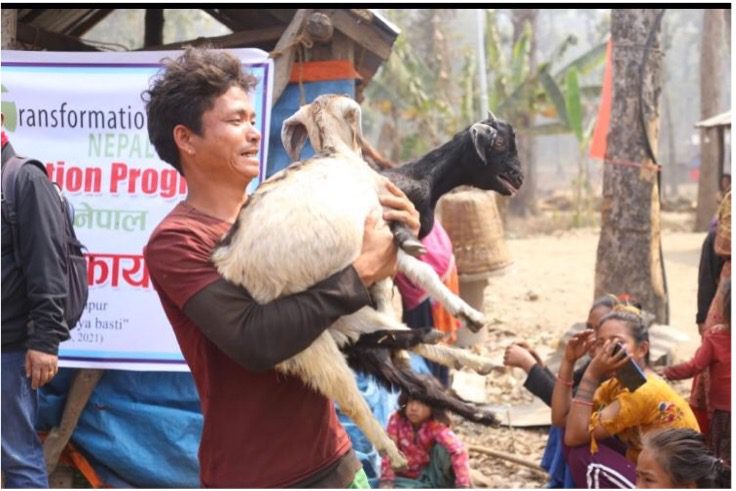
In Stage Two, we helped establish structures for the villagers to live in, as many had no shelter or lived in crudely built structures hastily made from sticks and leaves. This left them exposed to the elements as well as the dangers of the jungle. Initially, we planned to provide tarp roofing that would work to keep the rain out and the heat in. After seeing the need and the efforts being taken, the government wanted to participate in the efforts and our partner invited them to join them on the next food delivery. The government indeed decided to get involved and help with the homes!!
There was even a structure provided for the local church! Keep in mind, the Nepali government is hostile towards Christians and Christianity in general.
Stage Three proved to be a lot more involved than expected. Through many talks with our partner, who was connecting with village leaders, we started a farm where the Chepang people can raise animals, which would be sold, traded, and provide a means for food. We decided to go with goats first as they are always in demand. The meat is considered a delicacy in the area, and a few people already knew how to raise them. After consulting with the village, we created a large farm, which would essentially create an economy for the village. Each partnering family would receive two goats and take responsibility for them, but it would function as a large farm for the entire village.
God Used “Church People”
Our partner is adamant about working through the local churches and their leaders. His desire and strategy are to build up their reputation and witness, not his, much less ours. He relies heavily on their input and direction as they know the people, culture, needs, etc. So, the villagers continued to see great change. They saw that help came through the local church, the “church people” as they call them.
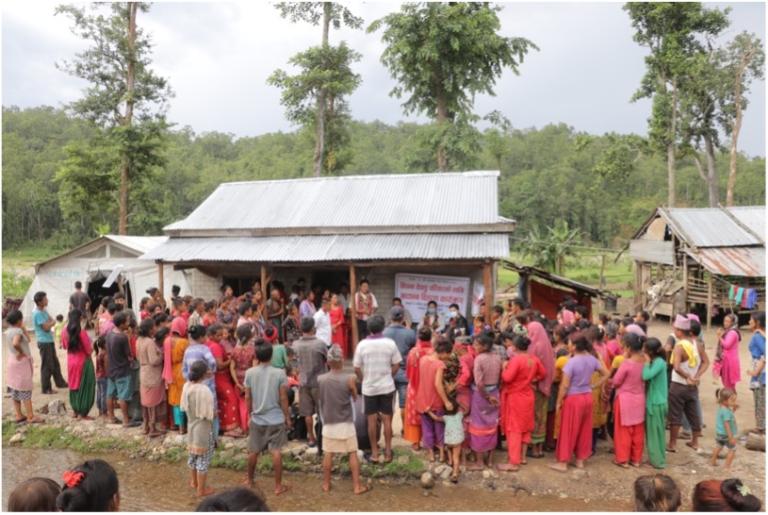 New people are coming to Christ day by day as they see the Lord work through his people. And they themselves are becoming a part of the “church people”! A second church was started on the outskirts of the village and a second pastor was also raised up to take over the existing one. Several people now belong to the larger church community, even though many do not yet follow Jesus.
In addition, our partner walks the local church through a five-step discipleship process over the course of a year, addressing effective evangelism, discipleship, leadership, women & children, and studying the Bible. After each training, church members go out into the community to implement what they’ve learned.
Honor Brings Life
During phase three, the government had numerous interactions in the village. Officials continue to praise the efforts, not just to provide aid to the Chepang people, but to help provide long-term means for self-sustainability were developed with their specific context in mind. To all our surprise, the government decided to formally recognize the Chepang people as an official people group in their region.
The impact of this can’t be over-exaggerated.
The Chepang people are now a part of this region’s metrics. This means that when they measure how many people are without basic needs (i.e., schools, medical clinics, basic infrastructure), the data will include the Cave People. Therefore, the government now has a stake in the continued development of the village. The government has already stepped in to provide structures and is now in the process of building a road to the village, which in Nepal is a major milestone, a declaration that they exist.
A previously unknown and overlooked people were now honored into existence by the Nepalese government. Such honor has continued to bring life where there was death, for, on that road, 250 goats were delivered (two each for 125 families) and many have already started reproducing!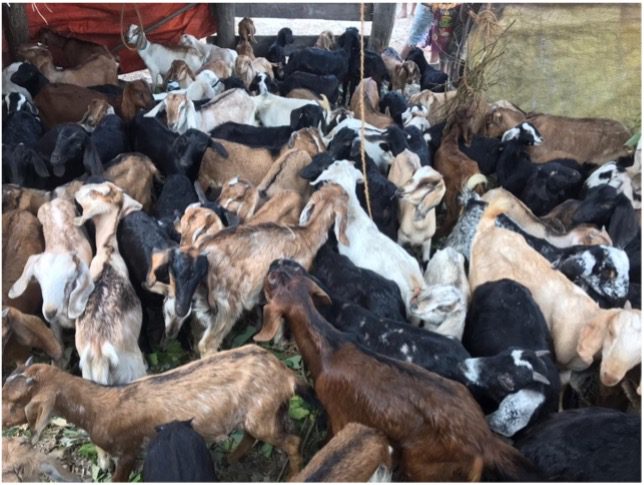
Previous Post

June 15, 2021
Forsaking Identity is the Logical Consequence of Individualism
Next Post
June 29, 2021 Why Does Peter Call Women Weaker?
Browse Our Archives
Select a Category Atonement Biblical Theology Book Reviews China Chinese Church Chinese Culture Chinese Language Collectivism Contextualization Culture (General) Ecclesiology Evangelism Gospel Honor & Shame (Face) Interpretation/Exegesis Justification/Righteousness Missiology Mission Methods One Gospel for All Nations Other Practical Contextualization Reading Romans with Eastern Eyes Resources Romans Salvation (General) Saving God's Face Seeking God's Face The Cross in Context Theological Contextualization Theological Education Theology Uncategorized
Select a Month October 2026 September 2026 August 2026 July 2026 June 2026 May 2026 April 2026 March 2026 February 2026 January 2026 December 2025 November 2025 October 2025 September 2025 August 2025 July 2025 June 2025 May 2025 April 2025 March 2025 February 2025 January 2025 December 2024 November 2024 October 2024 September 2024 August 2024 July 2024 June 2024 May 2024 April 2024 March 2024 February 2024 January 2024 December 2023 November 2023 October 2023 September 2023 August 2023 July 2023 June 2023 May 2023 April 2023 March 2023 February 2023 January 2023 December 2022 November 2022 October 2022 September 2022 August 2022 July 2022 June 2022 May 2022 April 2022 March 2022 February 2022 January 2022 December 2021 November 2021 October 2021 September 2021 August 2021 July 2021 June 2021 May 2021 April 2021 March 2021 February 2021 January 2021 December 2020 November 2020 October 2020 September 2020 August 2020 July 2020 June 2020 May 2020 April 2020 March 2020 February 2020 January 2020 December 2019 November 2019 October 2019 September 2019 August 2019 July 2019 June 2019 May 2019 April 2019 March 2019 February 2019 January 2019 December 2018 November 2018 October 2018 September 2018 August 2018 July 2018 June 2018 May 2018 April 2018 March 2018 February 2018 January 2018 December 2017 November 2017 October 2017 September 2017 August 2017 July 2017 June 2017 May 2017 April 2017 March 2017 February 2017 January 2017 December 2016 November 2016 October 2016 September 2016 August 2016 July 2016 June 2016 May 2016 April 2016 March 2016 February 2016 January 2016 December 2015 November 2015 October 2015 September 2015 August 2015 July 2015 June 2015 May 2015 April 2015 March 2015 February 2015 January 2015 December 2014 November 2014 October 2014 September 2014 August 2014 July 2014 June 2014 May 2014 April 2014 March 2014 February 2014 January 2014 December 2013 November 2013 October 2013 September 2013 August 2013 July 2013 June 2013 May 2013 April 2013 March 2013 February 2013 January 2013 December 2012 November 2012
Follow Us!
TAKE THE
Religious Wisdom Quiz
Who rebelled against David and declared himself king at Hebron?
Select your answer to see how you score.
Adonijah Amnon Sheba Absalom
Books by This Author Books by Brad Vaughn
Related posts from Saving God's Face

No King forgets his crown. Why do we?

Recovering Moral Vision Between Shame and Shamelessness

Refuge, Confession, and the End of Shame

Psalm 25 and the Fear of Being Put...
TRENDING AT PATHEOS Evangelical

Looking at the Largest Orthodox Cathedral on Earth
There is often a considerable amount of anger and, shall we...

The Problem with False Prophets
Miller’s Station UMC| 10/18/26| Anchor Verse: Jeremiah 23: 1, 9-23 I...

Emotion in Early Christianity by Andrew Crislip
Andrew Crislip’s Emotion in Early Christianity examines an often overlooked dimension of...

16 Spiritual Touchstones for a More Grounded Life
After decades of spiritual study, here are 16 principles I try...

Catholic Evangelization: Sharing Your Faith Every Day
Welcome back to the Graceful Awakening mini-series called, “From Faith to Mission.” ...

The Pillar of the Boatmen: the Ancient Monument...
The Pillar of the Boatmen is a Romano-Gaulish sculpture that dates from...
view all Evangelical blogs
Ad-Free & Subscriber Log-In Subscription Support
- About Us
- 2026 Calendar
- Videos
- Podcasts
- Library of World Religions
- Faith In Media Tracker
- Advertise With Us
- Write for Us
- Privacy Policy
- Terms of Service
- Do Not Sell My Data
- Contact Us
- Radiant Digital
- Manage Newsletter Subscriptions
- Unsubscribe From Notifications
- Sitemap
Copyright 2008-2026, Patheos. All rights reserved.
Subscription Support Ad-Free & Subscriber Log-In
Follow Patheos