
BuddhistCatholicContemplativeEvangelicalGeneral ChristianHinduJewishLatter-day SaintMuslimNew VisionsProgressive Christian
Beliefs
- Buddhist
- Catholic
- Contemplative
- Evangelical
- General Christian
- Hindu
- Jewish
- Latter-day Saint
- More Voices
- Muslim
- New Visions
- Pagan
- Progressive Christian
Topics
- Religion News
- Food and Religion
- Sports and Religion
- Religious Art
- Religious Music and Entertainment
- Religious Events
- History and Religion
- Style and Religion
- Politics and Religion
- Women in Religion
- Recreation Outdoors and Religion
- Business Finance and Religion
- Careers Workplace and Religion
- Education and Religion
- Family Parenting and Religion
- Health Fitness and Religion
- Home and Religion
- Relationships and Religion
- Technology and Religion
- Travel and Religion
Columnists
- Buddhist Columnists
- Business Finance and Religion Columnists
- Careers Workplace and Religion Columnists
- Catholic Columnists
- Contemplative Columnists
- Education and Religion Columnists
- Evangelists Columnists
- Family Parenting and Religion Columnists
- General Christian Columnists
- Health Fitness and Religion Columnists
- Hindu Columnists
- History and Religion Columnists
- Home and Religion Columnists
- Jewish Columnists
- More Voices Columnists
- Latter Day Columnists
- Muslim Columnists
- New Visions Columnists
- Nonreligious Columnists
- Pagan Columnists
- Politics and Religion Columnists
- Progressive Columnists
- Recreation Outdoors and Religion Columnists
- Relationships and Religion Columnists
- Religion News Columnists
- Religious Art Columnists
- Religious Events Columnists
- Religious Music and Entertainment Columnists
- Sports and Religion Columnists
- Style and Religion Columnists
- Technology and Religion Columnists
- Travel and Religion Columnists
- Women in Religion Columnists
Resource Library
- 2026 Calendar
- Library of World Religions
- The 100 Most Holy Places on Earth
- Patheos Answers
- Podcasts
- Videos
- Faith Leaders Database
- Anglican Episcopalian
- Bahai
- Baptist
- Buddhism
- Christianity
- Confucianism
- Eastern Orthodoxy
- Hinduism
- Holiness and Pentecostal
- ISKCON
- Islam
- Judaism
- Lutheran
- Methodist
- The Church of Jesus Christ of Latter-day Saints
- New Age
- Paganism
- Presbytarian and Reformed
- Protestantism
- Religion Behind the Scenes
- Roman Catholic
- Scientology
- Shia Islam
- Sikhism
- Sufism
- Sunni Islam
- Taoism
- Zen
- See all religions
Research Tools
 Ad-Free & Subscriber Log-In Subscription Support
Ad-Free & Subscriber Log-In Subscription Support
Follow Patheos 

- Trending:
- Forgiveness
- |
- Marriage
- |
- Consciousness
- |
- Death Penalty
- |
- Election
- |
- Halloween

-
Tools
-
Support the Work
- Home
- Evangelical
- Civility is a Life and Death Issue
Civility is a Life and Death Issue
Last updated on: May 4, 2021 at 4:09 pm by Brad Vaughn
Civility is a Life and Death Issue 2021-04-01T06:46:20-07:00 Brad Vaughn
Patheos Explore the world's faith through different perspectives on religion and spirituality! Patheos has the views of the prevalent religions and spiritualities of the world.
In an episode of the Winsome Conviction podcast, one of the hosts said the following before immediately correcting himself:
“Listen, incivility is a problem in our country but it’s not like we’re killing each other over it.”
In light of recent events, especially the Capitol riot on January 6th, he no longer could make that assertion. In fact, incivility literally is killing people.

Credit: Wikimedia/TaptheForwardAssist
Over the past number of years, incivility has destroyed friendships. It has divided families and weakened churches. It undermines our ability to testify to the gospel around the world. This is one more reason why Meuhlhoff and Langer’s recent book Winsome Conviction: Disagreeing without Dividing the Church is a significant read for churches, ministries, and, for that matter, any Christ-follower.
(This is the final segment of the series. Check out Part 1, Part 2, Part 3)
Why be civil?
Sad to say, many in the church no longer aspire to demonstrate civility. They suppose the evils or ignorance of the “other side” gives warrant to fight by every means possible.
What’s the point of civility when you think the other person disregards God’s revelation in Scripture? When you think their ideas could impede the growth of the church and the spread of the gospel? Meuhlhoff and Langer give multiple answers. Here is a couple to think about.
“The goal of civility is not to silence others but to help them be heard.
One of the goals of the sorts of discussions we are advocating is to “achieve disagreement.” In order to do this, we believe both parties need to understand the other, otherwise they have simply achieved misunderstanding, not an actual disagreement. The goal is for both parties to be heard—more than that, they have to be heard not just at a factual level but at an emotional level. We are advocating for empathy and being able to articulate the beliefs but also the feelings of one’s opponents.” (131)
For me, learning this lesson and skill many years ago was life-changing. If we are not willing to listen with the intent of understanding, then we don’t love. If we are not opened to changing our minds, we’re not humble.
“Nuanced thinking is a natural product of empathetic listening to others who have differing viewpoints and is necessary to refine well-intentioned but ineffective policies—a phrase that probably describes most social policies when they are first implemented. Civility is not the solution to our social problems; it is just the precondition for being able to work together to solve our social problems.” (132)
“Nuanced thinking”? What’s that?
“Nuance” has become a foreign word. People have as much patience for nuanced thinking as they do COVID or another 2 years of wearing masks. Yet, nuanced thinking is essential for anyone humble enough to acknowledge the wonder of God’s glory in creation and our finite role in it.
Why have so many people given up on nuanced thinking? Several possible reasons come to mind. Laziness. Lack of knowledge. Impatience. Lack of wisdom. A lack of love.
What happens when we appreciate the complexity of our world, the problems we face, and the dynamics at play within our hearts and communities? We adjust our expectations about what is possible and how we might wisely go about seeking unity, and perhaps even agreement.
One of my favorite takeaways from the book is found in chapter 10, where struggles in the church as compared to joint pain. They point out that some problems need to be managed, not solved.
In this rich chapter, they remind readers that successful conflict management concerns both facts and feelings. They state,
“Conflicting convictions are almost never simply about propositional beliefs; they are almost always about the values and emotions. We don’t achieve disagreement until the conflicting parties can clearly state what each other believes and why the matter is so important to them.” (142)
If we would shift the focus of our attention, we might be able to temper unruly emotions and improve our ability to perspective take. For instance, the authors say,
“Honestly, our biggest problem is not the lack of common ground but rather our preoccupation with our differences—a preoccupation that makes us slow to acknowledge common ground and even slower to make something of it.” (144)
What changes a person’s mind?
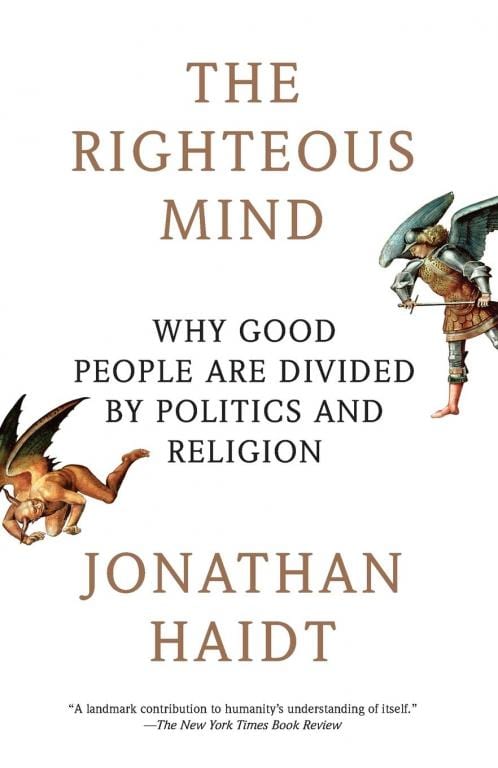 We’d do well to heed the insights from Jonathan Haidt’s research, like that found in The Righteous Mind. In it, he delves into the primary reasons why people change their minds…. and it a less to do with rational persuasion than you might think. Most people who change their mind about significant things begin at the same starting point:
they get to know and even like someone who disagrees with them.
If we internalized that point, what would be some implications for how we handle disagreement?
Previous Post

April 27, 2021
Yes, we stereotype. So now what?
Next Post

May 11, 2021 The Ministry of Women in the Chinese Church
Browse Our Archives
Select a Category Atonement Biblical Theology Book Reviews China Chinese Church Chinese Culture Chinese Language Collectivism Contextualization Culture (General) Ecclesiology Evangelism Gospel Honor & Shame (Face) Interpretation/Exegesis Justification/Righteousness Missiology Mission Methods One Gospel for All Nations Other Practical Contextualization Reading Romans with Eastern Eyes Resources Romans Salvation (General) Saving God's Face Seeking God's Face The Cross in Context Theological Contextualization Theological Education Theology Uncategorized
Select a Month October 2026 September 2026 August 2026 July 2026 June 2026 May 2026 April 2026 March 2026 February 2026 January 2026 December 2025 November 2025 October 2025 September 2025 August 2025 July 2025 June 2025 May 2025 April 2025 March 2025 February 2025 January 2025 December 2024 November 2024 October 2024 September 2024 August 2024 July 2024 June 2024 May 2024 April 2024 March 2024 February 2024 January 2024 December 2023 November 2023 October 2023 September 2023 August 2023 July 2023 June 2023 May 2023 April 2023 March 2023 February 2023 January 2023 December 2022 November 2022 October 2022 September 2022 August 2022 July 2022 June 2022 May 2022 April 2022 March 2022 February 2022 January 2022 December 2021 November 2021 October 2021 September 2021 August 2021 July 2021 June 2021 May 2021 April 2021 March 2021 February 2021 January 2021 December 2020 November 2020 October 2020 September 2020 August 2020 July 2020 June 2020 May 2020 April 2020 March 2020 February 2020 January 2020 December 2019 November 2019 October 2019 September 2019 August 2019 July 2019 June 2019 May 2019 April 2019 March 2019 February 2019 January 2019 December 2018 November 2018 October 2018 September 2018 August 2018 July 2018 June 2018 May 2018 April 2018 March 2018 February 2018 January 2018 December 2017 November 2017 October 2017 September 2017 August 2017 July 2017 June 2017 May 2017 April 2017 March 2017 February 2017 January 2017 December 2016 November 2016 October 2016 September 2016 August 2016 July 2016 June 2016 May 2016 April 2016 March 2016 February 2016 January 2016 December 2015 November 2015 October 2015 September 2015 August 2015 July 2015 June 2015 May 2015 April 2015 March 2015 February 2015 January 2015 December 2014 November 2014 October 2014 September 2014 August 2014 July 2014 June 2014 May 2014 April 2014 March 2014 February 2014 January 2014 December 2013 November 2013 October 2013 September 2013 August 2013 July 2013 June 2013 May 2013 April 2013 March 2013 February 2013 January 2013 December 2012 November 2012
Follow Us!
TAKE THE
Religious Wisdom Quiz
Who was told to prophesy to the mountains and valleys of Israel?
Select your answer to see how you score.
Micah Hosea Daniel Ezekiel
Books by This Author Books by Brad Vaughn
Related posts from Saving God's Face

The Real Crisis Beneath America’s Social Crises (Part...

America’s Crisis Is Deeper Than Politics

Independent Thinking Isn’t What You Think

The Gulag Theology of One Day in the...
TRENDING AT PATHEOS Evangelical

The Iron Gates and the Lion of the...
Yesterday, I didn't finish my report about, well, yesterday. So I'll...

Dolly Parton’s Last Song Wins Dove Award with...
Bluegrass band The Grascals, speaking on the red carpet at the 57th...

The Image: On the Horror of Capitalism and...
The Image Then went the Pharisees, and took counsel how they might...

We are approaching the date of our new American national holiday: October...

Letters on Living the Faith by C.S. Lewis
Most of us met C.S. Lewis as a public intellectual. Mere Christianity....

When Halloween Unmasks Married Hearts
Written by Dr. David K. Ewen from Eternal Truth Bible College Behind...
view all Evangelical blogs
Ad-Free & Subscriber Log-In Subscription Support
- About Us
- 2026 Calendar
- Videos
- Podcasts
- Library of World Religions
- Faith In Media Tracker
- Advertise With Us
- Write for Us
- Privacy Policy
- Terms of Service
- Do Not Sell My Data
- Contact Us
- Radiant Digital
- Manage Newsletter Subscriptions
- Unsubscribe From Notifications
- Sitemap
Copyright 2008-2026, Patheos. All rights reserved.
Subscription Support Ad-Free & Subscriber Log-In
Follow Patheos