
BuddhistCatholicContemplativeEvangelicalGeneral ChristianHinduJewishLatter-day SaintMuslimNew VisionsProgressive Christian
Beliefs
- Buddhist
- Catholic
- Contemplative
- Evangelical
- General Christian
- Hindu
- Jewish
- Latter-day Saint
- More Voices
- Muslim
- New Visions
- Pagan
- Progressive Christian
Topics
- Religion News
- Food and Religion
- Sports and Religion
- Religious Art
- Religious Music and Entertainment
- Religious Events
- History and Religion
- Style and Religion
- Politics and Religion
- Women in Religion
- Recreation Outdoors and Religion
- Business Finance and Religion
- Careers Workplace and Religion
- Education and Religion
- Family Parenting and Religion
- Health Fitness and Religion
- Home and Religion
- Relationships and Religion
- Technology and Religion
- Travel and Religion
Columnists
- Buddhist Columnists
- Business Finance and Religion Columnists
- Careers Workplace and Religion Columnists
- Catholic Columnists
- Contemplative Columnists
- Education and Religion Columnists
- Evangelists Columnists
- Family Parenting and Religion Columnists
- General Christian Columnists
- Health Fitness and Religion Columnists
- Hindu Columnists
- History and Religion Columnists
- Home and Religion Columnists
- Jewish Columnists
- More Voices Columnists
- Latter Day Columnists
- Muslim Columnists
- New Visions Columnists
- Nonreligious Columnists
- Pagan Columnists
- Politics and Religion Columnists
- Progressive Columnists
- Recreation Outdoors and Religion Columnists
- Relationships and Religion Columnists
- Religion News Columnists
- Religious Art Columnists
- Religious Events Columnists
- Religious Music and Entertainment Columnists
- Sports and Religion Columnists
- Style and Religion Columnists
- Technology and Religion Columnists
- Travel and Religion Columnists
- Women in Religion Columnists
Resource Library
- 2026 Calendar
- Library of World Religions
- The 100 Most Holy Places on Earth
- Patheos Answers
- Podcasts
- Videos
- Faith Leaders Database
- Anglican Episcopalian
- Bahai
- Baptist
- Buddhism
- Christianity
- Confucianism
- Eastern Orthodoxy
- Hinduism
- Holiness and Pentecostal
- ISKCON
- Islam
- Judaism
- Lutheran
- Methodist
- The Church of Jesus Christ of Latter-day Saints
- New Age
- Paganism
- Presbytarian and Reformed
- Protestantism
- Religion Behind the Scenes
- Roman Catholic
- Scientology
- Shia Islam
- Sikhism
- Sufism
- Sunni Islam
- Taoism
- Zen
- See all religions
Research Tools
 Ad-Free & Subscriber Log-In Subscription Support
Ad-Free & Subscriber Log-In Subscription Support
Follow Patheos 

- Trending:
- Forgiveness
- |
- Marriage
- |
- Consciousness
- |
- Death Penalty
- |
- Election
- |
- Halloween

-
Tools
-
Support the Work
- Home
- Evangelical
- Yes, we stereotype. So now what?
Yes, we stereotype. So now what?
Last updated on: April 27, 2021 at 4:00 pm by Brad Vaughn
Yes, we stereotype. So now what? 2021-04-01T06:45:51-07:00 Brad Vaughn
Patheos Explore the world's faith through different perspectives on religion and spirituality! Patheos has the views of the prevalent religions and spiritualities of the world.
Several things have been difficult about returning to America. One is the heightened impatience for labels, categories, and stereotypes (I use that word in a neutral sense). Americans seem a bit schizophrenic when it comes to their claims about identity.
On the one hand, people wave the banner of group identity (e.g., ethnic, gender, sexuality, or place of origin). On the other hand, everyone claims to be an “individual” and seems to get angry when you speak about them in broad terms. “Don’t label me!” or something similar is the constant refrain.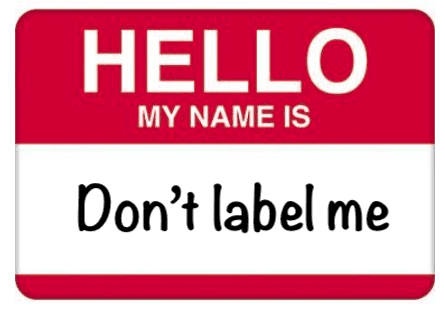
Outside of the West (especially North America), people are far more comfortable with such labels. Mainland Chinese have no problem calling themselves “yellow” and referring to non-Chinese as “foreigners.” Neither of those ways of speaking would pass muster in America.
Ironically, this penchant against broad descriptors and labels actually runs counter to basic human neurology. For the sake of efficiency, the mind literally cannot help but think in broad generalizations, lest we be too slow in protecting ourselves when quick decisions are needed. Such quick judgments are the brain’s default. It must be strategic about what it thinks about in a slower, more measured way.
What does all this have to do with anything? It has everything to do with being the Church and working with others in ministry. (This is part 3 in a series. Check out part 1 and part 2).
Perception is Reality?
I’ve always hated the phrase, “Their perception is their reality.” I want to reply, “No, reality is reality, regardless of what they perceive.” That’s certainly true ultimately, but it misses the point. All people speak and behave according to their perception of reality. Therefore, we ignore our and others’ perceptions at our own peril.
(For some people, this might begin with recognizing that your own perception is not necessarily reality. But that requires tremendous humility.)
In Winsome Conviction: Disagreeing without Dividing the Church, Meuhlhoff and Langer highlight several implications of our brain’s limited capacity to make holistic judgments about everything we experience efficiently. Our brains are energy misers. This is why we resort to categorizing or creating sweeping characterizations. Rather than deny this fact, let’s own it and consider what we can do about it.
The authors point out “that our categories are not value free, but rather each category is colored with implicit bias and discrimination” (93). We categorize people in far more diverse ways than “black/white,” “male/female,” etc. We are just as likely to stereotype people in other denominations and organizations or who have different philosophies of ministry.
What values are driving our characterizations?
To answer that question, we need to be cognizant of our own beliefs and assumptions about ourselves and others, especially the groups we belong to. How do hidden beliefs and assumptions impact the tone we use when speaking with people? And as most of us know, the right tone has an incredible influence on our ability to learn from one another.
Wrong tone = closed minds.
Perceptions of Us and Them
Our propensity to relate only to people who think like us has adverse effects. One is that our mental categories fossilize. Having so little interaction with people with different perspectives effectively permits us to think about those “others” in hyper-generic terms.
After all, little in our experience says otherwise. Naturally, we then attribute increasingly negative assumptions and motives to those with whom we disagree. What’s more, our inner group conversations are not likely to paint a generous picture of our “opponents.” Consequently, “how you talk about people privately is how you’ll treat them publicly” (116).
So, what can we do when discussing our disagreements? Meuhlhoff and Langer write,
“As followers of Jesus, our goal isn’t to ensure our particular group holds on to power or wins at all costs. Rather, it’s that we address a potentially divisive issue in a fair manner that ultimately brings honor to Christ. If your group is wrong on the particulars of an issue, better to receive it and make necessary corrections.” (117)
“But what if our group is right?!” you might ask. Well, that’s precisely the wrong question. Several other questions are much better starting points. A few include: “How might they be right?” “What might I have wrong?” and “What common ground do we share?”
In the next and final post of the series, we’ll look at some strategies for managing controversial issues and learning to rethink old ideas.
Previous Post

April 22, 2021
Interesting Article and Reviews in Themelios
Next Post
May 4, 2021 Civility is a Life and Death Issue
Browse Our Archives
Select a Category Atonement Biblical Theology Book Reviews China Chinese Church Chinese Culture Chinese Language Collectivism Contextualization Culture (General) Ecclesiology Evangelism Gospel Honor & Shame (Face) Interpretation/Exegesis Justification/Righteousness Missiology Mission Methods One Gospel for All Nations Other Practical Contextualization Reading Romans with Eastern Eyes Resources Romans Salvation (General) Saving God's Face Seeking God's Face The Cross in Context Theological Contextualization Theological Education Theology Uncategorized
Select a Month October 2026 September 2026 August 2026 July 2026 June 2026 May 2026 April 2026 March 2026 February 2026 January 2026 December 2025 November 2025 October 2025 September 2025 August 2025 July 2025 June 2025 May 2025 April 2025 March 2025 February 2025 January 2025 December 2024 November 2024 October 2024 September 2024 August 2024 July 2024 June 2024 May 2024 April 2024 March 2024 February 2024 January 2024 December 2023 November 2023 October 2023 September 2023 August 2023 July 2023 June 2023 May 2023 April 2023 March 2023 February 2023 January 2023 December 2022 November 2022 October 2022 September 2022 August 2022 July 2022 June 2022 May 2022 April 2022 March 2022 February 2022 January 2022 December 2021 November 2021 October 2021 September 2021 August 2021 July 2021 June 2021 May 2021 April 2021 March 2021 February 2021 January 2021 December 2020 November 2020 October 2020 September 2020 August 2020 July 2020 June 2020 May 2020 April 2020 March 2020 February 2020 January 2020 December 2019 November 2019 October 2019 September 2019 August 2019 July 2019 June 2019 May 2019 April 2019 March 2019 February 2019 January 2019 December 2018 November 2018 October 2018 September 2018 August 2018 July 2018 June 2018 May 2018 April 2018 March 2018 February 2018 January 2018 December 2017 November 2017 October 2017 September 2017 August 2017 July 2017 June 2017 May 2017 April 2017 March 2017 February 2017 January 2017 December 2016 November 2016 October 2016 September 2016 August 2016 July 2016 June 2016 May 2016 April 2016 March 2016 February 2016 January 2016 December 2015 November 2015 October 2015 September 2015 August 2015 July 2015 June 2015 May 2015 April 2015 March 2015 February 2015 January 2015 December 2014 November 2014 October 2014 September 2014 August 2014 July 2014 June 2014 May 2014 April 2014 March 2014 February 2014 January 2014 December 2013 November 2013 October 2013 September 2013 August 2013 July 2013 June 2013 May 2013 April 2013 March 2013 February 2013 January 2013 December 2012 November 2012
Follow Us!
TAKE THE
Religious Wisdom Quiz
What does the Hebrew word "Chokmah", often used in Proverbs, mean?
Select your answer to see how you score.
Fear Strength Wisdom Knowledge
Books by This Author Books by Brad Vaughn
Related posts from Saving God's Face

Chinese Christians Have Faith in the Wilderness. Will...
Shame and Status in Centered Set Churches

Three Implications of Not Having Paul's Missionary Motive

How Honor Motivates Mission Strategy
TRENDING AT PATHEOS Evangelical

We are approaching the date of our new American national holiday: October...

Letters on Living the Faith by C.S. Lewis
Most of us met C.S. Lewis as a public intellectual. Mere Christianity....

When Halloween Unmasks Married Hearts
Written by Dr. David K. Ewen from Eternal Truth Bible College Behind...

Aristotle. He’s been called the father of logic, the father of the...

Methodist Central Hall and Westminster Abbey
Situated on the same square is Methodist Central Hall and Westminster Abbey. ...

57th Dove Awards Honor Dolly Parton, Crown New...
On gospel music’s biggest night, the 57th annual GMA Dove Awards honored...
view all Evangelical blogs
Ad-Free & Subscriber Log-In Subscription Support
- About Us
- 2026 Calendar
- Videos
- Podcasts
- Library of World Religions
- Faith In Media Tracker
- Advertise With Us
- Write for Us
- Privacy Policy
- Terms of Service
- Do Not Sell My Data
- Contact Us
- Radiant Digital
- Manage Newsletter Subscriptions
- Unsubscribe From Notifications
- Sitemap
Copyright 2008-2026, Patheos. All rights reserved.
Subscription Support Ad-Free & Subscriber Log-In
Follow Patheos