
BuddhistCatholicContemplativeEvangelicalGeneral ChristianHinduJewishLatter-day SaintMuslimNew VisionsProgressive Christian
Beliefs
- Buddhist
- Catholic
- Contemplative
- Evangelical
- General Christian
- Hindu
- Jewish
- Latter-day Saint
- More Voices
- Muslim
- New Visions
- Pagan
- Progressive Christian
Topics
- Religion News
- Food and Religion
- Sports and Religion
- Religious Art
- Religious Music and Entertainment
- Religious Events
- History and Religion
- Style and Religion
- Politics and Religion
- Women in Religion
- Recreation Outdoors and Religion
- Business Finance and Religion
- Careers Workplace and Religion
- Education and Religion
- Family Parenting and Religion
- Health Fitness and Religion
- Home and Religion
- Relationships and Religion
- Technology and Religion
- Travel and Religion
Columnists
- Buddhist Columnists
- Business Finance and Religion Columnists
- Careers Workplace and Religion Columnists
- Catholic Columnists
- Contemplative Columnists
- Education and Religion Columnists
- Evangelists Columnists
- Family Parenting and Religion Columnists
- General Christian Columnists
- Health Fitness and Religion Columnists
- Hindu Columnists
- History and Religion Columnists
- Home and Religion Columnists
- Jewish Columnists
- More Voices Columnists
- Latter Day Columnists
- Muslim Columnists
- New Visions Columnists
- Nonreligious Columnists
- Pagan Columnists
- Politics and Religion Columnists
- Progressive Columnists
- Recreation Outdoors and Religion Columnists
- Relationships and Religion Columnists
- Religion News Columnists
- Religious Art Columnists
- Religious Events Columnists
- Religious Music and Entertainment Columnists
- Sports and Religion Columnists
- Style and Religion Columnists
- Technology and Religion Columnists
- Travel and Religion Columnists
- Women in Religion Columnists
Resource Library
- 2026 Calendar
- Library of World Religions
- The 100 Most Holy Places on Earth
- Patheos Answers
- Podcasts
- Videos
- Faith Leaders Database
- Anglican Episcopalian
- Bahai
- Baptist
- Buddhism
- Christianity
- Confucianism
- Eastern Orthodoxy
- Hinduism
- Holiness and Pentecostal
- ISKCON
- Islam
- Judaism
- Lutheran
- Methodist
- The Church of Jesus Christ of Latter-day Saints
- New Age
- Paganism
- Presbytarian and Reformed
- Protestantism
- Religion Behind the Scenes
- Roman Catholic
- Scientology
- Shia Islam
- Sikhism
- Sufism
- Sunni Islam
- Taoism
- Zen
- See all religions
Research Tools
 Ad-Free & Subscriber Log-In Subscription Support
Ad-Free & Subscriber Log-In Subscription Support
Follow Patheos 

- Trending:
- Forgiveness
- |
- Marriage
- |
- Consciousness
- |
- Death Penalty
- |
- Election
- |
- Halloween

-
Tools
-
Support the Work
- Home
- Evangelical
- Is biblical womanhood an example of syncretism?
Is biblical womanhood an example of syncretism?
Last updated on: April 7, 2021 at 11:18 am by Brad Vaughn
Is biblical womanhood an example of syncretism? 2021-04-07T11:18:40-07:00 Brad Vaughn
Patheos Explore the world's faith through different perspectives on religion and spirituality! Patheos has the views of the prevalent religions and spiritualities of the world.
When I first heard about Beth Allison Barr’s The Making of Biblical Womanhood: How the Subjugation of Women Became Gospel Truth, I wasn’t interested in reading it. I thought, “I don’t want to learn about history; I want to understand what the Bible says about womanhood, women as pastors, etc.” I was so wrongheaded. This book is all about biblical interpretation.
Before explaining why that’s so, I’ll first comment about why The Making of Biblical Womanhood is significant and, for many, potentially game-changing.
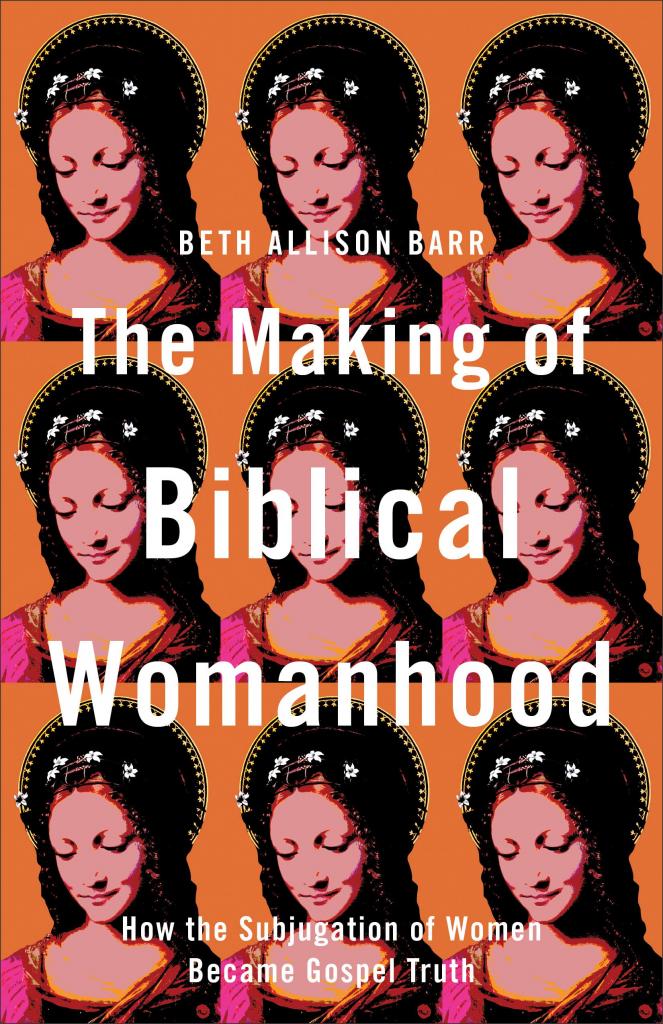
Barr’s book does something that sound exegesis can’t necessarily do for some men; it undercuts the emotional instincts whereby they subtly see women as inferior (not absolutely and ontologically) but in some implicit, social, or constitutional way. Even if one were convinced that women could be pastors, it’s another thing for some men to embrace that fact at an emotional level. This is due to lifeline habits of thinking reinforced by conservative evangelical subculture.
Interpreters are human; emotions, customs, and other mental habits can get in the way of sound thinking even when we see convincing arguments. To claim we’re above such unconscious biases is naïve or foolish.
Is Complementarianism Syncretistic?
Barr is a historian at Baylor University, specializing in women and religion in medieval and early modern England. Her book explores how patriarchy has manifested within the church across the centuries. Her research is beautifully wrapped in a memoir. While escorting readers through the corridors of history, she presents her own personal journey from being a Southern Baptist complementarian (i.e., where she affirmed male headship and the subordination of women, particularly in church leadership, as part of the divine order).
Contemporary complementarians worry that egalitarians surrender biblical truth on the altar of feminism. However, Barr asks,
So here is my question for complementarian evangelicals: What if you are wrong? What if evangelicals have been understanding Paul through the lens of modern culture instead of the way Paul intended to be understood? The evangelical church fears that recognizing women’s leadership will mean bowing to cultural peer pressure. But what if the church is bowing to cultural peer pressure by denying women’s leadership?
What if, instead of a “plain and natural” reading, our interpretation of Paul—and subsequent exclusion of women from leadership roles—results from succumbing to the attitudes and patterns of thinking around us? Christians in the past may have used Paul to exclude women from leadership, but this doesn’t mean that the subjugation of women is biblical. (p. 41)
In a word, what is it is complementarians who have yielded to cultural syncretism?
Historical Context and Biblical Text
Barr is quick to point out that she is no theologian; she is a historian. Yet, her work contributes much to our understanding of contextualization. Regardless of how you interpret 1 Timothy 2 and 1 Corinthians 11, 14, The Making of Biblical Womanhood demonstrates how historical contexts subtly influence our practice and views on Scripture.
This is a point that everyone should take seriously, even if you are a complementarian who wants to oppose egalitarians calls for women leadership in the church.

Credit: Pixnio/Bicanski
I cannot do justice to her scholarship, so I will merely highlight a few interesting quotes and claims.
For instance, contrary to the momentum of Reformation theology, social currents led to a setback in women’s status following Luther. It was not until this period that the home became the singular focus of a women’s ministry. Barr comments,
The subjugation of women is indeed a historical constant— but that doesn’t make it divinely ordained. While Paul’s writings about women were known consistently throughout church history, it wasn’t until the Reformation era that they begin to be used systematically to keep women out of leadership roles. Instead of Scripture transforming society, society transformed how early modern Christians interpreted the Bible. (127)
She anticipates objections arising from sentimentality when she writes, “Glorifying the past because we like that story better isn’t history; it is propaganda” (p. 107).
For many people, Chapter 5 will stand out among others. In it, she examines various ways that women have been written out of English Bibles, most recently, by the ESV.
Key Contributions
Ultimately, one’s convictions about women in church leadership should be decided by the biblical text. Not history. And not social currents. This does not, however, excuse us from reckoning with how history and culture shape our theological views. To ignore this factor would amount to belligerent ignorance.
Here are a couple of key contributions of The Making of Biblical Womanhood.
(1) Barr shows that there is no “traditional” interpretation of the Bible. The church has diverged in its practices and its precise treatment of women. What remains constant is the presence of patriarchy in the church and the broader culture to varying degrees. Yet, its rationale is anything but constant.
As a historian, I knew that women were kept out of leadership roles in my own congregation because Roman patriarchy had seeped back into the early church. Instead of ditching pagan Rome and embracing Jesus, we had done the opposite—ditching the freedom of Christ and embracing the oppression of the ancient world. (pp. 69-70)
(2) She alerts us to the imperceptible force of history and culture on our assumptions and biblical interpretation. She draws an analogy.
Just like with Dan Brown’s The DaVinci Code (when many Christians fell for a bit of historical truth mixed with an action-packed fictional story), Christians had once again fallen for a little bit of biblical truth mixed with a lot of human effort poured into maintaining the patriarchal equilibrium of history. (p. 157)
Such bold claims by a scholar like Barr deserve our attention.
One Caution
What are potential weaknesses of Barr’s work? In Chapter 7, she notes the link between complementarianism and a widely disputed point of doctrine called the “eternal subordination of the Son” (ESS). Connecting these ideas results in this conclusion:
because Jesus is eternally subordinate to God the Father, wives are eternally subordinate to their husbands. (p. 144)
I certainly cannot review and arbitrate this issue here. I only mention it to say this: Barr calls ESS a “heresy” and it might be, depending on what a person means by ESS. However, the past few years have shown that advocates of ESS are less than clear in their explanations even while they claim to affirm Nicene orthodoxy.
A Final Thought
This is a noteworthy book worth serious reflection, regardless of whether someone is a complementarian or egalitarian. Much is at stake. As she writes,
What if instead of replicating an ancient gender hierarchy, Paul was showing us how the Christian gospel sets even the Roman household free? (p. 55)
While she takes issue with complementarianism, her arguments should not be taken lightly. In order to be intellectually honest, readers of every persuasion must wrestle with her ideas and the facts of history.
Previous Post

March 30, 2021
"Confucian Shame in Christian Thinking" webinar video now posted
Next Post

April 13, 2021 Argument Culture, Not Conviction, Threatens the Church
Browse Our Archives
Select a Category Atonement Biblical Theology Book Reviews China Chinese Church Chinese Culture Chinese Language Collectivism Contextualization Culture (General) Ecclesiology Evangelism Gospel Honor & Shame (Face) Interpretation/Exegesis Justification/Righteousness Missiology Mission Methods One Gospel for All Nations Other Practical Contextualization Reading Romans with Eastern Eyes Resources Romans Salvation (General) Saving God's Face Seeking God's Face The Cross in Context Theological Contextualization Theological Education Theology Uncategorized
Select a Month October 2026 September 2026 August 2026 July 2026 June 2026 May 2026 April 2026 March 2026 February 2026 January 2026 December 2025 November 2025 October 2025 September 2025 August 2025 July 2025 June 2025 May 2025 April 2025 March 2025 February 2025 January 2025 December 2024 November 2024 October 2024 September 2024 August 2024 July 2024 June 2024 May 2024 April 2024 March 2024 February 2024 January 2024 December 2023 November 2023 October 2023 September 2023 August 2023 July 2023 June 2023 May 2023 April 2023 March 2023 February 2023 January 2023 December 2022 November 2022 October 2022 September 2022 August 2022 July 2022 June 2022 May 2022 April 2022 March 2022 February 2022 January 2022 December 2021 November 2021 October 2021 September 2021 August 2021 July 2021 June 2021 May 2021 April 2021 March 2021 February 2021 January 2021 December 2020 November 2020 October 2020 September 2020 August 2020 July 2020 June 2020 May 2020 April 2020 March 2020 February 2020 January 2020 December 2019 November 2019 October 2019 September 2019 August 2019 July 2019 June 2019 May 2019 April 2019 March 2019 February 2019 January 2019 December 2018 November 2018 October 2018 September 2018 August 2018 July 2018 June 2018 May 2018 April 2018 March 2018 February 2018 January 2018 December 2017 November 2017 October 2017 September 2017 August 2017 July 2017 June 2017 May 2017 April 2017 March 2017 February 2017 January 2017 December 2016 November 2016 October 2016 September 2016 August 2016 July 2016 June 2016 May 2016 April 2016 March 2016 February 2016 January 2016 December 2015 November 2015 October 2015 September 2015 August 2015 July 2015 June 2015 May 2015 April 2015 March 2015 February 2015 January 2015 December 2014 November 2014 October 2014 September 2014 August 2014 July 2014 June 2014 May 2014 April 2014 March 2014 February 2014 January 2014 December 2013 November 2013 October 2013 September 2013 August 2013 July 2013 June 2013 May 2013 April 2013 March 2013 February 2013 January 2013 December 2012 November 2012
Follow Us!
TAKE THE
Religious Wisdom Quiz
What sacred tent did God command the Israelites to build?
Select your answer to see how you score.
House of David Booth Tabernacle Temple
Books by This Author Books by Brad Vaughn
Related posts from Saving God's Face

Paul’s Contextualization of Artemis for the Ephesians

Bathsheba, #MeToo, and Eisegesis

I'm launching 3 online courses!
What's your political denomination?
TRENDING AT PATHEOS Evangelical

In one sense walking into Westminster Abbey is like walking down the...

'Super Scam Me' Exposes AI Jon Bon Jovi...
Leslie Pickett believed she was in a relationship with Jon Bon Jovi....

The Brazilian Remake of Kendricks' 'Flywheel' Opens in...
“Flywheel,” the story that launched the Kendrick Brothers’ filmmaking career is getting...

The Dangers of Gradual Accommodation (Winking at Sin)
Recently, the “law of gradualness” resurfaced during the opening of a weeklong,...

The Iron Gates and the Lion of the...
Yesterday, I didn't finish my report about, well, yesterday. So I'll...

The Image: On the Horror of Capitalism and...
The Image Then went the Pharisees, and took counsel how they might...
view all Evangelical blogs
Ad-Free & Subscriber Log-In Subscription Support
- About Us
- 2026 Calendar
- Videos
- Podcasts
- Library of World Religions
- Faith In Media Tracker
- Advertise With Us
- Write for Us
- Privacy Policy
- Terms of Service
- Do Not Sell My Data
- Contact Us
- Radiant Digital
- Manage Newsletter Subscriptions
- Unsubscribe From Notifications
- Sitemap
Copyright 2008-2026, Patheos. All rights reserved.
Subscription Support Ad-Free & Subscriber Log-In
Follow Patheos