
BuddhistCatholicContemplativeEvangelicalGeneral ChristianHinduJewishLatter-day SaintMuslimNew VisionsProgressive Christian
Beliefs
- Buddhist
- Catholic
- Contemplative
- Evangelical
- General Christian
- Hindu
- Jewish
- Latter-day Saint
- More Voices
- Muslim
- New Visions
- Pagan
- Progressive Christian
Topics
- Religion News
- Food and Religion
- Sports and Religion
- Religious Art
- Religious Music and Entertainment
- Religious Events
- History and Religion
- Style and Religion
- Politics and Religion
- Women in Religion
- Recreation Outdoors and Religion
- Business Finance and Religion
- Careers Workplace and Religion
- Education and Religion
- Family Parenting and Religion
- Health Fitness and Religion
- Home and Religion
- Relationships and Religion
- Technology and Religion
- Travel and Religion
Columnists
- Buddhist Columnists
- Business Finance and Religion Columnists
- Careers Workplace and Religion Columnists
- Catholic Columnists
- Contemplative Columnists
- Education and Religion Columnists
- Evangelists Columnists
- Family Parenting and Religion Columnists
- General Christian Columnists
- Health Fitness and Religion Columnists
- Hindu Columnists
- History and Religion Columnists
- Home and Religion Columnists
- Jewish Columnists
- More Voices Columnists
- Latter Day Columnists
- Muslim Columnists
- New Visions Columnists
- Nonreligious Columnists
- Pagan Columnists
- Politics and Religion Columnists
- Progressive Columnists
- Recreation Outdoors and Religion Columnists
- Relationships and Religion Columnists
- Religion News Columnists
- Religious Art Columnists
- Religious Events Columnists
- Religious Music and Entertainment Columnists
- Sports and Religion Columnists
- Style and Religion Columnists
- Technology and Religion Columnists
- Travel and Religion Columnists
- Women in Religion Columnists
Resource Library
- 2026 Calendar
- Library of World Religions
- The 100 Most Holy Places on Earth
- Patheos Answers
- Podcasts
- Videos
- Faith Leaders Database
- Anglican Episcopalian
- Bahai
- Baptist
- Buddhism
- Christianity
- Confucianism
- Eastern Orthodoxy
- Hinduism
- Holiness and Pentecostal
- ISKCON
- Islam
- Judaism
- Lutheran
- Methodist
- The Church of Jesus Christ of Latter-day Saints
- New Age
- Paganism
- Presbytarian and Reformed
- Protestantism
- Religion Behind the Scenes
- Roman Catholic
- Scientology
- Shia Islam
- Sikhism
- Sufism
- Sunni Islam
- Taoism
- Zen
- See all religions
Research Tools
 Ad-Free & Subscriber Log-In Subscription Support
Ad-Free & Subscriber Log-In Subscription Support
Follow Patheos 

- Trending:
- Forgiveness
- |
- Marriage
- |
- Consciousness
- |
- Death Penalty
- |
- Election
- |
- Halloween

-
Tools
-
Support the Work
- Home
- Evangelical
- How Honor and Shame Infuse Christian Nationalism
How Honor and Shame Infuse Christian Nationalism
Last updated on: February 16, 2021 at 4:00 pm by Brad Vaughn
How Honor and Shame Infuse Christian Nationalism 2021-02-09T01:38:21-07:00 Brad Vaughn
Patheos Explore the world's faith through different perspectives on religion and spirituality! Patheos has the views of the prevalent religions and spiritualities of the world.
How does one begin to sort how honor and shame infuse Christian nationalism?
We must first recognize the range of ways that honor and shame touch on various aspects of life. For instance, wherever we speak of identity, we will soon run into matters that concern one’s honor or sense of shame. Identity involves belonging. And belonging entails any number of values that determine what we think worthy of praise or censure.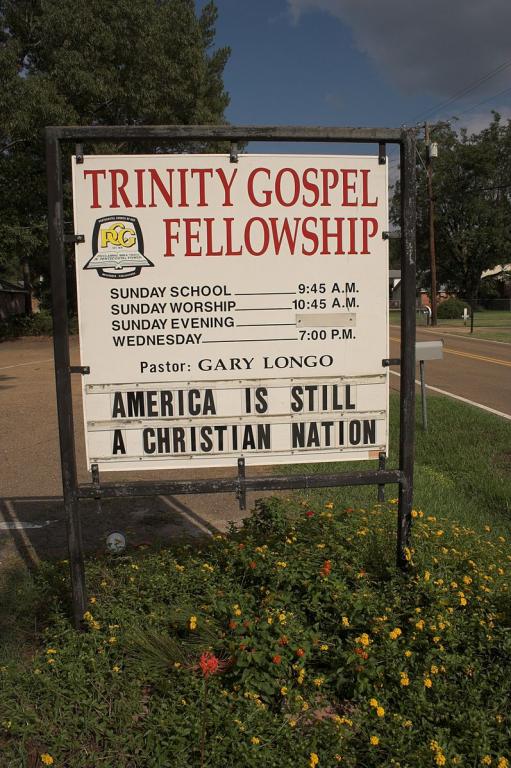
(In part one of the series, I considered the meaning of a “Christian Nation.”)
Christian Nationalism as Cultural Melting Pot
Accordingly, we begin by highlighting a point often overlooked by many people. In Taking America Back for God: Christian Nationalism in the United States, scholars Andrew Whitehead and Samuel Perry painstakingly detail why Christian nationalism consists of an amalgamation of subcultures. They argue that Christian nationalism is
“a cultural framework—a collection of myths, traditions, symbols, narratives, and value systems—that idealizes and advocates a fusion of [a particular sort of] Christianity with American civic life.” (10)
Contrary to the impression of some, “evangelicalism is not synonymous with Christian nationalism” (58). It is as much political and ethnic in its orientation as it is religious.
As they and others have observed, Christian nationalism
“is more common in the South with a strong representation in the Midwest. It is stronger in rural areas and smaller towns, less common in bigger cities. There’s also a class and education distinction here, more common in the lower middle class and more common amongst the population that does not have a college degree.”
In addition, while Christian nationalism is not a “white” phenomenon, the relationship between Christian nationalism and white Christians is noteworthy. Paul Miller says,
Christian nationalism would not claim that whites are inherently superior on the surface level. If you dig a bit deeper, you’ll find that Christian nationalists and white nationalists, agree on a range of subjects.
For example, if you ask whether racial inequality in America is primarily due to individual merit or due to structural systemic factors, Christian nationalists and white nationalists would agree it’s due mostly to individual merit. They would both advocate for strong immigration restrictions. They would reject that systemic racism exists.
There is a difference, but there is some overlap in those underlying attitudes.
What results? Whitehead and Perry explain how Christian nationalism “co-opts Christian language and iconography in order to cloak particular political or social ends in moral and religious symbolism” (153).
When It’s Us Versus Them
Christian nationalism forges rigid categories of “us” versus “them.” Whenever that happens, layers of underlying values dominate the group, reinforcing a particular honor-shame lens that affects everything else.
Consider, for example, the degree to which Christian nationalism and Southern culture conflate. In the American South, a perceived attack on one’s honor must be met with retaliation of some sort, otherwise, the person is seen as weak and loses far greater honor. Such inclinations fuel a cycle of responses that grow ever-increasing in intensity. Southern road rage serves as an apt illustration, where cutting someone off in traffic could quickly escalate to the offended driver pulling a gun on the other person.
Conflating Southern and Sacred Honor
How might this translate over into Christian nationalism? The Bible becomes a tool to justify such retaliatory instincts. God is a God of righteousness. He shows wrath to the wrongdoer. He conquers wicked invaders. Naturally, the Christian nationalist surmises, we should “fight back.”
One pastor of a “Patriot Church” sees the church engaged in a culture war. In response to Biden and the Democratic Party, he says,
“When you’re dealing with bullies, you have to fight back,” he says. He justifies this approach by saying, “The left doesn’t love the country at its roots… Freedom is the way, not the value system of the left, which is totally anti-Bible. But the Bible is the answer, and Jesus is the answer.”
This mentality is more Southern in origin than biblical. Christian nationalists are thus inclined (than non-nationalistic Christians) to embrace a far more adversarial and aggressive posture towards “others” whom they don’t regard as “patriots.”
 No wonder Tony Perkins, president of the Family Research Council, responded as he did when asked, “What happened to turning the other cheek?” He replied, “You know, you only have two cheeks… Look, Christianity is not all about being a welcome mat which people can just stomp their feet on.”
In short, Christian nationalism distorts and misappropriates biblical texts and values in the interest of preserving an alternative set of honor-shame values.
I have given just one example. Others could be added, including the near idolizing of hierarchy. How quickly do people forget that the kingdom of God is not a democracy? Why do some act as if God gave Americans the Constitution to function in the same way the covenant he established with ancient Israel?
Christian Nationalism as Folk Religion
As Geoff Holsclaw aptly put it, Christian nationalism is folk religion.
A folk religion doesn’t have a defined set of belief, practices, or leaders.
It just has ad hoc set of beliefs, loose patterns of practice, and informal leadership who can change, shape, manipulate, and control the flow of power (energy or force) within the spiritual realm (the middle level) …
[Its] leaders (even if outcasts of sorts) know what is “really going on” in a world, and will tell you the proper remedy for your ills.
In essence, folk religions aren’t interested in logical consistency or the coherence of belief. They are focused on pragmatic results! The main focus of a folk religion is POWER**.**
Where folk religion grows, power trumps truth. Holsclaw direct our attention to the Jericho March that shortly preceded the assault on the Capitol on January 6th. He says,
The blowing of shofars, waving of banners, raising of crosses, and offering of prayers “invoking” Jesus’ name in these “sacred” places is a mashup of authentic Christian symbols and practice dropped into a context and purpose foreign to Christianity (the advancement of purely political goals wrapped in spirituality).
Why bring up folk religion? By definition, folk religions are a hybrid of a formal religion with a surrounding subculture. The blending can then create a grotesque distortion of what previously existed. What was shameful becomes honored. What was honored now is looked at as shameful.
For a superb podcast on this subject, check out Phil Vischer’s Holy Post episode “Christian Nationalism & the Good Life with Derwin Gray.”
Photo Credit: Flickr/Derrek_B (Sign in Jackson, Mississippi for “Trinity Gospel Fellowship”)
Previous Post

February 9, 2021
What or Who is a Christian Nation?
Next Post
February 23, 2021 Honor, Shame, and Christian Character (Video)
Browse Our Archives
Select a Category Atonement Biblical Theology Book Reviews China Chinese Church Chinese Culture Chinese Language Collectivism Contextualization Culture (General) Ecclesiology Evangelism Gospel Honor & Shame (Face) Interpretation/Exegesis Justification/Righteousness Missiology Mission Methods One Gospel for All Nations Other Practical Contextualization Reading Romans with Eastern Eyes Resources Romans Salvation (General) Saving God's Face Seeking God's Face The Cross in Context Theological Contextualization Theological Education Theology Uncategorized
Select a Month October 2026 September 2026 August 2026 July 2026 June 2026 May 2026 April 2026 March 2026 February 2026 January 2026 December 2025 November 2025 October 2025 September 2025 August 2025 July 2025 June 2025 May 2025 April 2025 March 2025 February 2025 January 2025 December 2024 November 2024 October 2024 September 2024 August 2024 July 2024 June 2024 May 2024 April 2024 March 2024 February 2024 January 2024 December 2023 November 2023 October 2023 September 2023 August 2023 July 2023 June 2023 May 2023 April 2023 March 2023 February 2023 January 2023 December 2022 November 2022 October 2022 September 2022 August 2022 July 2022 June 2022 May 2022 April 2022 March 2022 February 2022 January 2022 December 2021 November 2021 October 2021 September 2021 August 2021 July 2021 June 2021 May 2021 April 2021 March 2021 February 2021 January 2021 December 2020 November 2020 October 2020 September 2020 August 2020 July 2020 June 2020 May 2020 April 2020 March 2020 February 2020 January 2020 December 2019 November 2019 October 2019 September 2019 August 2019 July 2019 June 2019 May 2019 April 2019 March 2019 February 2019 January 2019 December 2018 November 2018 October 2018 September 2018 August 2018 July 2018 June 2018 May 2018 April 2018 March 2018 February 2018 January 2018 December 2017 November 2017 October 2017 September 2017 August 2017 July 2017 June 2017 May 2017 April 2017 March 2017 February 2017 January 2017 December 2016 November 2016 October 2016 September 2016 August 2016 July 2016 June 2016 May 2016 April 2016 March 2016 February 2016 January 2016 December 2015 November 2015 October 2015 September 2015 August 2015 July 2015 June 2015 May 2015 April 2015 March 2015 February 2015 January 2015 December 2014 November 2014 October 2014 September 2014 August 2014 July 2014 June 2014 May 2014 April 2014 March 2014 February 2014 January 2014 December 2013 November 2013 October 2013 September 2013 August 2013 July 2013 June 2013 May 2013 April 2013 March 2013 February 2013 January 2013 December 2012 November 2012
Follow Us!
TAKE THE
Religious Wisdom Quiz
Which parable features a man building on rock versus sand?
Select your answer to see how you score.
The Talents The Sower The Wise and Foolish Builders The Workers in the Vineyard
Books by This Author Books by Brad Vaughn
Related posts from Saving God's Face

No King forgets his crown. Why do we?

Recovering Moral Vision Between Shame and Shamelessness

The Real Crisis Beneath America’s Social Crises (Part...

America’s Crisis Is Deeper Than Politics
TRENDING AT PATHEOS Evangelical

The Sermon on the Mount, Part I: Matthew...
The Sermon on the Mount, Part I (Matthew 4:12-5:12) St. Matthew moves...

What's up from Crossway: Reviewing some of their latest A few weeks...

Janie Learns the Way of the Cross: A...
Teaching children about Jesus' Passion can be challenging. Many parents and educators...

Looking For Good Catholic Writing - October 2026
He alone extends the heavens, and he walks upon the waves of...

In "Irreplaceable," our book on vocation and technology, Trevor Sutton and I...

I was strolling through the top floor of the brand new Parthenon...
view all Evangelical blogs
Ad-Free & Subscriber Log-In Subscription Support
- About Us
- 2026 Calendar
- Videos
- Podcasts
- Library of World Religions
- Faith In Media Tracker
- Advertise With Us
- Write for Us
- Privacy Policy
- Terms of Service
- Do Not Sell My Data
- Contact Us
- Radiant Digital
- Manage Newsletter Subscriptions
- Unsubscribe From Notifications
- Sitemap
Copyright 2008-2026, Patheos. All rights reserved.
Subscription Support Ad-Free & Subscriber Log-In
Follow Patheos