
BuddhistCatholicContemplativeEvangelicalGeneral ChristianHinduJewishLatter-day SaintMuslimNew VisionsProgressive Christian
Beliefs
- Buddhist
- Catholic
- Contemplative
- Evangelical
- General Christian
- Hindu
- Jewish
- Latter-day Saint
- More Voices
- Muslim
- New Visions
- Pagan
- Progressive Christian
Topics
- Religion News
- Food and Religion
- Sports and Religion
- Religious Art
- Religious Music and Entertainment
- Religious Events
- History and Religion
- Style and Religion
- Politics and Religion
- Women in Religion
- Recreation Outdoors and Religion
- Business Finance and Religion
- Careers Workplace and Religion
- Education and Religion
- Family Parenting and Religion
- Health Fitness and Religion
- Home and Religion
- Relationships and Religion
- Technology and Religion
- Travel and Religion
Columnists
- Buddhist Columnists
- Business Finance and Religion Columnists
- Careers Workplace and Religion Columnists
- Catholic Columnists
- Contemplative Columnists
- Education and Religion Columnists
- Evangelists Columnists
- Family Parenting and Religion Columnists
- General Christian Columnists
- Health Fitness and Religion Columnists
- Hindu Columnists
- History and Religion Columnists
- Home and Religion Columnists
- Jewish Columnists
- More Voices Columnists
- Latter Day Columnists
- Muslim Columnists
- New Visions Columnists
- Nonreligious Columnists
- Pagan Columnists
- Politics and Religion Columnists
- Progressive Columnists
- Recreation Outdoors and Religion Columnists
- Relationships and Religion Columnists
- Religion News Columnists
- Religious Art Columnists
- Religious Events Columnists
- Religious Music and Entertainment Columnists
- Sports and Religion Columnists
- Style and Religion Columnists
- Technology and Religion Columnists
- Travel and Religion Columnists
- Women in Religion Columnists
Resource Library
- 2026 Calendar
- Library of World Religions
- The 100 Most Holy Places on Earth
- Patheos Answers
- Podcasts
- Videos
- Faith Leaders Database
- Anglican Episcopalian
- Bahai
- Baptist
- Buddhism
- Christianity
- Confucianism
- Eastern Orthodoxy
- Hinduism
- Holiness and Pentecostal
- ISKCON
- Islam
- Judaism
- Lutheran
- Methodist
- The Church of Jesus Christ of Latter-day Saints
- New Age
- Paganism
- Presbytarian and Reformed
- Protestantism
- Religion Behind the Scenes
- Roman Catholic
- Scientology
- Shia Islam
- Sikhism
- Sufism
- Sunni Islam
- Taoism
- Zen
- See all religions
Research Tools
 Ad-Free & Subscriber Log-In Subscription Support
Ad-Free & Subscriber Log-In Subscription Support
Follow Patheos 

- Trending:
- Forgiveness
- |
- Marriage
- |
- Consciousness
- |
- Death Penalty
- |
- Election
- |
- Halloween

-
Tools
-
Support the Work
- Home
- Evangelical
- Reading While Black as an Exercise in Contextualization
Reading While Black as an Exercise in Contextualization
Last updated on: November 3, 2020 at 3:08 pm by Brad Vaughn
Reading While Black as an Exercise in Contextualization 2020-10-02T02:29:59-07:00 Brad Vaughn
Patheos Explore the world's faith through different perspectives on religion and spirituality! Patheos has the views of the prevalent religions and spiritualities of the world.
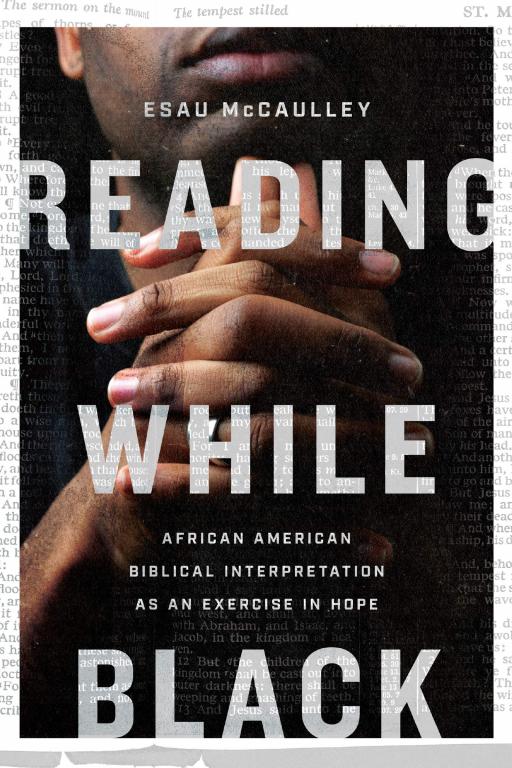
Prior to the release of Esau McCaulley’s Reading While Black, I had mixed feelings about reading the book, which had received a lot of press leading up to its publication. While I knew the book would be interesting, I simply didn’t know if I should prioritize it since, as McCaulley explains, the book is written for black people. And, well, I’m not black.
I’m so glad I came to my senses.
McCaulley, who earned his Ph.D. under N. T. Wright, conveys his ambition for the project in the book’s subtitle “African American Biblical Interpretation as an Exercise in Hope.” He contends that that African American interpreters have long been torn between rejecting a God (and thus a book) that condoned slavery and the theology of black progressives, which evangelicals have found troubling.
Yet, McCaulley loved much of his experience within the black church tradition. At the same time, he saw much of what he studied and wrote about (within the guild of biblical studies) to have little relevance to the questions being asked by those in the black church.
Accordingly, in this post, I explore how Reading While Black can be seen as an exercise in contextualization. What do I mean by contextualization? In One Gospel for All Nations, I suggest,
Contextualization refers to the process wherein people interpret, communicate, and apply the Bible within a particular cultural context.
As I’ve argued numerous times, contextualization begins with the process of interpretation. I tried to show how this plays out in Reading Romans with Eastern Eyes. McCaulley not only grasps this point but demonstrates it well.
An African-American Reading of Scripture
McCaulley begins by tracing the distinctive ways that black Christians have interpreted the Bible. Certain emphases and themes mark black theology in history. He says,
Alongside the story of the God of the exodus is the God of Leviticus, who calls his people to a holiness of life. The formerly enslaved managed to celebrate both their physical liberation and their spiritual transformation, which came as a result of their encounter with the God of the Old and New Testaments.
The social location of enslaved persons caused them to read the Bible differently. This unabashedly located reading has marked African American interpretation since. (17)
He rejects the possible accusation that black theology is syncretistic in contrast to the theology of white slave masters. He says,
It is not the case that Blacks uniquely emphasized certain passages and read other Scriptures in light of them; what was unique was what enslaved Black people emphasized. They emphasized God as the liberator and humankind as one family united under the rule of Christ whose death for sins reconciles us to God.
To put it more pointedly, I contend that the enslaved reading of the exodus as paradigmatic for understanding God’s character was more faithful to the biblical text than those who began with the Pauline slave passages. (18-19)
Therefore, the thesis of McCaulley’s book falls well in line with arguments I have posed in One Gospel for All Nations and Reading Romans with Eastern Eyes. He suggests, “I propose that dialogue, rooted in core theological principles, between the Black experience and the Bible has been the model and needs to be carried forward into our day” (20).
Too many people pretend that they read Scripture without a cultural lens. Rather, he says, “everybody has been reading the Bible from their locations, but we are honest about it. What makes Black interpretation Black, then, are the collective experiences, customs, and habits of Black people in this country” (20).
He reminds us that biblical interpretation always involves dialogue with the text. He notes, “But the dialogue goes both ways. If our experiences pose particular and unique questions to the Scriptures, then the Scriptures also pose unique questions to us” (20).
Although the book is not written “for” white people, its insights will prove helpful to readers from any cultural background. McCaulley’s work is an excellent demonstration of the potential fruit of contextualization.
In the next post, I will highlight some of the insights that follow from this approach to Scripture.
Previous Post

November 2, 2020
Entire Issue of Mission Dei Journal focuses on Honor and Shame
Next Post

November 10, 2020 Does the Bible really address policing and black identity?
Browse Our Archives
Select a Category Atonement Biblical Theology Book Reviews China Chinese Church Chinese Culture Chinese Language Collectivism Contextualization Culture (General) Ecclesiology Evangelism Gospel Honor & Shame (Face) Interpretation/Exegesis Justification/Righteousness Missiology Mission Methods One Gospel for All Nations Other Practical Contextualization Reading Romans with Eastern Eyes Resources Romans Salvation (General) Saving God's Face Seeking God's Face The Cross in Context Theological Contextualization Theological Education Theology Uncategorized
Select a Month October 2026 September 2026 August 2026 July 2026 June 2026 May 2026 April 2026 March 2026 February 2026 January 2026 December 2025 November 2025 October 2025 September 2025 August 2025 July 2025 June 2025 May 2025 April 2025 March 2025 February 2025 January 2025 December 2024 November 2024 October 2024 September 2024 August 2024 July 2024 June 2024 May 2024 April 2024 March 2024 February 2024 January 2024 December 2023 November 2023 October 2023 September 2023 August 2023 July 2023 June 2023 May 2023 April 2023 March 2023 February 2023 January 2023 December 2022 November 2022 October 2022 September 2022 August 2022 July 2022 June 2022 May 2022 April 2022 March 2022 February 2022 January 2022 December 2021 November 2021 October 2021 September 2021 August 2021 July 2021 June 2021 May 2021 April 2021 March 2021 February 2021 January 2021 December 2020 November 2020 October 2020 September 2020 August 2020 July 2020 June 2020 May 2020 April 2020 March 2020 February 2020 January 2020 December 2019 November 2019 October 2019 September 2019 August 2019 July 2019 June 2019 May 2019 April 2019 March 2019 February 2019 January 2019 December 2018 November 2018 October 2018 September 2018 August 2018 July 2018 June 2018 May 2018 April 2018 March 2018 February 2018 January 2018 December 2017 November 2017 October 2017 September 2017 August 2017 July 2017 June 2017 May 2017 April 2017 March 2017 February 2017 January 2017 December 2016 November 2016 October 2016 September 2016 August 2016 July 2016 June 2016 May 2016 April 2016 March 2016 February 2016 January 2016 December 2015 November 2015 October 2015 September 2015 August 2015 July 2015 June 2015 May 2015 April 2015 March 2015 February 2015 January 2015 December 2014 November 2014 October 2014 September 2014 August 2014 July 2014 June 2014 May 2014 April 2014 March 2014 February 2014 January 2014 December 2013 November 2013 October 2013 September 2013 August 2013 July 2013 June 2013 May 2013 April 2013 March 2013 February 2013 January 2013 December 2012 November 2012
Follow Us!
TAKE THE
Religious Wisdom Quiz
What does "Gethsemane" mean?
Select your answer to see how you score.
Oil press Spring Olive tree Garden
Books by This Author Books by Brad Vaughn
Related posts from Saving God's Face

The Real Crisis Beneath America’s Social Crises (Part...

America’s Crisis Is Deeper Than Politics

Independent Thinking Isn’t What You Think

The Gulag Theology of One Day in the...
TRENDING AT PATHEOS Evangelical

57th Dove Awards Honor Dolly Parton, Crown New...
On gospel music’s biggest night, the 57th annual GMA Dove Awards honored...

The First Eucharistic Controversy: Christ’s Real Presence
For Catholics, the Eucharist is the source and summit of the Christian...

What a Stop Sign Can Teach Us About...
How to Make a Decision When You Can't Hear God Main point:...

Archdiocese Hosts Military Marriage Retreat in Germany
RASTATT, Germany — The transient military lifestyle, with its frequent deployments and...

Nearly every morning, I make the drive to Detroit with my high-school-age...

The Real AI Story Is Adoption Without Trust
Artificial intelligence has crossed a political threshold. It is no longer a...
view all Evangelical blogs
Ad-Free & Subscriber Log-In Subscription Support
- About Us
- 2026 Calendar
- Videos
- Podcasts
- Library of World Religions
- Faith In Media Tracker
- Advertise With Us
- Write for Us
- Privacy Policy
- Terms of Service
- Do Not Sell My Data
- Contact Us
- Radiant Digital
- Manage Newsletter Subscriptions
- Unsubscribe From Notifications
- Sitemap
Copyright 2008-2026, Patheos. All rights reserved.
Subscription Support Ad-Free & Subscriber Log-In
Follow Patheos