
BuddhistCatholicContemplativeEvangelicalGeneral ChristianHinduJewishLatter-day SaintMuslimNew VisionsProgressive Christian
Beliefs
- Buddhist
- Catholic
- Contemplative
- Evangelical
- General Christian
- Hindu
- Jewish
- Latter-day Saint
- More Voices
- Muslim
- New Visions
- Pagan
- Progressive Christian
Topics
- Religion News
- Food and Religion
- Sports and Religion
- Religious Art
- Religious Music and Entertainment
- Religious Events
- History and Religion
- Style and Religion
- Politics and Religion
- Women in Religion
- Recreation Outdoors and Religion
- Business Finance and Religion
- Careers Workplace and Religion
- Education and Religion
- Family Parenting and Religion
- Health Fitness and Religion
- Home and Religion
- Relationships and Religion
- Technology and Religion
- Travel and Religion
Columnists
- Buddhist Columnists
- Business Finance and Religion Columnists
- Careers Workplace and Religion Columnists
- Catholic Columnists
- Contemplative Columnists
- Education and Religion Columnists
- Evangelists Columnists
- Family Parenting and Religion Columnists
- General Christian Columnists
- Health Fitness and Religion Columnists
- Hindu Columnists
- History and Religion Columnists
- Home and Religion Columnists
- Jewish Columnists
- More Voices Columnists
- Latter Day Columnists
- Muslim Columnists
- New Visions Columnists
- Nonreligious Columnists
- Pagan Columnists
- Politics and Religion Columnists
- Progressive Columnists
- Recreation Outdoors and Religion Columnists
- Relationships and Religion Columnists
- Religion News Columnists
- Religious Art Columnists
- Religious Events Columnists
- Religious Music and Entertainment Columnists
- Sports and Religion Columnists
- Style and Religion Columnists
- Technology and Religion Columnists
- Travel and Religion Columnists
- Women in Religion Columnists
Resource Library
- 2026 Calendar
- Library of World Religions
- The 100 Most Holy Places on Earth
- Patheos Answers
- Podcasts
- Videos
- Faith Leaders Database
- Anglican Episcopalian
- Bahai
- Baptist
- Buddhism
- Christianity
- Confucianism
- Eastern Orthodoxy
- Hinduism
- Holiness and Pentecostal
- ISKCON
- Islam
- Judaism
- Lutheran
- Methodist
- The Church of Jesus Christ of Latter-day Saints
- New Age
- Paganism
- Presbytarian and Reformed
- Protestantism
- Religion Behind the Scenes
- Roman Catholic
- Scientology
- Shia Islam
- Sikhism
- Sufism
- Sunni Islam
- Taoism
- Zen
- See all religions
Research Tools
 Ad-Free & Subscriber Log-In Subscription Support
Ad-Free & Subscriber Log-In Subscription Support
Follow Patheos 

- Trending:
- Forgiveness
- |
- Marriage
- |
- Consciousness
- |
- Death Penalty
- |
- Election
- |
- Halloween

-
Tools
-
Support the Work
- Home
- Evangelical
- Approaching Wokeness with Generosity
Approaching Wokeness with Generosity
Last updated on: October 21, 2020 at 11:45 pm by Brad Vaughn
Approaching Wokeness with Generosity 2020-10-21T23:45:53-07:00 Brad Vaughn
Patheos Explore the world's faith through different perspectives on religion and spirituality! Patheos has the views of the prevalent religions and spiritualities of the world.
This is my second post responding to Owen Strachan’s sweeping criticism of “wokeness.” In the previous post, I began to argue that he presents the most negative of caricatures when describing the so-called “woke.” As a result, he perpetuates social divisions and subtle assumptions that undermine progress in racial reconciliation.
 Today, I want to elaborate further in order to highlight ways that Strachan unwittingly misleads his audience. I suggest that we need to approach the subject with a far more generous spirit.
Colorblindness is Not the Goal?
Strachan misrepresents the sentiment of numerous writers, so many of whom I’ve read and heard myself. He says about “woke” people:
“Colorblindness is not at all the goal, a society where children are judged by their character, … a society where children are judged by their character, not their skin color, which is probably [Martin Luther King’s] most famous quote, that’s not the goal either. It’s not the goal at all. It’s not to celebrate diversity. It’s not to enjoy common humanity. Again… not the goal in critical race theory.”
This entire paragraph grossly distorts a multitude of “woke” authors who speak about colorblindness.
Is it true that colorblindness is not the goal of these writers? In part, yes, but we have to consider what they mean in context. They do not reject colorblindness as if they want their children to be judged by their skin color. Quite the opposite. They expressly want to cast aside stereotypes about skin color that fuels prejudice and marginalization.
Rather, warnings against “colorblind racism” speak to a different issue. Such authors want to raise awareness that our skin color, ethnicity, and background shape both who we are and the way people treat us.
This explains the quote from Ibram X. Kendi, about which Strachan laments. Kendi says,
“the most threatening racist movement is not the alt-right’s unlikely drive for a white ethnostate but the regular American’s drive for a race-neutral one.”
This comment utterly confounds Strachan. But we must interpret people generously and in context.

I’ve read and listened to much of Kendi. His (and others’) contention is that, in contemporary America, race is not a “neutral” topic. Our minds in fact are not colorblind. The average American inherits certain assumptions and stereotypes from the broader culture. One of these assumptions concerns what is “normal.” In practice, “whiteness” is equated with “normal.” To remain “neutral” is an unwitting assertion of whiteness (i.e., white culture) as the prevailing arbiter of normalcy.
The common white misreading of “colorblindness” or neutrality subtly leads people to ignore injustice and its effects, which still affect society today. It functions as a call to cultural assimilation into white culture. I could go on, but I think you get the point.
I am reminded of the popular show This Is Us, where a white father, Jack, has an adopted black son named Randall. In one episode, Jack tells Randall that he doesn’t see color; he just sees his son. In response, Randall says, “Then you don’t see me.” His point is this: Especially as a black person in America, you cannot separate who you are from your lived experience. That experience informs who you are. It shapes who you are.

Jack and Randall from “This Is Us” (NBC)
A part of what is common to our humanity is that we each have diverse backgrounds and experiences. Is this really something that we as Christians would condemn? When we critique movements or even ideologies, we need to maintain a spirit of generosity. We need to address the underlying concerns they wish to address.
A lack of generosity is a rot to evangelicalism.
The Real Target of Strachan’s Attack
In that spirit, let me say what I affirm about Strachan’s remarks.
In his talks and in a follow-up blog post, he distinguishes four types of people: the non-woke, those confused about wokeness, the “engaged and yet cautious pro-woke,” and the “convinced and committed pro-woke.” He includes himself among the non-woke and considers the third group on “a path that leads only to compromise.”
The fourth group includes the most extreme people, like Ashley Shackleford. These are people who seem to embrace Critical Race Theory (CRT) as a whole, as an all-encompassing worldview, and thus believe contrary to a biblically faithful, Christian worldview. Neil Shenvi has done an excellent job warning against CRT as a grand narrative or overall worldview, which is reductionistic and antithetical to Scripture.
To the degree that Strachan seeks to combat the latter, then he does well. But that is not what he communicates. His words are sweeping in their dismissal.
In fact, his exhortation to excommunicate those who espouse wokeness, CRT, etc. might be a type of strawman argument. A “strawman argument” attacks a view or argument that differs from the actual position of his opponent. In Strachan’s case, he levels his attack against the fourth group but then speaks as though these people were filling the pews of evangelical churches.
In reality, most churchgoers who reckon themselves “woke” would fit in Strachan’s third category and would affirm Eric Mason’s definition of wokeness as someone who is
“socially aware of issues that have systemic impact… [wokeness] has to do with seeing all of the issues and being able to connect the cultural, socio-economic, philosophical, historical, and ethical dots.”
Strachan’s seemingly indiscriminate (though “cavalier” might be a better word) assault on “wokeness is a war on Christian love” (to borrow from Michael Bird).
Those who accept CRT wholesale, who truly adopt the Marxist perspective that Strachan fears, are not the people waving around their “evangelical cards.” (If you are reading this and are not an evangelical, no, we don’t actually have cards.)
What about Critical Race Theory?
Should we not be concerned by CRT? Isn’t Strachan right to sound the alarm?
I give a qualified “yes.” Why? It’s the same qualification that I’d offer a young child who wants to stand by the fire. “Yes, you can do that, but don’t burn yourself.”
In other words, there are many good insights to be gained from CRT. CRT reminds the church of an assortment of sins and justice issues about which we should be concerned. For example, David French says,
“As a Christian, this kind of CRT-infused analysis helps me not only understand the reason for persistent disparities, it should also build empathy and motivate action. What can we do to ameliorate the effects of this disparate power and privilege? …
By God’s grace, critical race theory has on occasion helped me to identify the reality and effects of oppression and motivated me to follow the dictates of Micah 6:8 and “seek justice.” But we cannot lose sight of the fact that it’s ultimately Christ who ushers in the new creation—by elevating us beyond a broken world’s framing of black and white and into the kingdom reality that there is but one identity that truly matters, child of the living God.”
For his incredibly balanced and helpful article, click here.
In truth, wokeness has become evangelicals chimera, a monstrous creature from Greek mythology that is feared by many. But that’s precisely the thing. Much of the picture Strachan paints is mythical. The average “woke” person in the church is nothing like the people he describes in his talks, nor will they ever be.
Do Christians sometimes adopt unbiblical notions from CRT uncritically? Of course. That is true for any perspective, ideology, or even theology. How many people have accepted the saving hope of capitalism or Calvinism uncritically? Who many have embraced the harmful aspects of individualism without a second thought? Should I then expect Strachan to write articles soon lambasting the free market, reformed theology, and individualism? I’m not holding my breath.
In conclusion, let us remember the words of Paul in 1 Thessalonians 5:5-6,
For you are all children of light, children of the day. We are not of the night or of the darkness. So then let us not sleep, as others do, but let us keep awake and be sober.
Likewise, in Ephesians 5:11-14, Paul says,
Take no part in the unfruitful works of darkness, but instead expose them. For it is shameful even to speak of the things that they do in secret. But when anything is exposed by the light, it becomes visible, for anything that becomes visible is light. Therefore it says, “Awake, O sleeper, and arise from the dead, and Christ will shine on you.”
In other words, get woke.
For my first post, click here.
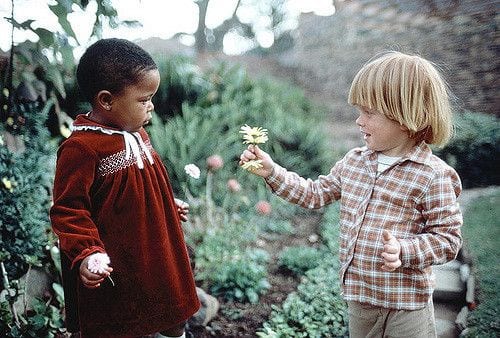
Cover: United Nations Photo, “Apartheid: The Tyranny of Racism Made Law,” January 1, 1982. Via Flickr. Licensed under Creative Commons CC BY-NC-ND 2.0.
Previous Post

October 20, 2020
SubChristian Caricatures of Wokeness
Next Post
October 26, 2020 Misreading Scripture with Individualist Eyes
Browse Our Archives
Select a Category Atonement Biblical Theology Book Reviews China Chinese Church Chinese Culture Chinese Language Collectivism Contextualization Culture (General) Ecclesiology Evangelism Gospel Honor & Shame (Face) Interpretation/Exegesis Justification/Righteousness Missiology Mission Methods One Gospel for All Nations Other Practical Contextualization Reading Romans with Eastern Eyes Resources Romans Salvation (General) Saving God's Face Seeking God's Face The Cross in Context Theological Contextualization Theological Education Theology Uncategorized
Select a Month October 2026 September 2026 August 2026 July 2026 June 2026 May 2026 April 2026 March 2026 February 2026 January 2026 December 2025 November 2025 October 2025 September 2025 August 2025 July 2025 June 2025 May 2025 April 2025 March 2025 February 2025 January 2025 December 2024 November 2024 October 2024 September 2024 August 2024 July 2024 June 2024 May 2024 April 2024 March 2024 February 2024 January 2024 December 2023 November 2023 October 2023 September 2023 August 2023 July 2023 June 2023 May 2023 April 2023 March 2023 February 2023 January 2023 December 2022 November 2022 October 2022 September 2022 August 2022 July 2022 June 2022 May 2022 April 2022 March 2022 February 2022 January 2022 December 2021 November 2021 October 2021 September 2021 August 2021 July 2021 June 2021 May 2021 April 2021 March 2021 February 2021 January 2021 December 2020 November 2020 October 2020 September 2020 August 2020 July 2020 June 2020 May 2020 April 2020 March 2020 February 2020 January 2020 December 2019 November 2019 October 2019 September 2019 August 2019 July 2019 June 2019 May 2019 April 2019 March 2019 February 2019 January 2019 December 2018 November 2018 October 2018 September 2018 August 2018 July 2018 June 2018 May 2018 April 2018 March 2018 February 2018 January 2018 December 2017 November 2017 October 2017 September 2017 August 2017 July 2017 June 2017 May 2017 April 2017 March 2017 February 2017 January 2017 December 2016 November 2016 October 2016 September 2016 August 2016 July 2016 June 2016 May 2016 April 2016 March 2016 February 2016 January 2016 December 2015 November 2015 October 2015 September 2015 August 2015 July 2015 June 2015 May 2015 April 2015 March 2015 February 2015 January 2015 December 2014 November 2014 October 2014 September 2014 August 2014 July 2014 June 2014 May 2014 April 2014 March 2014 February 2014 January 2014 December 2013 November 2013 October 2013 September 2013 August 2013 July 2013 June 2013 May 2013 April 2013 March 2013 February 2013 January 2013 December 2012 November 2012
Follow Us!
TAKE THE
Religious Wisdom Quiz
Be still, and know that I am ____.
Select your answer to see how you score.
Faithful God Holy Sovereign
Books by This Author Books by Brad Vaughn
Related posts from Saving God's Face

The Real Crisis Beneath America’s Social Crises (Part...

America’s Crisis Is Deeper Than Politics

Independent Thinking Isn’t What You Think

The Gulag Theology of One Day in the...
TRENDING AT PATHEOS Evangelical

The Image: On the Horror of Capitalism and...
The Image Then went the Pharisees, and took counsel how they might...

We are approaching the date of our new American national holiday: October...

Letters on Living the Faith by C.S. Lewis
Most of us met C.S. Lewis as a public intellectual. Mere Christianity....

When Halloween Unmasks Married Hearts
Written by Dr. David K. Ewen from Eternal Truth Bible College Behind...

Aristotle. He’s been called the father of logic, the father of the...

Methodist Central Hall and Westminster Abbey
Situated on the same square is Methodist Central Hall and Westminster Abbey. ...
view all Evangelical blogs
Ad-Free & Subscriber Log-In Subscription Support
- About Us
- 2026 Calendar
- Videos
- Podcasts
- Library of World Religions
- Faith In Media Tracker
- Advertise With Us
- Write for Us
- Privacy Policy
- Terms of Service
- Do Not Sell My Data
- Contact Us
- Radiant Digital
- Manage Newsletter Subscriptions
- Unsubscribe From Notifications
- Sitemap
Copyright 2008-2026, Patheos. All rights reserved.
Subscription Support Ad-Free & Subscriber Log-In
Follow Patheos