
BuddhistCatholicContemplativeEvangelicalGeneral ChristianHinduJewishLatter-day SaintMuslimNew VisionsProgressive Christian
Beliefs
- Buddhist
- Catholic
- Contemplative
- Evangelical
- General Christian
- Hindu
- Jewish
- Latter-day Saint
- More Voices
- Muslim
- New Visions
- Pagan
- Progressive Christian
Topics
- Religion News
- Food and Religion
- Sports and Religion
- Religious Art
- Religious Music and Entertainment
- Religious Events
- History and Religion
- Style and Religion
- Politics and Religion
- Women in Religion
- Recreation Outdoors and Religion
- Business Finance and Religion
- Careers Workplace and Religion
- Education and Religion
- Family Parenting and Religion
- Health Fitness and Religion
- Home and Religion
- Relationships and Religion
- Technology and Religion
- Travel and Religion
Columnists
- Buddhist Columnists
- Business Finance and Religion Columnists
- Careers Workplace and Religion Columnists
- Catholic Columnists
- Contemplative Columnists
- Education and Religion Columnists
- Evangelists Columnists
- Family Parenting and Religion Columnists
- General Christian Columnists
- Health Fitness and Religion Columnists
- Hindu Columnists
- History and Religion Columnists
- Home and Religion Columnists
- Jewish Columnists
- More Voices Columnists
- Latter Day Columnists
- Muslim Columnists
- New Visions Columnists
- Nonreligious Columnists
- Pagan Columnists
- Politics and Religion Columnists
- Progressive Columnists
- Recreation Outdoors and Religion Columnists
- Relationships and Religion Columnists
- Religion News Columnists
- Religious Art Columnists
- Religious Events Columnists
- Religious Music and Entertainment Columnists
- Sports and Religion Columnists
- Style and Religion Columnists
- Technology and Religion Columnists
- Travel and Religion Columnists
- Women in Religion Columnists
Resource Library
- 2026 Calendar
- Library of World Religions
- The 100 Most Holy Places on Earth
- Patheos Answers
- Podcasts
- Videos
- Faith Leaders Database
- Anglican Episcopalian
- Bahai
- Baptist
- Buddhism
- Christianity
- Confucianism
- Eastern Orthodoxy
- Hinduism
- Holiness and Pentecostal
- ISKCON
- Islam
- Judaism
- Lutheran
- Methodist
- The Church of Jesus Christ of Latter-day Saints
- New Age
- Paganism
- Presbytarian and Reformed
- Protestantism
- Religion Behind the Scenes
- Roman Catholic
- Scientology
- Shia Islam
- Sikhism
- Sufism
- Sunni Islam
- Taoism
- Zen
- See all religions
Research Tools
 Ad-Free & Subscriber Log-In Subscription Support
Ad-Free & Subscriber Log-In Subscription Support
Follow Patheos 

- Trending:
- Forgiveness
- |
- Marriage
- |
- Consciousness
- |
- Death Penalty
- |
- Election
- |
- Halloween

-
Tools
-
Support the Work
- Home
- Evangelical
- Ephesiology and the Critique of Church Planting Movements
Ephesiology and the Critique of Church Planting Movements
Last updated on: October 6, 2020 at 6:26 pm by Brad Vaughn
Ephesiology and the Critique of Church Planting Movements 2020-06-24T00:09:59-07:00 Brad Vaughn
Patheos Explore the world's faith through different perspectives on religion and spirituality! Patheos has the views of the prevalent religions and spiritualities of the world.
Today’s guest post comes from Michael Cooper, author of Ephesiology: The Study of the Ephesian Movement. He holds a PhD in Intercultural Studies from Trinity Evangelical Divinity School. You can contact him at [email protected].
Church planting movements (CPMs) have drawn the attention of missionary practitioners around the world. Many missiologists have asked challenging questions. Some are posed by Jackson Wu and professors predominately from Southern Baptist Convention seminaries. These thinkers contest the methods of CPMs. Such approaches include T4T and DMM. They also call attention to an apparent biblical “eisegesis,” as advocates were accused of reading CPM into the New Testament texts.

Credit: Facebook/Ephesiology
Today, Mission Frontiers claims there are more than a 1000 CPMs around the world. CPM agencies report phenomenal growth of multiplying house churches focused predominately in South Asia and Southeast Asia. Such growth naturally draws the attention of motivated missionaries who equate numerical progression with success. Equally true is that such phenomenal reporting of growth draws the attention of critics.
Their criticism of church planting movements generally falls in four categories:
- theological shallowness
- immature leaders
- reckless evangelism
- long-term sustainability
Criticisms of Church Planting Movements
Out of deep concern for theological orthodoxy, critics observe that the lack of focus on theological education could lead to church planting movements that eventually adopt unorthodox beliefs and behaviors. There is little doubt that this has happened.
From anecdotal evidence gathered from different parts of the world, I’ve personally collected reports of CPMs that have fallen into the hands of cults in both South Asia and Southeast Asia. I’ve heard stories of missionaries meeting with house churches long down the so-called generational map of a CPM who did not recognize that it was Christian. Others have assessed movements and found that they lack any recognizable ecclesiology.
Besides theological shallowness, critics of church planting movements allege that these movements appoint leaders who are unequipped. CPM advocates often retort that they trust the Holy Spirit to ensure the ongoing growth of leaders despite the fact that Paul clearly directs Timothy to safeguard the orthodoxy of church leaders (1 Tim 4:6, 13; 6:3).
While there are certainly instances of Christian leaders disqualifying themselves (indifferent to their involvement with a CPM or not), the CPM focus on obedience can result in leaders who are driven to achieve numbers more than to maturing themselves and the people under their care. Not guarding their own spiritual maturity can and has resulted in domestic violence, extramarital affairs, and addictions.
Reckless evangelism, as critics posit, reduces the gospel to a simple prayer for salvation in an easy-believism that stresses once-saved-always-saved. According to the critique, the primary concern for getting the soul into heaven seemingly disregards discipleship (which plays so prominently in the New Testament). The work of thousands of short-term missions teams, the mass evangelistic strategies of The Jesus Film, along with digital evangelism produce fantastic numbers of so-called “converts.” Yet, these “converts” are often left on their own to understand how to grow in their faith (although CPM advocates insist that the Holy Spirit will teach them).
Finally, the sustainability of CPMs is challenged by critics. There are instances where once reported CPMs in an area can no longer be identified. While one hopes that some have been absorbed by traditional churches, others could have fallen victim to syncretism or another non-Trinitarian form of Christianity.
A deeper assessment of CPMs is absolutely essential for us to understand their long-term viability. Perhaps God is working incredibly. If so, an accurate, dispassionate, and objective reporting on these CPMs would cause great rejoicing and strengthen the resolve to complete the Great Commission.
What is “Ephesiology”?
These four critiques were one of the primary motivations for writing Ephesiology: The Study of the Ephesian Movement. I believe God worked in fantastic ways as the Holy Spirit empowered believers in the book of Acts to carry the gospel to the ends of the earth (or, what is rightfully called a “movement”).
The movement in the New Testament was altogether different than what we see in church planting movements today. Certainly, there was a rapid expansion of the numbers of new disciples that resulted in their gatherings in communities of believers. However, this NT movement was characterized by social, economic, religious, and political transformation. This is rarely seen in CPMs today as the focus is often on the generational replication house churches.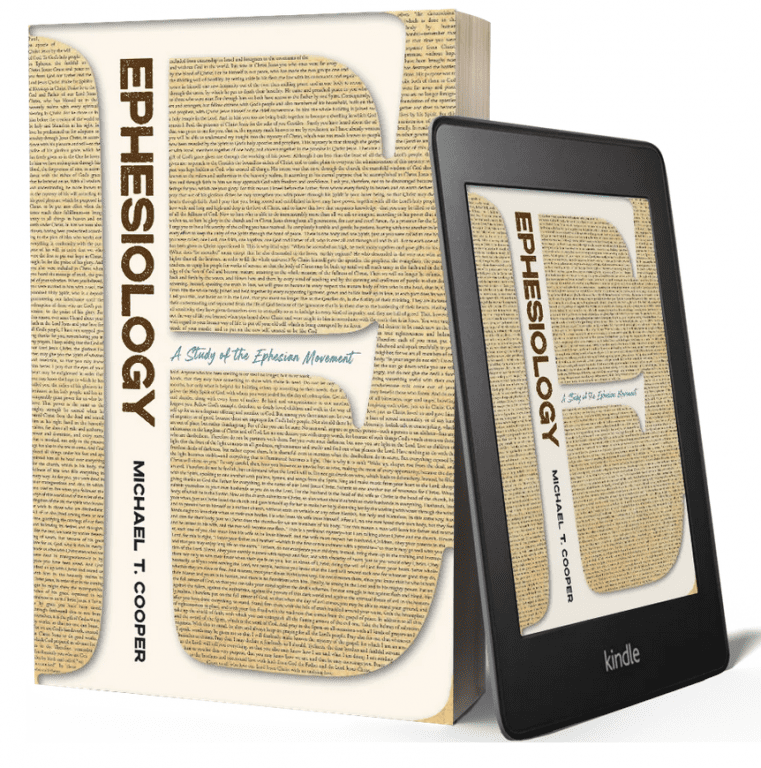 Undoubtedly, the NT movement grew exponentially as more and more believers united on God’s mission to see more people worshipping Him. It was not the multiplication of churches; rather, it was the multiplication of faithful Christ-followers who were empowered to use their God-given gifts, inspired to join in hardship, entrusted to equip others to carry on the mission, and reminded to preach the gospel in season and out that resulted in God’s glorification.
Ephesiology is not a commentary on Ephesians. It’s not a biblical theology of missions. It is not even missiology if understood as one of the systems of systematic theology. Instead, Ephesiology is a study of the missiological theology of Paul, John, and Peter as they connected the stories of Jesus to the stories of the Ephesian culture.
Ephesiology is not another method of contextualization. Instead, Ephesiology focuses on a missiological exegesis that digs deeply into the culture. It reflects missiologically on what God is doing in that culture. Ephesiology seeks after a missiological theology that takes the true, unchanged stories of Jesus and connects them to culture so that the culture sees how Jesus relates to them.
God is at work, but…
God is at work in cultures today. He continues to communicate through His creation both in nature as well as in His image-bearers. That voice is often implicitly revealing His glory, just as it did through the logos philosophy of Heraclitus of Ephesus (Acts 19:10, 20; John 1:1-2; 2 Peter 3:5-7) and the Zeus found in Aratus’s Phenomenon (Acts 17:28). Now, God extends to us the privilege of making Him explicitly known to a people who have been in search. Our current situation with COVID-19 provides an opportunity to rethink how we are engaging our world. Perhaps Ephesiology can help. It focuses on how the early church connected Jesus’s story to that of others.
There is a movement of God in the New Testament. It is not a church planting movement as it is understood today.
It was much more significant, and it connected the story of God to the story of people in such a way that it became the single story of God’s relentless pursuit of a relationship with His creation. Ephesiology tells one part of this story through a comprehensive look at the most significant church in the New Testament. If you practice the principles of a New Testament movement – launching, grounding, leading, multiplying, sustaining, you might very well see a movement yourself.
But it will be a result of God’s work, not the result of a method or strategy.
Previous Post

September 30, 2020
Did God the Father Commit an Honor Killing?

Browse Our Archives
Select a Category Atonement Biblical Theology Book Reviews China Chinese Church Chinese Culture Chinese Language Collectivism Contextualization Culture (General) Ecclesiology Evangelism Gospel Honor & Shame (Face) Interpretation/Exegesis Justification/Righteousness Missiology Mission Methods One Gospel for All Nations Other Practical Contextualization Reading Romans with Eastern Eyes Resources Romans Salvation (General) Saving God's Face Seeking God's Face The Cross in Context Theological Contextualization Theological Education Theology Uncategorized
Select a Month October 2026 September 2026 August 2026 July 2026 June 2026 May 2026 April 2026 March 2026 February 2026 January 2026 December 2025 November 2025 October 2025 September 2025 August 2025 July 2025 June 2025 May 2025 April 2025 March 2025 February 2025 January 2025 December 2024 November 2024 October 2024 September 2024 August 2024 July 2024 June 2024 May 2024 April 2024 March 2024 February 2024 January 2024 December 2023 November 2023 October 2023 September 2023 August 2023 July 2023 June 2023 May 2023 April 2023 March 2023 February 2023 January 2023 December 2022 November 2022 October 2022 September 2022 August 2022 July 2022 June 2022 May 2022 April 2022 March 2022 February 2022 January 2022 December 2021 November 2021 October 2021 September 2021 August 2021 July 2021 June 2021 May 2021 April 2021 March 2021 February 2021 January 2021 December 2020 November 2020 October 2020 September 2020 August 2020 July 2020 June 2020 May 2020 April 2020 March 2020 February 2020 January 2020 December 2019 November 2019 October 2019 September 2019 August 2019 July 2019 June 2019 May 2019 April 2019 March 2019 February 2019 January 2019 December 2018 November 2018 October 2018 September 2018 August 2018 July 2018 June 2018 May 2018 April 2018 March 2018 February 2018 January 2018 December 2017 November 2017 October 2017 September 2017 August 2017 July 2017 June 2017 May 2017 April 2017 March 2017 February 2017 January 2017 December 2016 November 2016 October 2016 September 2016 August 2016 July 2016 June 2016 May 2016 April 2016 March 2016 February 2016 January 2016 December 2015 November 2015 October 2015 September 2015 August 2015 July 2015 June 2015 May 2015 April 2015 March 2015 February 2015 January 2015 December 2014 November 2014 October 2014 September 2014 August 2014 July 2014 June 2014 May 2014 April 2014 March 2014 February 2014 January 2014 December 2013 November 2013 October 2013 September 2013 August 2013 July 2013 June 2013 May 2013 April 2013 March 2013 February 2013 January 2013 December 2012 November 2012
Follow Us!
TAKE THE
Religious Wisdom Quiz
Which book of the Bible contains the Song of Moses?
Select your answer to see how you score.
Exodus Psalms Deuteronomy Numbers
Books by This Author Books by Brad Vaughn
Related posts from Saving God's Face
How Technique Undermines Mission
God both exceeds and undermines our expectations

Implications of Dignity, Honor, and Face Cultures for...

Should multiplication be the goal of missions?
TRENDING AT PATHEOS Evangelical

Pope Leo Celebrates Mass for Nurses & Docs...
I don't have any idea how he did it, but Pope Leo...

The Sermon on the Mount, Part I: Matthew...
The Sermon on the Mount, Part I (Matthew 4:12-5:12) St. Matthew moves...

What's up from Crossway: Reviewing some of their latest A few weeks...

Janie Learns the Way of the Cross: A...
Teaching children about Jesus' Passion can be challenging. Many parents and educators...

Looking For Good Catholic Writing - October 2026
He alone extends the heavens, and he walks upon the waves of...

In "Irreplaceable," our book on vocation and technology, Trevor Sutton and I...
view all Evangelical blogs
Ad-Free & Subscriber Log-In Subscription Support
- About Us
- 2026 Calendar
- Videos
- Podcasts
- Library of World Religions
- Faith In Media Tracker
- Advertise With Us
- Write for Us
- Privacy Policy
- Terms of Service
- Do Not Sell My Data
- Contact Us
- Radiant Digital
- Manage Newsletter Subscriptions
- Unsubscribe From Notifications
- Sitemap
Copyright 2008-2026, Patheos. All rights reserved.
Subscription Support Ad-Free & Subscriber Log-In
Follow Patheos