
BuddhistCatholicContemplativeEvangelicalGeneral ChristianHinduJewishLatter-day SaintMuslimNew VisionsProgressive Christian
Beliefs
- Buddhist
- Catholic
- Contemplative
- Evangelical
- General Christian
- Hindu
- Jewish
- Latter-day Saint
- More Voices
- Muslim
- New Visions
- Pagan
- Progressive Christian
Topics
- Religion News
- Food and Religion
- Sports and Religion
- Religious Art
- Religious Music and Entertainment
- Religious Events
- History and Religion
- Style and Religion
- Politics and Religion
- Women in Religion
- Recreation Outdoors and Religion
- Business Finance and Religion
- Careers Workplace and Religion
- Education and Religion
- Family Parenting and Religion
- Health Fitness and Religion
- Home and Religion
- Relationships and Religion
- Technology and Religion
- Travel and Religion
Columnists
- Buddhist Columnists
- Business Finance and Religion Columnists
- Careers Workplace and Religion Columnists
- Catholic Columnists
- Contemplative Columnists
- Education and Religion Columnists
- Evangelists Columnists
- Family Parenting and Religion Columnists
- General Christian Columnists
- Health Fitness and Religion Columnists
- Hindu Columnists
- History and Religion Columnists
- Home and Religion Columnists
- Jewish Columnists
- More Voices Columnists
- Latter Day Columnists
- Muslim Columnists
- New Visions Columnists
- Nonreligious Columnists
- Pagan Columnists
- Politics and Religion Columnists
- Progressive Columnists
- Recreation Outdoors and Religion Columnists
- Relationships and Religion Columnists
- Religion News Columnists
- Religious Art Columnists
- Religious Events Columnists
- Religious Music and Entertainment Columnists
- Sports and Religion Columnists
- Style and Religion Columnists
- Technology and Religion Columnists
- Travel and Religion Columnists
- Women in Religion Columnists
Resource Library
- 2026 Calendar
- Library of World Religions
- The 100 Most Holy Places on Earth
- Patheos Answers
- Podcasts
- Videos
- Faith Leaders Database
- Anglican Episcopalian
- Bahai
- Baptist
- Buddhism
- Christianity
- Confucianism
- Eastern Orthodoxy
- Hinduism
- Holiness and Pentecostal
- ISKCON
- Islam
- Judaism
- Lutheran
- Methodist
- The Church of Jesus Christ of Latter-day Saints
- New Age
- Paganism
- Presbytarian and Reformed
- Protestantism
- Religion Behind the Scenes
- Roman Catholic
- Scientology
- Shia Islam
- Sikhism
- Sufism
- Sunni Islam
- Taoism
- Zen
- See all religions
Research Tools
 Ad-Free & Subscriber Log-In Subscription Support
Ad-Free & Subscriber Log-In Subscription Support
Follow Patheos 

- Trending:
- Forgiveness
- |
- Marriage
- |
- Consciousness
- |
- Death Penalty
- |
- Election
- |
- Halloween

-
Tools
-
Support the Work
- Home
- Evangelical
- Did God the Father Commit an Honor Killing?
Did God the Father Commit an Honor Killing?
Last updated on: September 30, 2020 at 2:34 am by Brad Vaughn
Did God the Father Commit an Honor Killing? 2020-07-25T05:39:57-07:00 Brad Vaughn
Patheos Explore the world's faith through different perspectives on religion and spirituality! Patheos has the views of the prevalent religions and spiritualities of the world.
Few things perplex and upset Westerners more than an honor killing. Of course, there are good reasons people find the practice deplorable. (Given my previous article, it seems fitting to repost this one, which originally appeared on Scot McKnight’s JesusCreed.)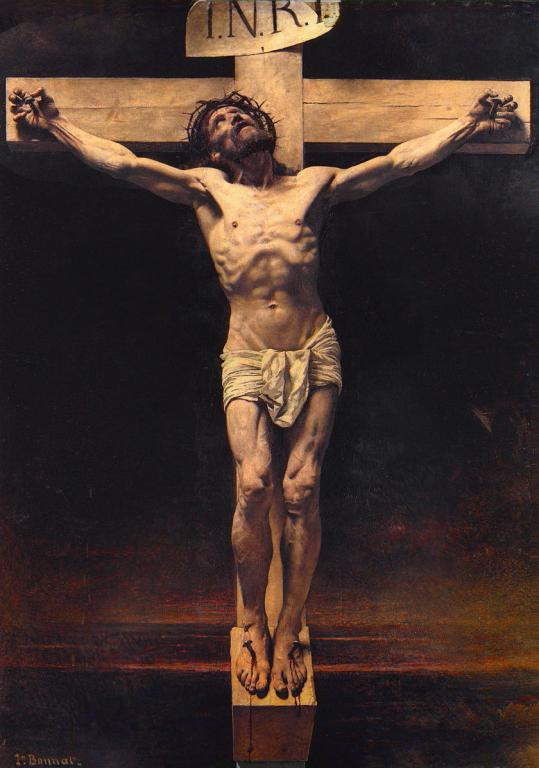
In recent years, reports of honor killings have become far more common. For example, click here, here, and here. An honor killing occurs when a person does something deemed shameful by one’s family or village. Typically, they involve a woman who is accused of illicit sexual relations with someone with whom she is not married. In order to restore honor to the community, a relative––often a brother or uncle–––will then murder the woman. Only then will their wrath be appeased.
So, it’s not surprising how people respond when they hear me and others talk about the importance of honor and shame in the Bible. They ask a very natural question, “Was Jesus’ death an honor killing?”
Unreasonable question?
The very idea of explaining the cross with something so heinous as an honor killing is revolting to most people. Yet, I’ve heard some people suggest the possibility that we could explain penal substitution in terms of an honor killing. Before dismissing the question, consider how people might potentially link these ideas.
What similarities might they share? In each . . .
- A father is dishonored by the shameful behavior.
- The offense evokes his wrath.
- To appease his wrath, the father seeks to avenge the affront to his honor.
- Consequently, the father punishes his child, upon guilt has been imputed.
The above four statements generally resemble traditional accounts of penal substitution. It doesn’t take a lot of imagination to understand why some people reject this theory of atonement. They think of it in the same way that people think of modern-day honor killings.
How does God judge the cross?
To the relief of many readers, I do not recommend we call Christ’s death an honor killing. The comparison is not helpful. However, the entire question does reveal quite clearly the significant questions at stake when it comes to the matter of contextualization. I don’t commend it as good contextualization.
To begin, the association between the cross and honor killings would cause more harm than good. Due to the confusion of concepts, using terms like “honor killing” is not helpful. For one thing, people do not associate an honor killing with love, but rather with vengeance alone. Let’s be clear––the biblical writers pinpoint those responsible for his murder.
Peter says to those in Jerusalem,
“this Jesus, delivered up according to the definite plan and foreknowledge of God, you crucified and killed by the hands of lawless men. [Yet] God raised him up, loosing the pangs of death, . . . ” (Acts 2:23; cf. 2:36; 5:30; 10:39; Luke 24:20).
The Father loves the Son. His murderers hated him.
It’s better to speak of Christ’s work on the cross as an “honor death”, not a “killing.” As such, he willingly sacrificed himself for the sake of God’s honor (and ours). I’ve argued the latter idea more thoroughly in my first book Saving God’s Face: A Chinese Contextualization of Salvation through Honor and Shame.
This is a far more faithful depiction of the cross. Among the many passages we could choose from, consider these two:
And walk in love, as Christ loved us and gave himself up for us, a fragrant offering and sacrifice to God. (Gal 5:2)
All this is from God, who through Christ reconciled us to himself and gave us the ministry of reconciliation; that is, in Christ God was reconciling the world to himself, not counting their trespasses against them. (2 Cor 5:18–19)
Christ was certainly killed, . . . by murderous sinners. Through Jesus’ death, God indeed vindicated His honor (foreshadowed in Ezek 36:22, 32). Nevertheless, Christ gave himself.
Implications of an “honor death”
The shift in perspective has significant practical implications. In fact, seeing Christ’s work as an “honor death” actually undermines the type of thinking that fuels so-called “honor killings.” From the perspective I’ve suggested, people can’t mistakenly think they imitate God by murdering a relative who has publicly shamed them.
On the one hand, God does not in fact smite humanity in vengeance; he instead took on flesh. That is, he “emptied himself, by taking the form of a servant, being born in the likeness of men. And being found in human form, he humbled himself by becoming obedient to the point of death, even death on a cross” (Phil 2:8-9).
On the other hand, Christ’s death spurs his followers to do the opposite of anything that might be called an “honor killing.” Consider how the cross-shaped Paul’s approach to ministry.
But we have this treasure in jars of clay, to show that the surpassing power belongs to God and not to us. We are afflicted in every way, but not crushed; perplexed, but not driven to despair; persecuted, but not forsaken; struck down, but not destroyed; always carrying in the body the death of Jesus, so that the life of Jesus may also be manifested in our bodies. For we who live are always being given over to death for Jesus’ sake, so that the life of Jesus also may be manifested in our mortal flesh. So death is at work in us, but life in you. (2 Cor 4:7–12)
In effect, Christ’s death redirects our path to glory. He overturns conventional notions of honor and shame. Accordingly, the writer of Hebrews exhorts his readers to look to
Jesus, the founder and perfecter of our faith, who for the joy that was set before him endured the cross, despising the shame, and is seated at the right hand of the throne of God. (Heb 12:2)
In the same way, we Christians need to rethink our conceptions of honor and the way we seek honor. I particularly have in mind passages in 2 Corinthians, Hebrews, and 1 Peter. I’d urge people to reflect on the way each letter reorients honor and shame in light of the cross.
When we present Christ’s death in this way, we magnify the glory of God. Without calling the cross an “honor killing,” we can contextualize the gospel message in a way that is biblically faithful and culturally meaningful.
Previous Post

September 23, 2020
Was Jesus’ Murder an Honor Killing?
Next Post
October 6, 2020 Ephesiology and the Critique of Church Planting Movements
Browse Our Archives
Select a Category Atonement Biblical Theology Book Reviews China Chinese Church Chinese Culture Chinese Language Collectivism Contextualization Culture (General) Ecclesiology Evangelism Gospel Honor & Shame (Face) Interpretation/Exegesis Justification/Righteousness Missiology Mission Methods One Gospel for All Nations Other Practical Contextualization Reading Romans with Eastern Eyes Resources Romans Salvation (General) Saving God's Face Seeking God's Face The Cross in Context Theological Contextualization Theological Education Theology Uncategorized
Select a Month October 2026 September 2026 August 2026 July 2026 June 2026 May 2026 April 2026 March 2026 February 2026 January 2026 December 2025 November 2025 October 2025 September 2025 August 2025 July 2025 June 2025 May 2025 April 2025 March 2025 February 2025 January 2025 December 2024 November 2024 October 2024 September 2024 August 2024 July 2024 June 2024 May 2024 April 2024 March 2024 February 2024 January 2024 December 2023 November 2023 October 2023 September 2023 August 2023 July 2023 June 2023 May 2023 April 2023 March 2023 February 2023 January 2023 December 2022 November 2022 October 2022 September 2022 August 2022 July 2022 June 2022 May 2022 April 2022 March 2022 February 2022 January 2022 December 2021 November 2021 October 2021 September 2021 August 2021 July 2021 June 2021 May 2021 April 2021 March 2021 February 2021 January 2021 December 2020 November 2020 October 2020 September 2020 August 2020 July 2020 June 2020 May 2020 April 2020 March 2020 February 2020 January 2020 December 2019 November 2019 October 2019 September 2019 August 2019 July 2019 June 2019 May 2019 April 2019 March 2019 February 2019 January 2019 December 2018 November 2018 October 2018 September 2018 August 2018 July 2018 June 2018 May 2018 April 2018 March 2018 February 2018 January 2018 December 2017 November 2017 October 2017 September 2017 August 2017 July 2017 June 2017 May 2017 April 2017 March 2017 February 2017 January 2017 December 2016 November 2016 October 2016 September 2016 August 2016 July 2016 June 2016 May 2016 April 2016 March 2016 February 2016 January 2016 December 2015 November 2015 October 2015 September 2015 August 2015 July 2015 June 2015 May 2015 April 2015 March 2015 February 2015 January 2015 December 2014 November 2014 October 2014 September 2014 August 2014 July 2014 June 2014 May 2014 April 2014 March 2014 February 2014 January 2014 December 2013 November 2013 October 2013 September 2013 August 2013 July 2013 June 2013 May 2013 April 2013 March 2013 February 2013 January 2013 December 2012 November 2012
Follow Us!
TAKE THE
Religious Wisdom Quiz
Who was Paul's hometown companion?
Select your answer to see how you score.
Timothy Barnabas Luke Silas
Books by This Author Books by Brad Vaughn
Related posts from Saving God's Face

No King forgets his crown. Why do we?

Recovering Moral Vision Between Shame and Shamelessness

Refuge, Confession, and the End of Shame

Psalm 25 and the Fear of Being Put...
TRENDING AT PATHEOS Evangelical

57th Dove Awards Honor Dolly Parton, Crown New...
On gospel music’s biggest night, the 57th annual GMA Dove Awards honored...

The First Eucharistic Controversy: Christ’s Real Presence
For Catholics, the Eucharist is the source and summit of the Christian...

What a Stop Sign Can Teach Us About...
How to Make a Decision When You Can't Hear God Main point:...

Archdiocese Hosts Military Marriage Retreat in Germany
RASTATT, Germany — The transient military lifestyle, with its frequent deployments and...

Nearly every morning, I make the drive to Detroit with my high-school-age...

The Real AI Story Is Adoption Without Trust
Artificial intelligence has crossed a political threshold. It is no longer a...
view all Evangelical blogs
Ad-Free & Subscriber Log-In Subscription Support
- About Us
- 2026 Calendar
- Videos
- Podcasts
- Library of World Religions
- Faith In Media Tracker
- Advertise With Us
- Write for Us
- Privacy Policy
- Terms of Service
- Do Not Sell My Data
- Contact Us
- Radiant Digital
- Manage Newsletter Subscriptions
- Unsubscribe From Notifications
- Sitemap
Copyright 2008-2026, Patheos. All rights reserved.
Subscription Support Ad-Free & Subscriber Log-In
Follow Patheos