
BuddhistCatholicContemplativeEvangelicalGeneral ChristianHinduJewishLatter-day SaintMuslimNew VisionsProgressive Christian
Beliefs
- Buddhist
- Catholic
- Contemplative
- Evangelical
- General Christian
- Hindu
- Jewish
- Latter-day Saint
- More Voices
- Muslim
- New Visions
- Pagan
- Progressive Christian
Topics
- Religion News
- Food and Religion
- Sports and Religion
- Religious Art
- Religious Music and Entertainment
- Religious Events
- History and Religion
- Style and Religion
- Politics and Religion
- Women in Religion
- Recreation Outdoors and Religion
- Business Finance and Religion
- Careers Workplace and Religion
- Education and Religion
- Family Parenting and Religion
- Health Fitness and Religion
- Home and Religion
- Relationships and Religion
- Technology and Religion
- Travel and Religion
Columnists
- Buddhist Columnists
- Business Finance and Religion Columnists
- Careers Workplace and Religion Columnists
- Catholic Columnists
- Contemplative Columnists
- Education and Religion Columnists
- Evangelists Columnists
- Family Parenting and Religion Columnists
- General Christian Columnists
- Health Fitness and Religion Columnists
- Hindu Columnists
- History and Religion Columnists
- Home and Religion Columnists
- Jewish Columnists
- More Voices Columnists
- Latter Day Columnists
- Muslim Columnists
- New Visions Columnists
- Nonreligious Columnists
- Pagan Columnists
- Politics and Religion Columnists
- Progressive Columnists
- Recreation Outdoors and Religion Columnists
- Relationships and Religion Columnists
- Religion News Columnists
- Religious Art Columnists
- Religious Events Columnists
- Religious Music and Entertainment Columnists
- Sports and Religion Columnists
- Style and Religion Columnists
- Technology and Religion Columnists
- Travel and Religion Columnists
- Women in Religion Columnists
Resource Library
- 2026 Calendar
- Library of World Religions
- The 100 Most Holy Places on Earth
- Patheos Answers
- Podcasts
- Videos
- Faith Leaders Database
- Anglican Episcopalian
- Bahai
- Baptist
- Buddhism
- Christianity
- Confucianism
- Eastern Orthodoxy
- Hinduism
- Holiness and Pentecostal
- ISKCON
- Islam
- Judaism
- Lutheran
- Methodist
- The Church of Jesus Christ of Latter-day Saints
- New Age
- Paganism
- Presbytarian and Reformed
- Protestantism
- Religion Behind the Scenes
- Roman Catholic
- Scientology
- Shia Islam
- Sikhism
- Sufism
- Sunni Islam
- Taoism
- Zen
- See all religions
Research Tools
 Ad-Free & Subscriber Log-In Subscription Support
Ad-Free & Subscriber Log-In Subscription Support
Follow Patheos 

- Trending:
- Forgiveness
- |
- Marriage
- |
- Consciousness
- |
- Death Penalty
- |
- Election
- |
- Halloween

-
Tools
-
Support the Work
- Home
- Evangelical
- Was Jesus’ Murder an Honor Killing?
Was Jesus’ Murder an Honor Killing?
Last updated on: September 23, 2020 at 3:34 am by Brad Vaughn
Was Jesus’ Murder an Honor Killing? 2020-07-25T05:38:37-07:00 Brad Vaughn
Patheos Explore the world's faith through different perspectives on religion and spirituality! Patheos has the views of the prevalent religions and spiritualities of the world.
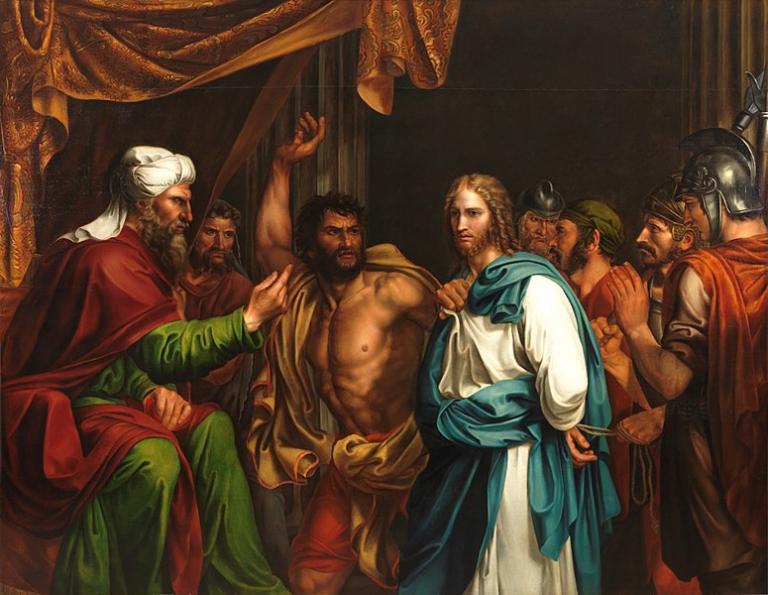
Why did Jesus die? Most Christians will say something like, “He died for our sin.” While true, I’m asking a different question. Why did the people who murdered Jesus kill him? What was their motive or mindset? There are certainly layers to that answer. In this post, I suggest one particular idea that gets little discussion.
From the perspective of the authorities, Jesus’s death functioned very similarly to an honor killing. How so?
Honor, Humiliation & the Death of Jesus
Jesus challenged the prestige and authority of the Jewish leaders. The number of his followers increasingly grew. Observe the conversation in John 11:47–50.
So the chief priests and the Pharisees gathered the council and said, “What are we to do? For this man performs many signs. If we let him go on like this, everyone will believe in him, and the Romans will come and take away both our place and our nation.” But one of them, Caiaphas, who was high priest that year, said to them, “You know nothing at all. Nor do you understand that it is better for you that one man should die for the people, not that the whole nation should perish.”
To preserve their status and power, these leaders decided Jesus had to die. He threatened their honor and position in the eyes of Rome and the common people. After all, Jesus claimed that God blessed the poor and outcasts, yet despised the status-seeking of the powerful.
In an unlawful process, Jewish leaders manipulated Roman authorities into condemning Jesus. He was beaten and crucified. Many people never survived the violent beatings. Those who did likely wished they had not. One scholar describes crucifixion in the ancient world:
By the public display of a naked victim at a prominent place – at a crossroads, in the theatre, on high ground, at the place of his crime – crucifixion also represented his uttermost humiliation,…[1]
Victims were tormented publicly, physically, and psychologically. The violence of the cross had a distinct motive: humiliation. The fear of shame would keep others from acting contrary to the normal social system.
Even after death, the crucified person endured more shame. Hengel says:
Crucifixion was aggravated further by the fact that quite often its victims were never buried. It was a stereotyped picture that the crucified victim served as food for wild beasts and birds of prey. In this way, his humiliation was made complete. What it meant for a man in antiquity to be refused burial, and the dishonour which went with it, can hardly be appreciated by modern man.[2]
Death by crucifixion was sadistic, a virtual rape. Don’t forget that every victim had a family and a network of relationships. The family would be shamed that one of their members suffered this fate. Former friends would have abandoned the crucified victim at his most desperate hour. Sometimes, those being crucified were forced to watch their children or wives get killed.[3]
Imagine the effect on the watching public. Some people have compared the effect to a “state terror,” which is a “means in enforcing brutal authoritarianism through a culture of fear.”[4]
Misusing “Honor” as a Tool for Power
“Honor killings” ostensibly serve a few functions. By killing the person who brings disgrace to a community, the stain of shame is removed in the most total manner. The action gives evidence that one doesn’t tolerate so-called “shameful” people or actions. Consequently, an honor killing inevitably acts to deter anyone from contradicting certain social norms.
Christ’s death, when seen as a type of honor killing, exposes the twisted underbelly of such thinking. He was innocent of any moral transgression. The term “honor killing” is a gross misnomer; there is no moral honor in murder. An honor killing is a tool to preserve power and status; they are not designed to uphold truth or inspire love.
In actual fact, these killings brutally exemplify what we’d expect from a mentality that lays stress on fear and power. In protecting one’s own position of power, honor becomes the scapegoat.
[1] Martin Hengel, Crucifixion, 87.
[2] Martin Hengel, Crucifixion, 87–88.
[3] Martin Hengel, Crucifixion, 84. He cites Herodotus 4.202.1 and 9.120.4.
[4] David Tombs, “Crucifixion and Sexual Abuse.” Union Seminary Quarterly Review 53 (Autumn 1999): 89-109.
Photo Credit: Public Domain
Previous Post

September 15, 2020
The Stigma and Shame of COVID-19 around the World
Next Post
September 30, 2020 Did God the Father Commit an Honor Killing?
Browse Our Archives
Select a Category Atonement Biblical Theology Book Reviews China Chinese Church Chinese Culture Chinese Language Collectivism Contextualization Culture (General) Ecclesiology Evangelism Gospel Honor & Shame (Face) Interpretation/Exegesis Justification/Righteousness Missiology Mission Methods One Gospel for All Nations Other Practical Contextualization Reading Romans with Eastern Eyes Resources Romans Salvation (General) Saving God's Face Seeking God's Face The Cross in Context Theological Contextualization Theological Education Theology Uncategorized
Select a Month October 2026 September 2026 August 2026 July 2026 June 2026 May 2026 April 2026 March 2026 February 2026 January 2026 December 2025 November 2025 October 2025 September 2025 August 2025 July 2025 June 2025 May 2025 April 2025 March 2025 February 2025 January 2025 December 2024 November 2024 October 2024 September 2024 August 2024 July 2024 June 2024 May 2024 April 2024 March 2024 February 2024 January 2024 December 2023 November 2023 October 2023 September 2023 August 2023 July 2023 June 2023 May 2023 April 2023 March 2023 February 2023 January 2023 December 2022 November 2022 October 2022 September 2022 August 2022 July 2022 June 2022 May 2022 April 2022 March 2022 February 2022 January 2022 December 2021 November 2021 October 2021 September 2021 August 2021 July 2021 June 2021 May 2021 April 2021 March 2021 February 2021 January 2021 December 2020 November 2020 October 2020 September 2020 August 2020 July 2020 June 2020 May 2020 April 2020 March 2020 February 2020 January 2020 December 2019 November 2019 October 2019 September 2019 August 2019 July 2019 June 2019 May 2019 April 2019 March 2019 February 2019 January 2019 December 2018 November 2018 October 2018 September 2018 August 2018 July 2018 June 2018 May 2018 April 2018 March 2018 February 2018 January 2018 December 2017 November 2017 October 2017 September 2017 August 2017 July 2017 June 2017 May 2017 April 2017 March 2017 February 2017 January 2017 December 2016 November 2016 October 2016 September 2016 August 2016 July 2016 June 2016 May 2016 April 2016 March 2016 February 2016 January 2016 December 2015 November 2015 October 2015 September 2015 August 2015 July 2015 June 2015 May 2015 April 2015 March 2015 February 2015 January 2015 December 2014 November 2014 October 2014 September 2014 August 2014 July 2014 June 2014 May 2014 April 2014 March 2014 February 2014 January 2014 December 2013 November 2013 October 2013 September 2013 August 2013 July 2013 June 2013 May 2013 April 2013 March 2013 February 2013 January 2013 December 2012 November 2012
Follow Us!
TAKE THE
Religious Wisdom Quiz
What was worn as a sign of mourning in biblical times?
Select your answer to see how you score.
Purple robe Linen Sackcloth Fur
Books by This Author Books by Brad Vaughn
Related posts from Saving God's Face

The Real Crisis Beneath America’s Social Crises (Part...

America’s Crisis Is Deeper Than Politics

Independent Thinking Isn’t What You Think

The Gulag Theology of One Day in the...
TRENDING AT PATHEOS Evangelical

57th Dove Awards Honor Dolly Parton, Crown New...
On gospel music’s biggest night, the 57th annual GMA Dove Awards honored...

The First Eucharistic Controversy: Christ’s Real Presence
For Catholics, the Eucharist is the source and summit of the Christian...

What a Stop Sign Can Teach Us About...
How to Make a Decision When You Can't Hear God Main point:...

Archdiocese Hosts Military Marriage Retreat in Germany
RASTATT, Germany — The transient military lifestyle, with its frequent deployments and...

Nearly every morning, I make the drive to Detroit with my high-school-age...

The Real AI Story Is Adoption Without Trust
Artificial intelligence has crossed a political threshold. It is no longer a...
view all Evangelical blogs
Ad-Free & Subscriber Log-In Subscription Support
- About Us
- 2026 Calendar
- Videos
- Podcasts
- Library of World Religions
- Faith In Media Tracker
- Advertise With Us
- Write for Us
- Privacy Policy
- Terms of Service
- Do Not Sell My Data
- Contact Us
- Radiant Digital
- Manage Newsletter Subscriptions
- Unsubscribe From Notifications
- Sitemap
Copyright 2008-2026, Patheos. All rights reserved.
Subscription Support Ad-Free & Subscriber Log-In
Follow Patheos