
BuddhistCatholicContemplativeEvangelicalGeneral ChristianHinduJewishLatter-day SaintMuslimNew VisionsProgressive Christian
Beliefs
- Buddhist
- Catholic
- Contemplative
- Evangelical
- General Christian
- Hindu
- Jewish
- Latter-day Saint
- More Voices
- Muslim
- New Visions
- Pagan
- Progressive Christian
Topics
- Religion News
- Food and Religion
- Sports and Religion
- Religious Art
- Religious Music and Entertainment
- Religious Events
- History and Religion
- Style and Religion
- Politics and Religion
- Women in Religion
- Recreation Outdoors and Religion
- Business Finance and Religion
- Careers Workplace and Religion
- Education and Religion
- Family Parenting and Religion
- Health Fitness and Religion
- Home and Religion
- Relationships and Religion
- Technology and Religion
- Travel and Religion
Columnists
- Buddhist Columnists
- Business Finance and Religion Columnists
- Careers Workplace and Religion Columnists
- Catholic Columnists
- Contemplative Columnists
- Education and Religion Columnists
- Evangelists Columnists
- Family Parenting and Religion Columnists
- General Christian Columnists
- Health Fitness and Religion Columnists
- Hindu Columnists
- History and Religion Columnists
- Home and Religion Columnists
- Jewish Columnists
- More Voices Columnists
- Latter Day Columnists
- Muslim Columnists
- New Visions Columnists
- Nonreligious Columnists
- Pagan Columnists
- Politics and Religion Columnists
- Progressive Columnists
- Recreation Outdoors and Religion Columnists
- Relationships and Religion Columnists
- Religion News Columnists
- Religious Art Columnists
- Religious Events Columnists
- Religious Music and Entertainment Columnists
- Sports and Religion Columnists
- Style and Religion Columnists
- Technology and Religion Columnists
- Travel and Religion Columnists
- Women in Religion Columnists
Resource Library
- 2026 Calendar
- Library of World Religions
- The 100 Most Holy Places on Earth
- Patheos Answers
- Podcasts
- Videos
- Faith Leaders Database
- Anglican Episcopalian
- Bahai
- Baptist
- Buddhism
- Christianity
- Confucianism
- Eastern Orthodoxy
- Hinduism
- Holiness and Pentecostal
- ISKCON
- Islam
- Judaism
- Lutheran
- Methodist
- The Church of Jesus Christ of Latter-day Saints
- New Age
- Paganism
- Presbytarian and Reformed
- Protestantism
- Religion Behind the Scenes
- Roman Catholic
- Scientology
- Shia Islam
- Sikhism
- Sufism
- Sunni Islam
- Taoism
- Zen
- See all religions
Research Tools
 Ad-Free & Subscriber Log-In Subscription Support
Ad-Free & Subscriber Log-In Subscription Support
Follow Patheos 

- Trending:
- Forgiveness
- |
- Marriage
- |
- Consciousness
- |
- Death Penalty
- |
- Election
- |
- Halloween

-
Tools
-
Support the Work
- Home
- Evangelical
- Is Shame a Solution to Racism?
Is Shame a Solution to Racism?
Last updated on: July 28, 2020 at 1:42 pm by Brad Vaughn
Is Shame a Solution to Racism? 2020-07-25T05:55:29-07:00 Brad Vaughn
Patheos Explore the world's faith through different perspectives on religion and spirituality! Patheos has the views of the prevalent religions and spiritualities of the world.
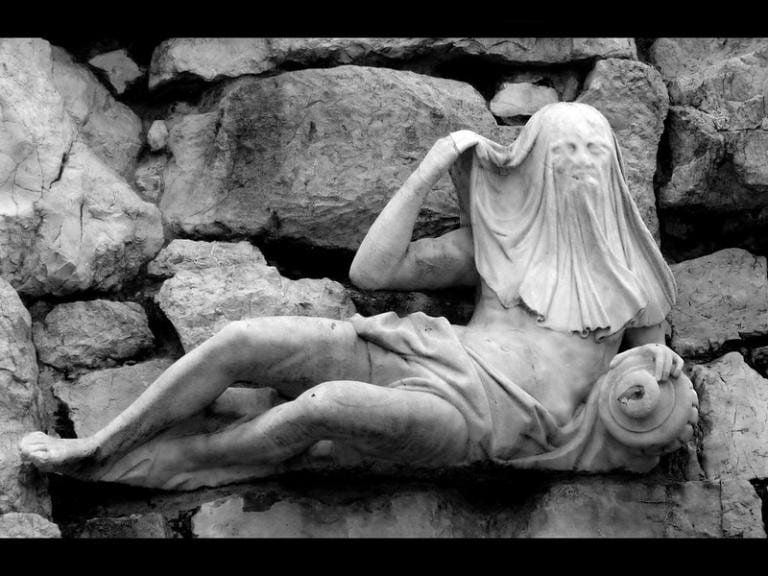
Credit: flickr/ranger78
Christianity Today recently published a short piece by Bonnie Kristian called “Shaming Can’t Fix Racism. But Guilt Can.” The subtitle conveys the writer’s big idea: “Guilt is about action with a clear path to redemption. Shame leaves us stuck in our sin.”
Some people have expressed their mixed feelings about the article. One man said to me, “What it says is correct. But articles like this leads people to think that shame is all bad.” Precisely.
Can Shame Stop Racism? No.
Kristian’s concerns are well-founded. She reacts to the growing tendency to shame white people for their complicity in perpetuating racism. Who is doing the shaming? White people themselves are leading the way. As an example, Kristian spotlights Robin DiAngelo, author of White Fragility, whose work I wrote about here.
My favorite excerpt from the article summarizes the problem.
Well-intended white Christians newly in pursuit of racial justice, adopting the language of our national conversation on race, began to speak of racism as an irreparable sin. They talked of racism as a stain on the souls of white people that cannot be washed away. Though rarely so blunt as that caption, much of the content I encountered reduced down to basically: “White people like you and me are inherently, unalterably shameful.”
This rejection of redemption unsettled me….
She suggests several differences between shame and guilt. Consequently, Kristian says, highlighting guilt offers a better way forward than shame since the former offers a chance at redemption. By contrast, “Because we can’t change our identity, we will always be shameful.”
Stop and think about it? How do you predict white people will respond to that message? She says,
“Some people, hearing that story, will simply reject it. They’ll deny the story’s premise of racial injustice as a means of escaping its conclusion of inescapable shame…. Most, however, exhausted by shame, will do nothing.”
The article makes a compelling case that we should focus on wrong behavior, not wrong identity, if we want to unite people against racism.
Can Shame Stop Racism? Yes!
There is, however, more than can and should be said. My friend was correct when he said, “Articles like this leads people to think that shame is all bad.” If we only read these valid remarks in this Christianity Today article, you would think that shame is an enemy to be opposed. One would think there is little to nothing redemptive about shame.
But if you’ve read this blog or other publications, you probably know better. Or you at least feel conflicted.
Recall my series on Te-Li Lau’s book Defending Shame: Its Formative Power in Paul’s Letters. Lau demonstrates how Paul’s adroit use of shame for the sake of moral transformation (specifically, “Christic formation”). How do we reconcile this with Kristian’s comments? As I’ve written about often, the word “shame” has several shades or layers of meaning. The Christianity Today article only speaks to one use of shame.
Randy Richard and Richard James make a helpful distinction in their exceptional forthcoming book Misreading Scripture with Individualist Eyes: Patronage, Honor, and Shame in the Biblical World. A malignant use of shame drives people away, treating them as outsiders. A healthy, restorative application of shame has the opposite effect. It draws people to us. It expresses belonging and urges people to live up to the group’s values.
In East Asian cultures, Confucian thinking has long treated shame as a “moral emotion.” I looked at this topic in posts on Bongrae Seok’s Moral Psychology of Confucian Shame: Shame of Shamelessness.
Kristian’s article uses a far more common perspective on shame. Westerners have a hard time seeing shame as a virtue. Yet, “shame” essentially functions as one’s conscience. This is why people sometimes make the rebuke “Have you no shame!?”
To see how the Bible uses these various “types” of shame, check out my Themelios article “Have Theologians No Sense of Shame? How the Bible Reconciles Objective and Subjective Shame.”
So, how do we answer the question, “Can shame stop racism?” No… and yes. It depends on what you mean by shame.
Previous Post

July 21, 2020
The Problem of White Shame
Next Post
August 5, 2020 How Purity Culture Undermined Christian Identity
Browse Our Archives
Select a Category Atonement Biblical Theology Book Reviews China Chinese Church Chinese Culture Chinese Language Collectivism Contextualization Culture (General) Ecclesiology Evangelism Gospel Honor & Shame (Face) Interpretation/Exegesis Justification/Righteousness Missiology Mission Methods One Gospel for All Nations Other Practical Contextualization Reading Romans with Eastern Eyes Resources Romans Salvation (General) Saving God's Face Seeking God's Face The Cross in Context Theological Contextualization Theological Education Theology Uncategorized
Select a Month October 2026 September 2026 August 2026 July 2026 June 2026 May 2026 April 2026 March 2026 February 2026 January 2026 December 2025 November 2025 October 2025 September 2025 August 2025 July 2025 June 2025 May 2025 April 2025 March 2025 February 2025 January 2025 December 2024 November 2024 October 2024 September 2024 August 2024 July 2024 June 2024 May 2024 April 2024 March 2024 February 2024 January 2024 December 2023 November 2023 October 2023 September 2023 August 2023 July 2023 June 2023 May 2023 April 2023 March 2023 February 2023 January 2023 December 2022 November 2022 October 2022 September 2022 August 2022 July 2022 June 2022 May 2022 April 2022 March 2022 February 2022 January 2022 December 2021 November 2021 October 2021 September 2021 August 2021 July 2021 June 2021 May 2021 April 2021 March 2021 February 2021 January 2021 December 2020 November 2020 October 2020 September 2020 August 2020 July 2020 June 2020 May 2020 April 2020 March 2020 February 2020 January 2020 December 2019 November 2019 October 2019 September 2019 August 2019 July 2019 June 2019 May 2019 April 2019 March 2019 February 2019 January 2019 December 2018 November 2018 October 2018 September 2018 August 2018 July 2018 June 2018 May 2018 April 2018 March 2018 February 2018 January 2018 December 2017 November 2017 October 2017 September 2017 August 2017 July 2017 June 2017 May 2017 April 2017 March 2017 February 2017 January 2017 December 2016 November 2016 October 2016 September 2016 August 2016 July 2016 June 2016 May 2016 April 2016 March 2016 February 2016 January 2016 December 2015 November 2015 October 2015 September 2015 August 2015 July 2015 June 2015 May 2015 April 2015 March 2015 February 2015 January 2015 December 2014 November 2014 October 2014 September 2014 August 2014 July 2014 June 2014 May 2014 April 2014 March 2014 February 2014 January 2014 December 2013 November 2013 October 2013 September 2013 August 2013 July 2013 June 2013 May 2013 April 2013 March 2013 February 2013 January 2013 December 2012 November 2012
Follow Us!
TAKE THE
Religious Wisdom Quiz
Which parable features a man building on rock versus sand?
Select your answer to see how you score.
The Talents The Sower The Wise and Foolish Builders The Workers in the Vineyard
Books by This Author Books by Brad Vaughn
Related posts from Saving God's Face

No King forgets his crown. Why do we?

Recovering Moral Vision Between Shame and Shamelessness

Refuge, Confession, and the End of Shame

Psalm 25 and the Fear of Being Put...
TRENDING AT PATHEOS Evangelical

The Sermon on the Mount, Part I: Matthew...
The Sermon on the Mount, Part I (Matthew 4:12-5:12) St. Matthew moves...

What's up from Crossway: Reviewing some of their latest A few weeks...

Janie Learns the Way of the Cross: A...
Teaching children about Jesus' Passion can be challenging. Many parents and educators...

Looking For Good Catholic Writing - October 2026
He alone extends the heavens, and he walks upon the waves of...

In "Irreplaceable," our book on vocation and technology, Trevor Sutton and I...

I was strolling through the top floor of the brand new Parthenon...
view all Evangelical blogs
Ad-Free & Subscriber Log-In Subscription Support
- About Us
- 2026 Calendar
- Videos
- Podcasts
- Library of World Religions
- Faith In Media Tracker
- Advertise With Us
- Write for Us
- Privacy Policy
- Terms of Service
- Do Not Sell My Data
- Contact Us
- Radiant Digital
- Manage Newsletter Subscriptions
- Unsubscribe From Notifications
- Sitemap
Copyright 2008-2026, Patheos. All rights reserved.
Subscription Support Ad-Free & Subscriber Log-In
Follow Patheos