
BuddhistCatholicContemplativeEvangelicalGeneral ChristianHinduJewishLatter-day SaintMuslimNew VisionsProgressive Christian
Beliefs
- Buddhist
- Catholic
- Contemplative
- Evangelical
- General Christian
- Hindu
- Jewish
- Latter-day Saint
- More Voices
- Muslim
- New Visions
- Pagan
- Progressive Christian
Topics
- Religion News
- Food and Religion
- Sports and Religion
- Religious Art
- Religious Music and Entertainment
- Religious Events
- History and Religion
- Style and Religion
- Politics and Religion
- Women in Religion
- Recreation Outdoors and Religion
- Business Finance and Religion
- Careers Workplace and Religion
- Education and Religion
- Family Parenting and Religion
- Health Fitness and Religion
- Home and Religion
- Relationships and Religion
- Technology and Religion
- Travel and Religion
Columnists
- Buddhist Columnists
- Business Finance and Religion Columnists
- Careers Workplace and Religion Columnists
- Catholic Columnists
- Contemplative Columnists
- Education and Religion Columnists
- Evangelists Columnists
- Family Parenting and Religion Columnists
- General Christian Columnists
- Health Fitness and Religion Columnists
- Hindu Columnists
- History and Religion Columnists
- Home and Religion Columnists
- Jewish Columnists
- More Voices Columnists
- Latter Day Columnists
- Muslim Columnists
- New Visions Columnists
- Nonreligious Columnists
- Pagan Columnists
- Politics and Religion Columnists
- Progressive Columnists
- Recreation Outdoors and Religion Columnists
- Relationships and Religion Columnists
- Religion News Columnists
- Religious Art Columnists
- Religious Events Columnists
- Religious Music and Entertainment Columnists
- Sports and Religion Columnists
- Style and Religion Columnists
- Technology and Religion Columnists
- Travel and Religion Columnists
- Women in Religion Columnists
Resource Library
- 2026 Calendar
- Library of World Religions
- The 100 Most Holy Places on Earth
- Patheos Answers
- Podcasts
- Videos
- Faith Leaders Database
- Anglican Episcopalian
- Bahai
- Baptist
- Buddhism
- Christianity
- Confucianism
- Eastern Orthodoxy
- Hinduism
- Holiness and Pentecostal
- ISKCON
- Islam
- Judaism
- Lutheran
- Methodist
- The Church of Jesus Christ of Latter-day Saints
- New Age
- Paganism
- Presbytarian and Reformed
- Protestantism
- Religion Behind the Scenes
- Roman Catholic
- Scientology
- Shia Islam
- Sikhism
- Sufism
- Sunni Islam
- Taoism
- Zen
- See all religions
Research Tools
 Ad-Free & Subscriber Log-In Subscription Support
Ad-Free & Subscriber Log-In Subscription Support
Follow Patheos 

- Trending:
- Forgiveness
- |
- Marriage
- |
- Consciousness
- |
- Death Penalty
- |
- Election
- |
- Halloween

-
Tools
-
Support the Work
- Home
- Evangelical
- Using Honor to Challenge Patriarchal Thinking
Using Honor to Challenge Patriarchal Thinking
Last updated on: June 24, 2020 at 3:06 am by Brad Vaughn
Using Honor to Challenge Patriarchal Thinking 2020-06-16T02:01:37-07:00 Brad Vaughn
Patheos Explore the world's faith through different perspectives on religion and spirituality! Patheos has the views of the prevalent religions and spiritualities of the world.
My previous post looked at a few examples in Scripture where women accepted and maintained patriarchal ways of thinking. By “patriarchy,” I refer to a system of rules, customs, and assumptions that preserve or prioritize the rights and power of men over those of women.
This mentality is not always apparent. Many well-intended actions draw from latent assumptions about the priority of men over women. Understanding how women reinforce such thinking is one key component to combat patriarchy within society and the church.
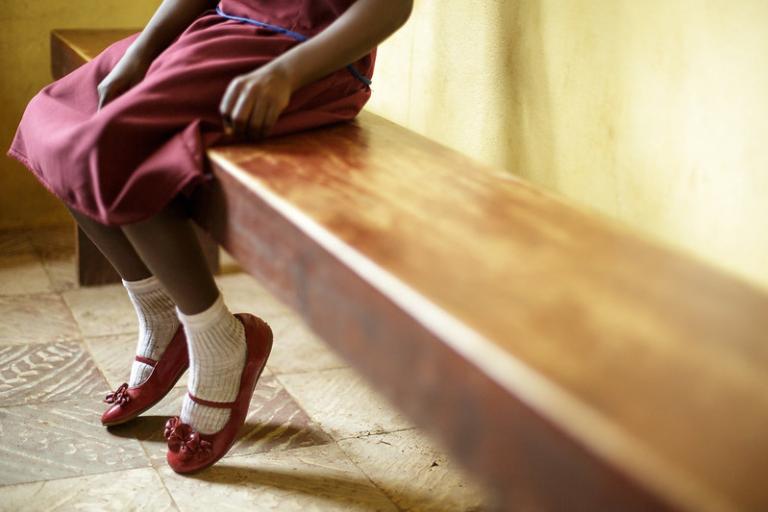 This post looks are several contemporary contexts and highlights a creative way that some women have subverted conventional patriarchal customs.
Muslim Mothers & Female Genital Mutilation
Female genital mutilation (FGM) is a common practice in some Muslim societies. Although sometimes referred to as female “circumcision,” FGM is utterly different and exceedingly cruel. Depending on the context, young girls have their clitoris partially or entirely removed. Sometimes, their vagina is sewn shut.
In a fascinating and important documentary, “The Honor Diaries,” several women discuss the rationale behind the practice. On midwife explains, “purified girls grow taller and get marriage proposals, but unpurified girls grow short and stubby.” Notice her manner of speaking. Girls who received FGM are considered “purified.” Why? Egyptian cleric, Sheikh Yussuf al Badri, adds this:
“Circumcision is the reason why Muslim women are virtuous, unlike Western women who run off to their sexual appetite in any place with any man.”
The documentary’s panel laments the fact that women often are the primary maintainers of patriarchal systems. Mothers fear that their daughters won’t get married if they receive the procedure.
What values drive this specific behavior? Honor and shame. In these conservative Muslim contexts (though not limited to such settings), a family’s honor is wrapped up in the sexual purity of women. Therefore, husbands and fathers take extreme measures to control a women’s body and sexuality.
For more examples in an African context, see here.
Patriarchal Perspectives among Western Women
How do women in the West perpetuate assumptions or practices that can marginalize the status of women? I’ll briefly suggest a few ideas.
-
“Boys will be boys”
The first is the tendency to hold boys and girls to different standards. The point is encapsulated in the phrase “boys will be boys.” This plays out in various ways. For instance, I recently heard an underlying assumption governing people’s differing responses to men and women concerning sex.
The basic idea was this: Men have the right to ask for sex. Women have the right to say “no.” As a result, if a young man and girl have sex, the girl suffers disgrace while little or nothing is said about the boy. In some cultures, the girl could be killed.
-
Body shaming
Body shaming is a favorite weapon of choice for many women. (Don’t believe me… just read some of the hubbub surrounding the recent photo of Adele that showed her 100 pounds thinner than before.) Guys might not realize it, but women dress for other women, not men.
The best line from John Mellencamp’s “Wild Night” opens the second verse.
All the girls walk by dressed up for each other
And the boys do the boogie woogie on the corner of the street
And the people passing by just stare with the wild wonder
And the inside jukebox roars just like thunder
Why do this? Subconsciously, many women measure their worth by their appearance. They absorb this thinking from the same sort of patriarchal views that create FGM in other cultures.
-
Shaming boys for showing emotion
A less direct method is the habit of shaming boys for showing emotion. I’m not saying that we should teach boys to cry all day and not learn toughness. No, I simply highlight the tendency to reinforce notions of masculinity that scorn displays of emotion. When men learn from their upbringing that sadness or grief is not acceptable, those emotions eventually come out as anger. Also, such men attempt to control the situations and people around them (including women) to an unhealthy degree.
Challenging Patriarchy in India
Now, I’ll give an example of how women and India have challenged patriarchal assumptions. These women used honor and shame as tools for improving the health and safety of women in India. I’ll quote an article that explained the situation faced by Indian women.
Like most of northern India, Haryana values males much more than females. Even before birth, males often receive far better care, while females face a high risk of selective abortion because of their gender. Once born, girls continue to face discrimination through constraints on health care, movement, education or employment. However, they also face much higher risk of violence due to the widespread practice of open defecation.
In 1999, the Indian government began the “Total Sanitation Campaign.” A major goal of the effort was to increase the number of toilets in people’s homes. So, they developed the slogan: “No Toilet, No Bride.” Between 2005–2009, 1.42 million toilets were built in the northern Indian state of Haryana.
In one village, women used a “name and shame” approach. One Indian woman said,
“We started to make a list of people who squatted in the open,” Narsaiah says. Guravaiah adds: “In the panchayat [local government] meetings, those names were read out.” The strategy worked. Humiliated by being publicly identified for defecating in the open, the men agreed to build private toilets.
As a result, the men were publicly shamed for defecating in the open. Rather than suffer humiliation, the men consented to build private toilets.
On the other hand, the campaign also created a healthy way of shaming people into building toilets. People wanted to avoid the potential shame of criticism and not having a wife. So, they were proactive and built toilets on their own initiative.
This beautiful example demonstrates how women can challenge prevailing assumptions about women as well as the use of honor and shame.
[1] See Emily Wax, “In India, New Seat of Power for Women.” Washington Post October 2009; Joanne Lu, “Women in northern India said, ‘No toilet, no bride,’ and it worked,” 18 May 2017.
[2] Joanne Lu, “Women in northern India said, ‘No toilet, no bride,’ and it worked”.
[3] Stella Paul, Global Press Journal. Sept 12, 2012. Online: https://globalpressjournal.com/asia/india/women-drive-india-s-sanitation-campaign-demand-toilets/.
Photo Credit: Flickr/MONUSCO Photos
Previous Post

June 18, 2020
JETS reviews Reading Romans with Eastern Eyes
Next Post
June 30, 2020 How God Uses Disability for the Sake of Global Missions
Browse Our Archives
Select a Category Atonement Biblical Theology Book Reviews China Chinese Church Chinese Culture Chinese Language Collectivism Contextualization Culture (General) Ecclesiology Evangelism Gospel Honor & Shame (Face) Interpretation/Exegesis Justification/Righteousness Missiology Mission Methods One Gospel for All Nations Other Practical Contextualization Reading Romans with Eastern Eyes Resources Romans Salvation (General) Saving God's Face Seeking God's Face The Cross in Context Theological Contextualization Theological Education Theology Uncategorized
Select a Month October 2026 September 2026 August 2026 July 2026 June 2026 May 2026 April 2026 March 2026 February 2026 January 2026 December 2025 November 2025 October 2025 September 2025 August 2025 July 2025 June 2025 May 2025 April 2025 March 2025 February 2025 January 2025 December 2024 November 2024 October 2024 September 2024 August 2024 July 2024 June 2024 May 2024 April 2024 March 2024 February 2024 January 2024 December 2023 November 2023 October 2023 September 2023 August 2023 July 2023 June 2023 May 2023 April 2023 March 2023 February 2023 January 2023 December 2022 November 2022 October 2022 September 2022 August 2022 July 2022 June 2022 May 2022 April 2022 March 2022 February 2022 January 2022 December 2021 November 2021 October 2021 September 2021 August 2021 July 2021 June 2021 May 2021 April 2021 March 2021 February 2021 January 2021 December 2020 November 2020 October 2020 September 2020 August 2020 July 2020 June 2020 May 2020 April 2020 March 2020 February 2020 January 2020 December 2019 November 2019 October 2019 September 2019 August 2019 July 2019 June 2019 May 2019 April 2019 March 2019 February 2019 January 2019 December 2018 November 2018 October 2018 September 2018 August 2018 July 2018 June 2018 May 2018 April 2018 March 2018 February 2018 January 2018 December 2017 November 2017 October 2017 September 2017 August 2017 July 2017 June 2017 May 2017 April 2017 March 2017 February 2017 January 2017 December 2016 November 2016 October 2016 September 2016 August 2016 July 2016 June 2016 May 2016 April 2016 March 2016 February 2016 January 2016 December 2015 November 2015 October 2015 September 2015 August 2015 July 2015 June 2015 May 2015 April 2015 March 2015 February 2015 January 2015 December 2014 November 2014 October 2014 September 2014 August 2014 July 2014 June 2014 May 2014 April 2014 March 2014 February 2014 January 2014 December 2013 November 2013 October 2013 September 2013 August 2013 July 2013 June 2013 May 2013 April 2013 March 2013 February 2013 January 2013 December 2012 November 2012
Follow Us!
TAKE THE
Religious Wisdom Quiz
What river did Jesus get baptized in?
Select your answer to see how you score.
Nile Jordan Euphrates Tigris
Books by This Author Books by Brad Vaughn
Related posts from Saving God's Face

No King forgets his crown. Why do we?

Recovering Moral Vision Between Shame and Shamelessness

The Real Crisis Beneath America’s Social Crises (Part...

America’s Crisis Is Deeper Than Politics
TRENDING AT PATHEOS Evangelical

When Halloween Unmasks Married Hearts
Written by Dr. David K. Ewen from Eternal Truth Bible College Behind...

Aristotle. He’s been called the father of logic, the father of the...

Methodist Central Hall and Westminster Abbey
Situated on the same square is Methodist Central Hall and Westminster Abbey. ...

57th Dove Awards Honor Dolly Parton, Crown New...
On gospel music’s biggest night, the 57th annual GMA Dove Awards honored...

The First Eucharistic Controversy: Christ’s Real Presence
For Catholics, the Eucharist is the source and summit of the Christian...

What a Stop Sign Can Teach Us About...
How to Make a Decision When You Can't Hear God Main point:...
view all Evangelical blogs
Ad-Free & Subscriber Log-In Subscription Support
- About Us
- 2026 Calendar
- Videos
- Podcasts
- Library of World Religions
- Faith In Media Tracker
- Advertise With Us
- Write for Us
- Privacy Policy
- Terms of Service
- Do Not Sell My Data
- Contact Us
- Radiant Digital
- Manage Newsletter Subscriptions
- Unsubscribe From Notifications
- Sitemap
Copyright 2008-2026, Patheos. All rights reserved.
Subscription Support Ad-Free & Subscriber Log-In
Follow Patheos