
BuddhistCatholicContemplativeEvangelicalGeneral ChristianHinduJewishLatter-day SaintMuslimNew VisionsProgressive Christian
Beliefs
- Buddhist
- Catholic
- Contemplative
- Evangelical
- General Christian
- Hindu
- Jewish
- Latter-day Saint
- More Voices
- Muslim
- New Visions
- Pagan
- Progressive Christian
Topics
- Religion News
- Food and Religion
- Sports and Religion
- Religious Art
- Religious Music and Entertainment
- Religious Events
- History and Religion
- Style and Religion
- Politics and Religion
- Women in Religion
- Recreation Outdoors and Religion
- Business Finance and Religion
- Careers Workplace and Religion
- Education and Religion
- Family Parenting and Religion
- Health Fitness and Religion
- Home and Religion
- Relationships and Religion
- Technology and Religion
- Travel and Religion
Columnists
- Buddhist Columnists
- Business Finance and Religion Columnists
- Careers Workplace and Religion Columnists
- Catholic Columnists
- Contemplative Columnists
- Education and Religion Columnists
- Evangelists Columnists
- Family Parenting and Religion Columnists
- General Christian Columnists
- Health Fitness and Religion Columnists
- Hindu Columnists
- History and Religion Columnists
- Home and Religion Columnists
- Jewish Columnists
- More Voices Columnists
- Latter Day Columnists
- Muslim Columnists
- New Visions Columnists
- Nonreligious Columnists
- Pagan Columnists
- Politics and Religion Columnists
- Progressive Columnists
- Recreation Outdoors and Religion Columnists
- Relationships and Religion Columnists
- Religion News Columnists
- Religious Art Columnists
- Religious Events Columnists
- Religious Music and Entertainment Columnists
- Sports and Religion Columnists
- Style and Religion Columnists
- Technology and Religion Columnists
- Travel and Religion Columnists
- Women in Religion Columnists
Resource Library
- 2026 Calendar
- Library of World Religions
- The 100 Most Holy Places on Earth
- Patheos Answers
- Podcasts
- Videos
- Faith Leaders Database
- Anglican Episcopalian
- Bahai
- Baptist
- Buddhism
- Christianity
- Confucianism
- Eastern Orthodoxy
- Hinduism
- Holiness and Pentecostal
- ISKCON
- Islam
- Judaism
- Lutheran
- Methodist
- The Church of Jesus Christ of Latter-day Saints
- New Age
- Paganism
- Presbytarian and Reformed
- Protestantism
- Religion Behind the Scenes
- Roman Catholic
- Scientology
- Shia Islam
- Sikhism
- Sufism
- Sunni Islam
- Taoism
- Zen
- See all religions
Research Tools
 Ad-Free & Subscriber Log-In Subscription Support
Ad-Free & Subscriber Log-In Subscription Support
Follow Patheos 

- Trending:
- Forgiveness
- |
- Marriage
- |
- Consciousness
- |
- Death Penalty
- |
- Election
- |
- Halloween

-
Tools
-
Support the Work
- Home
- Evangelical
- How Paul Uses Shame in His Letters
How Paul Uses Shame in His Letters
Last updated on: May 14, 2020 at 2:01 am by Brad Vaughn
How Paul Uses Shame in His Letters 2020-05-14T02:01:15-07:00 Brad Vaughn
Patheos Explore the world's faith through different perspectives on religion and spirituality! Patheos has the views of the prevalent religions and spiritualities of the world.
The goal of Te-Li Lau’s Defending Shame is to explore Paul’s use of shame for the sake of moral formation. Specifically, Paul uses “retrospective shame” (ch. 4) and “prospective shame” (ch. 5) in an effort to bring about “Christic formation.” Lau’s survey of Paul is rich with insight. This post only highlights just a few of my favorite takeaways.
(This is the third in a series looking at Lau’s Defending Defending Shame: Its Formative Power in Paul’s Letters. Check out Part 1 and Part 2)
Paul’s Use of Retrospective Shame
Retrospective shame is the “kind of shame that is consequent upon having done bad acts (either in the past or present)” (26). To see how Paul uses this type of shame, Lau examines Galatians and 1 Corinthians.
Lau begins with Galatians. He not only looks at Paul’s confrontation with Peter; Lau also considers more subtle aspects of Paul’s approach, including the structure of the letter, Paul’s portrayal of the Galatian addressees, and his portrayal of the agitators against whom Paul writes.
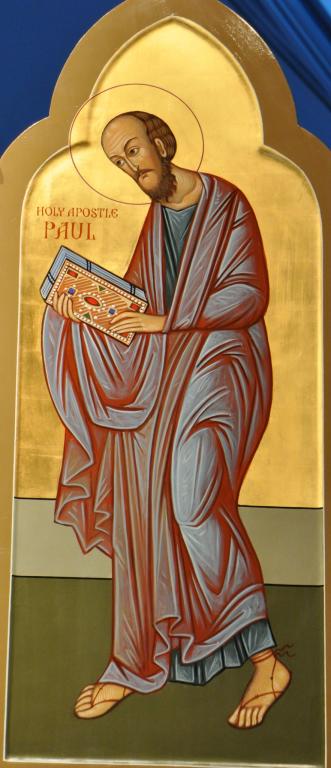
Credit: Flickr/frted
Lau identifies several key characteristics that mark Paul’s shaming tactics. First, he does not merely berate his readers; he gives thoughtful reasons to buttress his rebuff. Second, Lau notes, “Effective shaming rebuke also requires solid ethos or unimpeachable character on the part of the speaker” (104). Paul highlights his own character and efforts as “a foil demonstrating the shameful character of the agitators” (104).
Third, “Like a skillful doctor, Paul balances his shaming refutation with gentle words so that the bitter pill of correction is more easily swallowed” (104). This approach leads to a fourth feature of Paul’s shaming in Galatians. His purpose or goal in shaming is to “engage them in the core of their being” in order to “transform the mind” (104–105). They must know that “within the divine court of opinion, the Galatians are shameworthy” (106).
Lau summarizes,
“Paul uses shame as a tool to transform the mind so that it is capable of self-evaluation, but the ultimate goal of Paul’s shaming refutation is to transform the perspective of the Galatians so that their identity and behavior are firmly rooted in the crucified Messiah.” (106)
For this reason, Paul pivots from his extended rebuke in Galatians 1:6–4:11 and urges them to “become like me” (Gal 4:12).
When Lau turns our eyes to 1 Corinthians, we find many other insights for wisdom. Lau’s careful attention to detail enables him to discern subtle ways that Paul uses vocabulary to achieve different effects. In waking the Corinthians from their complacency, “Paul moves past the superficial task of behavior modification to value transformation” (120). Lau has a lot more to say about 1 Corinthians, but space prevents me from delving deeply here.
Paul’s Use of Prospective Shame
Prospective shame is a kind of shame that “looks to the future and restrains one from pursuing bad acts” (26). To understand how Paul uses shame in this way, he looks to Philippians and Philemon.
According to Lau, “Paul uses honor and shame categories in Philippians to cultivate a dispositional sense of shame in his readers” (123). He wants to shape their conscience so that they can persevere in the faith and resist temptation and fruitless disputes. For the church, the cross and humility no longer are “social markers of shame”; they are “nullified and transformed in God’s economy” for the sake of glory (128).
Paul points to Christ and others as moral exemplars, who can guide them forwarded to true honor. Christ is the new standard that must shape one’s conscience.
Paul’s use of honor and shame in Philemon is breathtaking. He keenly alternates between the roles of superior and inferior. Paul ensures that Philemon grasps the way Christ transform our identity and thus his relationship to Onesimus. Lau astutely points out that the letter to Philemon actually is a public letter, a detail I had long overlooked.
The Place of Shame in Paul
Prospective shame is not independent of retrospective shame; rather, they are intertwined. In Lau’s study, this point becomes increasing evident. It is also quite useful. Lau states,
“Paul may engage in specific acts of shaming so as to evoke the occurrent experience of shame not for a past or present transgression but for a potential bad act in the future. He brings about the experience of prospective shame to forestall the performance of bad acts” (p. 158).
The experience of shame does not that cause a pain rather than pleasure response. It reflects and modulates one’s values. It moves our morality.
Paul understands that “Virtue is not just doing virtuous things but doing virtuous things virtuously” (p. 162). Accordingly, shaming acts are not punitive for punishment’s sake; they aim at restoration. In fact, Lau observes that the converse can be true, as when Israel finally felt shame once they were restored. This form of shame is healthy and healing for those who suffer from shamelessness.
Read It Twice and Read It Together
Here is my advice if you get this book. Read it twice. And read it together. The reason is that it is dense. The second time through, you will want to sketch outline and practical takeaways that can be used in your life and ministry.
Paul’s demonstrate a healthy way of using shame as a way of honoring people. In order to internalize such insights, we need time and opportunity to process with others.
If you are interested, here’s an excerpt of Defending Shame. Enjoy!
Previous Post

April 23, 2020
Where is the Gospel?
Next Post
May 5, 2020 I sacrificed more by leaving the mission field
Browse Our Archives
Select a Category Atonement Biblical Theology Book Reviews China Chinese Church Chinese Culture Chinese Language Collectivism Contextualization Culture (General) Ecclesiology Evangelism Gospel Honor & Shame (Face) Interpretation/Exegesis Justification/Righteousness Missiology Mission Methods One Gospel for All Nations Other Practical Contextualization Reading Romans with Eastern Eyes Resources Romans Salvation (General) Saving God's Face Seeking God's Face The Cross in Context Theological Contextualization Theological Education Theology Uncategorized
Select a Month October 2026 September 2026 August 2026 July 2026 June 2026 May 2026 April 2026 March 2026 February 2026 January 2026 December 2025 November 2025 October 2025 September 2025 August 2025 July 2025 June 2025 May 2025 April 2025 March 2025 February 2025 January 2025 December 2024 November 2024 October 2024 September 2024 August 2024 July 2024 June 2024 May 2024 April 2024 March 2024 February 2024 January 2024 December 2023 November 2023 October 2023 September 2023 August 2023 July 2023 June 2023 May 2023 April 2023 March 2023 February 2023 January 2023 December 2022 November 2022 October 2022 September 2022 August 2022 July 2022 June 2022 May 2022 April 2022 March 2022 February 2022 January 2022 December 2021 November 2021 October 2021 September 2021 August 2021 July 2021 June 2021 May 2021 April 2021 March 2021 February 2021 January 2021 December 2020 November 2020 October 2020 September 2020 August 2020 July 2020 June 2020 May 2020 April 2020 March 2020 February 2020 January 2020 December 2019 November 2019 October 2019 September 2019 August 2019 July 2019 June 2019 May 2019 April 2019 March 2019 February 2019 January 2019 December 2018 November 2018 October 2018 September 2018 August 2018 July 2018 June 2018 May 2018 April 2018 March 2018 February 2018 January 2018 December 2017 November 2017 October 2017 September 2017 August 2017 July 2017 June 2017 May 2017 April 2017 March 2017 February 2017 January 2017 December 2016 November 2016 October 2016 September 2016 August 2016 July 2016 June 2016 May 2016 April 2016 March 2016 February 2016 January 2016 December 2015 November 2015 October 2015 September 2015 August 2015 July 2015 June 2015 May 2015 April 2015 March 2015 February 2015 January 2015 December 2014 November 2014 October 2014 September 2014 August 2014 July 2014 June 2014 May 2014 April 2014 March 2014 February 2014 January 2014 December 2013 November 2013 October 2013 September 2013 August 2013 July 2013 June 2013 May 2013 April 2013 March 2013 February 2013 January 2013 December 2012 November 2012
Follow Us!
TAKE THE
Religious Wisdom Quiz
Who were Isaac and Rebekah's twin sons?
Select your answer to see how you score.
Joseph and Benjamin Esau and Jacob Cain and Abel Simeon and Levi
Books by This Author Books by Brad Vaughn
Related posts from Saving God's Face

No King forgets his crown. Why do we?

Recovering Moral Vision Between Shame and Shamelessness

Refuge, Confession, and the End of Shame

Psalm 25 and the Fear of Being Put...
TRENDING AT PATHEOS Evangelical

In one sense walking into Westminster Abbey is like walking down the...

'Super Scam Me' Exposes AI Jon Bon Jovi...
Leslie Pickett believed she was in a relationship with Jon Bon Jovi....

The Brazilian Remake of Kendricks' 'Flywheel' Opens in...
“Flywheel,” the story that launched the Kendrick Brothers’ filmmaking career is getting...

The Dangers of Gradual Accommodation (Winking at Sin)
Recently, the “law of gradualness” resurfaced during the opening of a weeklong,...

The Iron Gates and the Lion of the...
Yesterday, I didn't finish my report about, well, yesterday. So I'll...

The Image: On the Horror of Capitalism and...
The Image Then went the Pharisees, and took counsel how they might...
view all Evangelical blogs
Ad-Free & Subscriber Log-In Subscription Support
- About Us
- 2026 Calendar
- Videos
- Podcasts
- Library of World Religions
- Faith In Media Tracker
- Advertise With Us
- Write for Us
- Privacy Policy
- Terms of Service
- Do Not Sell My Data
- Contact Us
- Radiant Digital
- Manage Newsletter Subscriptions
- Unsubscribe From Notifications
- Sitemap
Copyright 2008-2026, Patheos. All rights reserved.
Subscription Support Ad-Free & Subscriber Log-In
Follow Patheos