
BuddhistCatholicContemplativeEvangelicalGeneral ChristianHinduJewishLatter-day SaintMuslimNew VisionsProgressive Christian
Beliefs
- Buddhist
- Catholic
- Contemplative
- Evangelical
- General Christian
- Hindu
- Jewish
- Latter-day Saint
- More Voices
- Muslim
- New Visions
- Pagan
- Progressive Christian
Topics
- Religion News
- Food and Religion
- Sports and Religion
- Religious Art
- Religious Music and Entertainment
- Religious Events
- History and Religion
- Style and Religion
- Politics and Religion
- Women in Religion
- Recreation Outdoors and Religion
- Business Finance and Religion
- Careers Workplace and Religion
- Education and Religion
- Family Parenting and Religion
- Health Fitness and Religion
- Home and Religion
- Relationships and Religion
- Technology and Religion
- Travel and Religion
Columnists
- Buddhist Columnists
- Business Finance and Religion Columnists
- Careers Workplace and Religion Columnists
- Catholic Columnists
- Contemplative Columnists
- Education and Religion Columnists
- Evangelists Columnists
- Family Parenting and Religion Columnists
- General Christian Columnists
- Health Fitness and Religion Columnists
- Hindu Columnists
- History and Religion Columnists
- Home and Religion Columnists
- Jewish Columnists
- More Voices Columnists
- Latter Day Columnists
- Muslim Columnists
- New Visions Columnists
- Nonreligious Columnists
- Pagan Columnists
- Politics and Religion Columnists
- Progressive Columnists
- Recreation Outdoors and Religion Columnists
- Relationships and Religion Columnists
- Religion News Columnists
- Religious Art Columnists
- Religious Events Columnists
- Religious Music and Entertainment Columnists
- Sports and Religion Columnists
- Style and Religion Columnists
- Technology and Religion Columnists
- Travel and Religion Columnists
- Women in Religion Columnists
Resource Library
- 2026 Calendar
- Library of World Religions
- The 100 Most Holy Places on Earth
- Patheos Answers
- Podcasts
- Videos
- Faith Leaders Database
- Anglican Episcopalian
- Bahai
- Baptist
- Buddhism
- Christianity
- Confucianism
- Eastern Orthodoxy
- Hinduism
- Holiness and Pentecostal
- ISKCON
- Islam
- Judaism
- Lutheran
- Methodist
- The Church of Jesus Christ of Latter-day Saints
- New Age
- Paganism
- Presbytarian and Reformed
- Protestantism
- Religion Behind the Scenes
- Roman Catholic
- Scientology
- Shia Islam
- Sikhism
- Sufism
- Sunni Islam
- Taoism
- Zen
- See all religions
Research Tools
 Ad-Free & Subscriber Log-In Subscription Support
Ad-Free & Subscriber Log-In Subscription Support
Follow Patheos 

- Trending:
- Forgiveness
- |
- Marriage
- |
- Consciousness
- |
- Death Penalty
- |
- Election
- |
- Halloween

-
Tools
-
Support the Work
- Home
- Evangelical
- How Ancient Greeks and Jews Used Shame
How Ancient Greeks and Jews Used Shame
Last updated on: November 21, 2020 at 3:40 am by Brad Vaughn
How Ancient Greeks and Jews Used Shame 2020-11-21T03:40:44-07:00 Brad Vaughn
Patheos Explore the world's faith through different perspectives on religion and spirituality! Patheos has the views of the prevalent religions and spiritualities of the world.

Te-Li Lau
There is an internal logic to shame. This is one reason Te-Li Lau writes Part 1 (“Framework”) of Defending Shame. For many people, the initial section of an academic book could easily be called “Boring But Necessary.” I was tempted to skim the first few chapters of Lau’s book; I’m glad I didn’t.
(The first post in this series gave a broad introduction to Defending Shame: Its Formative Power in Paul’s Letters.)
Definitions and Clarifications
Chapter 1 provides the conceptual framework for his project. In general, Lau defines shame as “the painful emotion that arises from an awareness that one has fallen short of some standard, ideal, or goal” (p. 29). While I might quibble with a few minor points, this introduction is standard for any such work on honor and shame. Most importantly, he makes several important clarifications that shape the rest of his work.
Occurrent experience of shame
“the discomforting and painful emotion that arises when one is aware of certain inadequacies of the self under the gaze of an other.” (p. 24)
Dispositional shame
“(sense of shame or shamefulness) is the disposition, inclination, and inhibition that restrains one from pursuing certain actions from pursuing certain actions that are shameful without implication that shame is actually being experienced by the person.” (p. 24)
Retrospective shame
“a kind of shame that is consequent upon having done bad acts (either in the past or present)” (26)
Prospective shame
a kind of shame that “looks to the future and restrains one from pursuing bad acts.” (26)
Acts of shaming
“what and individual or collective agent does to bring about the occurrent experience of shame in an individual or collective group.” (26)
Simply being aware of these distinctions will make a big difference in thinking through the implications of honor and shame. In chapter 2–3, Lau surveys the Greco-Roman and Jewish backgrounds respectively.
Greco-Romans Background
Why study ancient Greek and Roman perspectives concerning shame?
First, this is the cultural milieu in which Paul and his readers lived and learned. His study introduces important terms and distinctions that modern readers likely miss due to the vagueness of contemporary shame language (especially English). Second, Lau’s study sheds light on the inner logic governing honor and shame, whether in history and/or across cultures.
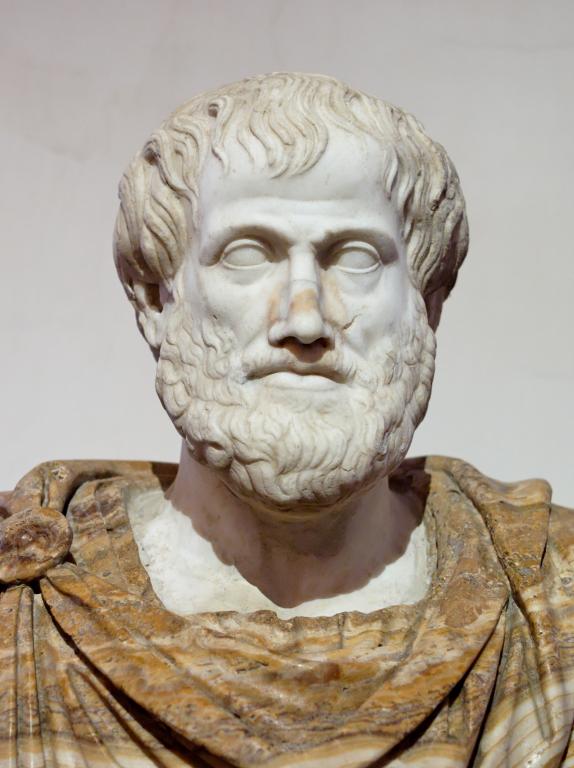
Aristotle
The ancient Greeks, like Chinese philosophers, clearly saw shame as a moral emotion. In fact, unlike many people today, they did not dichotomize justice and shame. For example, Protagoros (a pre-Socratic philosopher) taught that the second stage of civilization is where “Zeus intervenes in human history with his two gifts: justice (δικη) and shame (αιδως)” (34). Shame regulates behavior such that Democritus says, “Learn to feel shame (αισχυνω) in your own eyes much more than before others” (36).
Aristotle explains shame in this way.
“Let shame then be defined as a kind of pain or uneasiness in respect of misdeeds, past, present, or future, which seem to tend to bring dishonor; and shamelessness as contempt and indifference in regard to these same things.” (Rhet. 2.6.2)
Shaming refutation, Lau suggests, was and is an important tool for moral formation. In my own words, I summarize a key take away like this: to shame others (for the sake of ethics) is akin to showing people what they could be and so evoke disgust. Shaming someone need not be a definite, once-for-all negative assessment of another’s worth. Shame is integral to a fully functioning conscience.
There are so many more things that deserve attention. For now, this must suffice.
Jewish Background
Lau’s reflections on shame in ancient Israel are equally substantial. The chapter draws from both biblical and extra-biblical texts. He rightly observes the way Jewish writers use metaphors to convey shame and honor (e.g., clean, unclean). Blessing and curse likewise carried honor-shame connotations. Shaming actions served as sanctions for behavior.
Wisdom helps us discern between various types of shame. A quote from Ben Sira highlights a key distinction. He says,
“there is a shame that leads to sin, and there is a shame that is glory and favor” (83).
Ancient Jewish writers exalted in the glory of God’s power and faithfulness; they pointed to moral exemplars who honored the Lord. Yet, they were willing publicly shame those who veered from the Lord “with the hope that they might be able to perceive their actions from the perspective of the community” (89).
_______________________________
The next post looks at Part 2, where Lau interprets Paul’s letters. For now, here’s an excerpt of Defending Shame.
Previous Post

April 15, 2020
Does the cross mean we should "grin and bear it"?
Next Post
April 22, 2020 Why must we settle for part of the gospel?
Browse Our Archives
Select a Category Atonement Biblical Theology Book Reviews China Chinese Church Chinese Culture Chinese Language Collectivism Contextualization Culture (General) Ecclesiology Evangelism Gospel Honor & Shame (Face) Interpretation/Exegesis Justification/Righteousness Missiology Mission Methods One Gospel for All Nations Other Practical Contextualization Reading Romans with Eastern Eyes Resources Romans Salvation (General) Saving God's Face Seeking God's Face The Cross in Context Theological Contextualization Theological Education Theology Uncategorized
Select a Month October 2026 September 2026 August 2026 July 2026 June 2026 May 2026 April 2026 March 2026 February 2026 January 2026 December 2025 November 2025 October 2025 September 2025 August 2025 July 2025 June 2025 May 2025 April 2025 March 2025 February 2025 January 2025 December 2024 November 2024 October 2024 September 2024 August 2024 July 2024 June 2024 May 2024 April 2024 March 2024 February 2024 January 2024 December 2023 November 2023 October 2023 September 2023 August 2023 July 2023 June 2023 May 2023 April 2023 March 2023 February 2023 January 2023 December 2022 November 2022 October 2022 September 2022 August 2022 July 2022 June 2022 May 2022 April 2022 March 2022 February 2022 January 2022 December 2021 November 2021 October 2021 September 2021 August 2021 July 2021 June 2021 May 2021 April 2021 March 2021 February 2021 January 2021 December 2020 November 2020 October 2020 September 2020 August 2020 July 2020 June 2020 May 2020 April 2020 March 2020 February 2020 January 2020 December 2019 November 2019 October 2019 September 2019 August 2019 July 2019 June 2019 May 2019 April 2019 March 2019 February 2019 January 2019 December 2018 November 2018 October 2018 September 2018 August 2018 July 2018 June 2018 May 2018 April 2018 March 2018 February 2018 January 2018 December 2017 November 2017 October 2017 September 2017 August 2017 July 2017 June 2017 May 2017 April 2017 March 2017 February 2017 January 2017 December 2016 November 2016 October 2016 September 2016 August 2016 July 2016 June 2016 May 2016 April 2016 March 2016 February 2016 January 2016 December 2015 November 2015 October 2015 September 2015 August 2015 July 2015 June 2015 May 2015 April 2015 March 2015 February 2015 January 2015 December 2014 November 2014 October 2014 September 2014 August 2014 July 2014 June 2014 May 2014 April 2014 March 2014 February 2014 January 2014 December 2013 November 2013 October 2013 September 2013 August 2013 July 2013 June 2013 May 2013 April 2013 March 2013 February 2013 January 2013 December 2012 November 2012
Follow Us!
TAKE THE
Religious Wisdom Quiz
What is the biblical view of work?
Select your answer to see how you score.
Work is a curse Work hard as for the Lord Avoid work Only kings should work
Books by This Author Books by Brad Vaughn
Related posts from Saving God's Face

No King forgets his crown. Why do we?

Recovering Moral Vision Between Shame and Shamelessness

Refuge, Confession, and the End of Shame

Psalm 25 and the Fear of Being Put...
TRENDING AT PATHEOS Evangelical

The Iron Gates and the Lion of the...
Yesterday, I didn't finish my report about, well, yesterday. So I'll...

Dolly Parton’s Last Song Wins Dove Award with...
Bluegrass band The Grascals, speaking on the red carpet at the 57th...

The Image: On the Horror of Capitalism and...
The Image Then went the Pharisees, and took counsel how they might...

We are approaching the date of our new American national holiday: October...

Letters on Living the Faith by C.S. Lewis
Most of us met C.S. Lewis as a public intellectual. Mere Christianity....

When Halloween Unmasks Married Hearts
Written by Dr. David K. Ewen from Eternal Truth Bible College Behind...
view all Evangelical blogs
Ad-Free & Subscriber Log-In Subscription Support
- About Us
- 2026 Calendar
- Videos
- Podcasts
- Library of World Religions
- Faith In Media Tracker
- Advertise With Us
- Write for Us
- Privacy Policy
- Terms of Service
- Do Not Sell My Data
- Contact Us
- Radiant Digital
- Manage Newsletter Subscriptions
- Unsubscribe From Notifications
- Sitemap
Copyright 2008-2026, Patheos. All rights reserved.
Subscription Support Ad-Free & Subscriber Log-In
Follow Patheos