
BuddhistCatholicContemplativeEvangelicalGeneral ChristianHinduJewishLatter-day SaintMuslimNew VisionsProgressive Christian
Beliefs
- Buddhist
- Catholic
- Contemplative
- Evangelical
- General Christian
- Hindu
- Jewish
- Latter-day Saint
- More Voices
- Muslim
- New Visions
- Pagan
- Progressive Christian
Topics
- Religion News
- Food and Religion
- Sports and Religion
- Religious Art
- Religious Music and Entertainment
- Religious Events
- History and Religion
- Style and Religion
- Politics and Religion
- Women in Religion
- Recreation Outdoors and Religion
- Business Finance and Religion
- Careers Workplace and Religion
- Education and Religion
- Family Parenting and Religion
- Health Fitness and Religion
- Home and Religion
- Relationships and Religion
- Technology and Religion
- Travel and Religion
Columnists
- Buddhist Columnists
- Business Finance and Religion Columnists
- Careers Workplace and Religion Columnists
- Catholic Columnists
- Contemplative Columnists
- Education and Religion Columnists
- Evangelists Columnists
- Family Parenting and Religion Columnists
- General Christian Columnists
- Health Fitness and Religion Columnists
- Hindu Columnists
- History and Religion Columnists
- Home and Religion Columnists
- Jewish Columnists
- More Voices Columnists
- Latter Day Columnists
- Muslim Columnists
- New Visions Columnists
- Nonreligious Columnists
- Pagan Columnists
- Politics and Religion Columnists
- Progressive Columnists
- Recreation Outdoors and Religion Columnists
- Relationships and Religion Columnists
- Religion News Columnists
- Religious Art Columnists
- Religious Events Columnists
- Religious Music and Entertainment Columnists
- Sports and Religion Columnists
- Style and Religion Columnists
- Technology and Religion Columnists
- Travel and Religion Columnists
- Women in Religion Columnists
Resource Library
- 2026 Calendar
- Library of World Religions
- The 100 Most Holy Places on Earth
- Patheos Answers
- Podcasts
- Videos
- Faith Leaders Database
- Anglican Episcopalian
- Bahai
- Baptist
- Buddhism
- Christianity
- Confucianism
- Eastern Orthodoxy
- Hinduism
- Holiness and Pentecostal
- ISKCON
- Islam
- Judaism
- Lutheran
- Methodist
- The Church of Jesus Christ of Latter-day Saints
- New Age
- Paganism
- Presbytarian and Reformed
- Protestantism
- Religion Behind the Scenes
- Roman Catholic
- Scientology
- Shia Islam
- Sikhism
- Sufism
- Sunni Islam
- Taoism
- Zen
- See all religions
Research Tools
 Ad-Free & Subscriber Log-In Subscription Support
Ad-Free & Subscriber Log-In Subscription Support
Follow Patheos 

- Trending:
- Forgiveness
- |
- Marriage
- |
- Consciousness
- |
- Death Penalty
- |
- Election
- |
- Halloween

-
Tools
-
Support the Work
- Home
- Evangelical
- The Gospel Coalition Reviews “Reading Romans”
The Gospel Coalition Reviews “Reading Romans”
Last updated on: February 5, 2020 at 11:04 am by Brad Vaughn
The Gospel Coalition Reviews “Reading Romans” 2020-02-05T11:04:56-07:00 Brad Vaughn
Patheos Explore the world's faith through different perspectives on religion and spirituality! Patheos has the views of the prevalent religions and spiritualities of the world.
A few people have asked, “What do you think about The Gospel Coalition’s review of your book?” My response didn’t surprise those who posed the question. I’ve said, “It’s probably the most positive review I could ever expect from The Gospel Coalition.”
That is not at all a back-handed “thank you.” I’m sincerely grateful for such a thoughtful and generous review. However, I’m also aware that every church, organization, etc. has certain things they look for when reading books. Any book that covers such a broad span of Romans will, for example, address justification. That topic has long been a focus point for TGC writers.
(For full disclosure, I am the Mission and Culture book reviews editor for The Gospel Coalition’s (TGC) journal Themelios. I didn’t even know they reviewed the book until a day after it was published online. So, there was no insider influence.)
A Lesson in Critiquing a Book
The reviewers, Jonathan Worthington and Elliot Clark, show respect and appreciation while demonstrating how to disagree well. They open with several kind words about the Reading Romans, including specific insights they gained from it. The next section identifies a particular concern or limitation of the book as they see it.
Before engaging with their criticism, I want to highlight what impressed me most about their review. After stating their reservations, they make this comment:
“Some defenders of Wu or his perspective may now be tempted to dismiss our earlier praise for his book as shallow and insincere. Some committed to a traditional understanding of justification may now be tempted to dismiss Wu’s entire project. Both temptations should be resisted. Wu has given us many genuine insights, and they’re exactly the things that those in the Reformed evangelical world need to see—reading Wu with discerning eyes, of course.”
I rarely see reviewers go out of their way like this to ensure that readers would maintain a balanced perspective. In fact, they later add this qualification,
“We also believe that careful readers who don’t blindly follow Wu’s view of justification can greatly benefit from his primary objective. His theology of justification is actually peripheral and dispensable, not central and inherent, to his main thesis.”
In recent years, it has become vogue to judge books as nearly “all bad” or “all good.” We’ve lost our ability to disagree and the appreciation for nuance. Sadly, this has become too characteristic of conservative evangelicals. Worthington and Clark offer a refreshing example of a better way forward.
Responding to “Significant Concerns”
So, what do they not like about Reading Romans with Eastern Eyes and what is my response? First, I state their concern. They write,
“Inasmuch as we appreciate Wu’s contribution to the church’s understanding of Romans, we do have some significant concerns. In some cases, we believe Wu has blurred theological lines specifically related to the doctrine of justification. While his primary and stated agenda is to highlight shame-honor and collectivist aspects of Romans, his secondary goal appears to be influenced by his commitment to the “New Perspective” reading of Paul.
Wu has sought to correct an overemphasis on the individual. But we believe he’s done so with an overemphasis on the collective. And he’s done so in a way that, at times, confuses a crucial aspect of the gospel itself—justification.”
I appreciate their acknowledgement that Reading Romans primary aims to highlight shame-honor thus collectivist aspects of Romans. Therefore, one should not expect an extended exposition on justification and related themes. Of course, we can’t entirely separate justification from honor-shame. After all, Paul explicitly links them in texts like Romans 10:10-11, which says
For with the heart one believes and is justified, and with the mouth one confesses and is saved. For the Scripture says, “Everyone who believes in him will not be put to shame.”
I was somewhat disappointed but not surprised by the reference to my “commitment to the ‘New Perspective’ reading of Paul.” That blanket description obscures more than it reveals.
- There is no such that as a single “New Perspective” on Paul.
- Even proponents of the traditional protestant perspective have expressed appreciation for many insights that comes from the so-called New Perspective on Paul (NPP). The reviewers use the term as if everything coming from the NPP were errant.
If I were to liken my view of Paul to other scholars, the people with whom I’m probably closest would be Michael Bird and Preston Sprinkle (based on what I’ve read from him on the topic). I’d be on the more traditional side of N. T. Wright, though our difference might be a matter of emphasis.
Individual vs. Collective Identity?
Finally, Worthington and Clark add,
“As a result, we believe Wu conflates who is justified with how they are justified. At times the scope of the gospel eclipses the content and means of the gospel (90). Wu wants to emphasize (not without some warrant) the community identity that comes with justification. Quoting N. T. Wright, he repeatedly affirms, “Justification is all about being declared a member of God’s people” (106). But this communal focus seems to blind Wu to Paul’s ability to talk about justification in personal and individual terms as well, specifically with reference to what it actually is rather than to whom it’s applied, and particularly in the texts of Romans 3–4.
Wu has sought to correct an overemphasis on the individual. This is needed. But we believe he’s done so with an overemphasis on the collective. And he’s done so in a way that, at times, confuses a crucial aspect of the gospel itself—justification.”
I suspect this might be one of those “in the eye of the beholder” objections. The book intends to be a corrective. By nature, one would not expect correctives to be entirely balanced on all issues (while remaining readable).
Where we can’t agree on what constitutes a proper emphasis, I would say this: With a group (i.e., collective identity), we get the individual. But with a focus on the individual, we tend to lose the group. While an oversimplification, I think the past few hundred years of overemphasizing the individual bears out my point.
Reading Romans with Eastern Eyes
Previous Post

February 3, 2020
Why Are Drones Shaming Chinese Citizens? The Coronavirus
Next Post
February 12, 2020 Do you have missional ADD?
Browse Our Archives
Select a Category Atonement Biblical Theology Book Reviews China Chinese Church Chinese Culture Chinese Language Collectivism Contextualization Culture (General) Ecclesiology Evangelism Gospel Honor & Shame (Face) Interpretation/Exegesis Justification/Righteousness Missiology Mission Methods One Gospel for All Nations Other Practical Contextualization Reading Romans with Eastern Eyes Resources Romans Salvation (General) Saving God's Face Seeking God's Face The Cross in Context Theological Contextualization Theological Education Theology Uncategorized
Select a Month October 2026 September 2026 August 2026 July 2026 June 2026 May 2026 April 2026 March 2026 February 2026 January 2026 December 2025 November 2025 October 2025 September 2025 August 2025 July 2025 June 2025 May 2025 April 2025 March 2025 February 2025 January 2025 December 2024 November 2024 October 2024 September 2024 August 2024 July 2024 June 2024 May 2024 April 2024 March 2024 February 2024 January 2024 December 2023 November 2023 October 2023 September 2023 August 2023 July 2023 June 2023 May 2023 April 2023 March 2023 February 2023 January 2023 December 2022 November 2022 October 2022 September 2022 August 2022 July 2022 June 2022 May 2022 April 2022 March 2022 February 2022 January 2022 December 2021 November 2021 October 2021 September 2021 August 2021 July 2021 June 2021 May 2021 April 2021 March 2021 February 2021 January 2021 December 2020 November 2020 October 2020 September 2020 August 2020 July 2020 June 2020 May 2020 April 2020 March 2020 February 2020 January 2020 December 2019 November 2019 October 2019 September 2019 August 2019 July 2019 June 2019 May 2019 April 2019 March 2019 February 2019 January 2019 December 2018 November 2018 October 2018 September 2018 August 2018 July 2018 June 2018 May 2018 April 2018 March 2018 February 2018 January 2018 December 2017 November 2017 October 2017 September 2017 August 2017 July 2017 June 2017 May 2017 April 2017 March 2017 February 2017 January 2017 December 2016 November 2016 October 2016 September 2016 August 2016 July 2016 June 2016 May 2016 April 2016 March 2016 February 2016 January 2016 December 2015 November 2015 October 2015 September 2015 August 2015 July 2015 June 2015 May 2015 April 2015 March 2015 February 2015 January 2015 December 2014 November 2014 October 2014 September 2014 August 2014 July 2014 June 2014 May 2014 April 2014 March 2014 February 2014 January 2014 December 2013 November 2013 October 2013 September 2013 August 2013 July 2013 June 2013 May 2013 April 2013 March 2013 February 2013 January 2013 December 2012 November 2012
Follow Us!
TAKE THE
Religious Wisdom Quiz
Who said, "Lord, to whom shall we go? You have the words of eternal life"?
Select your answer to see how you score.
James Judas Peter John
Books by This Author Books by Brad Vaughn
Related posts from Saving God's Face

Pride Economy: When Passion Becomes Workplace Exploitation
Tribal is a book worth reading!
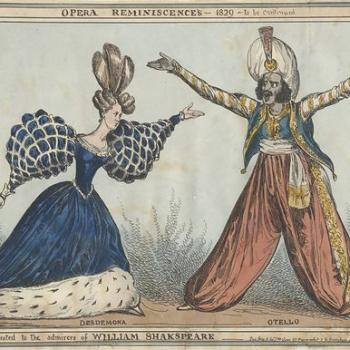
Honor and Shame in Shakespeare’s Othello

Honor and Shame in Mary Shelley’s Frankenstein
TRENDING AT PATHEOS Evangelical

The First Eucharistic Controversy: Christ’s Real Presence
For Catholics, the Eucharist is the source and summit of the Christian...

How to Make a Decision When You Can't...
Main point: It’s much more valuable to stay close to God so...

Archdiocese Hosts Military Marriage Retreat in Germany
RASTATT, Germany — The transient military lifestyle, with its frequent deployments and...

Nearly every morning, I make the drive to Detroit with my high-school-age...

The Real AI Story Is Adoption Without Trust
Artificial intelligence has crossed a political threshold. It is no longer a...

A new article, written by Jeff Lindsay and Gale L. Pooley,...
view all Evangelical blogs
Ad-Free & Subscriber Log-In Subscription Support
- About Us
- 2026 Calendar
- Videos
- Podcasts
- Library of World Religions
- Faith In Media Tracker
- Advertise With Us
- Write for Us
- Privacy Policy
- Terms of Service
- Do Not Sell My Data
- Contact Us
- Radiant Digital
- Manage Newsletter Subscriptions
- Unsubscribe From Notifications
- Sitemap
Copyright 2008-2026, Patheos. All rights reserved.
Subscription Support Ad-Free & Subscriber Log-In
Follow Patheos