
BuddhistCatholicContemplativeEvangelicalGeneral ChristianHinduJewishLatter-day SaintMuslimNew VisionsProgressive Christian
Beliefs
- Buddhist
- Catholic
- Contemplative
- Evangelical
- General Christian
- Hindu
- Jewish
- Latter-day Saint
- More Voices
- Muslim
- New Visions
- Pagan
- Progressive Christian
Topics
- Religion News
- Food and Religion
- Sports and Religion
- Religious Art
- Religious Music and Entertainment
- Religious Events
- History and Religion
- Style and Religion
- Politics and Religion
- Women in Religion
- Recreation Outdoors and Religion
- Business Finance and Religion
- Careers Workplace and Religion
- Education and Religion
- Family Parenting and Religion
- Health Fitness and Religion
- Home and Religion
- Relationships and Religion
- Technology and Religion
- Travel and Religion
Columnists
- Buddhist Columnists
- Business Finance and Religion Columnists
- Careers Workplace and Religion Columnists
- Catholic Columnists
- Contemplative Columnists
- Education and Religion Columnists
- Evangelists Columnists
- Family Parenting and Religion Columnists
- General Christian Columnists
- Health Fitness and Religion Columnists
- Hindu Columnists
- History and Religion Columnists
- Home and Religion Columnists
- Jewish Columnists
- More Voices Columnists
- Latter Day Columnists
- Muslim Columnists
- New Visions Columnists
- Nonreligious Columnists
- Pagan Columnists
- Politics and Religion Columnists
- Progressive Columnists
- Recreation Outdoors and Religion Columnists
- Relationships and Religion Columnists
- Religion News Columnists
- Religious Art Columnists
- Religious Events Columnists
- Religious Music and Entertainment Columnists
- Sports and Religion Columnists
- Style and Religion Columnists
- Technology and Religion Columnists
- Travel and Religion Columnists
- Women in Religion Columnists
Resource Library
- 2026 Calendar
- Library of World Religions
- The 100 Most Holy Places on Earth
- Patheos Answers
- Podcasts
- Videos
- Faith Leaders Database
- Anglican Episcopalian
- Bahai
- Baptist
- Buddhism
- Christianity
- Confucianism
- Eastern Orthodoxy
- Hinduism
- Holiness and Pentecostal
- ISKCON
- Islam
- Judaism
- Lutheran
- Methodist
- The Church of Jesus Christ of Latter-day Saints
- New Age
- Paganism
- Presbytarian and Reformed
- Protestantism
- Religion Behind the Scenes
- Roman Catholic
- Scientology
- Shia Islam
- Sikhism
- Sufism
- Sunni Islam
- Taoism
- Zen
- See all religions
Research Tools
 Ad-Free & Subscriber Log-In Subscription Support
Ad-Free & Subscriber Log-In Subscription Support
Follow Patheos 

- Trending:
- Forgiveness
- |
- Marriage
- |
- Consciousness
- |
- Death Penalty
- |
- Election
- |
- Halloween

-
Tools
-
Support the Work
- Home
- Evangelical
- Honor, Shame and Hospitality when Christ is King
Honor, Shame and Hospitality when Christ is King
Last updated on: January 15, 2020 at 7:45 am by Brad Vaughn
Honor, Shame and Hospitality when Christ is King 2019-10-15T00:47:40-07:00 Brad Vaughn
Patheos Explore the world's faith through different perspectives on religion and spirituality! Patheos has the views of the prevalent religions and spiritualities of the world.
Joshua Jipp is an associate professor of New Testament at Trinity Evangelical Divinity School. He will be a workshop leader at the upcoming Honor-Shame Conference in June 8-10, 2020. This post spotlights a few areas of his research with particular relevance for honor and shame. I won’t be surprised if Joshua Jipp also spurs ongoing conversation following the upcoming conference.
Saved by Hospitality?
Jipp’s work is timely as it is accessible. His book Saved by Faith and Hospitality was named 2018 Book of the Year Award by The Academy of Parish Clergy. Hospitality is one of those critical yet oft overlooked aspects of honor and shame.
Hospitality literally made Marcus Luttrell became “Lone Survivor” after Taliban insurgents killed and ambushed his Navy SEAL reconnaissance team. Just when Luttrell was barely hanging onto life, Mohammad Gulab, an Afghan villager, found him and protected Luttrell from the Taliban, who then threatened Gulab’s family and village. In Pashtun culture, hospitality is a central, even sacred, virtue.
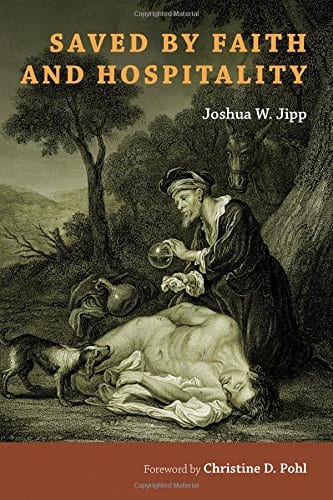 Likewise, so few Christians today understand that hospitality to strangers and the marginalized is an essential part of the church’s identity. In Saved by Faith and Hospitality, Jipp argues that God’s relationship to his people is fundamentally an act of hospitality to strangers. He surveys several biblical passages, portraying Christ as the divine host who extends God’s welcome to all people. He then invites us to consider how God’s hospitality sets the pattern for human hospitality.
I recently heard someone say we humans have a hardwired sense of “stranger danger.” This is precisely what Jipp helps us to think about. His work should spur us to reflect seriously on topics such as immigration, ministering to refugees, overcoming tribalism (whether Western or non-Western), and even our use of resources.
We tend to think about hospitality from the perspective of the host; however, Jipp highlights the importance of being a good guest. This is a particularly relevant topic for those who live and work among people from other cultures.
The King of Glory
In Christ Is King: Paul’s Royal Ideology, Jipp first looks at Greco-Roman and Jewish depictions of the ideal king. He then explains how this background influences several aspects of Paul’s thought. These include hymning to the king, the royal roots of Paul’s language of participation “in Christ,” and his portrayal of Christ as the just, faithful, and enthroned king.
In the ancient Roman world, people bestowed divine honors upon kings and emperors. Such authorities served as powerful benefactors. Interestingly,
Evidence for the composition and singing of hymns increases in the age of imperial Rome, as hymns form a major component of emperor worship—so much so that these duties were given to a professional hymn writer for emperors, referred to as a θεολόγος or σεβαστολόγος. One of the responsibilities of the θεολόγος was to publicize the emperor’s benefactions, powers, and achievements by composing hymns that would then be sung by choirs at provincial imperial cults. (Kindle Loc 2125-30)
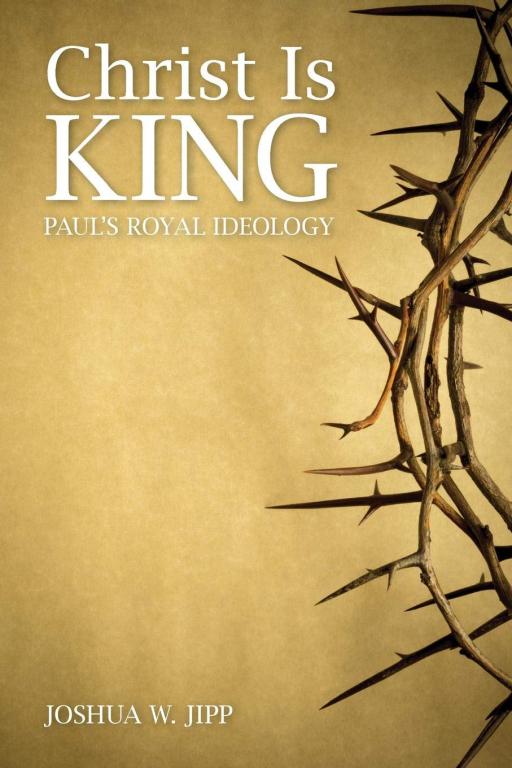 Dynamics like these influence the way people understood (and presented) Christ in the ancient world.
In Christ Is King, Jipp examines Paul’s letters in particular. He helps us understand how certain terms and ways of speaking would be understood by the early church. For example, Jipp writes,
The logic of Philippians trades on the notion that Christ’s subjects benefit from his rule if they manifest the same royal virtues Christ himself displayed. The church confesses Christ alone as their ruler, for he is “Lord Jesus the Messiah” (2:11).
He has entered into his cosmic lordship, received the divine name, and been exalted above every other power (2:9-11), but not through any lust for power or divine honors and benefits. Christ has, rather, redefined true power, authority, and rule through his obedient acceptance of public humiliation in service to God and to others.
His teaching on Romans complements my work in Reading Romans with Eastern Eyes. For instance, what was ideal for which ancient Mediterranean rulers aspired? Jipp says,
“One of the standard responsibilities of ancient kings was the task of enacting justice for his people. One of the goals of the king is to create and facilitate a just and peaceful rule over his people…. The king’s devotion to justice is necessary because his vocation is to mirror the deity as an agent of the divine; since the gods love justice, so is the king to mirror divine justice.” [Ch. 5]
Accordingly, he observes,
“It is no surprise that one important aspect of imperial propaganda legitimating Augustus’s rule was the presentation of him as the supremely just ruler.”
What does this look like in the Bible?
Let’s not forget that the word “gospel” in the ancient world had royal, thus political, connotations. Readers frequently associate words like “righteousness” and therefore contrast it with honor-shame language. However, this is a false dichotomy, since righteousness-language is regal, not merely legal.
God manifests glory via His establishing righteousness. Jipp explains,
“God’s righteousness, or the king’s enactment of justice, often entails salvation, deliverance, and freedom, or alternatively, shame, destruction, and dishonor.” (Kindle Loc 5449)
Furthermore,
“Paul’s lack of shame, then, derives from his belief that the powerful revelation of God’s righteousness has vindicated the righteous one and brought divine wrath and judgment upon the wicked. Paul is not ashamed of God’s gospel precisely because he has seen its power unveiled in the Messiah’s deliverance from shame and disgrace—an event that carries that same power for those who belong to the Messiah.” (Kindle 5915-19)
To participate in Jipp’s workshop and join us at the 2020 Honor-Shame Conference, click here.
Previous Post

January 13, 2020
Nominate "Reading Romans" and your other 2019 favorites!
Next Post
January 22, 2020 Training Leaders in Honor and Shame Cultures
Browse Our Archives
Select a Category Atonement Biblical Theology Book Reviews China Chinese Church Chinese Culture Chinese Language Collectivism Contextualization Culture (General) Ecclesiology Evangelism Gospel Honor & Shame (Face) Interpretation/Exegesis Justification/Righteousness Missiology Mission Methods One Gospel for All Nations Other Practical Contextualization Reading Romans with Eastern Eyes Resources Romans Salvation (General) Saving God's Face Seeking God's Face The Cross in Context Theological Contextualization Theological Education Theology Uncategorized
Select a Month October 2026 September 2026 August 2026 July 2026 June 2026 May 2026 April 2026 March 2026 February 2026 January 2026 December 2025 November 2025 October 2025 September 2025 August 2025 July 2025 June 2025 May 2025 April 2025 March 2025 February 2025 January 2025 December 2024 November 2024 October 2024 September 2024 August 2024 July 2024 June 2024 May 2024 April 2024 March 2024 February 2024 January 2024 December 2023 November 2023 October 2023 September 2023 August 2023 July 2023 June 2023 May 2023 April 2023 March 2023 February 2023 January 2023 December 2022 November 2022 October 2022 September 2022 August 2022 July 2022 June 2022 May 2022 April 2022 March 2022 February 2022 January 2022 December 2021 November 2021 October 2021 September 2021 August 2021 July 2021 June 2021 May 2021 April 2021 March 2021 February 2021 January 2021 December 2020 November 2020 October 2020 September 2020 August 2020 July 2020 June 2020 May 2020 April 2020 March 2020 February 2020 January 2020 December 2019 November 2019 October 2019 September 2019 August 2019 July 2019 June 2019 May 2019 April 2019 March 2019 February 2019 January 2019 December 2018 November 2018 October 2018 September 2018 August 2018 July 2018 June 2018 May 2018 April 2018 March 2018 February 2018 January 2018 December 2017 November 2017 October 2017 September 2017 August 2017 July 2017 June 2017 May 2017 April 2017 March 2017 February 2017 January 2017 December 2016 November 2016 October 2016 September 2016 August 2016 July 2016 June 2016 May 2016 April 2016 March 2016 February 2016 January 2016 December 2015 November 2015 October 2015 September 2015 August 2015 July 2015 June 2015 May 2015 April 2015 March 2015 February 2015 January 2015 December 2014 November 2014 October 2014 September 2014 August 2014 July 2014 June 2014 May 2014 April 2014 March 2014 February 2014 January 2014 December 2013 November 2013 October 2013 September 2013 August 2013 July 2013 June 2013 May 2013 April 2013 March 2013 February 2013 January 2013 December 2012 November 2012
Follow Us!
TAKE THE
Religious Wisdom Quiz
Who prophesied about a locust plague and called for national repentance?
Select your answer to see how you score.
Amos Joel Daniel Micah
Books by This Author Books by Brad Vaughn
Related posts from Saving God's Face

No King forgets his crown. Why do we?

Recovering Moral Vision Between Shame and Shamelessness

Refuge, Confession, and the End of Shame

Psalm 25 and the Fear of Being Put...
TRENDING AT PATHEOS Evangelical

The First Eucharistic Controversy: Christ’s Real Presence
For Catholics, the Eucharist is the source and summit of the Christian...

What a Stop Sign Can Teach Us About...
How to Make a Decision When You Can't Hear God Main point:...

Archdiocese Hosts Military Marriage Retreat in Germany
RASTATT, Germany — The transient military lifestyle, with its frequent deployments and...

Nearly every morning, I make the drive to Detroit with my high-school-age...

The Real AI Story Is Adoption Without Trust
Artificial intelligence has crossed a political threshold. It is no longer a...

A new article, written by Jeff Lindsay and Gale L. Pooley,...
view all Evangelical blogs
Ad-Free & Subscriber Log-In Subscription Support
- About Us
- 2026 Calendar
- Videos
- Podcasts
- Library of World Religions
- Faith In Media Tracker
- Advertise With Us
- Write for Us
- Privacy Policy
- Terms of Service
- Do Not Sell My Data
- Contact Us
- Radiant Digital
- Manage Newsletter Subscriptions
- Unsubscribe From Notifications
- Sitemap
Copyright 2008-2026, Patheos. All rights reserved.
Subscription Support Ad-Free & Subscriber Log-In
Follow Patheos