
BuddhistCatholicContemplativeEvangelicalGeneral ChristianHinduJewishLatter-day SaintMuslimNew VisionsProgressive Christian
Beliefs
- Buddhist
- Catholic
- Contemplative
- Evangelical
- General Christian
- Hindu
- Jewish
- Latter-day Saint
- More Voices
- Muslim
- New Visions
- Pagan
- Progressive Christian
Topics
- Religion News
- Food and Religion
- Sports and Religion
- Religious Art
- Religious Music and Entertainment
- Religious Events
- History and Religion
- Style and Religion
- Politics and Religion
- Women in Religion
- Recreation Outdoors and Religion
- Business Finance and Religion
- Careers Workplace and Religion
- Education and Religion
- Family Parenting and Religion
- Health Fitness and Religion
- Home and Religion
- Relationships and Religion
- Technology and Religion
- Travel and Religion
Columnists
- Buddhist Columnists
- Business Finance and Religion Columnists
- Careers Workplace and Religion Columnists
- Catholic Columnists
- Contemplative Columnists
- Education and Religion Columnists
- Evangelists Columnists
- Family Parenting and Religion Columnists
- General Christian Columnists
- Health Fitness and Religion Columnists
- Hindu Columnists
- History and Religion Columnists
- Home and Religion Columnists
- Jewish Columnists
- More Voices Columnists
- Latter Day Columnists
- Muslim Columnists
- New Visions Columnists
- Nonreligious Columnists
- Pagan Columnists
- Politics and Religion Columnists
- Progressive Columnists
- Recreation Outdoors and Religion Columnists
- Relationships and Religion Columnists
- Religion News Columnists
- Religious Art Columnists
- Religious Events Columnists
- Religious Music and Entertainment Columnists
- Sports and Religion Columnists
- Style and Religion Columnists
- Technology and Religion Columnists
- Travel and Religion Columnists
- Women in Religion Columnists
Resource Library
- 2026 Calendar
- Library of World Religions
- The 100 Most Holy Places on Earth
- Patheos Answers
- Podcasts
- Videos
- Faith Leaders Database
- Anglican Episcopalian
- Bahai
- Baptist
- Buddhism
- Christianity
- Confucianism
- Eastern Orthodoxy
- Hinduism
- Holiness and Pentecostal
- ISKCON
- Islam
- Judaism
- Lutheran
- Methodist
- The Church of Jesus Christ of Latter-day Saints
- New Age
- Paganism
- Presbytarian and Reformed
- Protestantism
- Religion Behind the Scenes
- Roman Catholic
- Scientology
- Shia Islam
- Sikhism
- Sufism
- Sunni Islam
- Taoism
- Zen
- See all religions
Research Tools
 Ad-Free & Subscriber Log-In Subscription Support
Ad-Free & Subscriber Log-In Subscription Support
Follow Patheos 

- Trending:
- Forgiveness
- |
- Marriage
- |
- Consciousness
- |
- Death Penalty
- |
- Election
- |
- Halloween

-
Tools
-
Support the Work
- Home
- Evangelical
- When being shameless is shameful
When being shameless is shameful
Last updated on: November 25, 2019 at 12:24 am by Brad Vaughn
When being shameless is shameful 2019-10-15T01:19:16-07:00 Brad Vaughn
Patheos Explore the world's faith through different perspectives on religion and spirituality! Patheos has the views of the prevalent religions and spiritualities of the world.
Have you ever noticed the peculiar way we talk about shame? We don’t want people full of shame, yet being shameless is considered a bad thing. In fact, it’s ironic that being shameless is equivalent to being shameful.
 Our language, or manner of speaking, is one reason so much confusion surrounds the topic of shame. People tend to think of one aspect of shame or one way of talking about it. Consequently, they lose sight of other dimensions of shame. For example, the average person is familiar with subjective, psychological shame but forgets about objective types of shame.
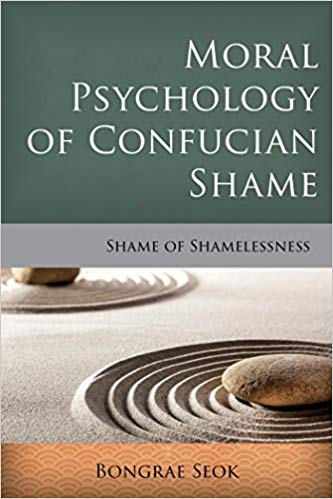
To help us sort through possible confusion, this post looks at Bongrae Seok’s Moral Psychology of Confucian Shame: Shame of Shamelessness (MPCS). Although it focuses on Confucian notions of shame, its contents are relevant for everyone. Seok gives language to aspects of shame that are routinely neglected both in the West and in the church. It’s a bit pricey so I hope distilling a few ideas will prove helpful to you.
There are so many helpful insights in this book that I find myself simply wanting to cut and paste vast portions of text. Honestly, some books are easier understood when summarized or rephrased. Not so with this book. It’s super clear.
So, I will modify the format of this post. I essentially conduct an “interview” with MPCS, posing questions and letting Seok’s writing speak for itself.
Shame as a “Moral Emotion”?
JWu: Readers will certainly have several presuppositions when opening the book. So, what are key words one should understand and how does the book define them?
MPCS:
We should understand “moral emotions” as those “emotions that promote self-regulative or other-regarding prosocial behaviors” (p. 31).
A few examples mentioned in the book include contempt, anger, disgust, empathy, compassion, gratitude, and awe.
JWu: How should we distinguish being shameless from shamefulness?
MPCS:
Shamefulness is “a state of feeling one experiences during self-humiliating events” (p. 35). It’s a “reactive shameful feeling” (p. 36). By contrast, being shameless is they “well-established psychological tendency or fully habituated disposition to inappropriate behaviors” (p. 35). It’s an “active moral disposition” (p. 36).
Internal Shame & External Shame
JWu: There’s at least one more distinction that is critical to the book––“internal shame” and “external shame.” Explain what you mean.
MPCS:
“Most discussions of Confucian shame focus on internal, rather than external, shame. Internal shame is a sense of shame caused by one’s inner awareness of or concern for one’s moral integrity. [T]his special form of shame is the foundation of a morally idealized virtue of shame in Confucian tradition. One can, of course, take an external stance and feel shame from the perspective of others. I call this type of shame external shame. External shame is a shameful feeling caused by one’s awareness of others observing one’s inappropriate behaviors” (pp. 36-37).
“A virtuous person should overcome external shame… On the contrary, internal shame does not arise from the viewpoints or evaluation of others. It is caused by one’s inner awareness of, and motivation to protect, one’s moral integrity…. Confucius praises people who overcome their external shame and cherish their internal shame” (p. 37).
“According to Xunzi, a virtuous person is not shameful of not being trusted or liked by others, but is ashamed of not being cultivated to her own standard of ideal moral excellence” (p. 38).
“Shame, here, refers to a feeling of a personally and emotionally invested moral sense or moral judgment. It is very different from a fearful or stressful feeling of one’s failure. In other words, Confucian shame is not a fear of failure but an active expression of one’s moral integrity” (p. 38).
JWu**:** By “external shame,” you essentially refer to “social shame,” the emotional reaction to others’ judgments.
MPCS: Yes.
“Basically, social shame is a self-conscious emotion only available to agents with… a sense of self from the perspective of others. This form of shame brings otherness to one’s inner self so that one can be responsive to others’ expectations and cultivate successful interpersonal relations. But too much self-critical pressure makes one dependent upon others’ viewpoints and their expectations” (pp. 39-40).
“If social shame evolves out of one’s fear of social failure, moral shame is one’s self-reflective awareness of moral excellence. Here, shame is not an emotional punishment for one’s wrongdoings but an emotional promotion of one’s moral integrity and moral excellence. If social shame is dependent upon others’ viewpoints and expectations, moral shame is dependent upon one’s ideal goals” (p. 40).
Idealized Moral Authority
JWu: Shame is inherently public, not private. So, what role does an external authority play in shaping this moral shame?
MPCS:
“…shame is typically associated with external authority that shamed individuals look up to as their superiors or their moral role models. It is, however, important to note that in Confucian moral shame the external moral authority is not necessarily external or physically real but an internalized moral authority.
Heaven and idealized role models, such as Confucian sages, are projections of one’s inner moral ideal. They don’t have to be real. Nor do they have to be physically powerful, socially popular, or politically potent. They are idealized moral authorities” (p. 69).
JWu: A passage often cited in MPCS comes from Analects 2:3, where Confucius says,
“If the people are led by laws, and uniformity among them be sought by punishments, they will try to escape punishment and have no sense of shame. If they are led by virtue, and uniformity sought among them through practice of ritual propriety, they will possess a sense of shame and come to you of their own accord.”[1]
This quote describes the advantage of shame over the mere use of laws. Explicit rules help people feel a sense of guilt. Can you explain the difference between people having a sense of guilt versus feeling shame in the moral, Confucian sense?
… to be continued in the next post.
[1] Analects 2:3. Translation comes from Stanford Encyclopedia of Philosophy, n.p. <http://plato/stanford.edu/entries confucius>.
Previous Post

November 19, 2019
Is Penal Substitution a Western Doctrine?
Next Post
December 4, 2019 3 Features of Moral Shame
Browse Our Archives
Select a Category Atonement Biblical Theology Book Reviews China Chinese Church Chinese Culture Chinese Language Collectivism Contextualization Culture (General) Ecclesiology Evangelism Gospel Honor & Shame (Face) Interpretation/Exegesis Justification/Righteousness Missiology Mission Methods One Gospel for All Nations Other Practical Contextualization Reading Romans with Eastern Eyes Resources Romans Salvation (General) Saving God's Face Seeking God's Face The Cross in Context Theological Contextualization Theological Education Theology Uncategorized
Select a Month October 2026 September 2026 August 2026 July 2026 June 2026 May 2026 April 2026 March 2026 February 2026 January 2026 December 2025 November 2025 October 2025 September 2025 August 2025 July 2025 June 2025 May 2025 April 2025 March 2025 February 2025 January 2025 December 2024 November 2024 October 2024 September 2024 August 2024 July 2024 June 2024 May 2024 April 2024 March 2024 February 2024 January 2024 December 2023 November 2023 October 2023 September 2023 August 2023 July 2023 June 2023 May 2023 April 2023 March 2023 February 2023 January 2023 December 2022 November 2022 October 2022 September 2022 August 2022 July 2022 June 2022 May 2022 April 2022 March 2022 February 2022 January 2022 December 2021 November 2021 October 2021 September 2021 August 2021 July 2021 June 2021 May 2021 April 2021 March 2021 February 2021 January 2021 December 2020 November 2020 October 2020 September 2020 August 2020 July 2020 June 2020 May 2020 April 2020 March 2020 February 2020 January 2020 December 2019 November 2019 October 2019 September 2019 August 2019 July 2019 June 2019 May 2019 April 2019 March 2019 February 2019 January 2019 December 2018 November 2018 October 2018 September 2018 August 2018 July 2018 June 2018 May 2018 April 2018 March 2018 February 2018 January 2018 December 2017 November 2017 October 2017 September 2017 August 2017 July 2017 June 2017 May 2017 April 2017 March 2017 February 2017 January 2017 December 2016 November 2016 October 2016 September 2016 August 2016 July 2016 June 2016 May 2016 April 2016 March 2016 February 2016 January 2016 December 2015 November 2015 October 2015 September 2015 August 2015 July 2015 June 2015 May 2015 April 2015 March 2015 February 2015 January 2015 December 2014 November 2014 October 2014 September 2014 August 2014 July 2014 June 2014 May 2014 April 2014 March 2014 February 2014 January 2014 December 2013 November 2013 October 2013 September 2013 August 2013 July 2013 June 2013 May 2013 April 2013 March 2013 February 2013 January 2013 December 2012 November 2012
Follow Us!
TAKE THE
Religious Wisdom Quiz
What natural disaster did God use to destroy the earth in Noah’s time?
Select your answer to see how you score.
Fire Famine Flood Earthquake
Books by This Author Books by Brad Vaughn
Related posts from Saving God's Face

No King forgets his crown. Why do we?

Recovering Moral Vision Between Shame and Shamelessness

Refuge, Confession, and the End of Shame

Psalm 25 and the Fear of Being Put...
TRENDING AT PATHEOS Evangelical

A new article, written by Jeff Lindsay and Gale L. Pooley,...

Swimfan: Forgotten Aughts Pleasures
This is a recovery effort. In 2002, My Big Fat Greek Wedding...

Top Three Anti-Catholic Lies About Catholicism
This is my initial transcript for the video, "THE 3 WORST...

Pope Leo Celebrates Mass for Nurses & Docs...
I don't have any idea how he did it, but Pope Leo...

The Sermon on the Mount, Part I: Matthew...
The Sermon on the Mount, Part I (Matthew 4:12-5:12) St. Matthew moves...

What's up from Crossway: Reviewing some of their latest A few weeks...
view all Evangelical blogs
Ad-Free & Subscriber Log-In Subscription Support
- About Us
- 2026 Calendar
- Videos
- Podcasts
- Library of World Religions
- Faith In Media Tracker
- Advertise With Us
- Write for Us
- Privacy Policy
- Terms of Service
- Do Not Sell My Data
- Contact Us
- Radiant Digital
- Manage Newsletter Subscriptions
- Unsubscribe From Notifications
- Sitemap
Copyright 2008-2026, Patheos. All rights reserved.
Subscription Support Ad-Free & Subscriber Log-In
Follow Patheos