
BuddhistCatholicContemplativeEvangelicalGeneral ChristianHinduJewishLatter-day SaintMuslimNew VisionsProgressive Christian
Beliefs
- Buddhist
- Catholic
- Contemplative
- Evangelical
- General Christian
- Hindu
- Jewish
- Latter-day Saint
- More Voices
- Muslim
- New Visions
- Pagan
- Progressive Christian
Topics
- Religion News
- Food and Religion
- Sports and Religion
- Religious Art
- Religious Music and Entertainment
- Religious Events
- History and Religion
- Style and Religion
- Politics and Religion
- Women in Religion
- Recreation Outdoors and Religion
- Business Finance and Religion
- Careers Workplace and Religion
- Education and Religion
- Family Parenting and Religion
- Health Fitness and Religion
- Home and Religion
- Relationships and Religion
- Technology and Religion
- Travel and Religion
Columnists
- Buddhist Columnists
- Business Finance and Religion Columnists
- Careers Workplace and Religion Columnists
- Catholic Columnists
- Contemplative Columnists
- Education and Religion Columnists
- Evangelists Columnists
- Family Parenting and Religion Columnists
- General Christian Columnists
- Health Fitness and Religion Columnists
- Hindu Columnists
- History and Religion Columnists
- Home and Religion Columnists
- Jewish Columnists
- More Voices Columnists
- Latter Day Columnists
- Muslim Columnists
- New Visions Columnists
- Nonreligious Columnists
- Pagan Columnists
- Politics and Religion Columnists
- Progressive Columnists
- Recreation Outdoors and Religion Columnists
- Relationships and Religion Columnists
- Religion News Columnists
- Religious Art Columnists
- Religious Events Columnists
- Religious Music and Entertainment Columnists
- Sports and Religion Columnists
- Style and Religion Columnists
- Technology and Religion Columnists
- Travel and Religion Columnists
- Women in Religion Columnists
Resource Library
- 2026 Calendar
- Library of World Religions
- The 100 Most Holy Places on Earth
- Patheos Answers
- Podcasts
- Videos
- Faith Leaders Database
- Anglican Episcopalian
- Bahai
- Baptist
- Buddhism
- Christianity
- Confucianism
- Eastern Orthodoxy
- Hinduism
- Holiness and Pentecostal
- ISKCON
- Islam
- Judaism
- Lutheran
- Methodist
- The Church of Jesus Christ of Latter-day Saints
- New Age
- Paganism
- Presbytarian and Reformed
- Protestantism
- Religion Behind the Scenes
- Roman Catholic
- Scientology
- Shia Islam
- Sikhism
- Sufism
- Sunni Islam
- Taoism
- Zen
- See all religions
Research Tools
 Ad-Free & Subscriber Log-In Subscription Support
Ad-Free & Subscriber Log-In Subscription Support
Follow Patheos 

- Trending:
- Forgiveness
- |
- Marriage
- |
- Consciousness
- |
- Death Penalty
- |
- Election
- |
- Halloween

-
Tools
-
Support the Work
- Home
- Evangelical
- 4 Factors Influencing Cultural Adjustment and Retention of Chinese Missionaries
4 Factors Influencing Cultural Adjustment and Retention of Chinese Missionaries
Last updated on: December 10, 2019 at 11:15 pm by Brad Vaughn
4 Factors Influencing Cultural Adjustment and Retention of Chinese Missionaries 2019-12-10T23:15:41-07:00 Brad Vaughn
Patheos Explore the world's faith through different perspectives on religion and spirituality! Patheos has the views of the prevalent religions and spiritualities of the world.

Credit: Pixabay CC 2.0
I’ve known Tabor Laughlin for a long time. With unquestioned character and competence, he is an exceptional cross-cultural worker. For this reason, I was overjoyed to hear that Tabor finished his dissertation, “Factors Impacting Cultural Adjustment and Retention of Chinese Cross-Cultural Workers.” In it, he explores various factors influencing the cultural adjustment and retention of Chinese missionaries.
By the way, it will soon be published by Wipf & Stock as a part of the EMS Dissertation series.
Four Key Conclusions
Twelve major themes emerged from his research and interviews with Chinese workers. However, in this post, I will only highlight what Laughlin calls the “four key conclusions” of his study. While his findings are compelling, I will take issue with the analysis that leads to one of his conclusions.
-
Finances are a significant challenge for Chinese missionaries.
Many Chinese missionaries receive financial support from sending house churches. All too often, this funding is insufficient and/or inconsistent. Financial stress takes a toll on marriages. Several missionaries spoke of not having the support needed to pay for their children’s’ education. Another dire threat looms over them as well. Inadequate funding could prevent them from returning to China, being unable to afford the expense.
-
The need for pre-field vocational training.
Laughlin adds,
A recurring theme throughout the interviews was peoples’ lack of preparation in the area of vocational skills that would have enabled them to obtain a long-term visa and earn an income on the mission field. (p. 130)
Vocational skills can certainly contribute to the need for financial stability. Furthermore, without such training, the missionary can only maintain a student visa or a tourist visa. Both options are short-term. Also, people from a missionary’s host culture will grow suspicious of the Chinese worker’s motive for being in the country.
-
The impact of filial piety on Chinese missionaries.
Even into adulthood, Chinese children feel a strong sense of obligation to take care of their parents and honor their families. Therefore, it is no surprise that…
…it can be shameful for Chinese missionaries when they move to the mission field if they are perceived as abandoning their aging parents in China and failing to live up to their society’s standards of filial piety. (p 132)
In Chinese society, elderly people rely heavily on the support of their child(ren). They do not enjoy a governmental safety net akin to Social Security in the States.
On the other hand, many Chinese families do not approve of their children serving as missionaries. Such work does not give them “face” or wealth. In short, “Lack of family support of their moving to the mission field can hinder such people from becoming missionaries, or force them to prematurely leave the mission field” (p. 134).
-
No correlation between educational achievement and cross-cultural effectiveness.
Laughlin’s final “key conclusion” deserves closer attention. His analysis is problematic, and his summary remarks could inadvertently mislead readers. I will first quote Laughlin before making comments. He says,
The fourth emerging theme from the research is that there is no correlation between educational achievement and cross-cultural effectiveness. Of the 25 Chinese missionaries interviewed, eleven had no more than a middle or high school education. From this research, and from my personal judgment and evaluation of the missionaries through the interviews, no clear distinction in effective cross-cultural adjustment was identifiable on the field for those with more formal school education compared to those with less. Many with only a middle school education seemed to flourish in learning the host language and building cross-cultural relationships, while some who had bachelor’s degrees did not adjust as well in cross-cultural ministry.
These findings are contrary to Rob Hay’s description that high retaining mission agencies have twice as many missionaries with master’s or doctoral degrees.
Several points deserve a closer look and a response.
Taking a Closer Look
First of all, Laughlin slightly alters his wording in this section, which could unwittingly cause readers to draw a wrong conclusion. He first speaks of the relationship between the missionary’s level of education and his “cross-cultural effectiveness.”
What does he mean by “cross-cultural effectiveness”? The phrase by itself is ambiguous. What are the criteria for being an “effective” cross-cultural missionary? Upon closer reading, what Laughlin means is “effective cross-cultural adjustment.” It is critical for readers to note this more explicit phrasing, lest one draw wrong conclusions from Laughlin’s research.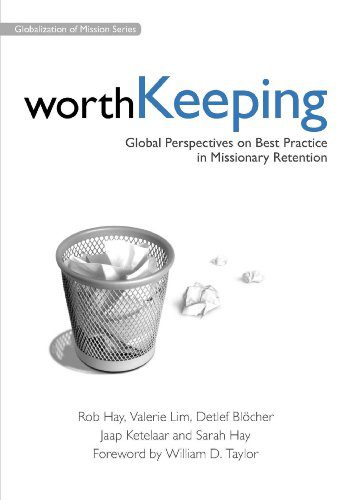
Also important is the contrast Laughlin makes between his findings and the work of Rob Hay. When one actually reads the cited passage from Hay’s Worth Keeping, it seems that Laughlin compares grapes with raisins, if not apples and bananas. Sure, there might be some relationship between the two studies; however, the relationship appears thinner than Laughlin supposes.
First, Hay assesses retention rates. He explains,
In simple terms, education is very helpful in retaining missionaries. High retaining agencies have almost twice as many missionaries with MA degrees and doctorates. They also have, on average, expected 2-3 times as much formal missiological training plus 50% more practical pre-field missionary training [compared with low retaining agencies]. Highly educated personnel can be more easily retained, since they have more potential to be offered and successfully fulfil different assignments within the same agency.
In substance, Laughlin makes a far narrower claim than Hay. In short, Laughlin says, “Many of both the more educated and less educated interviewees seemed to flourish cross-culturally in learning well the host language and effectively making close relationships with hosts” (p. 154). Hay does not contest this specific point.
Hay addresses a broader issue than does Laughlin. Whereas Hay highlights the correlation between retaining missionaries and higher levels of education, Laughlin describes only one of several factors that influence Chinese missionary retention rates (i.e., cultural adaptation).
Besides the factors mentioned above, other influences include:
- language learning
- missionary preparation
- building intimate relationships with hosts
- the missionary’s team
- the level of supportiveness of mission agencies
- unique challenges for single missionaries
- overcoming hosts’ stereotypes and prejudices of Chinese
In fact, successfully adapting to a cross-cultural environment is only one component contributing to the retention of Chinese missionaries.
In fact, having more than a middle-school or high-school education would significantly help missionaries address the problems of finances and of securing a long-term visa (hence the need for pre-field training).
Furthermore, Laughlin later makes an important comment concerning the 11 missionaries who “had no more than a middle or high school education.” He says,
Although these missionaries have a low level of formal school education, they may have received extensive theological education or mission training. (p. 153)
Thus, even these missionaries received training that likely contributed significantly to their ability to adapt to their host culture, even if such training does not yield a “formal” degree.
Aside from my quibble above, I think Laughlin has made an important contribution to the missionary task. He sheds light on a group of people with whom few have access. The dissertation is full of interesting and thoughtful quotations from Chinese workers.
To be sure, it is a dissertation. So, for those who want to jump to the meaty parts, you can use the table of contents and the search-function on your PDF reader (The link has been removed because it has been selected for publication in the EMS Dissertation series). I hope churches and mission agencies give it a serious look and discuss its implications.
Previous Post

September 25, 2019
How Biblical Theology Alters Current Mission Practice
Next Post
October 8, 2019 Honor and Shame Should Not Control Biblical Interpretation
Browse Our Archives
Select a Category Atonement Biblical Theology Book Reviews China Chinese Church Chinese Culture Chinese Language Collectivism Contextualization Culture (General) Ecclesiology Evangelism Gospel Honor & Shame (Face) Interpretation/Exegesis Justification/Righteousness Missiology Mission Methods One Gospel for All Nations Other Practical Contextualization Reading Romans with Eastern Eyes Resources Romans Salvation (General) Saving God's Face Seeking God's Face The Cross in Context Theological Contextualization Theological Education Theology Uncategorized
Select a Month October 2026 September 2026 August 2026 July 2026 June 2026 May 2026 April 2026 March 2026 February 2026 January 2026 December 2025 November 2025 October 2025 September 2025 August 2025 July 2025 June 2025 May 2025 April 2025 March 2025 February 2025 January 2025 December 2024 November 2024 October 2024 September 2024 August 2024 July 2024 June 2024 May 2024 April 2024 March 2024 February 2024 January 2024 December 2023 November 2023 October 2023 September 2023 August 2023 July 2023 June 2023 May 2023 April 2023 March 2023 February 2023 January 2023 December 2022 November 2022 October 2022 September 2022 August 2022 July 2022 June 2022 May 2022 April 2022 March 2022 February 2022 January 2022 December 2021 November 2021 October 2021 September 2021 August 2021 July 2021 June 2021 May 2021 April 2021 March 2021 February 2021 January 2021 December 2020 November 2020 October 2020 September 2020 August 2020 July 2020 June 2020 May 2020 April 2020 March 2020 February 2020 January 2020 December 2019 November 2019 October 2019 September 2019 August 2019 July 2019 June 2019 May 2019 April 2019 March 2019 February 2019 January 2019 December 2018 November 2018 October 2018 September 2018 August 2018 July 2018 June 2018 May 2018 April 2018 March 2018 February 2018 January 2018 December 2017 November 2017 October 2017 September 2017 August 2017 July 2017 June 2017 May 2017 April 2017 March 2017 February 2017 January 2017 December 2016 November 2016 October 2016 September 2016 August 2016 July 2016 June 2016 May 2016 April 2016 March 2016 February 2016 January 2016 December 2015 November 2015 October 2015 September 2015 August 2015 July 2015 June 2015 May 2015 April 2015 March 2015 February 2015 January 2015 December 2014 November 2014 October 2014 September 2014 August 2014 July 2014 June 2014 May 2014 April 2014 March 2014 February 2014 January 2014 December 2013 November 2013 October 2013 September 2013 August 2013 July 2013 June 2013 May 2013 April 2013 March 2013 February 2013 January 2013 December 2012 November 2012
Follow Us!
TAKE THE
Religious Wisdom Quiz
How did the people show honor when Jesus entered Jerusalem on a donkey?
Select your answer to see how you score.
Sounded trumpets Built an altar Offered sacrifices Laid down palm branches
Books by This Author Books by Brad Vaughn
Related posts from Saving God's Face

Why Christianity Needs Individuals but Rejects Individualism

Glory, Violence, and the Gospel of Peace

“I’ll be wherever you call me.”

Biblical Foundations for Local Embodiment
TRENDING AT PATHEOS Evangelical

The First Eucharistic Controversy: Christ’s Real Presence
For Catholics, the Eucharist is the source and summit of the Christian...

How to Make a Decision When You Can't...
Main point: It’s much more valuable to stay close to God so...

Archdiocese Hosts Military Marriage Retreat in Germany
RASTATT, Germany — The transient military lifestyle, with its frequent deployments and...

Nearly every morning, I make the drive to Detroit with my high-school-age...

The Real AI Story Is Adoption Without Trust
Artificial intelligence has crossed a political threshold. It is no longer a...

A new article, written by Jeff Lindsay and Gale L. Pooley,...
view all Evangelical blogs
Ad-Free & Subscriber Log-In Subscription Support
- About Us
- 2026 Calendar
- Videos
- Podcasts
- Library of World Religions
- Faith In Media Tracker
- Advertise With Us
- Write for Us
- Privacy Policy
- Terms of Service
- Do Not Sell My Data
- Contact Us
- Radiant Digital
- Manage Newsletter Subscriptions
- Unsubscribe From Notifications
- Sitemap
Copyright 2008-2026, Patheos. All rights reserved.
Subscription Support Ad-Free & Subscriber Log-In
Follow Patheos