
BuddhistCatholicContemplativeEvangelicalGeneral ChristianHinduJewishLatter-day SaintMuslimNew VisionsProgressive Christian
Beliefs
- Buddhist
- Catholic
- Contemplative
- Evangelical
- General Christian
- Hindu
- Jewish
- Latter-day Saint
- More Voices
- Muslim
- New Visions
- Pagan
- Progressive Christian
Topics
- Religion News
- Food and Religion
- Sports and Religion
- Religious Art
- Religious Music and Entertainment
- Religious Events
- History and Religion
- Style and Religion
- Politics and Religion
- Women in Religion
- Recreation Outdoors and Religion
- Business Finance and Religion
- Careers Workplace and Religion
- Education and Religion
- Family Parenting and Religion
- Health Fitness and Religion
- Home and Religion
- Relationships and Religion
- Technology and Religion
- Travel and Religion
Columnists
- Buddhist Columnists
- Business Finance and Religion Columnists
- Careers Workplace and Religion Columnists
- Catholic Columnists
- Contemplative Columnists
- Education and Religion Columnists
- Evangelists Columnists
- Family Parenting and Religion Columnists
- General Christian Columnists
- Health Fitness and Religion Columnists
- Hindu Columnists
- History and Religion Columnists
- Home and Religion Columnists
- Jewish Columnists
- More Voices Columnists
- Latter Day Columnists
- Muslim Columnists
- New Visions Columnists
- Nonreligious Columnists
- Pagan Columnists
- Politics and Religion Columnists
- Progressive Columnists
- Recreation Outdoors and Religion Columnists
- Relationships and Religion Columnists
- Religion News Columnists
- Religious Art Columnists
- Religious Events Columnists
- Religious Music and Entertainment Columnists
- Sports and Religion Columnists
- Style and Religion Columnists
- Technology and Religion Columnists
- Travel and Religion Columnists
- Women in Religion Columnists
Resource Library
- 2026 Calendar
- Library of World Religions
- The 100 Most Holy Places on Earth
- Patheos Answers
- Podcasts
- Videos
- Faith Leaders Database
- Anglican Episcopalian
- Bahai
- Baptist
- Buddhism
- Christianity
- Confucianism
- Eastern Orthodoxy
- Hinduism
- Holiness and Pentecostal
- ISKCON
- Islam
- Judaism
- Lutheran
- Methodist
- The Church of Jesus Christ of Latter-day Saints
- New Age
- Paganism
- Presbytarian and Reformed
- Protestantism
- Religion Behind the Scenes
- Roman Catholic
- Scientology
- Shia Islam
- Sikhism
- Sufism
- Sunni Islam
- Taoism
- Zen
- See all religions
Research Tools
 Ad-Free & Subscriber Log-In Subscription Support
Ad-Free & Subscriber Log-In Subscription Support
Follow Patheos 

- Trending:
- Forgiveness
- |
- Marriage
- |
- Consciousness
- |
- Death Penalty
- |
- Election
- |
- Halloween

-
Tools
-
Support the Work
- Home
- Evangelical
- Implications of Biblical Theology for Strategy in World Mission
Implications of Biblical Theology for Strategy in World Mission
Last updated on: September 18, 2019 at 7:41 am by Brad Vaughn
Implications of Biblical Theology for Strategy in World Mission 2019-09-18T07:41:22-07:00 Brad Vaughn
Patheos Explore the world's faith through different perspectives on religion and spirituality! Patheos has the views of the prevalent religions and spiritualities of the world.

Today’s post is the first part of my interview with Scott Callaham, Lecturer of Hebrew and Old Testament at Baptist Theological Seminary in Singapore. I have spotlighted his work previously, most recently about writing worship songs in Chinese. A few years ago, I also highlighted his article about teaching Hebrew in Chinese.
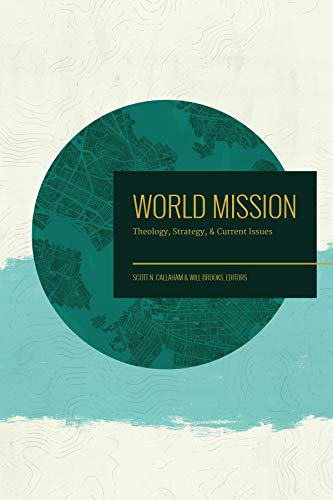
In the interview, I ask Scott about a book he co-edited (along with Will Brooks) titled World Mission: Theology, Strategy, and Current Issues (Lexham, 2019). I briefly introduced it in a previous post.
This is what emerges when a Hebrew grammarian partners with a missiologist. Together, they put together a truly diverse group of theologically-minded practitioners, whose expertise span the globe and the academy. The integrated nature of World Mission makes a unique contribution to missions literature. Enjoy the interview!
JW: Most missions textbooks have chapters on “New Testament foundations,” perhaps even “Old Testament foundations.” How then is World Mission different?
SC: World Mission presents a completely different perspective than the majority of missiology books, in that our contributors share a thoroughgoing commitment to the full authority and sufficiency of all of Scripture. From the first page onward, the reader can discern the difference that our approach entails. And, by the way, we do not use the metaphor of biblical “foundations” at all.
We think the “foundations” metaphor is flawed. It’s possible to construct a theological “building” that rests upon the Bible as a “foundation” but then simply forget the Bible like one forgets the foundation under their house. Instead, missions thinking and practice should grow organically from Scripture as a stout redwood grows upward from its roots.
This kind of biblical “foundation” all too often serves missiologists as a biblical “pretext.” That is to say, we know what we want the Bible to say. So, we reverse engineer an approach to the Bible that justifies a certain desired outcome. This kind of biblical “pretexting” directly challenges Scripture’s authority and sufficiency.
JW: Can you give an example?
 SC: Sure. Let me illustrate what I mean from the first chapter, “Old Testament Theology and World Mission.” It does not force the Old Testament to conform to a predetermined script in order to reach foregone conclusions. Instead, our biblical theology-centered approach lets the Old Testament speak for itself regarding the fate of the nations in the hand of God.
The uniqueness and value of our approach comes fully into view. When one takes the Old Testament seriously as the majority of the canon of Scripture, it recovers its own voice in the church’s theology. Apprehending the beauty of the Old Testament’s graceful song is a necessary precondition for hearing the harmonic line that the New Testament adds to the chorus of biblical theology.
The Old Testament theology chapter concludes with specific assertions about how the contemporary practice of world mission must change to conform with biblical teaching in the Old Testament.
JW: Ok, what about the New Testament?
SC: The second chapter addresses the New Testament as a collection of missional documents written for a church carrying out Jesus’s mission. New Testament theology issues a call to the church to join in Jesus’s mission in union with him. Our theology section closes with a biblical theology chapter: a move that may surprise some readers. After all, after fresh and extensive treatments of Old and New Testament theology with regard to mission, what’s left to discuss in the realm of biblical theology?
Actually, the biblical theology chapter is no mere rehearsal of what comes before. It’s a look at how God unfolds his purposes for all peoples through the covenants, culminating in the new covenant announced in the prophetic books and actualized in the New Testament.
JW: The book isn’t only for theologians. So, what are implications for mission strategy?
SC: Treatments of mission strategy typically lean heavily on organizational, sociological, and anthropological studies and theory. Insights from these fields of knowledge certainly hold value. But today’s challenges rapidly pass away as new ones arise.
So, there’s a tendency to chase conditions on the field that rapidly change rather than focus upon biblical guidance on strategy, which does not change. Therefore, our strategy section walks through the elements of the Great Commission in sequence. Our Lord’s command is to make disciples.
This observation seems obvious. Mentioning it would be unnecessary but for the mass of contemporary “missions” literature that evidences little or no disciple-making intention. Sadly, entire books on mission strategy exist that do not mention discipleship at all! Applying what Jesus means by making disciples should form the bedrock of mission strategy.
JW: The chapter by Jarvis Williams, I think, is provocative yet constructive. Tell us about that chapter.
SC: That chapter considers who should become Jesus’s disciples: all nations (meaning people groups defined demographically) or all nations (everyone, everywhere). Some may suggest that we set up a false dichotomy here, but we argue that this dichotomy already exists.
Prominent voices in missiology reason that if every people group in the world becomes “reached” to some arbitrary standard, then the church will have obeyed the Great Commission and Jesus will return. Rather than rely on a host of mutually interdependent and arguably theoretical assumptions, we ask, “What does the Bible itself mean by the phrase ‘all nations’?”
JW: The book talks about baptism too. Why? Few if any missions books highlight the topic.
SC: Baptism is a non-negotiable, integral component of world mission strategy. Simply put, where there is no baptism or plan for baptism to take place, there is no Great Commission obedience. Systematic theologies, church traditions, and Western missiological theories that obfuscate or contradict the meaning of baptism in Scripture contribute to the erosion of world missions. They resist carrying out Christ’s command to make disciples.
JW: I’m glad to see the book looks at theological education. Explain what you mean. Should we catalyze “seminary planting movements”?
SC: Not exactly, though I’d love to see more healthy seminaries pop up around the world!
That chapter promotes theological education at all levels. Both informal and traditional formal models are critical elements of world mission strategy. The goal of theological education is to teach obedience to all of Jesus’s commands.
Anything less than full support of theological education efforts runs the familiar risk of paternalism in mission. We risk setting missionaries as presumptuous, self-appointed filters of what people need to know to be Jesus’s disciple and to grow in faith.
Previous Post

September 11, 2019
Biblical Theology for Oral Cultures
Next Post
September 25, 2019 How Biblical Theology Alters Current Mission Practice
Browse Our Archives
Select a Category Atonement Biblical Theology Book Reviews China Chinese Church Chinese Culture Chinese Language Collectivism Contextualization Culture (General) Ecclesiology Evangelism Gospel Honor & Shame (Face) Interpretation/Exegesis Justification/Righteousness Missiology Mission Methods One Gospel for All Nations Other Practical Contextualization Reading Romans with Eastern Eyes Resources Romans Salvation (General) Saving God's Face Seeking God's Face The Cross in Context Theological Contextualization Theological Education Theology Uncategorized
Select a Month October 2026 September 2026 August 2026 July 2026 June 2026 May 2026 April 2026 March 2026 February 2026 January 2026 December 2025 November 2025 October 2025 September 2025 August 2025 July 2025 June 2025 May 2025 April 2025 March 2025 February 2025 January 2025 December 2024 November 2024 October 2024 September 2024 August 2024 July 2024 June 2024 May 2024 April 2024 March 2024 February 2024 January 2024 December 2023 November 2023 October 2023 September 2023 August 2023 July 2023 June 2023 May 2023 April 2023 March 2023 February 2023 January 2023 December 2022 November 2022 October 2022 September 2022 August 2022 July 2022 June 2022 May 2022 April 2022 March 2022 February 2022 January 2022 December 2021 November 2021 October 2021 September 2021 August 2021 July 2021 June 2021 May 2021 April 2021 March 2021 February 2021 January 2021 December 2020 November 2020 October 2020 September 2020 August 2020 July 2020 June 2020 May 2020 April 2020 March 2020 February 2020 January 2020 December 2019 November 2019 October 2019 September 2019 August 2019 July 2019 June 2019 May 2019 April 2019 March 2019 February 2019 January 2019 December 2018 November 2018 October 2018 September 2018 August 2018 July 2018 June 2018 May 2018 April 2018 March 2018 February 2018 January 2018 December 2017 November 2017 October 2017 September 2017 August 2017 July 2017 June 2017 May 2017 April 2017 March 2017 February 2017 January 2017 December 2016 November 2016 October 2016 September 2016 August 2016 July 2016 June 2016 May 2016 April 2016 March 2016 February 2016 January 2016 December 2015 November 2015 October 2015 September 2015 August 2015 July 2015 June 2015 May 2015 April 2015 March 2015 February 2015 January 2015 December 2014 November 2014 October 2014 September 2014 August 2014 July 2014 June 2014 May 2014 April 2014 March 2014 February 2014 January 2014 December 2013 November 2013 October 2013 September 2013 August 2013 July 2013 June 2013 May 2013 April 2013 March 2013 February 2013 January 2013 December 2012 November 2012
Follow Us!
TAKE THE
Religious Wisdom Quiz
What did the Israelites grumble about after crossing the Red Sea?
Select your answer to see how you score.
Wild animals Too much sun Lack of water Boredom
Books by This Author Books by Brad Vaughn
Related posts from Saving God's Face

Why Christianity Needs Individuals but Rejects Individualism

Glory, Violence, and the Gospel of Peace

“I’ll be wherever you call me.”

Biblical Foundations for Local Embodiment
TRENDING AT PATHEOS Evangelical

Letters on Living the Faith by C.S. Lewis
Most of us met C.S. Lewis as a public intellectual. Mere Christianity....

When Halloween Unmasks Married Hearts
Written by Dr. David K. Ewen from Eternal Truth Bible College Behind...

Aristotle. He’s been called the father of logic, the father of the...

Methodist Central Hall and Westminster Abbey
Situated on the same square is Methodist Central Hall and Westminster Abbey. ...

57th Dove Awards Honor Dolly Parton, Crown New...
On gospel music’s biggest night, the 57th annual GMA Dove Awards honored...

The First Eucharistic Controversy: Christ’s Real Presence
For Catholics, the Eucharist is the source and summit of the Christian...
view all Evangelical blogs
Ad-Free & Subscriber Log-In Subscription Support
- About Us
- 2026 Calendar
- Videos
- Podcasts
- Library of World Religions
- Faith In Media Tracker
- Advertise With Us
- Write for Us
- Privacy Policy
- Terms of Service
- Do Not Sell My Data
- Contact Us
- Radiant Digital
- Manage Newsletter Subscriptions
- Unsubscribe From Notifications
- Sitemap
Copyright 2008-2026, Patheos. All rights reserved.
Subscription Support Ad-Free & Subscriber Log-In
Follow Patheos